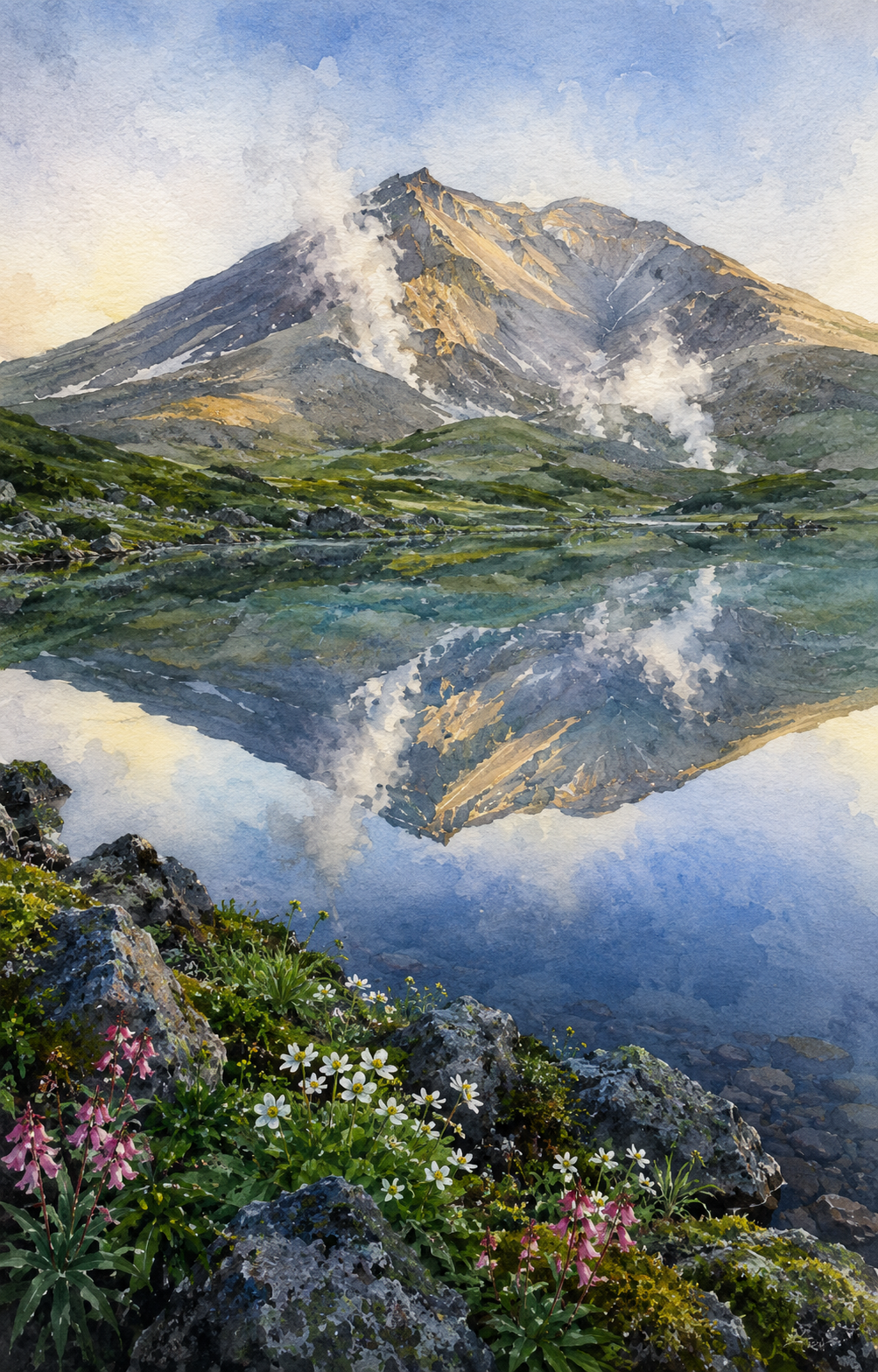
The Mountain Dreams Twice
Critique
Introduction This landscape painting presents a rugged volcanic peak mirrored in a clear alpine pond. The principal focus is the rocky shore and sharply reflected summit. The setting extends to white cloud drifting behind the upper slope. Its quiet mood reveals order among nature, built form, and human presence. Description The foreground holds clear shallows, rocks, and sparse alpine plants, giving tactile weight and scale. The middle distance guides attention toward white cloud drifting behind the upper slope. Light from pale light moving between cloud and mountain reflection defines forms without hardening every edge. A palette of deep blue, stone gray, muted green, and warm ocher unifies the scene. Analysis The composition is structured by a near shoreline opening onto a large mirrored peak, turning the narrow format into spatial stages. Brighter accents gather around the motif, while dark margins contain the view. Repeated contours create rhythm. Transparent washes and granular strokes distinguish distance and suggest moisture or moving air. Interpretation and Evaluation Beyond recording scenery, the image uses the scene to examine reflection joining physical height with contemplative stillness. Small built or human elements remain subordinate, encouraging attention to duration and place. Descriptive clarity, controlled color, and disciplined organization are persuasive. Its originality lies in making atmosphere structural. Conclusion Near texture, the central motif, and the distant field form one continuous visual passage. Specific foreground forms balance abbreviated remote ones, so the eye travels slowly through the scene. What first appears to be an attractive view becomes a study of reflection joining physical height with contemplative stillness. The technique remains controlled and coherent.
Same Subcategory
Similar Artworks
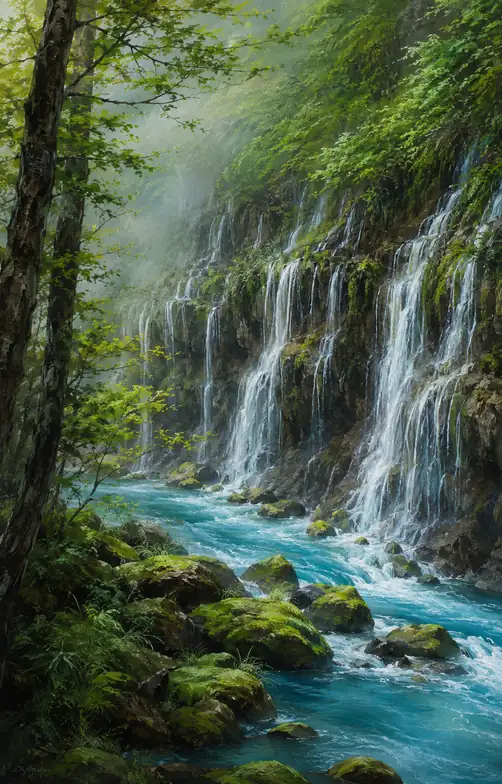 A Thousand Threads, One River
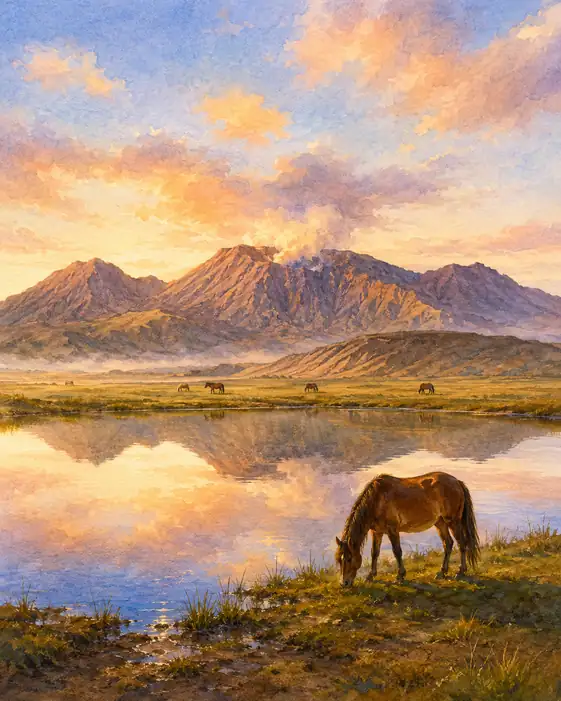 The Horse Grazes Beneath the Mountain's Dream
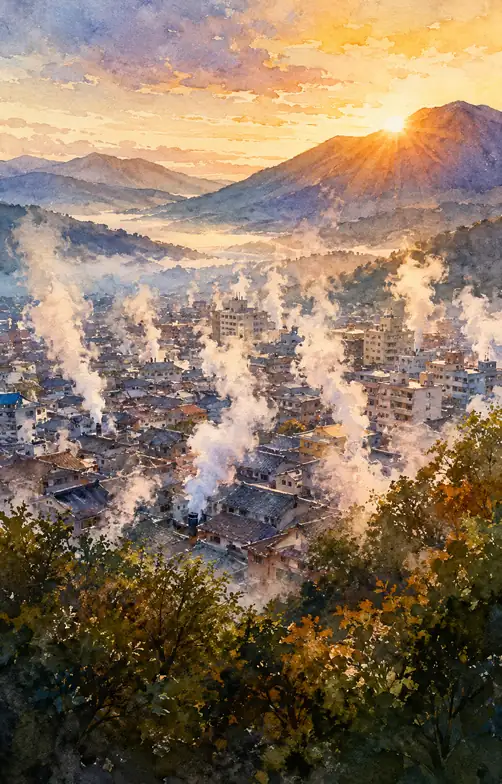 The Mountain Breathes Through Every Roof
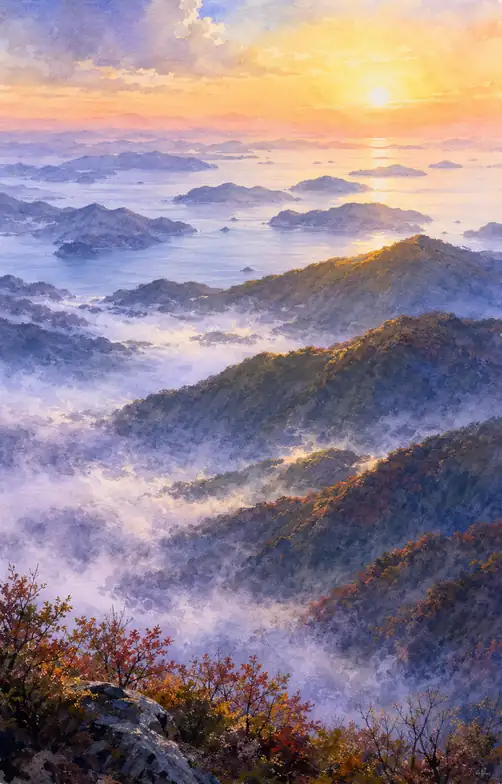 Where the Ridges Learn to Float
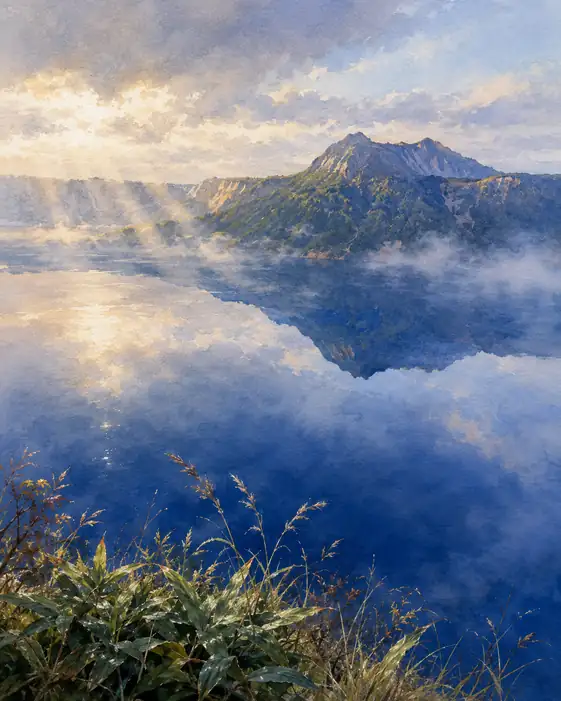 The Mountain Dreams Beneath the Blue
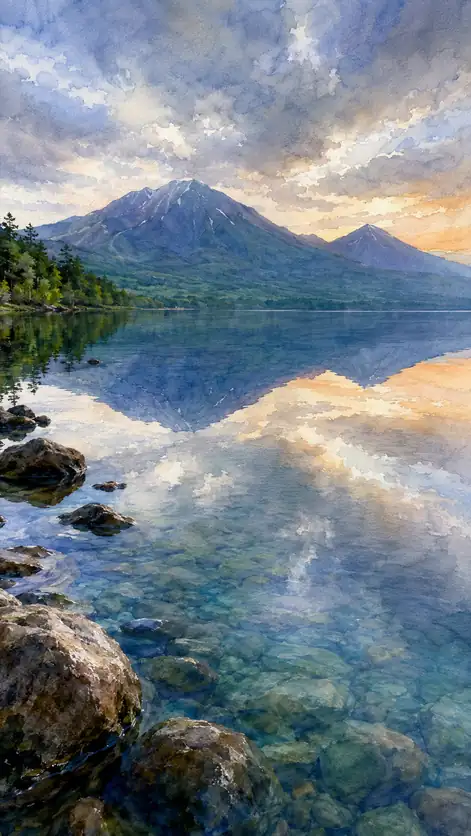 The Mountain Descends to Meet Its Reflection
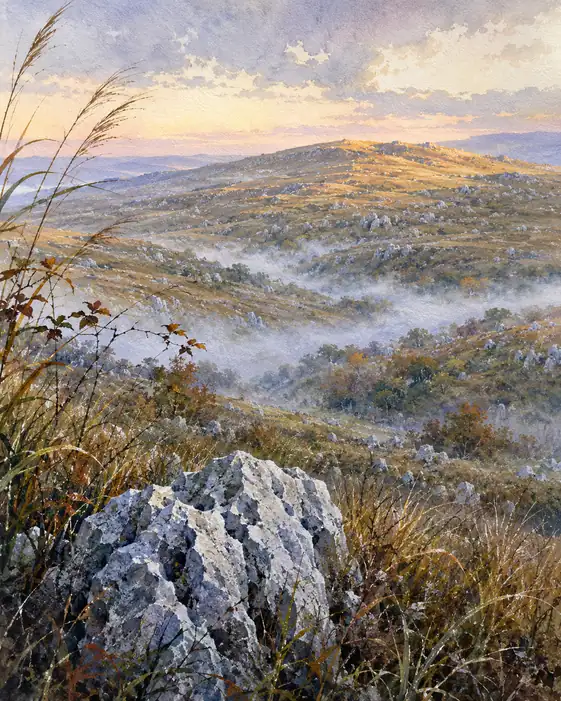 Where Stone Outlives the Mist
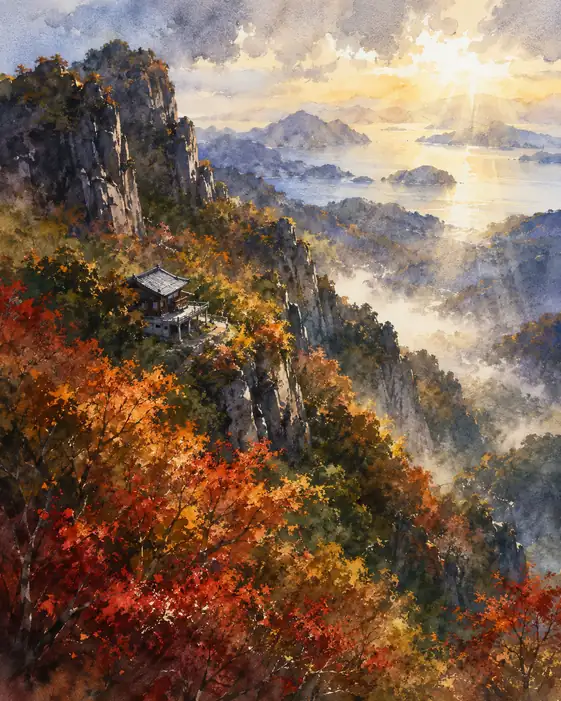 A Pavilion at the Edge of Autumn
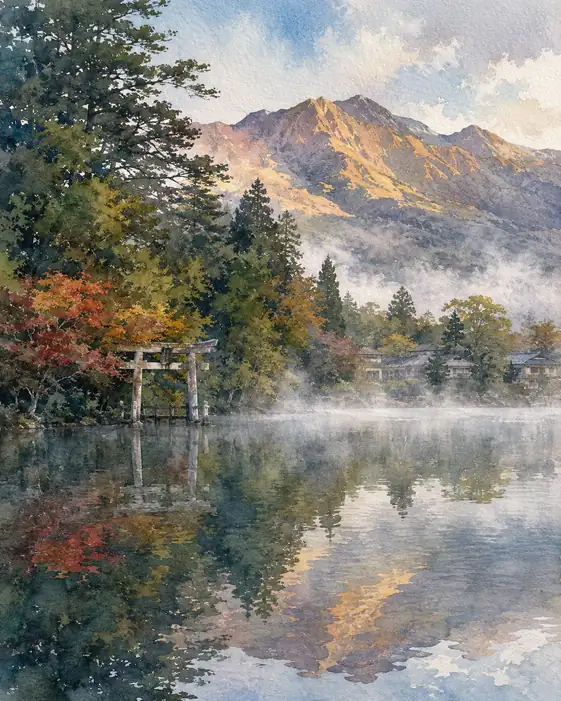 Autumn Sets a Small Gate Before the Mountain
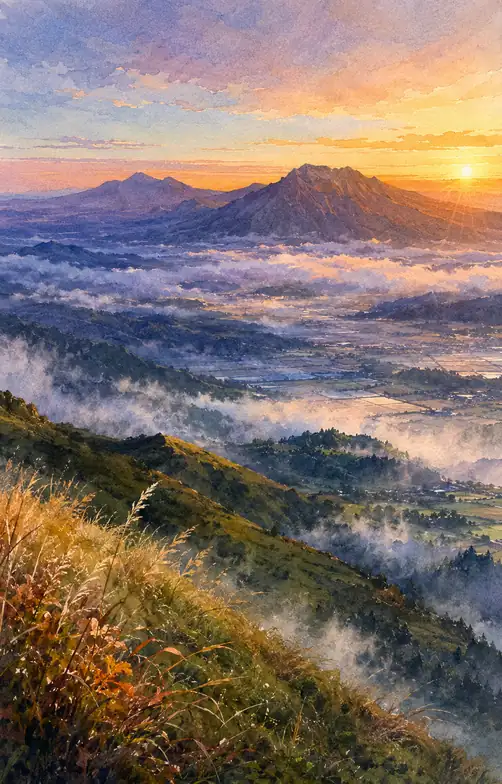 Clouds Sleep in the Mountain's Open Hand