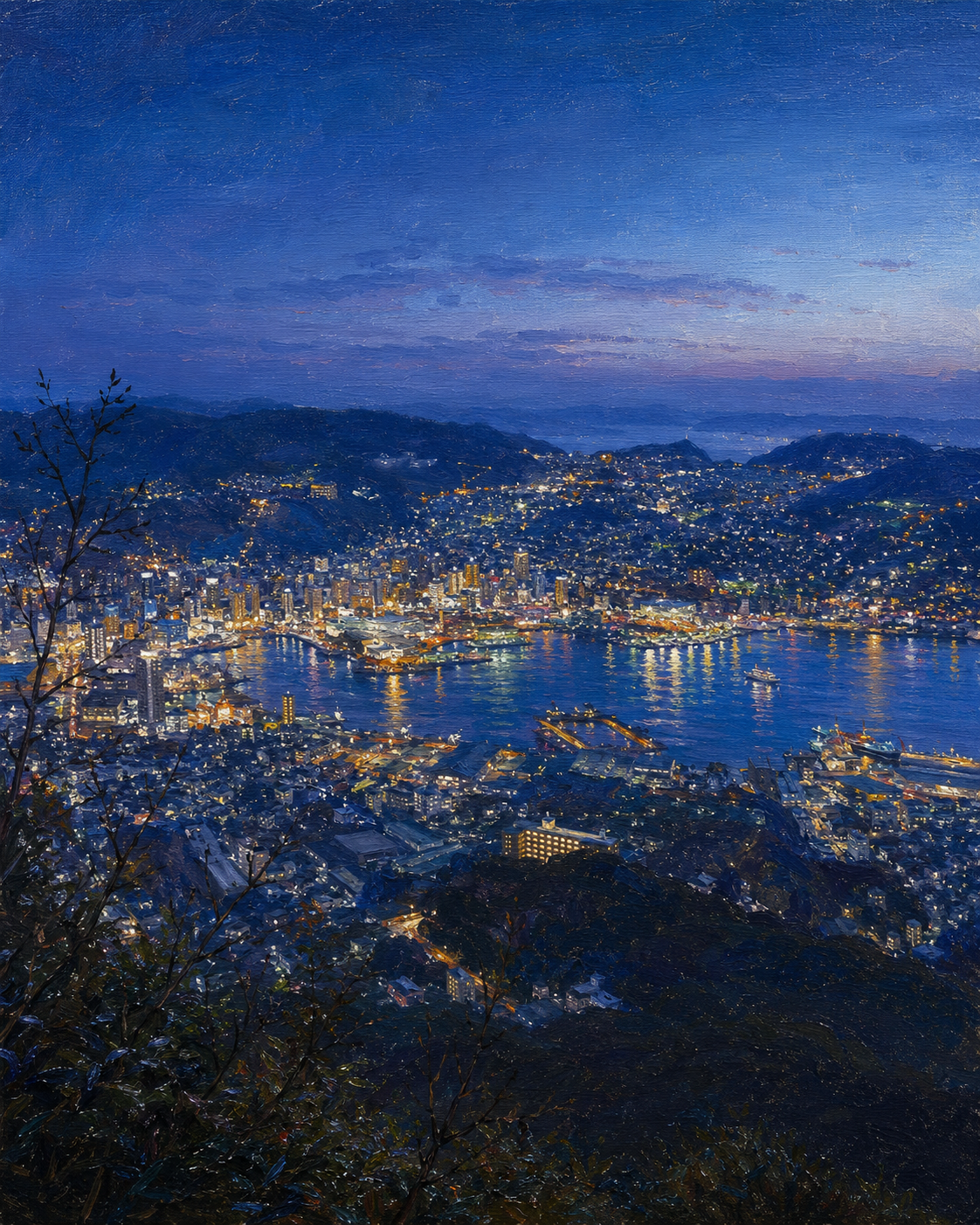
The Bay Wears a Crown of Lights
Critique
Introduction This landscape painting presents a vast illuminated city curving around a mountain bay. The principal focus is dense urban lights reflected across the inner harbor, while layered dark ridges beneath a cobalt evening sky extends the setting. Its quiet impression reveals an ordered relationship between nature, built form, and human presence. Description The foreground holds a dark hillside forming a quiet visual base, giving tactile weight and scale. The middle distance guides attention toward layered dark ridges beneath a cobalt evening sky. Light from the remaining twilight balancing many points of electric light defines forms without hardening every edge. A palette of deep cobalt, indigo, amber, and cool white unifies the scene. Analysis The composition is structured by curving shorelines and light trails encircling the bay, turning the narrow format into spatial stages. Brighter accents gather around the motif, while dark margins contain the view. Repeated contours create rhythm. Transparent washes and granular strokes distinguish distance and suggest moisture or moving air. Interpretation and Evaluation Beyond recording scenery, the image considers the transformation of an industrial harbor into a shared nocturnal landscape. Small built or human elements remain subordinate to the environment, encouraging attention to duration and place. Descriptive clarity, controlled color, and disciplined organization are persuasive. Its originality lies in making atmosphere structural. Conclusion Near texture, the central motif, and the distant field form one continuous visual passage. Specific foreground forms balance abbreviated remote ones, so the eye travels slowly through the scene. What first appears to be an attractive view becomes a study of the transformation of an industrial harbor into a shared nocturnal landscape. The technique remains controlled and coherent.
Same Subcategory
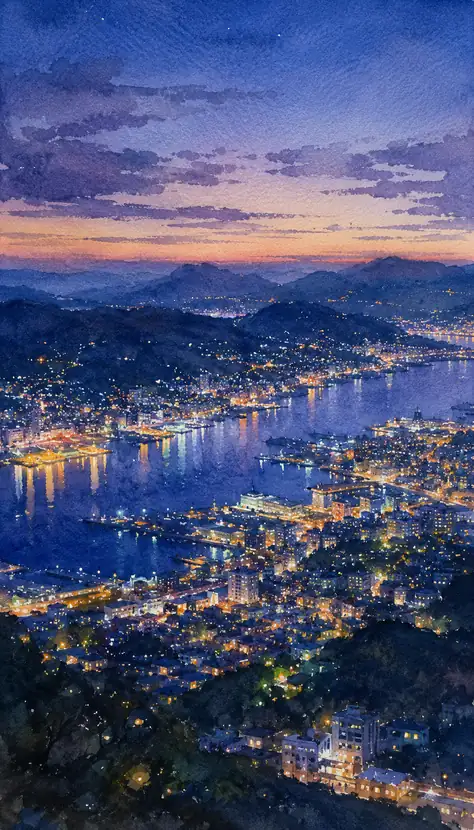 Night Learns the Shape of the Harbor
Similar Artworks
 Blue Hour, Harbor of Embers
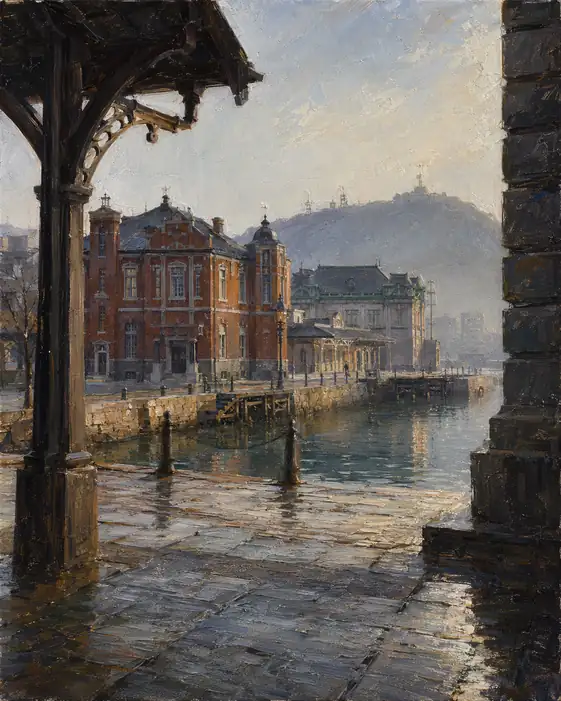 Trade Winds in the Old Harbor
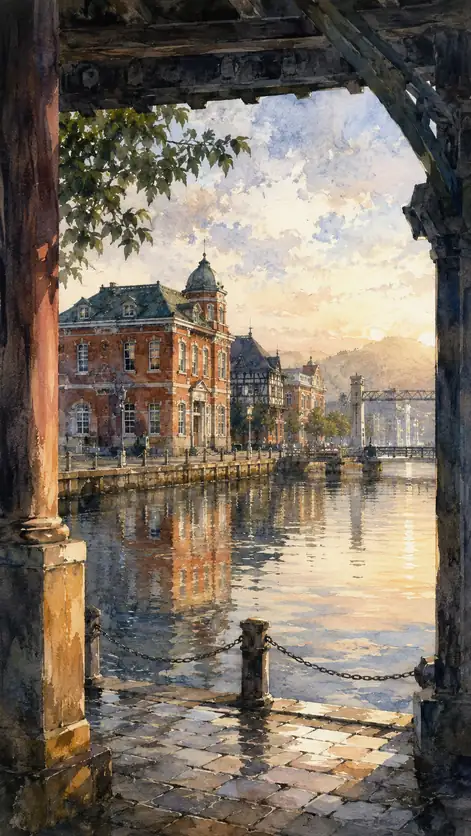 The Harbor Beyond the Old Frame
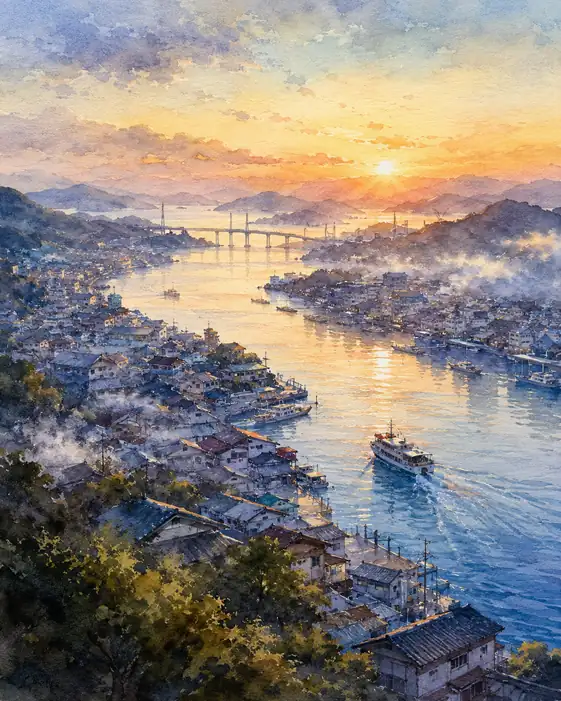 The Ferry Carries Morning
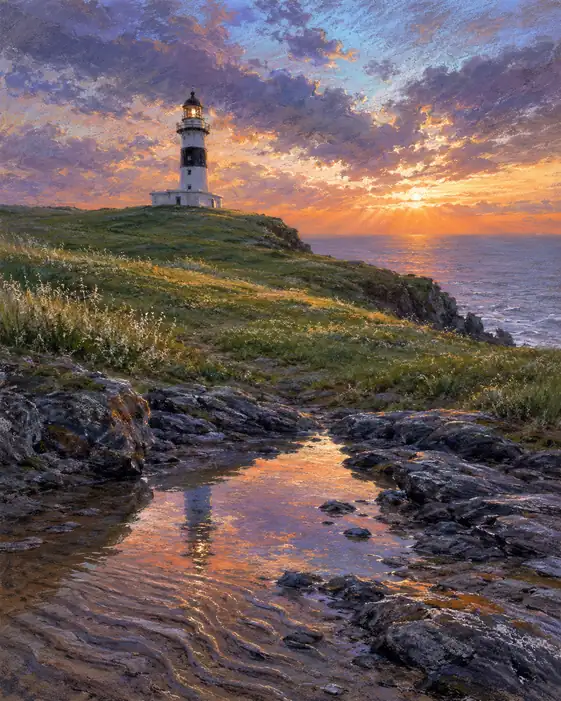 The Last Light Finds Its Way Home
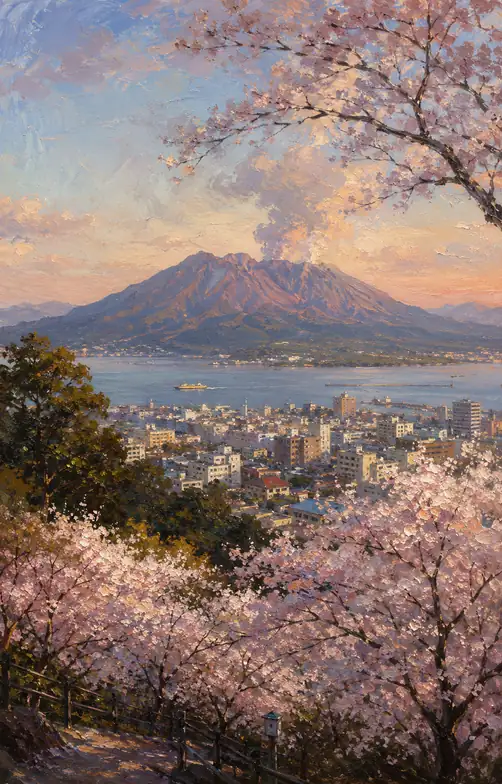 Spring Keeps Watch over the Fire
 The Sun Finds a Sanctuary Inside Stone
 Light Threads the Islands Back Together
 Spring Opens a Gate Between Two Rocks
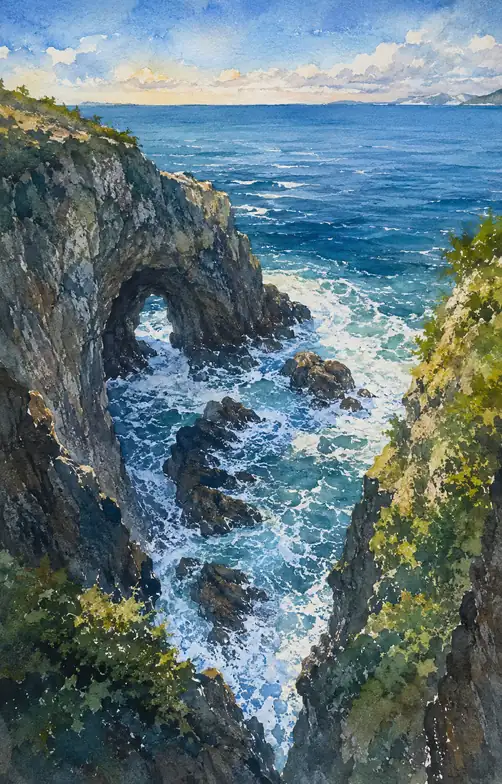 A Doorway Made by the Sea