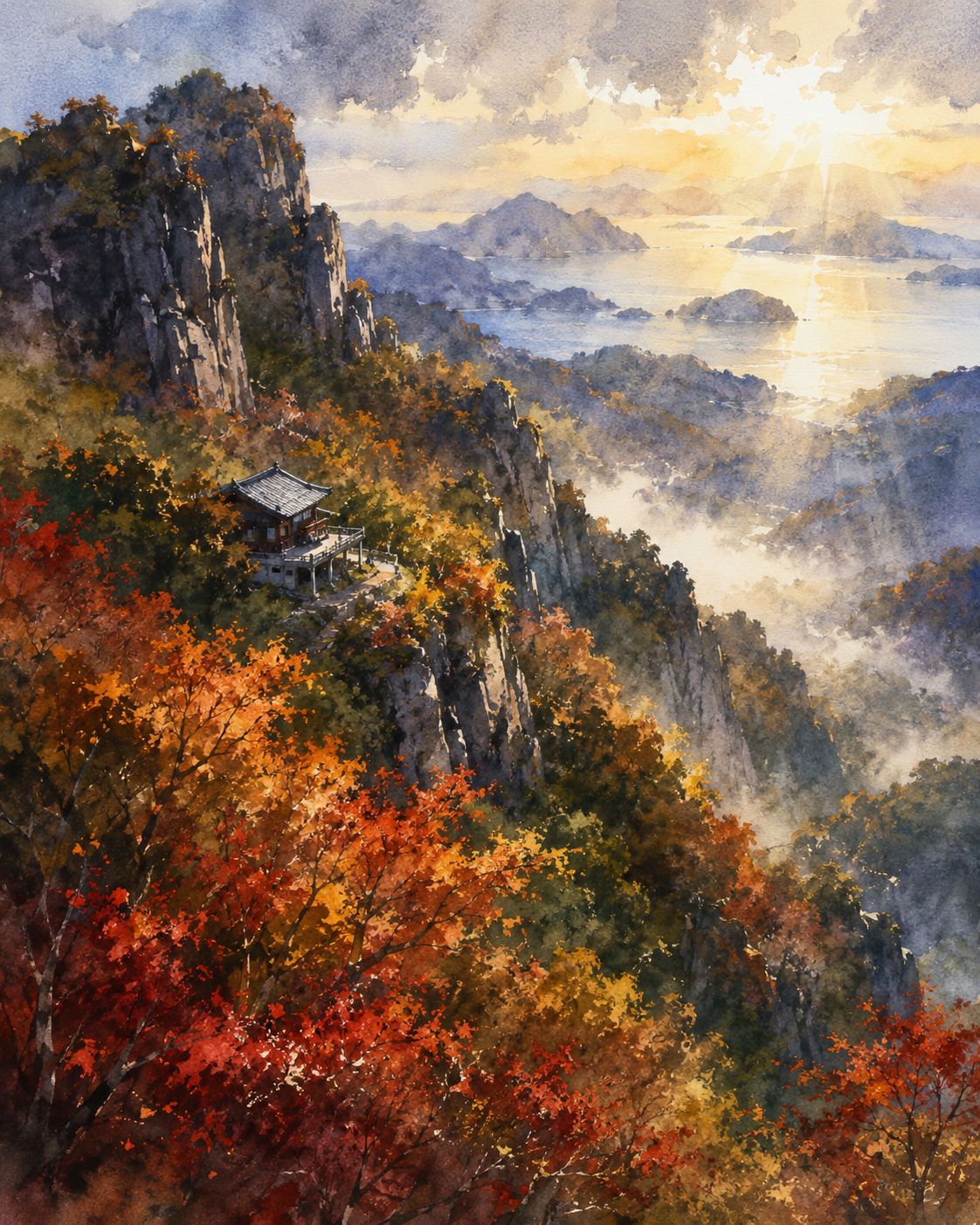
A Pavilion at the Edge of Autumn
Critique
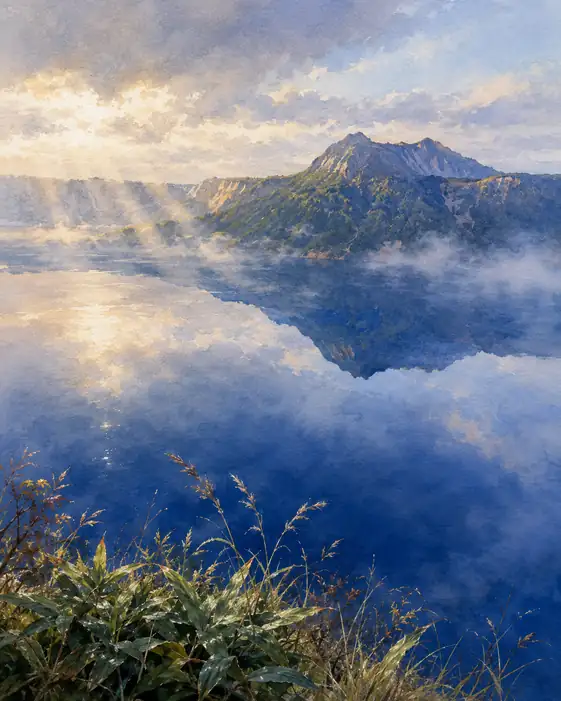
Introduction This landscape painting presents a dramatic autumn gorge opening toward distant mountains. The principal focus is a rocky pinnacle and small pavilion among colored forest, while sunlit peaks suspended beyond rising mist extends the setting. Its quiet impression reveals an ordered relationship between nature, built form, and human presence. Description The foreground holds dense autumn leaves and dark rock at close range, giving tactile weight and scale. The middle distance guides attention toward sunlit peaks suspended beyond rising mist. Light from sunlight breaking through vapor above the ravine defines forms without hardening every edge. A palette of burnt orange, olive, violet-gray, and gold unifies the scene. Analysis The composition is structured by towering rock masses enclosing a small path and distant peaks, turning the narrow format into spatial stages. Brighter accents gather around the motif, while dark margins contain the view. Repeated contours create rhythm. Transparent washes and granular strokes distinguish distance and suggest moisture or moving air. Interpretation and Evaluation Beyond recording scenery, the image considers the tension between vertical enclosure and the desire to look beyond. Small built or human elements remain subordinate to the environment, encouraging attention to duration and place. Descriptive clarity, controlled color, and disciplined organization are persuasive. Its originality lies in making atmosphere structural. Conclusion Near texture, the central motif, and the distant field form one continuous visual passage. Specific foreground forms balance abbreviated remote ones, so the eye travels slowly through the scene. What first appears to be an attractive view becomes a study of the tension between vertical enclosure and the desire to look beyond. The technique remains controlled and coherent.
Same Subcategory
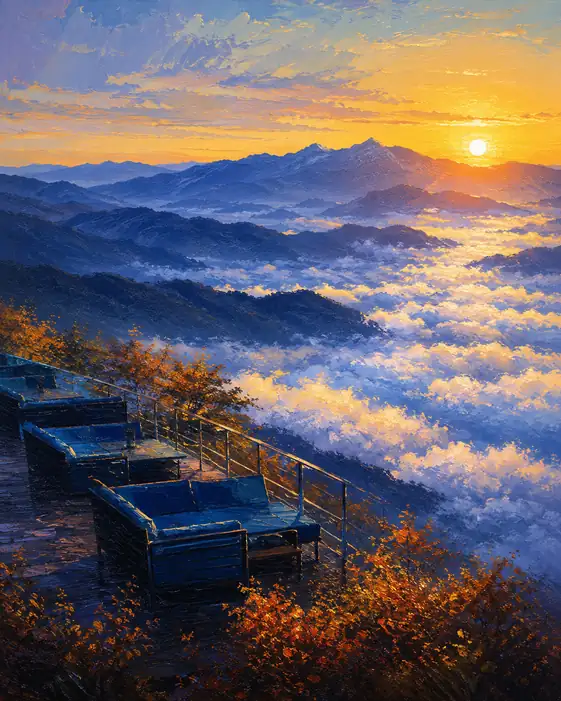 Where Distant Hopes Become Dawn
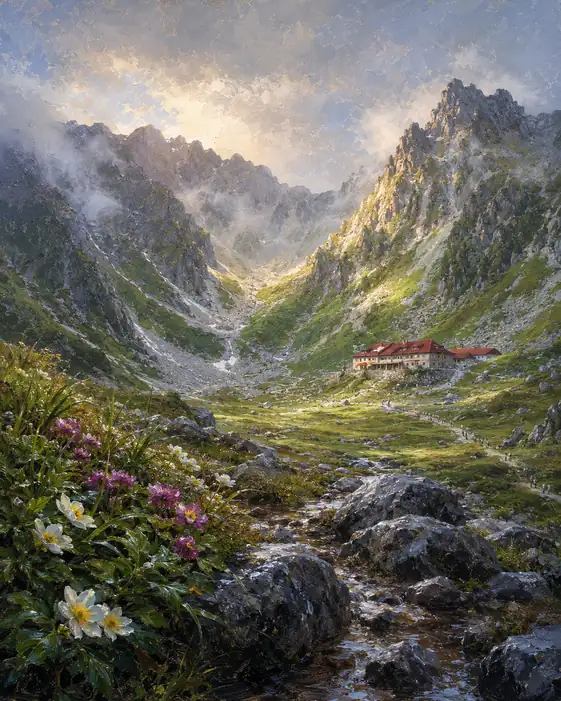 Where Flowers Welcome the Summit
Similar Artworks
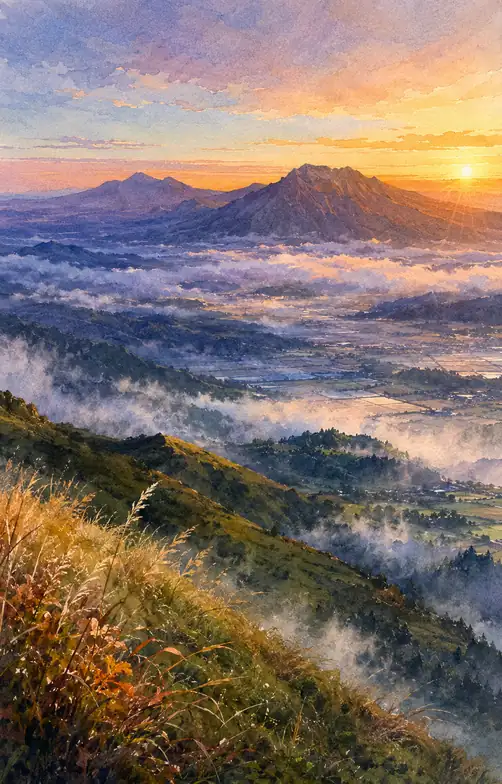 Clouds Sleep in the Mountain's Open Hand
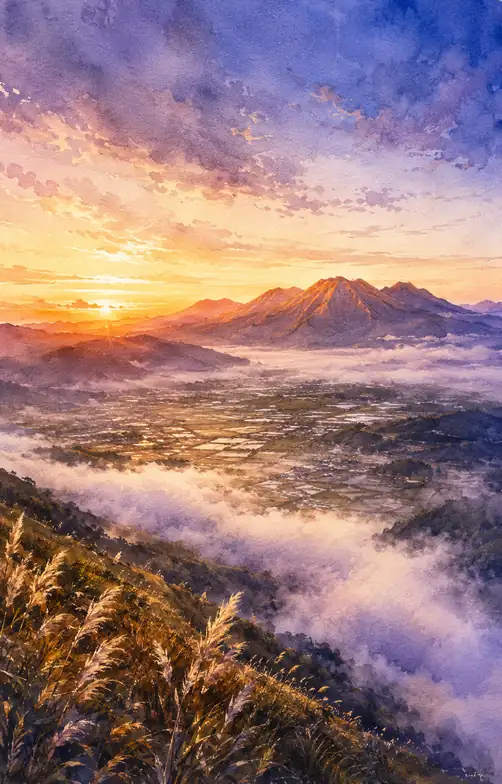 Dawn Measures the Age of Mountains
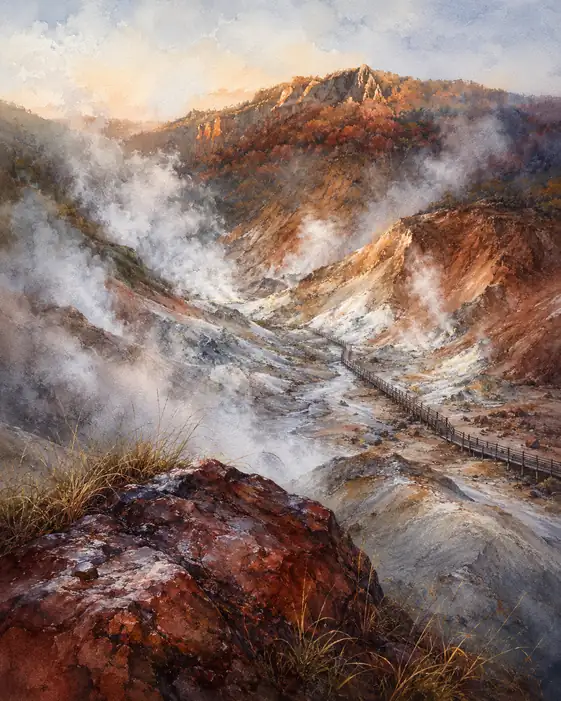 The Earth Writes in Steam and Rust
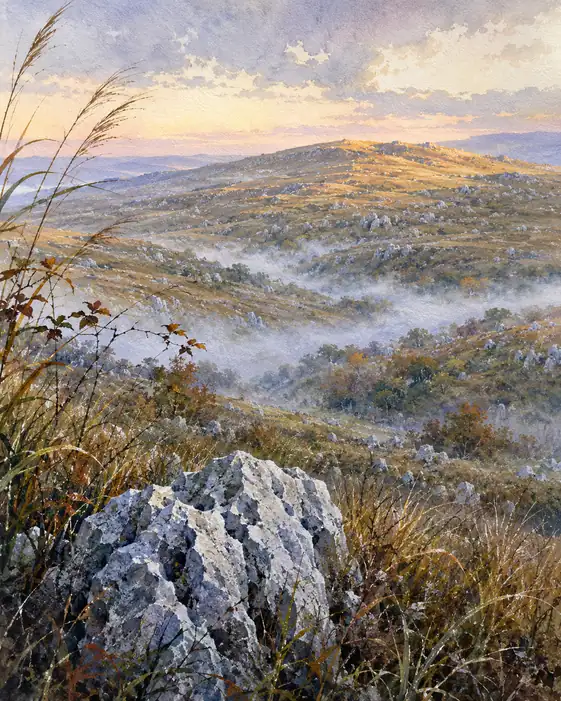 Where Stone Outlives the Mist
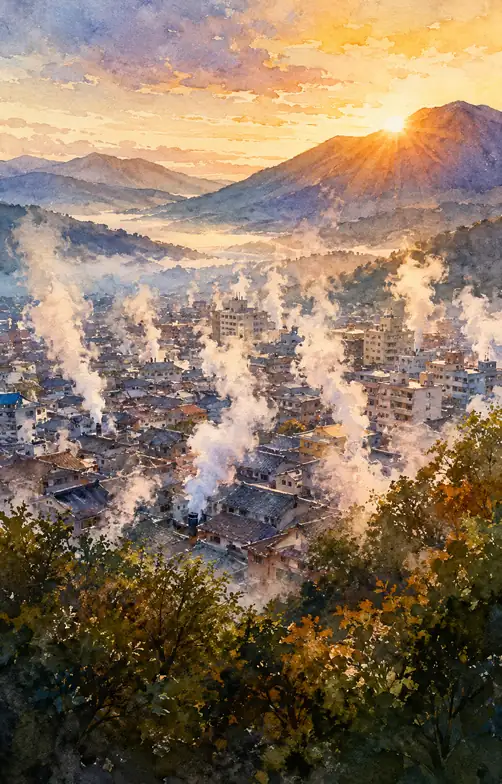 The Mountain Breathes Through Every Roof
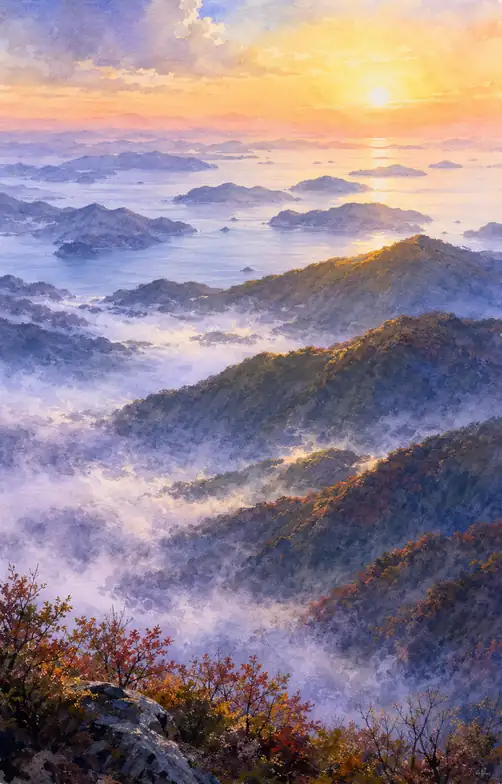 Where the Ridges Learn to Float
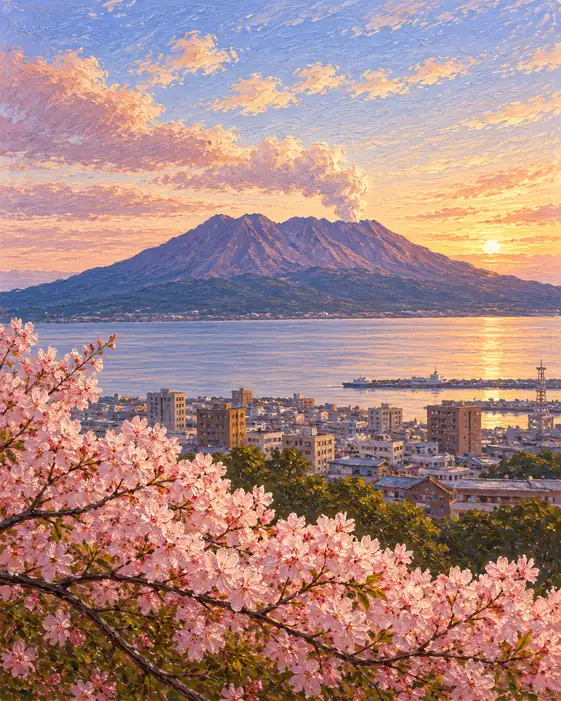 Blossoms Beneath a Sleeping Fire
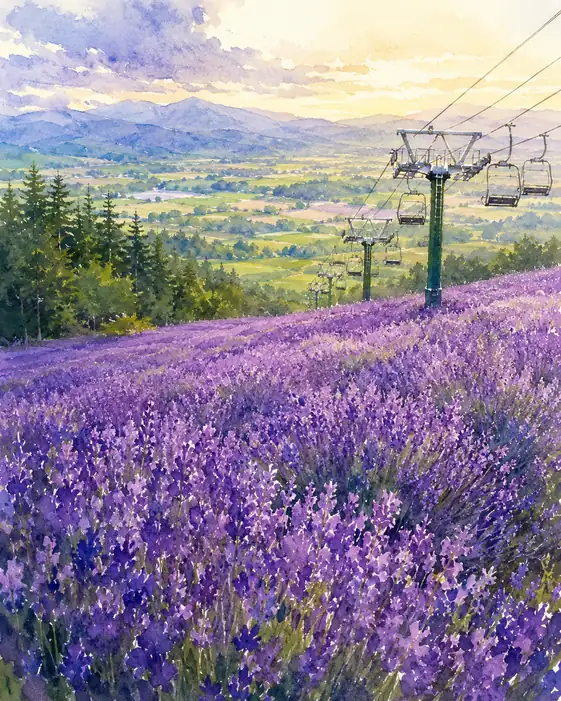 The Valley Wears a Violet Wind
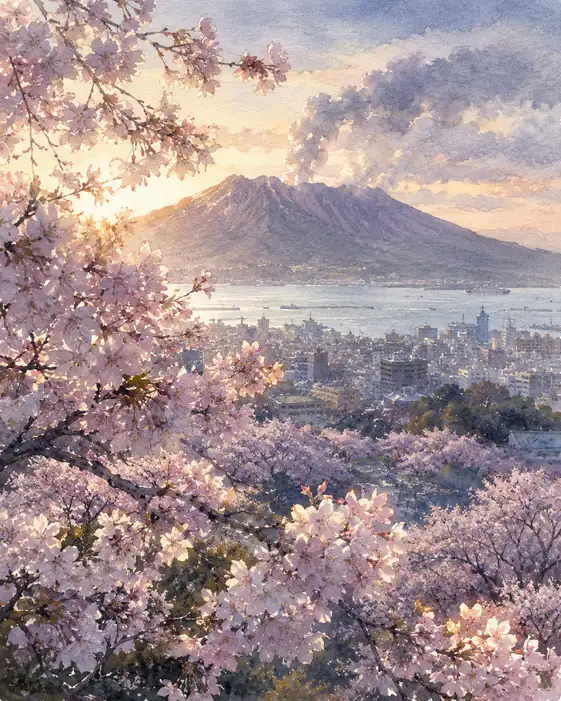 Sakura Quietly Watches Over the City
 The Mountain Dreams Beneath the Blue