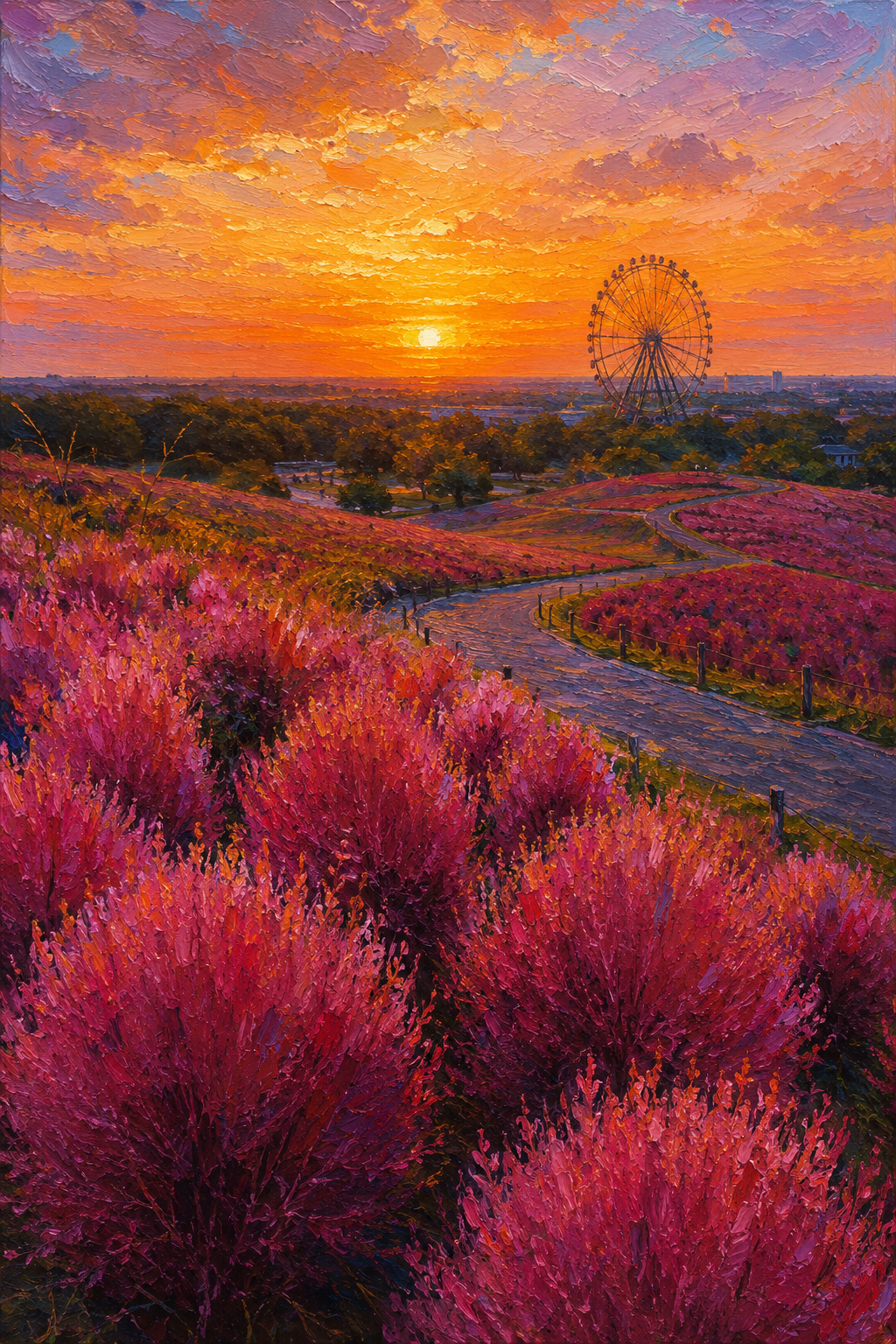
The Ferris Wheel Gathers the Last Fire
Critique
Introduction This landscape painting presents Hitachi Seaside Park’s Miharashi Hill in autumn in luminous early light. The scene is organized around towering magenta shrubs in the foreground, using the location as a framework for examining scale, atmosphere, and the transition between cultivated or architectural order and the surrounding environment. Description The principal motif is towering magenta shrubs in the foreground, while a large Ferris wheel at upper right. Other visible features include the sun near the center-left, a curving path through the fields, and heavy impasto throughout. Analysis The composition uses heavy impasto throughout as its main visual route, leading the eye through overlapping planes toward the horizon. Stable horizontal bands are countered by curved or diagonal movement, so the view remains spacious without becoming static. Dense marks give nearby forms weight, while smaller and softer strokes reduce detail with distance. Warm orange light and cooler blue or violet shadows establish depth and chromatic unity. Interpretation and Evaluation The rounded red kochia functions both as a recognizable subject and as a measure of the larger setting. Its repetition or clear silhouette converts natural abundance into a legible rhythm. The drawing is selective but convincing, the composition is balanced, and the color design sustains atmosphere across the surface. Varied edges and textures distinguish foreground detail from distant masses, demonstrating controlled technique. The specific relation between the sun near the center-left and a large Ferris wheel at upper right also gives this version an individual emphasis. Conclusion At first the work is dominated by its luminous color and abundant scenery. Closer viewing reveals a paced structure in which paths, reflections, rocks, or planted rows organize the experience of distance.
Same Subcategory
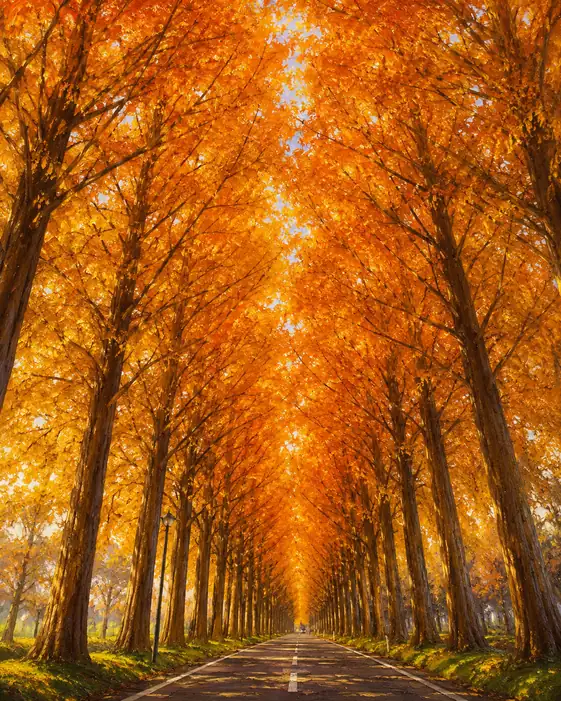 The Golden Road That Lights the Wind's Memory
Similar Artworks
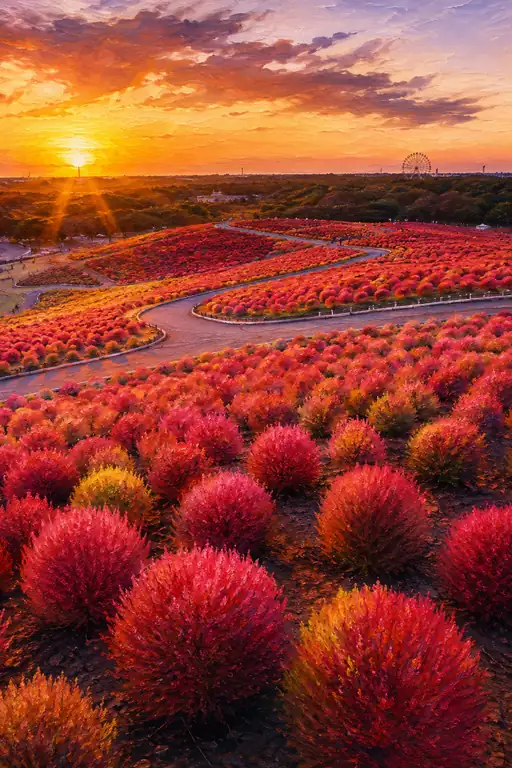 Autumn Rolls Its Red Carpet to the Horizon
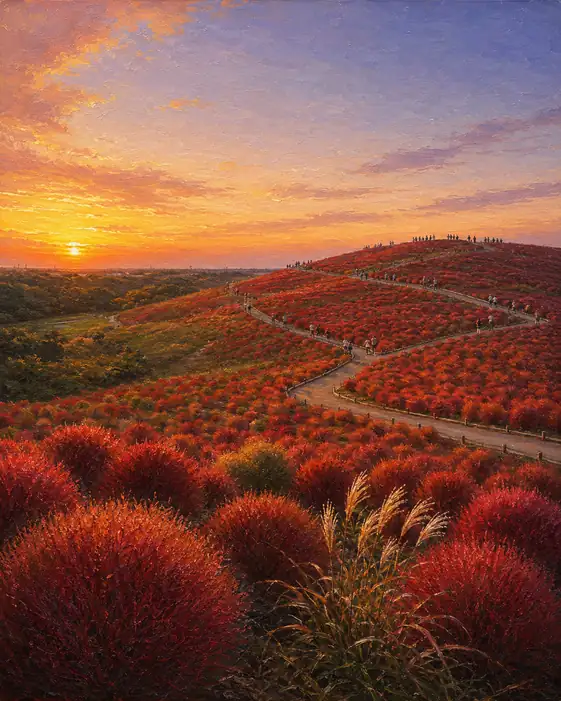 Everyone Walks Inside Autumn's Fire
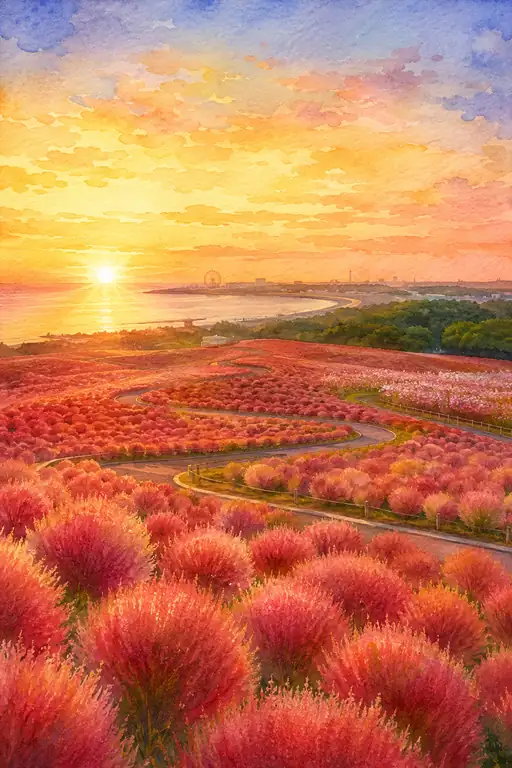 Red Hills Wander Down to the Sea
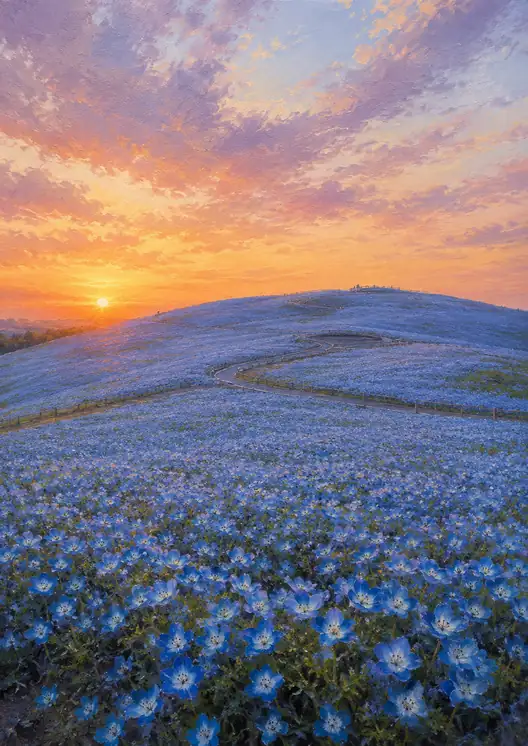 A Path Loosens the Blue Horizon
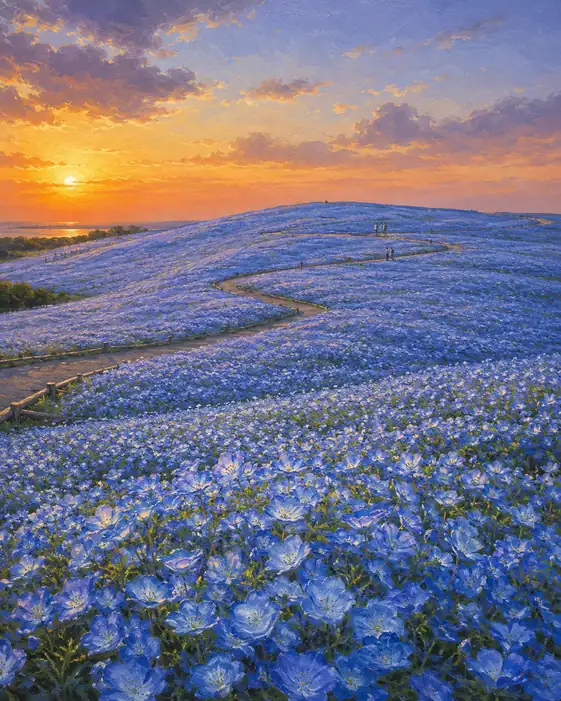 Spring Borrows Blue from the Evening
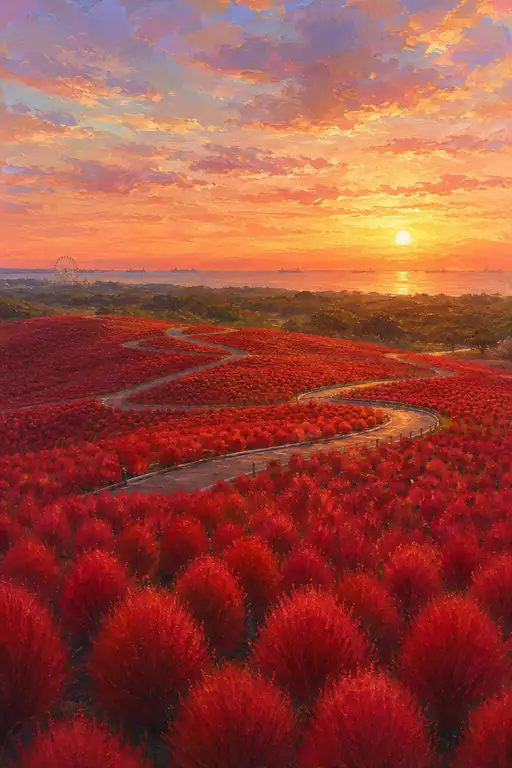 Where Crimson Paths Meet the Sun
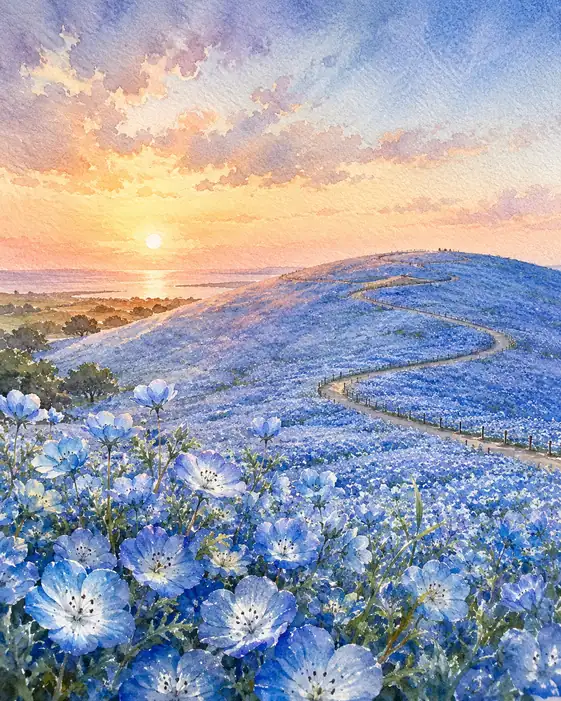 The Blue Hill Sends a Path to the Sun
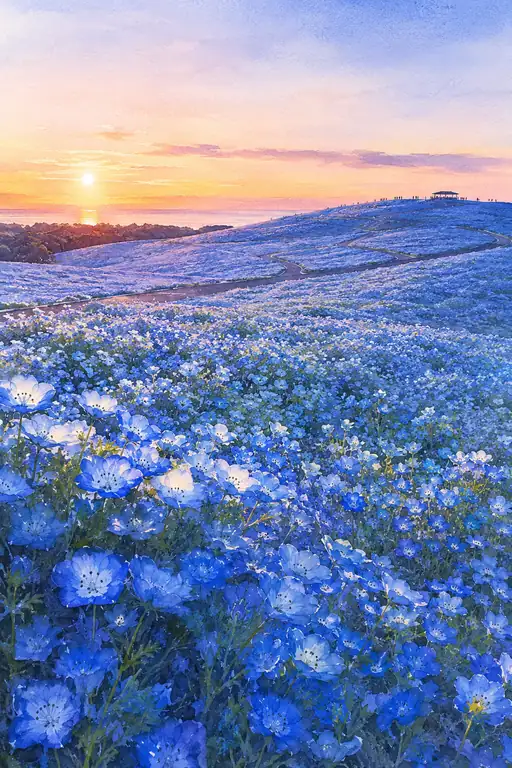 The Little Pavilion at the End of Blue
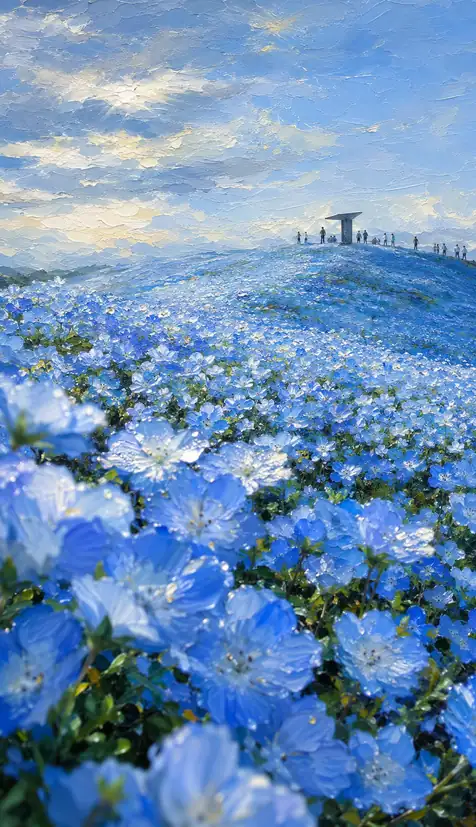 Where Morning Dew Blooms into Sky
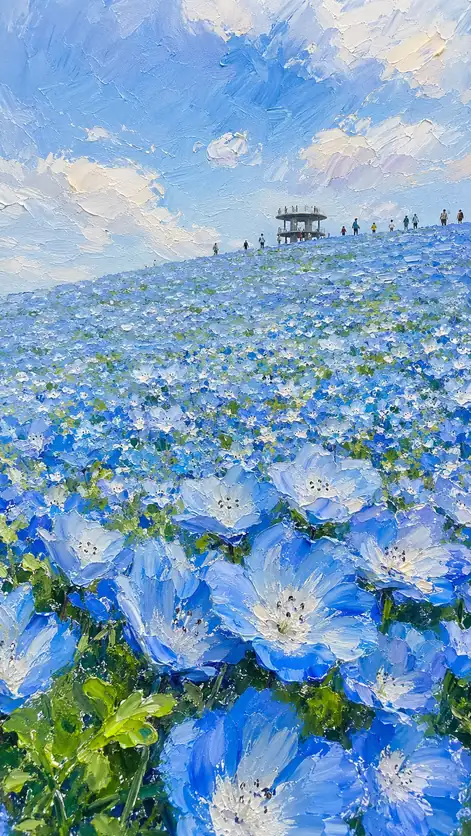 A Blue Hill into the Sky