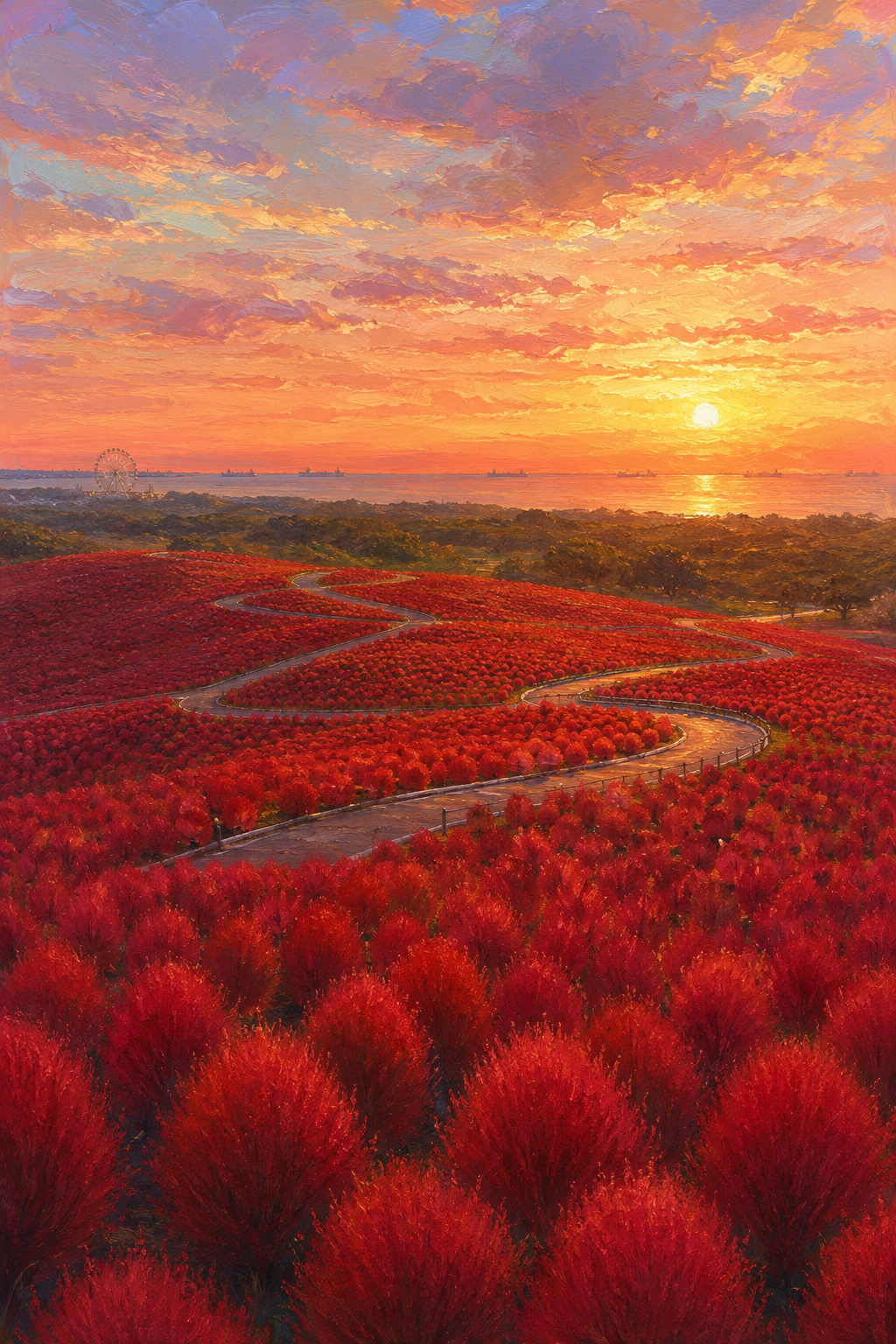
Where Crimson Paths Meet the Sun
Critique
Introduction This painting presents an autumn field of crimson kochia at sunset as a carefully organized study of place, light, and atmosphere. The recognizable subject is transformed through painterly texture rather than treated as a strictly documentary record. Its first effect is immediate, yet the measured arrangement rewards slower looking. Description The scene brings together repeating crimson shrubs and a winding path. Seen from a frontal viewpoint, these elements occupy clear foreground, middle-ground, and distant zones. An orange-to-violet sky establishes the prevailing mood, while smaller reflections and surface marks animate otherwise stable forms. Analysis The composition is built from firm verticals and broad diagonals that guide the eye toward the main structure. Warm highlights are balanced against cooler blues, greens, or grays, giving the image both depth and chromatic unity. Layered, granular brushwork softens hard contours without sacrificing legibility, and repeated shapes create a steady visual rhythm. Interpretation and Evaluation The work interprets a familiar public setting as a place suspended between observation and memory. Its descriptive skill is strongest in the separation of textures and in the controlled transitions of light. The composition remains coherent despite abundant detail, while the selective color heightens atmosphere. The technique is persuasive, and its modest stylization gives the scene an individual character. Conclusion What initially appears to be a direct view of an autumn field of crimson kochia at sunset gradually becomes an examination of how architecture or landscape is remembered through changing illumination. The balanced design, restrained palette, and tactile handling sustain attention across the surface. The painting succeeds by joining recognizable detail with a calm, reflective sense of place.
Same Subcategory
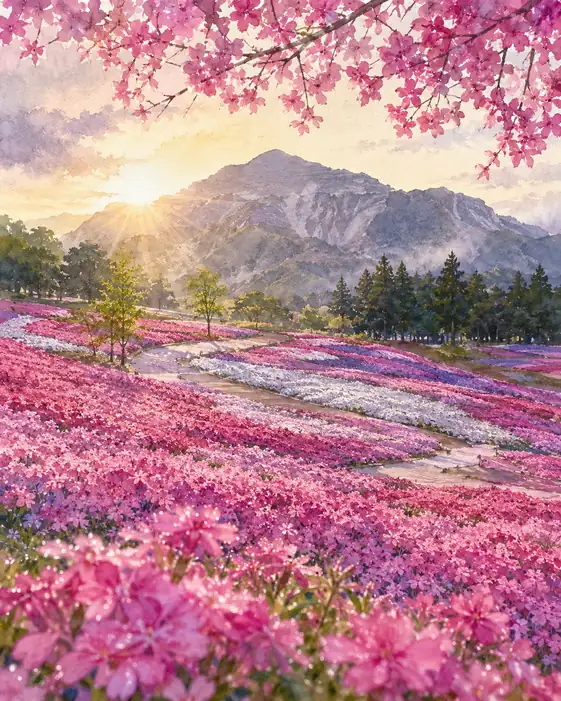 A Pink Carpet for Mount Buko
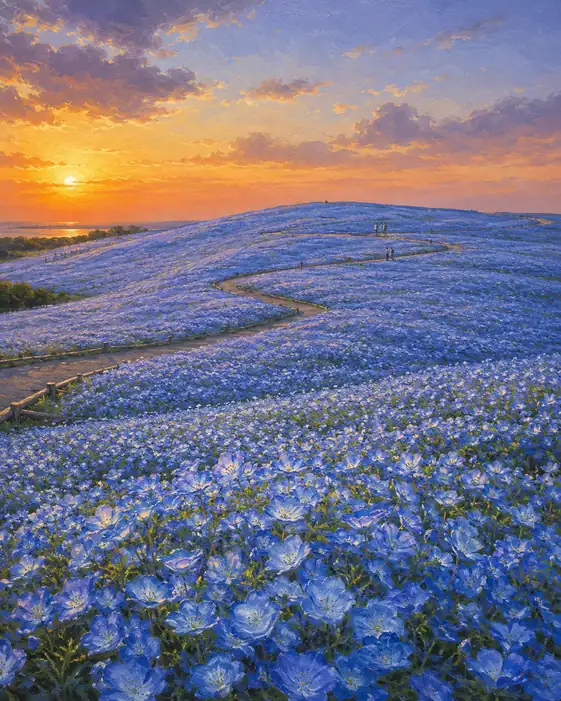 Spring Borrows Blue from the Evening
Similar Artworks
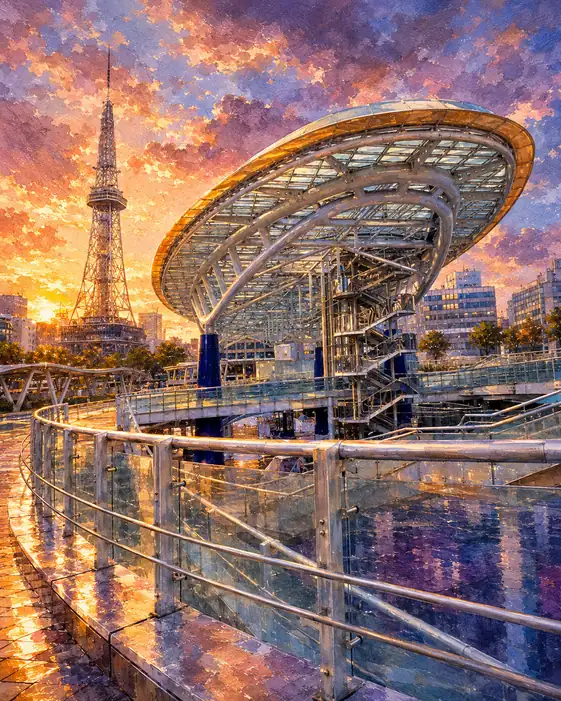 A Future Forged in Sunset Fire
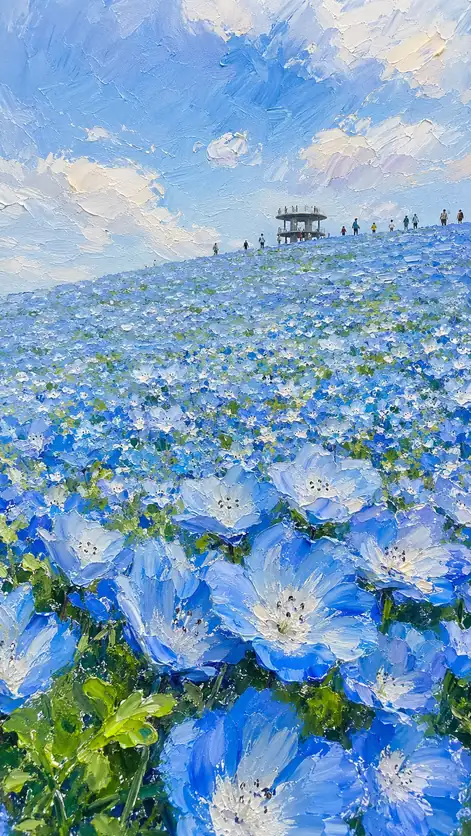 A Blue Hill into the Sky
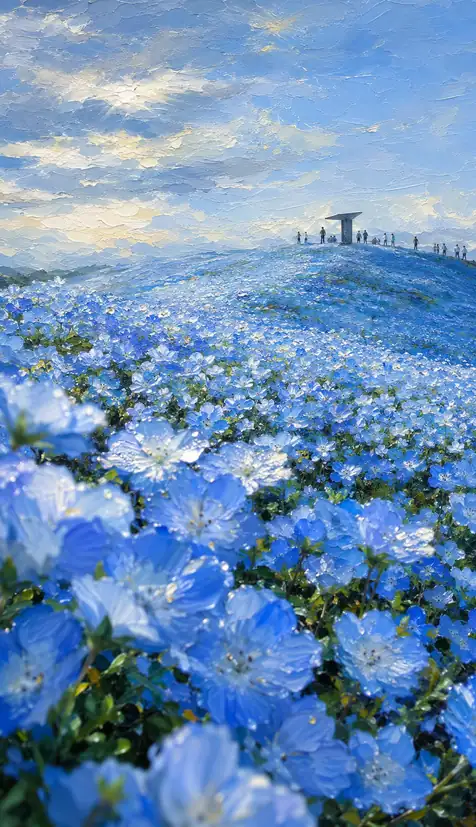 Where Morning Dew Blooms into Sky
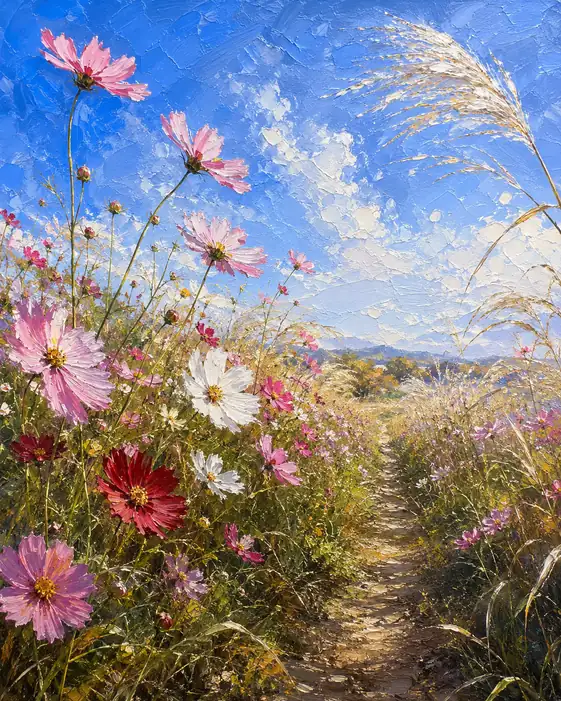 Cosmos and Pampas Grass on the Breezy Hill
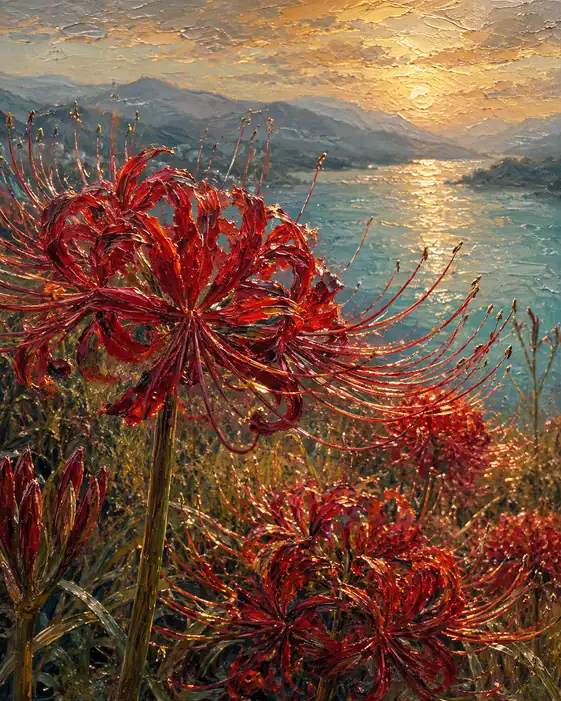 Red Spider Lilies Flaming on the Sunset Coast
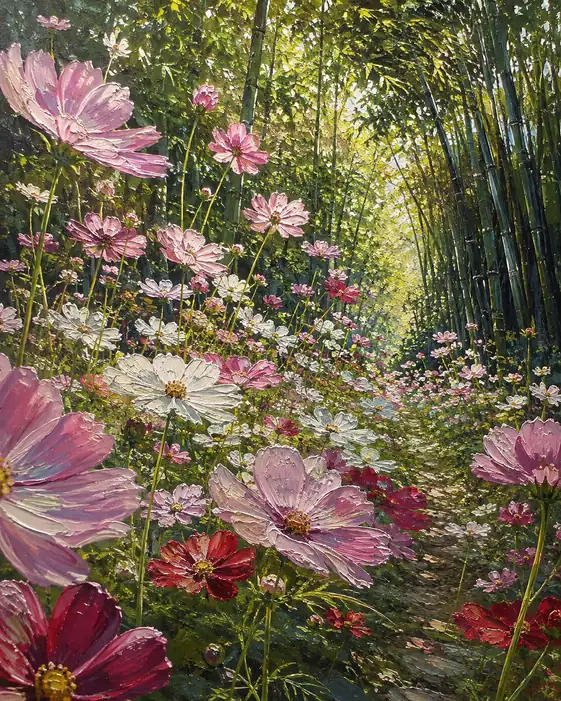 Radiant Cosmos Along the Bamboo Path
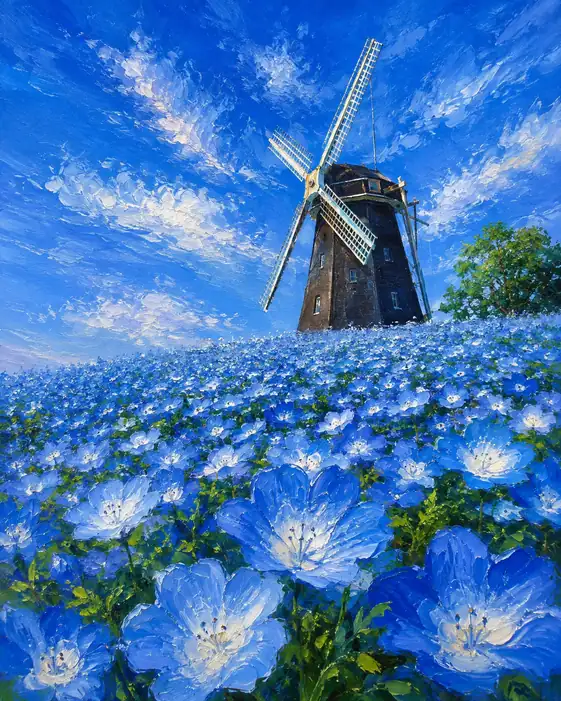 Sky and Petal Meeting the Wind
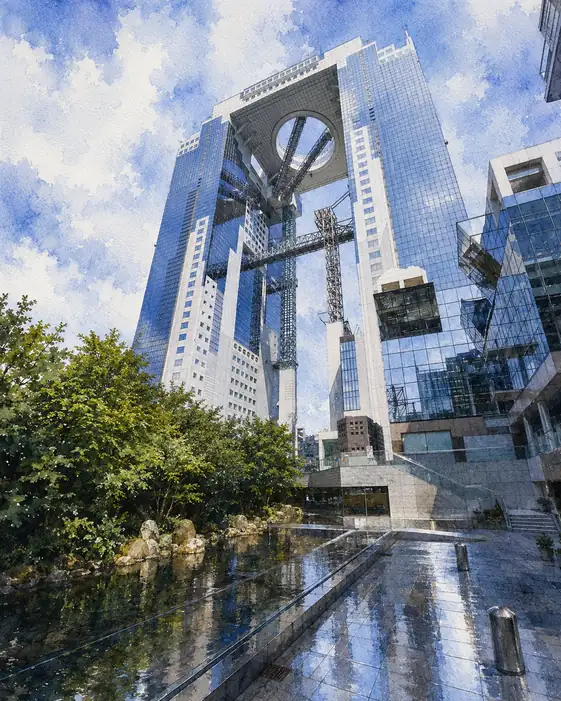
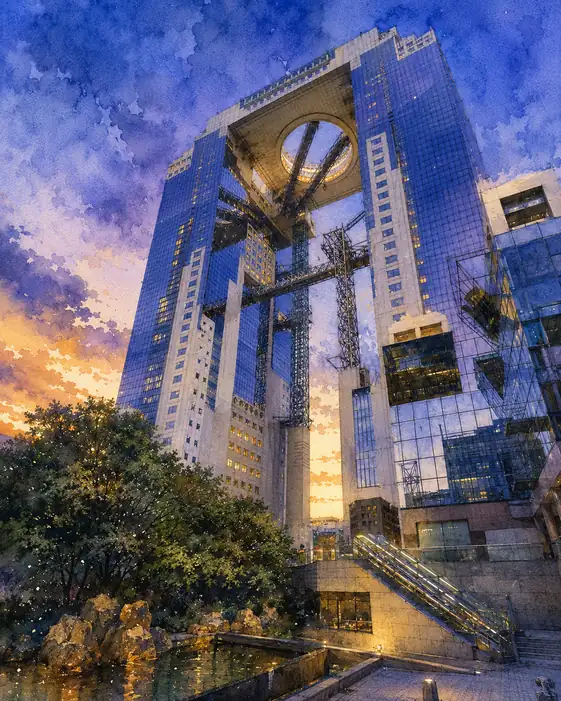 A Gateway Floating in the Sky Above Umeda
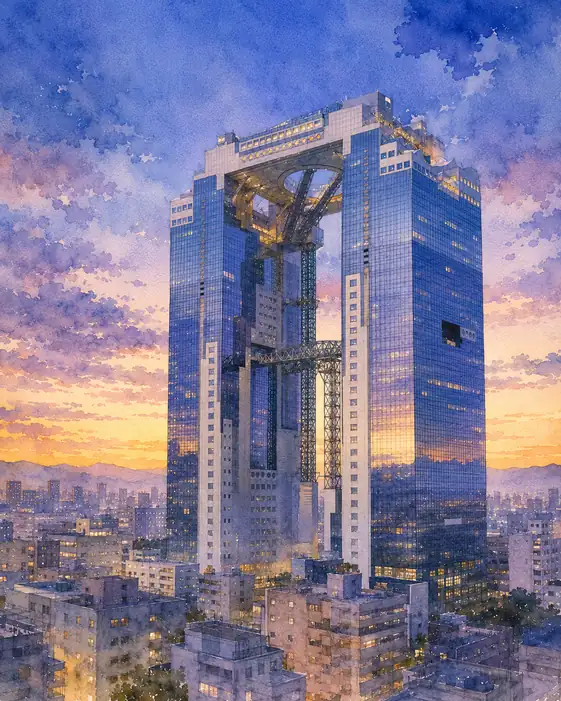 The City Enters Its Violet Dream
 A Blue Cathedral for Passing Clouds