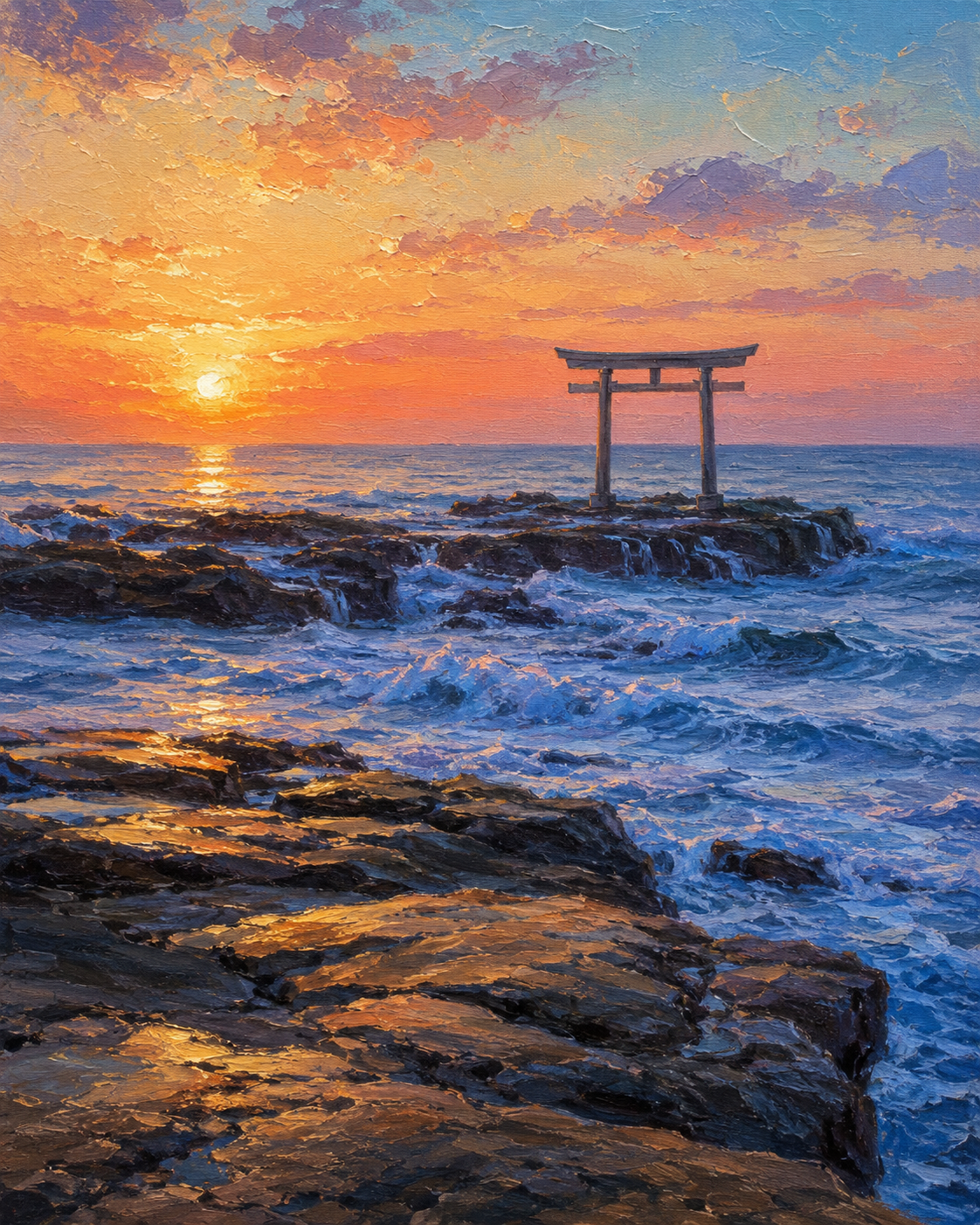
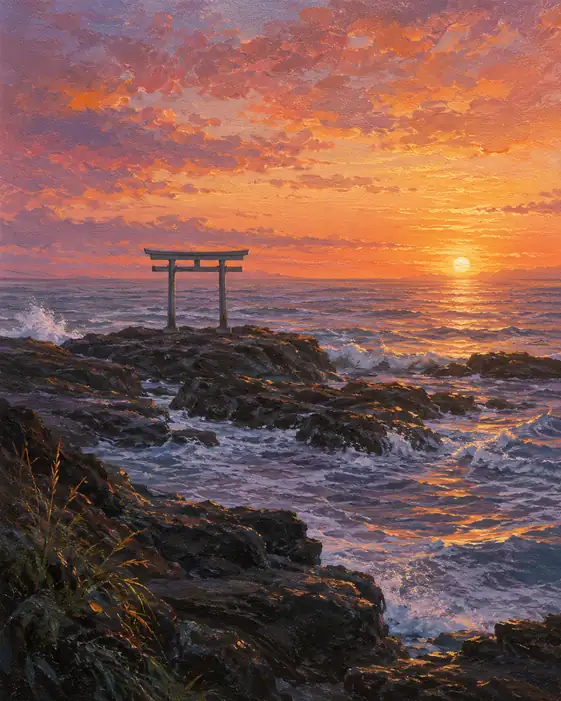
Blue Waves Carry the Sun to the Gate
Critique
Introduction This landscape painting presents the Kamiiso torii of Oarai Isosaki Shrine in luminous early light. The scene is organized around right of center, using the location as a framework for examining scale, atmosphere, and the transition between cultivated or architectural order and the surrounding environment. Description The principal motif is right of center, while the sun rises at the far left. Other visible features include a broad ocher foreground shelf, blue waves and low cascades, and a long diagonal approach. Analysis The composition uses a long diagonal approach as its main visual route, leading the eye through overlapping planes toward the horizon. Stable horizontal bands are countered by curved or diagonal movement, so the view remains spacious without becoming static. Dense marks give nearby forms weight, while smaller and softer strokes reduce detail with distance. Warm orange light and cooler blue or violet shadows establish depth and chromatic unity. Interpretation and Evaluation The the torii functions both as a recognizable subject and as a measure of the larger setting. Its repetition or clear silhouette converts natural abundance into a legible rhythm. The drawing is selective but convincing, the composition is balanced, and the color design sustains atmosphere across the surface. Varied edges and textures distinguish foreground detail from distant masses, demonstrating controlled technique. The specific relation between a broad ocher foreground shelf and the sun rises at the far left also gives this version an individual emphasis. Conclusion At first the work is dominated by its luminous color and abundant scenery. Closer viewing reveals a paced structure in which paths, reflections, rocks, or planted rows organize the experience of distance.
Same Subcategory
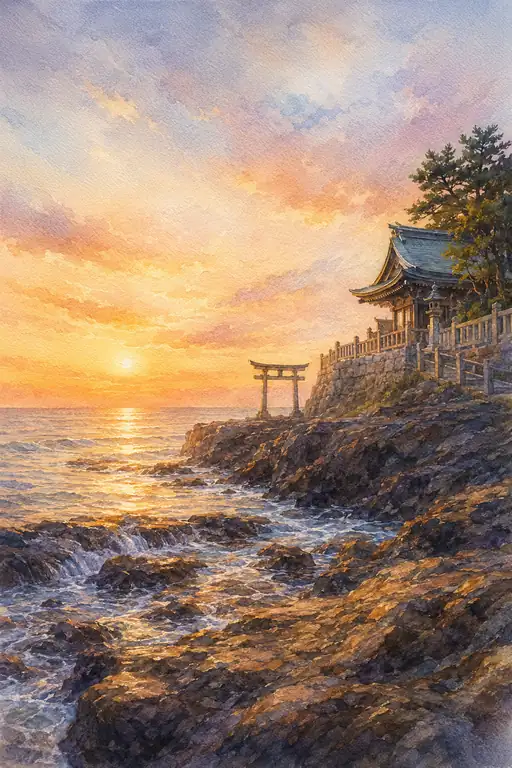 The Shrine Watches Its Small Door to the Sea
Similar Artworks
 Water Returns Until the Gate Awakens
 Morning Finds Its Balance on Stone
 The Shore Teaches the Gate to Belong
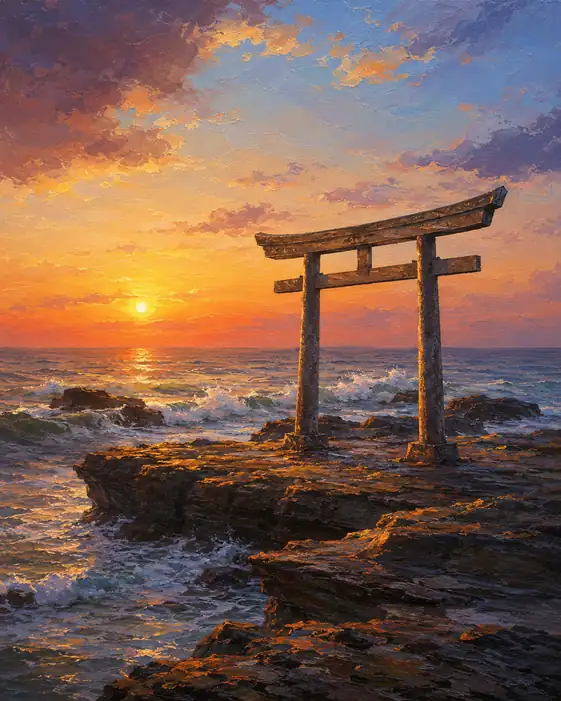 The Gate Stands Where Day Touches Stone
 A Wave Rises to Greet the Empty Gate
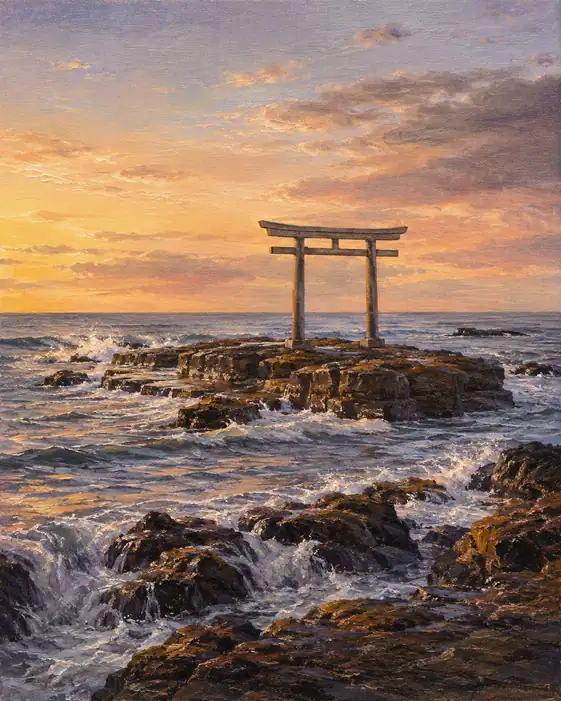 The Tide Builds a Stairway to Morning
 The Sun Lays a Golden Road Beside the Gate
 Dawn Opens a Channel Through Stone
 Stillness Measured in Waves
 The Sea Breaks, the Threshold Remains