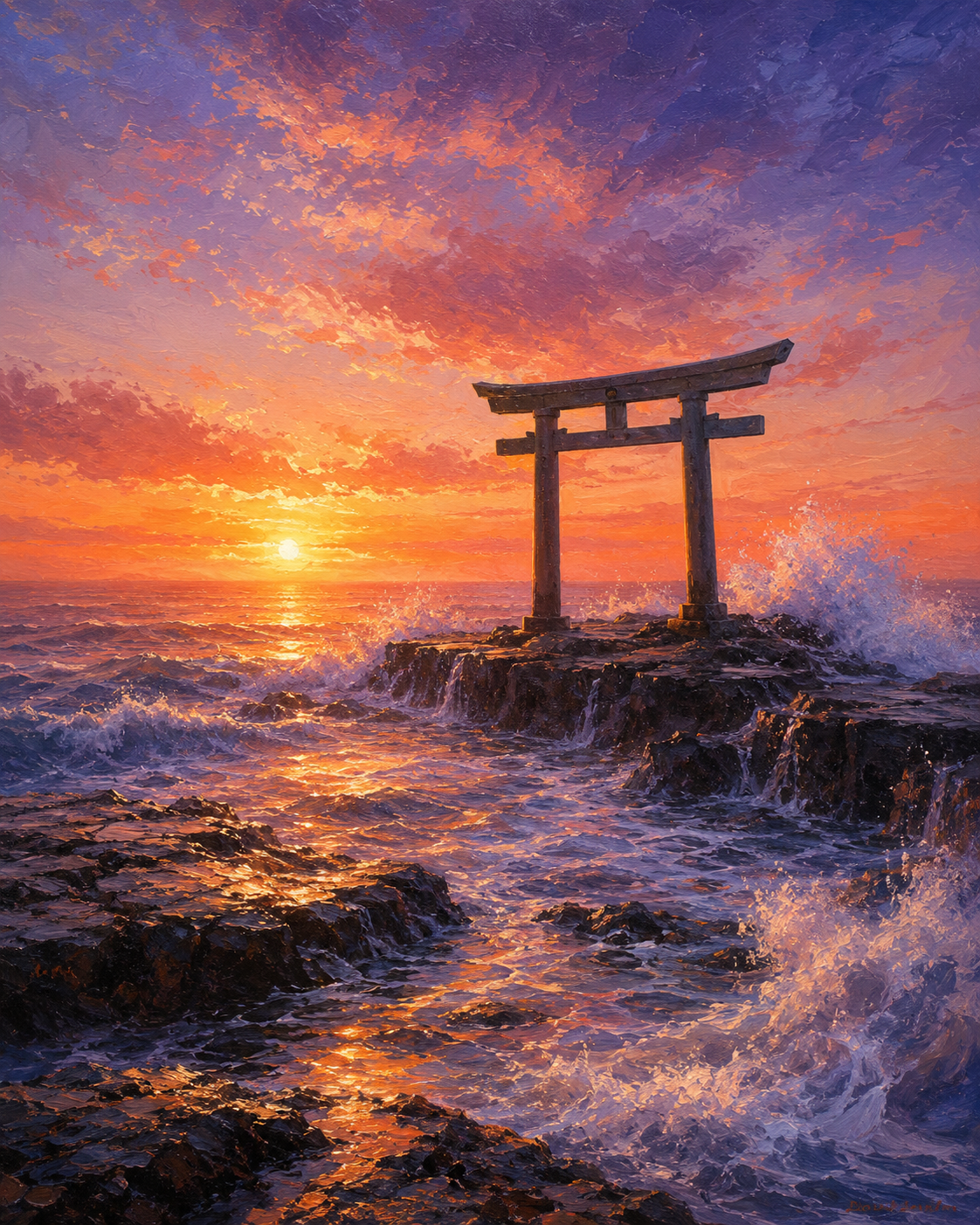
Where the Waves Come to Pray
Critique
Introduction This painting presents the Kamiiso torii of Oarai Isosaki Shrine on a rocky Pacific shore at sunrise. The familiar coastal landmark is treated less as documentary scenery than as a concentrated encounter between architecture, sea, and changing light. Description The dark gate rises slightly right of center, while the low sun glows near the left horizon. Jagged rocks lead inward from the foreground, and waves break around their edges in white and violet spray. Above, orange clouds spread through a broad field of lavender and deep blue. Analysis The composition balances the compact vertical structure of the torii against the sun’s smaller circular form. A diagonal path of reflected orange light carries the eye from the lower center toward the horizon, while repeated ridges of rock slow that movement. Thick, broken strokes give clouds, foam, and stone a shared physical energy; warm oranges and cool purples establish both depth and strong chromatic tension. Interpretation and Evaluation The gate appears stable but not isolated, since surf and reflected light continually gather around it. This contrast gives the sacred structure a measured authority without suppressing the force of nature. The drawing is clear, the color design is cohesive, and the handling of paint effectively distinguishes solid rock from restless water. Its originality lies in making sunset-like intensity serve a quiet devotional mood. Conclusion At first the work may seem primarily spectacular, dominated by blazing color and crashing waves. Closer viewing reveals a carefully controlled arrangement in which light, texture, and architectural silhouette turn the coastal view into a sustained meditation on permanence and change.
Same Subcategory
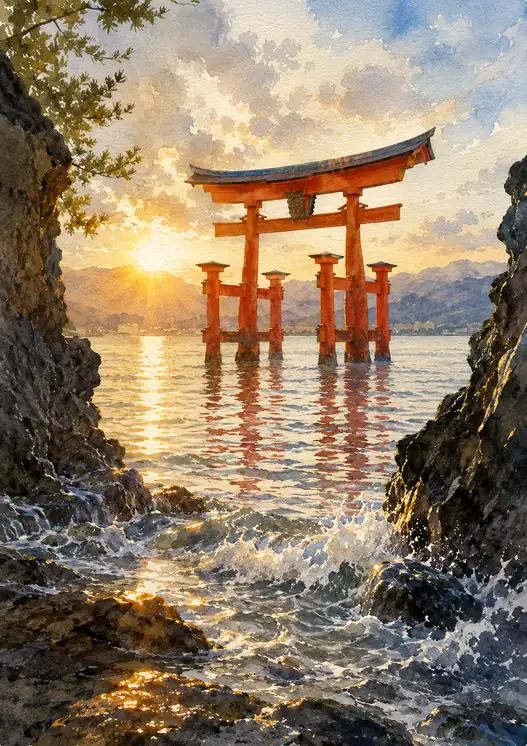 The Sea Passes Through the Gate of Light
Similar Artworks
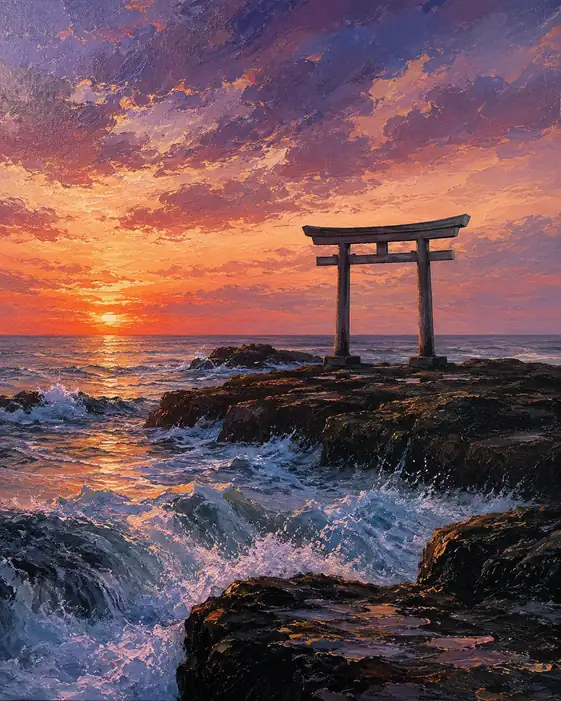 Stillness Measured in Waves
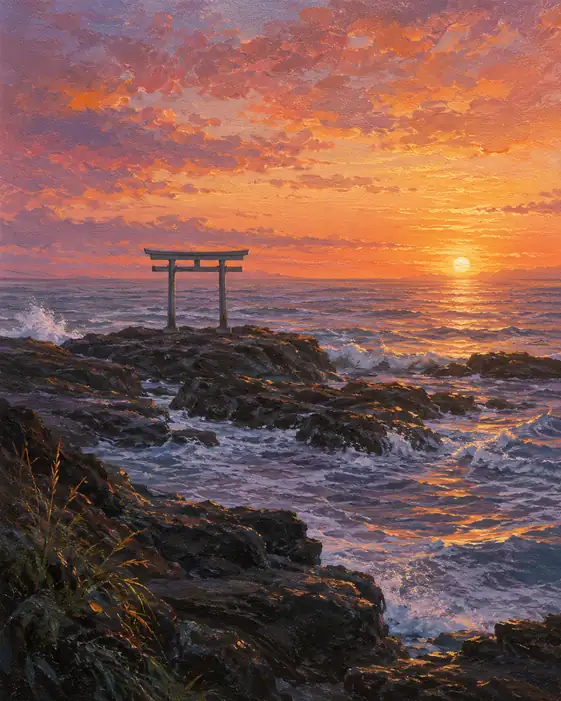 Dawn Opens a Channel Through Stone
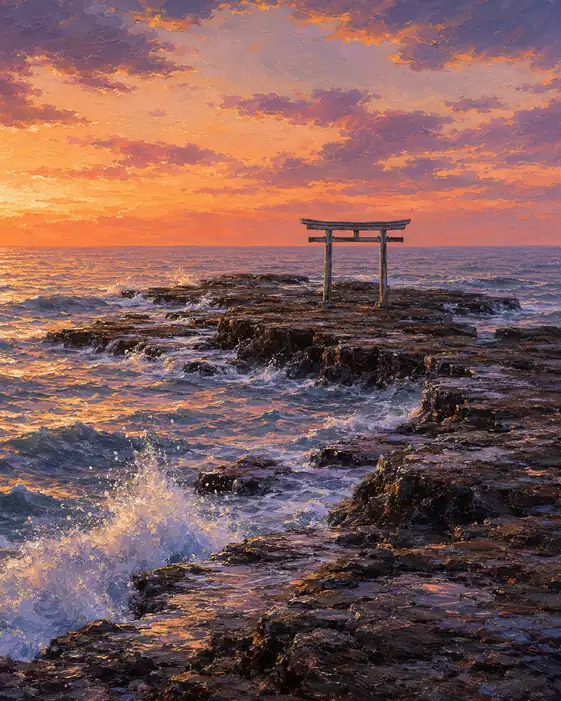 The Far Gate Holds the Horizon
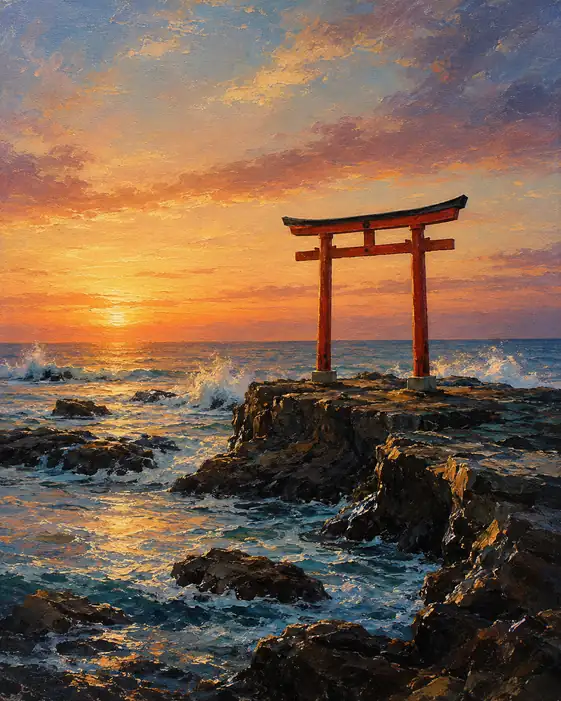 The Red Gate Sets the Sea Alight
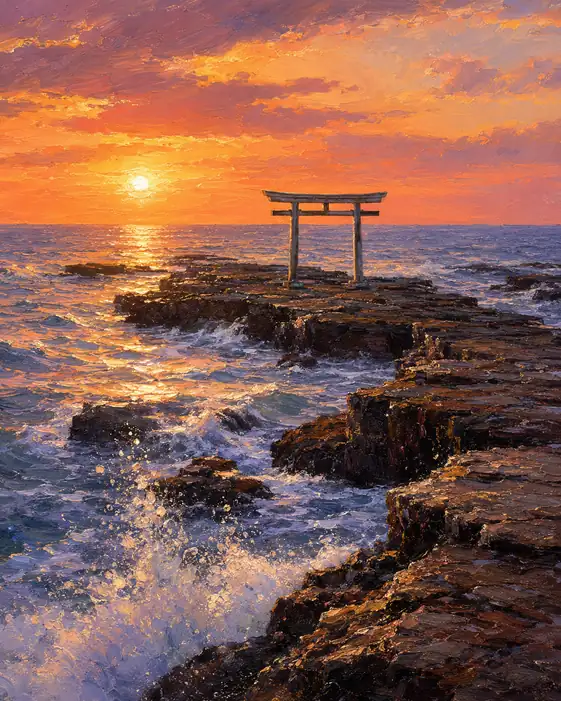 The Sea Breaks, the Threshold Remains
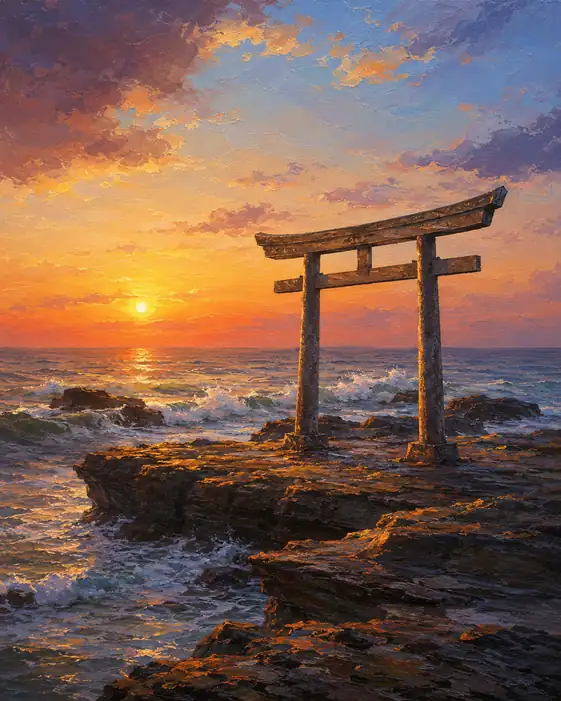 The Gate Stands Where Day Touches Stone
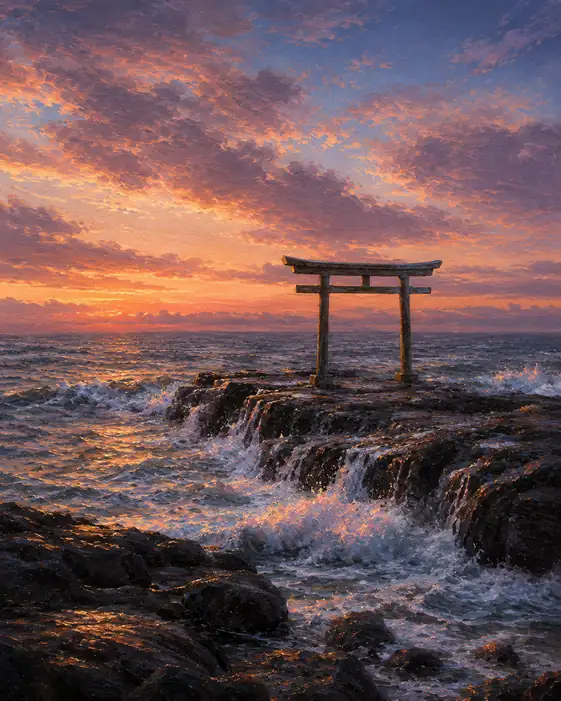 The Sea Spills Sunset at the Gate
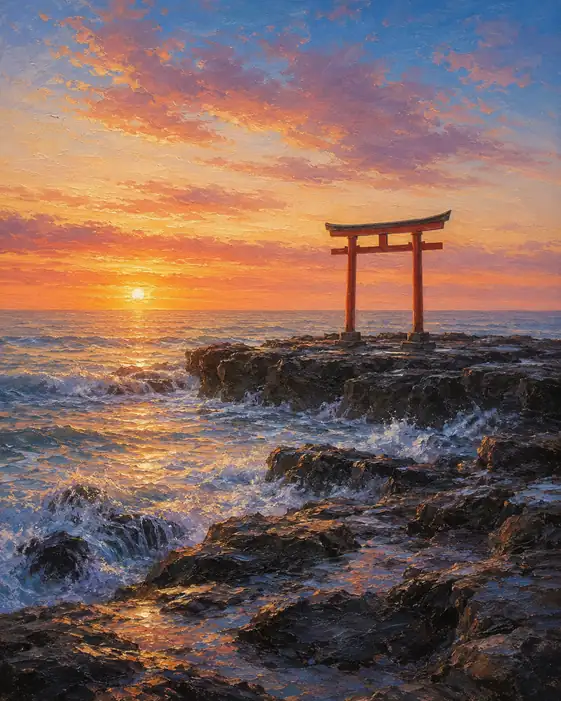 The Dawn Chooses a Red Door
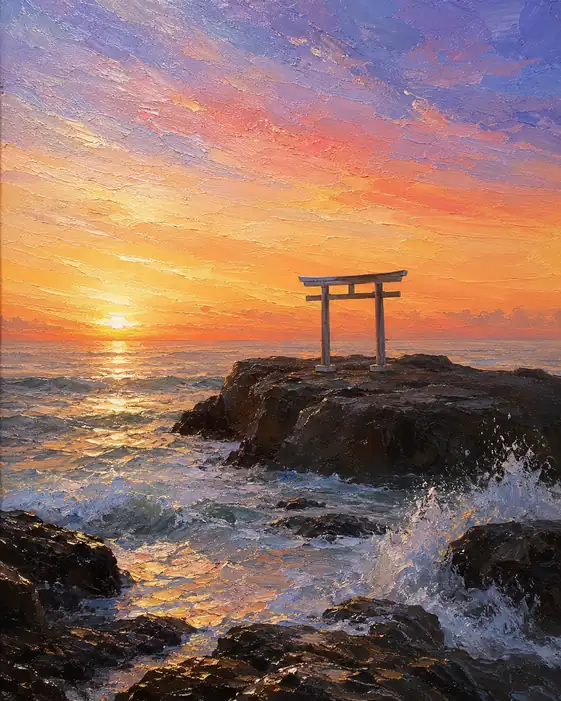 The Sun Lays a Golden Road Beside the Gate
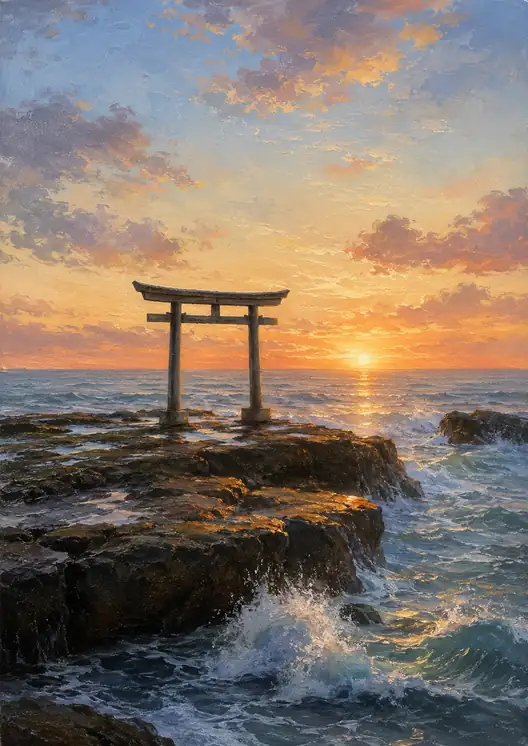 A Wave Rises to Greet the Empty Gate