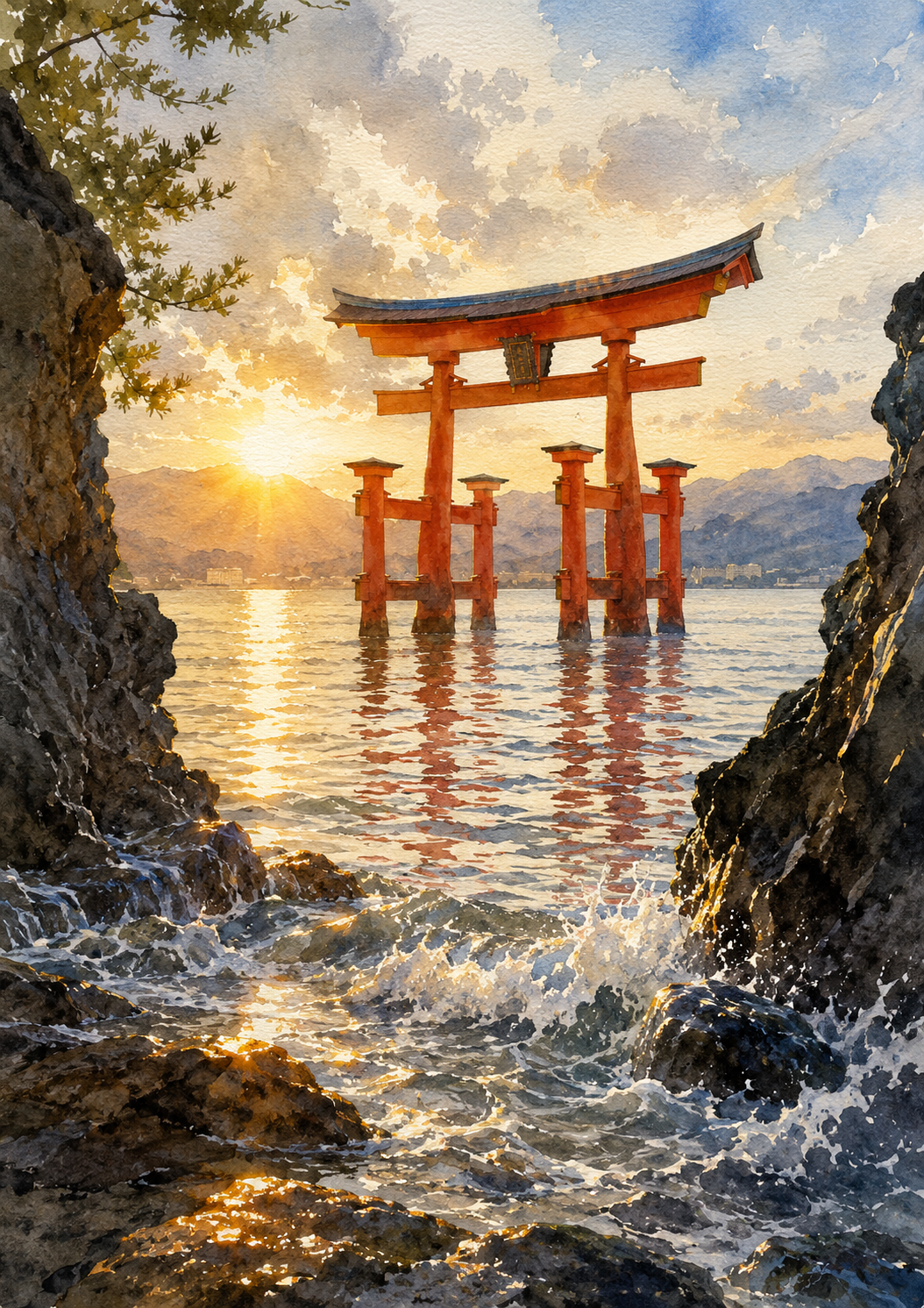
The Sea Passes Through the Gate of Light
Critique
Introduction This landscape painting presents a great vermilion torii standing in the sunset sea. Its first impact comes from the gate and distant islands seen frontally through dark rocks on both sides. Description The image shows the gate and distant islands seen frontally through dark rocks on both sides. Its palette consists of vermilion, gold, and pale blue tightened by black-brown foreground cliffs. Forms decrease in size and clarity from foreground to distance, so air and light also convey depth. Analysis Compositionally, the central gate overlaps the sun's reflective axis while breaking waves create immediate proximity. An edge directs attention toward the principal motif and background. Technically, the torii is clearly edged, sky and sea are layered color fields, and spray uses quick white strokes. Descriptive skill lies in coordinating light and dark, solid form and soft atmosphere. Interpretation and Evaluation The scene can be understood as a conclusion in which natural light and symbolic construction intensify one another. Color carries stillness, tension, and passing time. Stable structure and selective accents keep the subject legible, while varied handling gives materials distinct presence. Conclusion The work succeeds by joining a clear subject to nuanced atmospheric painting. At first, attention rests on a great vermilion torii standing in the sunset sea, but prolonged viewing reveals how repetition, shifts of temperature, and changing visual pace support the whole. Description, composition, color, and technique remain mutually consistent, transforming a scenic motif into a calm and persuasive encounter.
Same Subcategory
 Morning Rests Between Two Shores
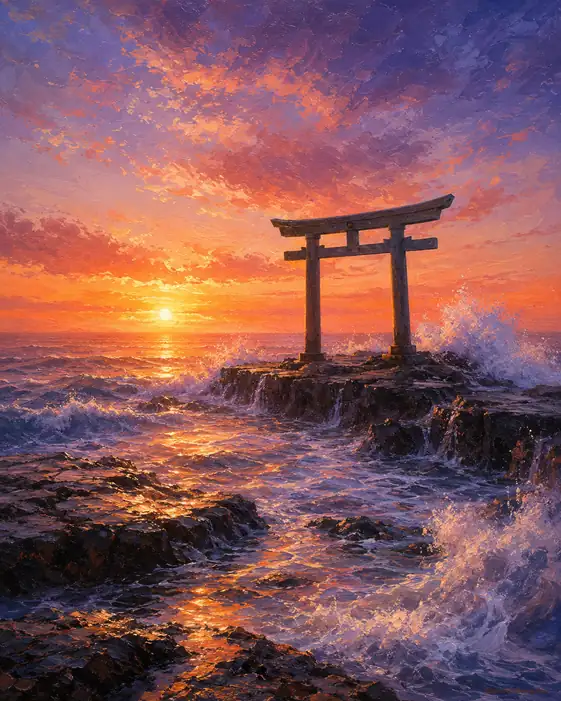 Where the Waves Come to Pray
Similar Artworks
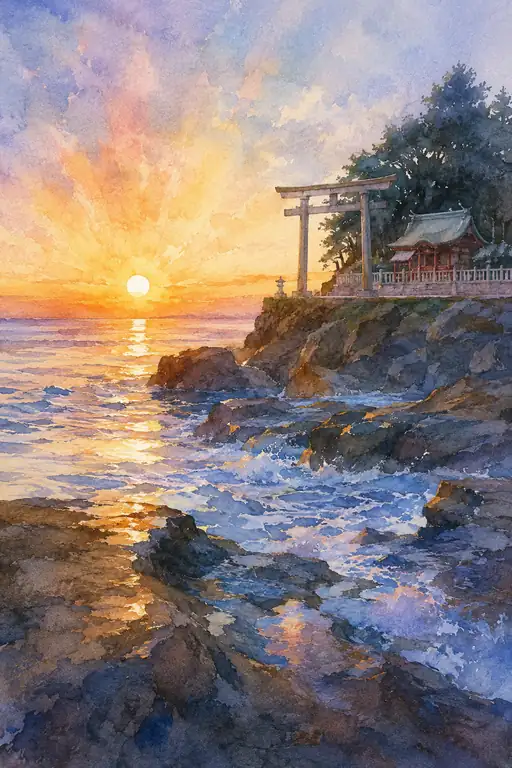 Morning Climbs Toward the Sanctuary
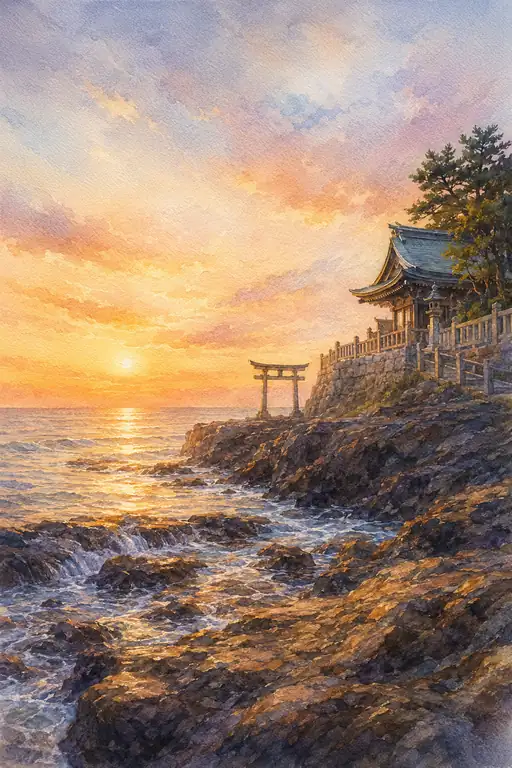 The Shrine Watches Its Small Door to the Sea
 Crimson Dawn Over the Tranquil Sea
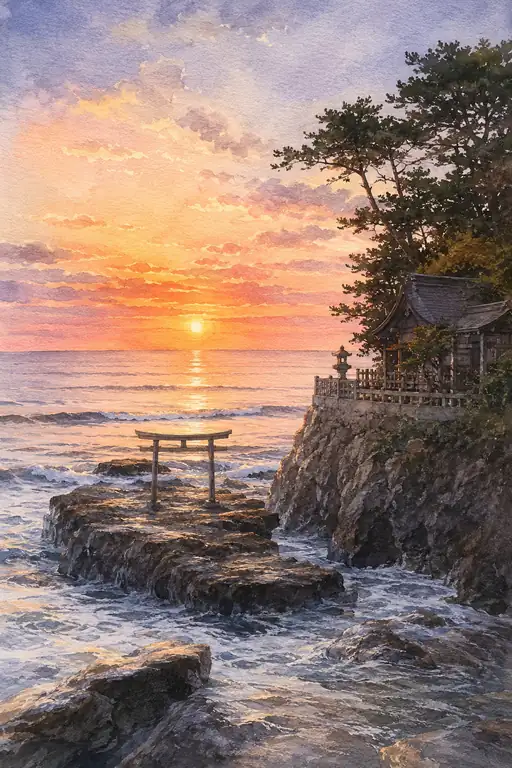 Between the Shrine and the Sea, Morning
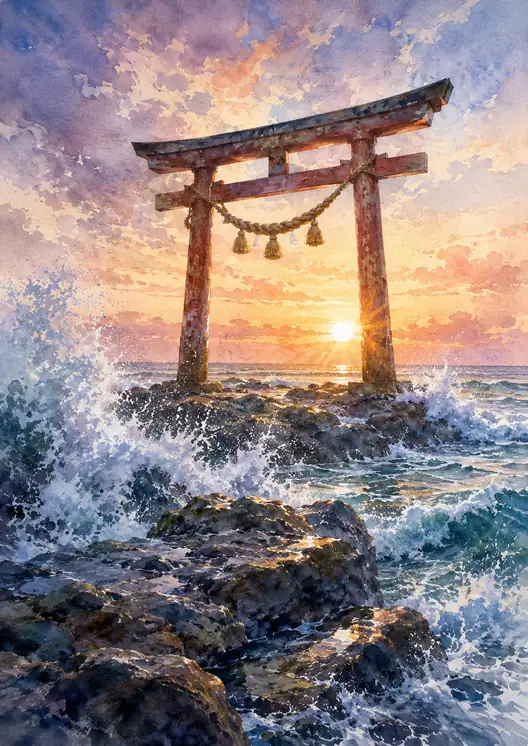 Dawn, When the Sea Tests Our Prayers
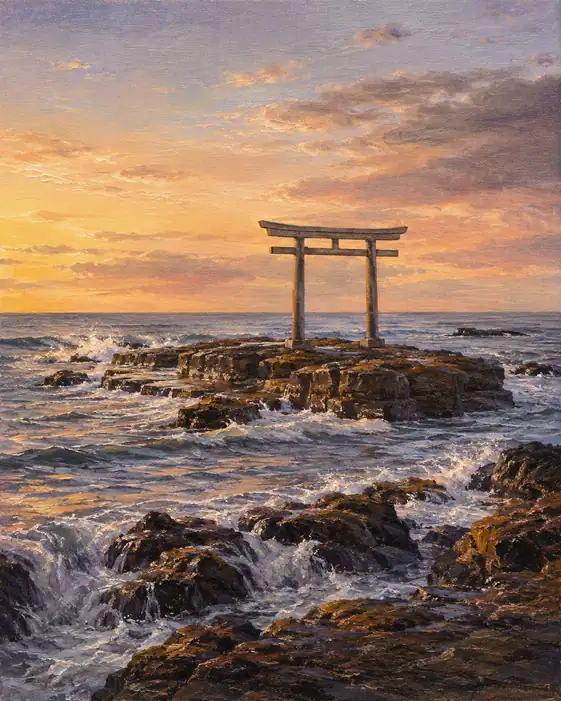 The Tide Builds a Stairway to Morning
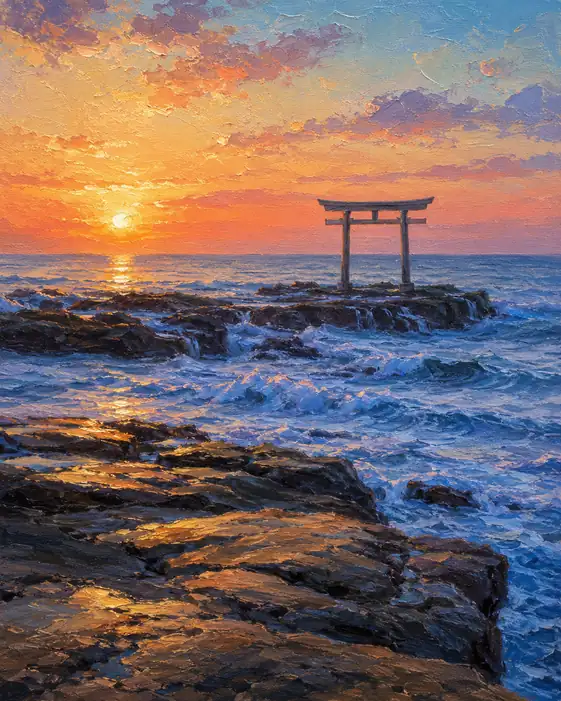 Blue Waves Carry the Sun to the Gate
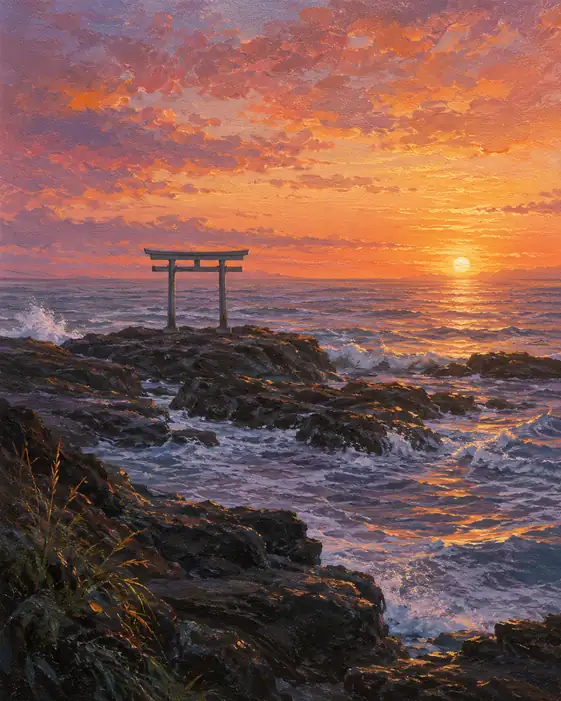 Dawn Opens a Channel Through Stone
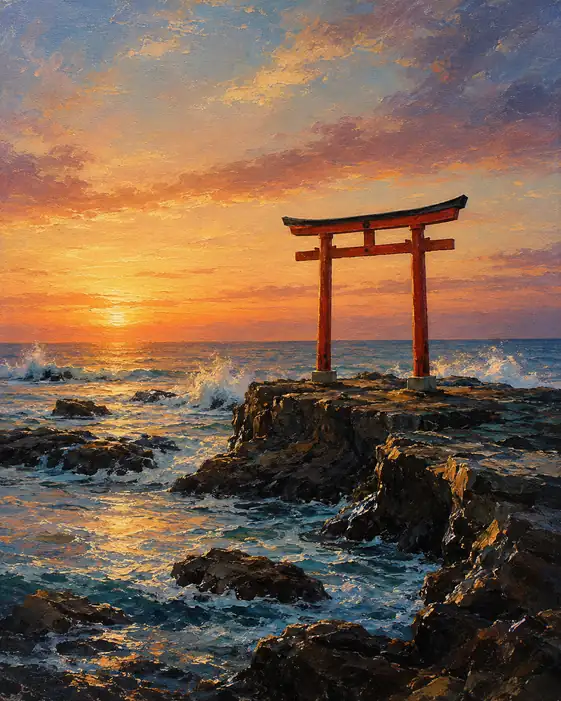 The Red Gate Sets the Sea Alight
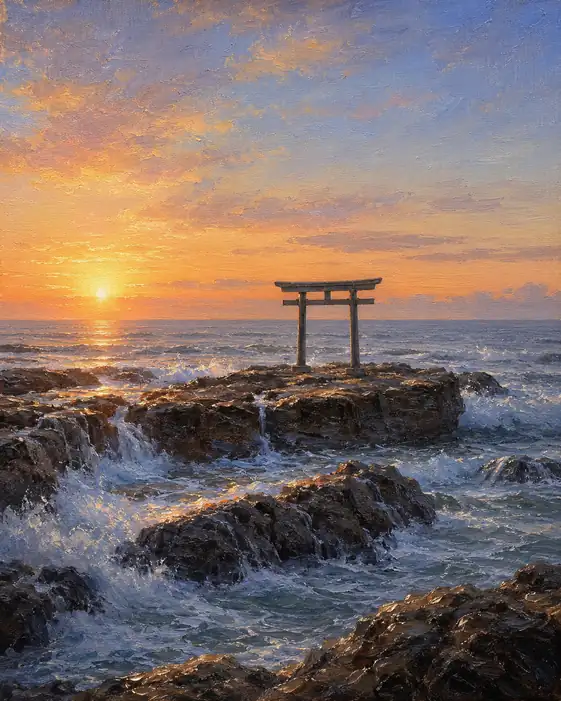 Water Returns Until the Gate Awakens