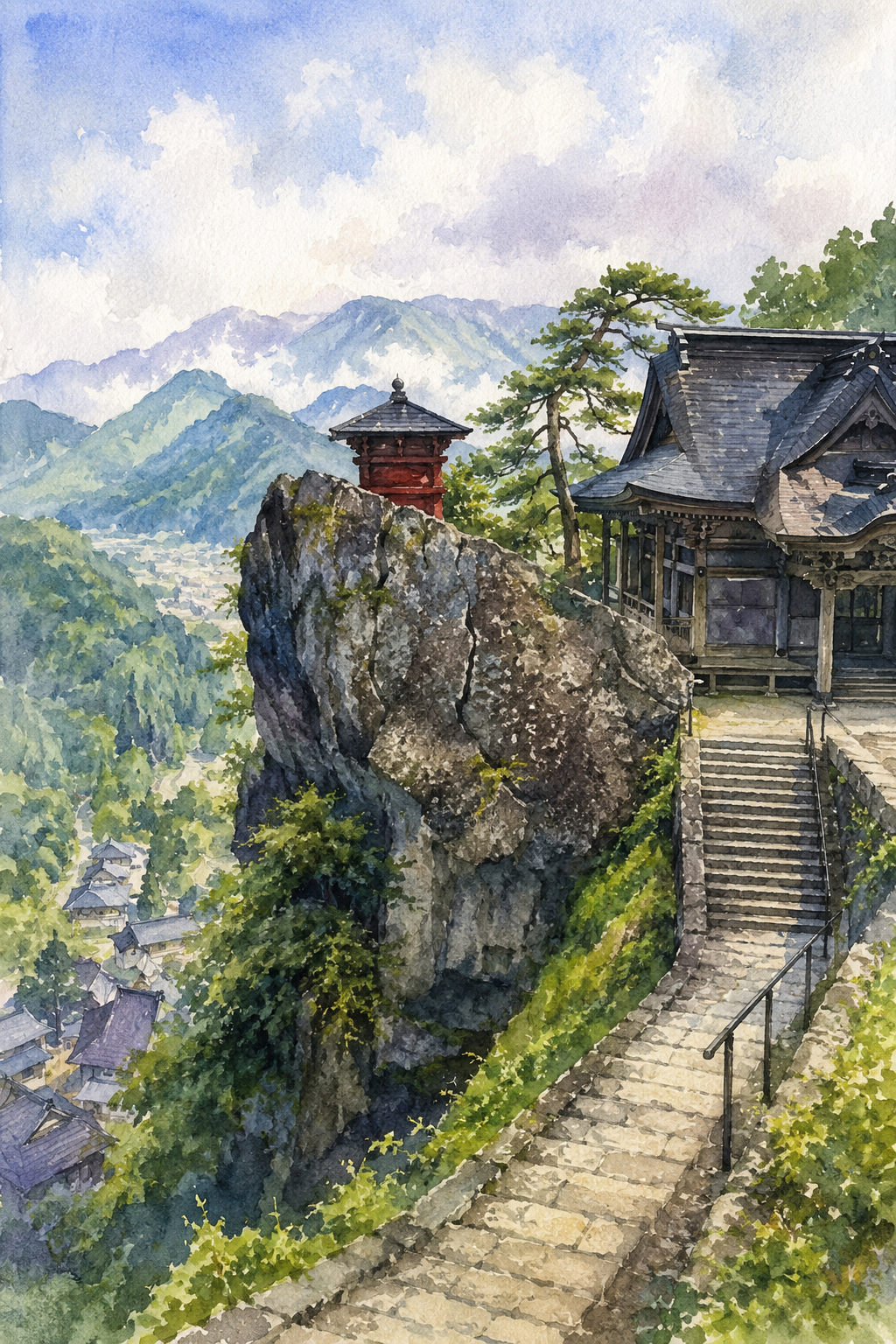
The Mountain Leaves No Easy Prayer
Critique
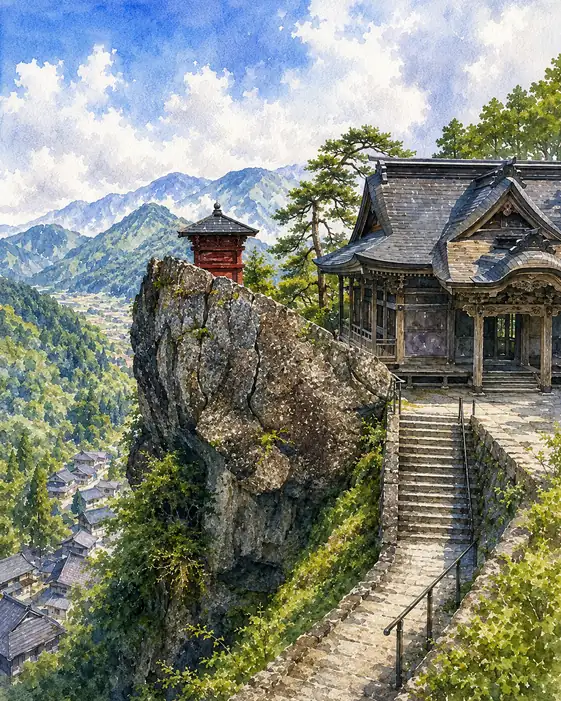
Introduction This landscape painting shows Yamadera, or Risshakuji, from a close elevated approach in Yamagata. A monumental rock, a small red repository, and a wooden hall dominate the view, while a long stone stairway connects the sacred precinct to the valley below. Description The foreground is occupied by broad descending steps with a simple iron handrail. A fractured gray boulder rises beside them, partly concealing the red structure behind it. The dark hall stands at the right, and a village road, scattered roofs, green ridges, and summer clouds extend across the distance. Analysis The stairway enters from the lower center and turns upward toward the buildings, providing a clear spatial route. The boulder interrupts that route with heavy vertical mass, creating tension between access and obstruction. Bright paper, transparent blue-green washes, and firm architectural lines separate sunlight, atmosphere, and constructed form. Interpretation and Evaluation By placing rock and stair at equal importance, the painting treats pilgrimage as negotiation with the mountain. The red repository offers a concise focal accent, while the valley measures the precinct's elevation. Strong perspective, balanced asymmetry, and differentiated textures demonstrate controlled technique, and the unusually close viewpoint makes the sacred site physically immediate. Conclusion The scene integrates a specific route, massive geology, modest buildings, and distant habitation. Its first impression of an open mountain view develops into a study of the obstacles and structures that shape ascent. The lucid composition and restrained palette support sustained, attentive viewing.
Same Subcategory
Similar Artworks
 At the Edge Where Prayer Dwells
 Every Roof Is Another Prayer
 Faith Finds a Foothold in Stone
 The Path That Teaches the Sky
 Under the Cloud, the Sacred Door
 The Stone Remembers Every Ascent
 A Shrine Held Between Clouds
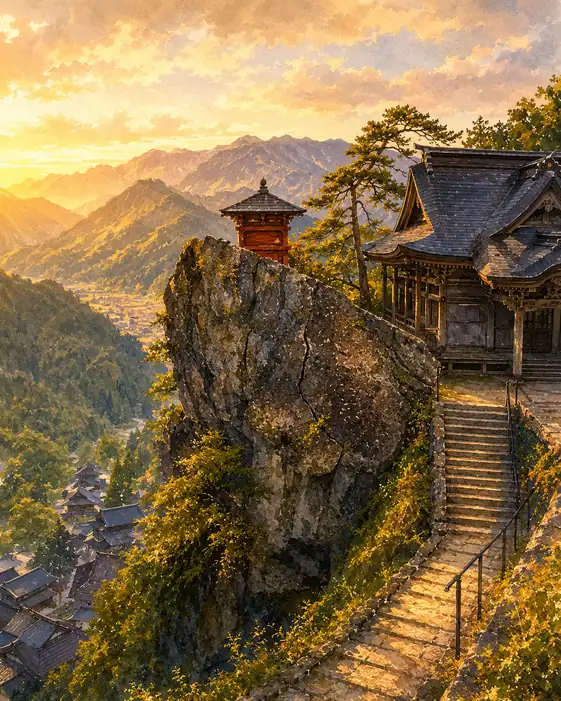 A Lone Vermilion Glow on Yamadera's Cliff Edge
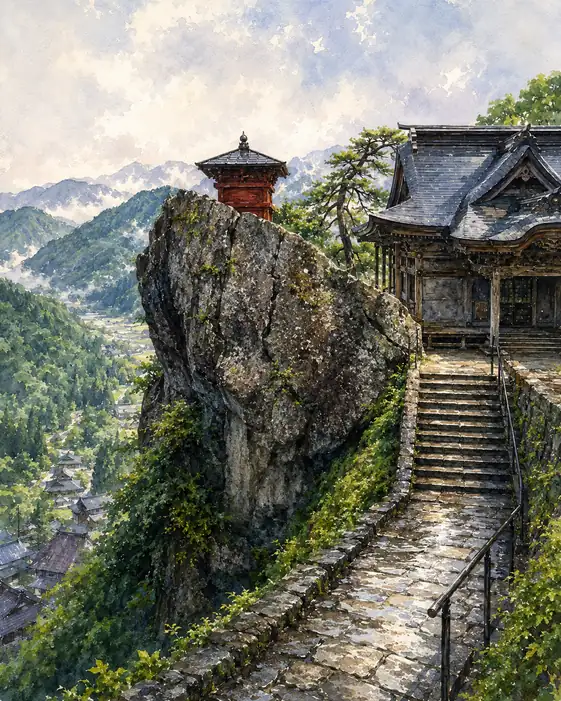 The Mountain Grants a Narrow Path
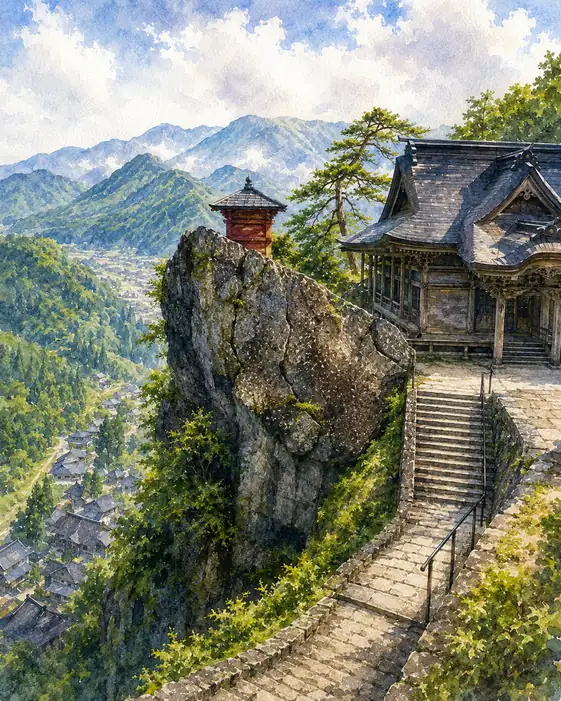 Where the Valley Learns to Pray