The Path That Teaches the Sky
Critique
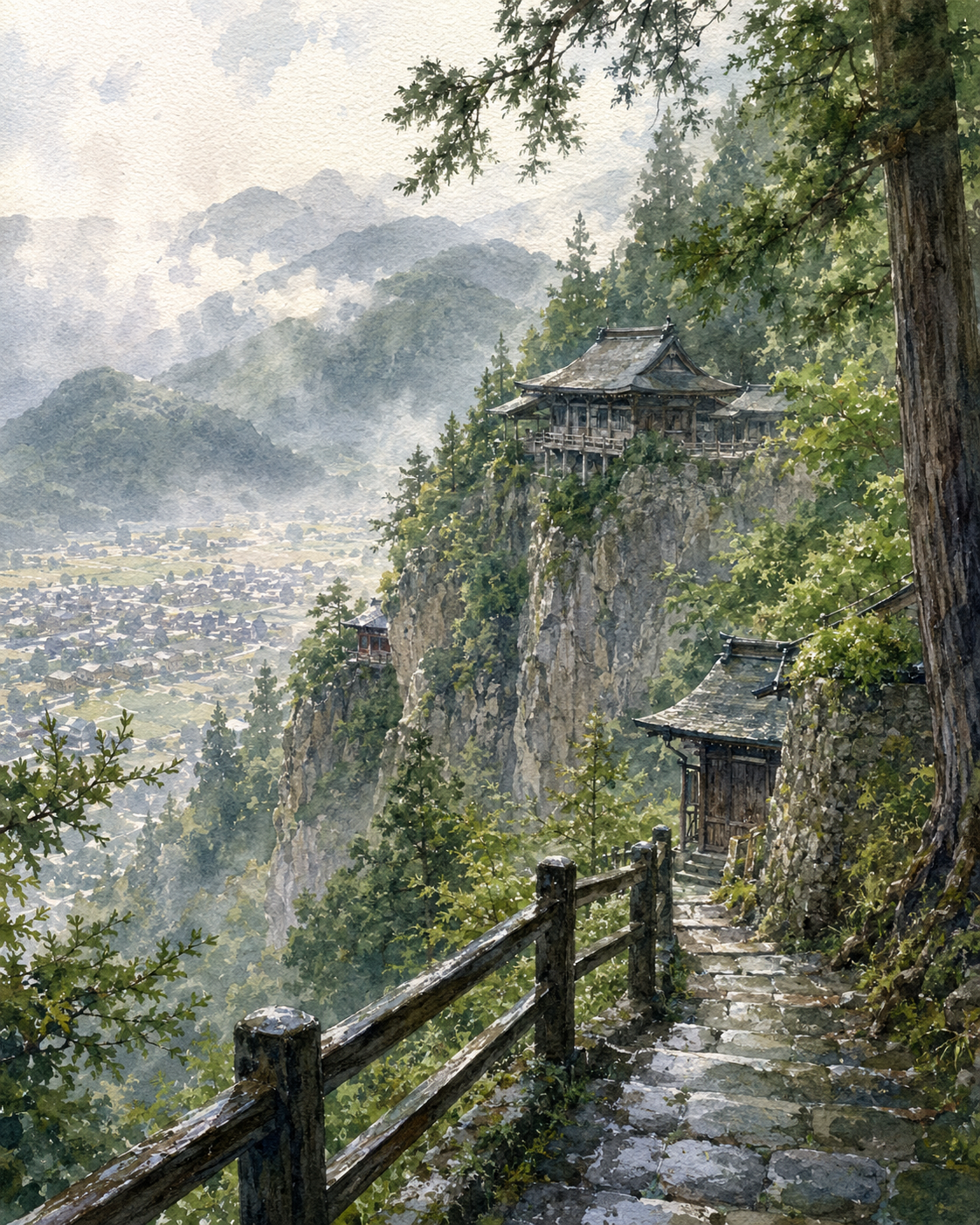
Introduction This landscape painting presents Yamadera, or Risshakuji, as a mountain sanctuary overlooking a broad Yamagata valley. A cliffside hall, wet stone path, and layered green ridges establish a quiet scene in which religious architecture is closely joined to steep terrain. Description The foreground begins with a descending path bordered by a dark wooden railing and dense summer foliage. A small gate stands to the right, while the principal hall projects from a distant rock face. Below, clustered roofs spread across the pale valley, and mist softens the mountains beyond. Analysis The path forms a strong diagonal that directs the eye from the lower edge toward the elevated building. Vertical tree trunks and cliff walls counter this movement, giving the composition both tension and stability. Transparent green and gray washes distinguish near leaves, weathered timber, stone, and atmospheric distance. Interpretation and Evaluation The contrast between the difficult approach and the open valley suggests pilgrimage as a gradual change in perception. Human construction appears small but purposeful within the mountain. Controlled perspective, restrained color, and convincing surface variation support the subject, while the displaced viewpoint gives a familiar sacred landscape an exploratory quality. Conclusion The painting unites path, cliff, temple, and settlement within one continuous visual journey. Its first impression of scenic height develops into an understanding of spiritual practice shaped by physical ascent. The balanced composition and measured watercolor handling make the image coherent and contemplative.
Same Subcategory
 The Red Pagoda Measures the Waterfall
Similar Artworks
 At the Edge Where Prayer Dwells
 The Mountain Leaves No Easy Prayer
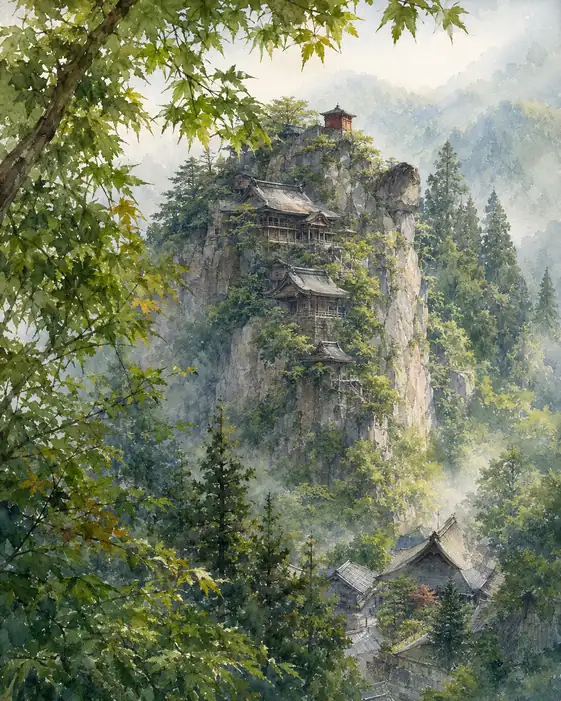 Every Roof Is Another Prayer
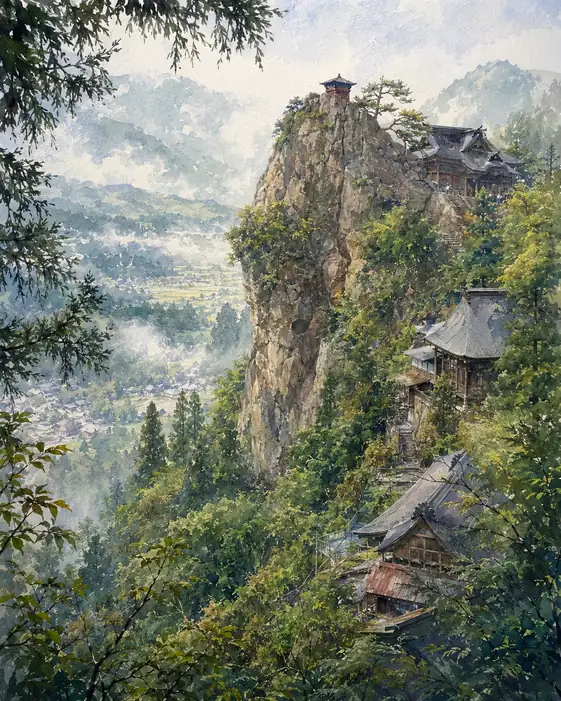 Faith Finds a Foothold in Stone
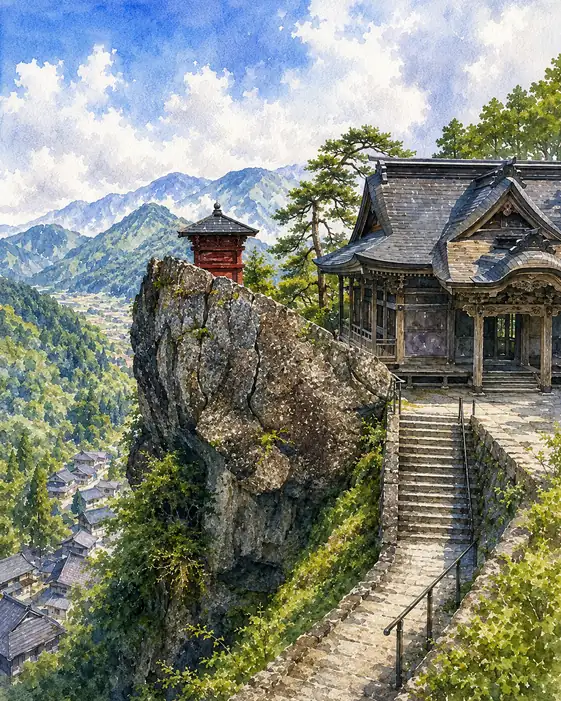 Under the Cloud, the Sacred Door
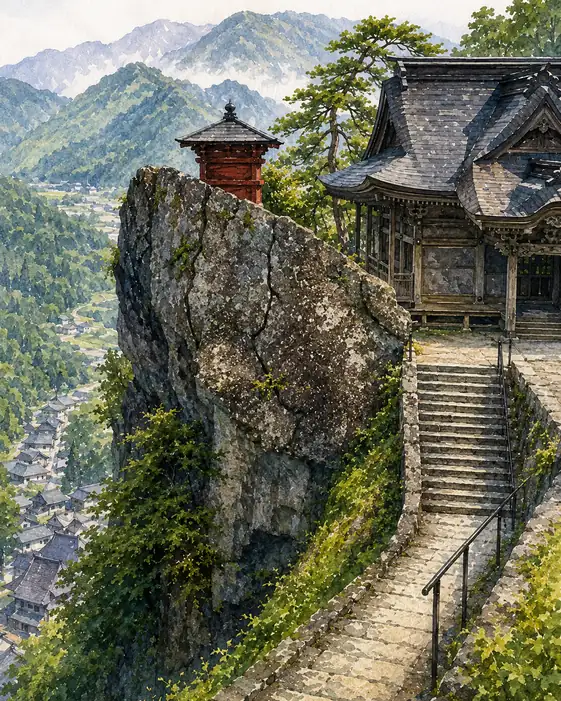 The Stone Remembers Every Ascent
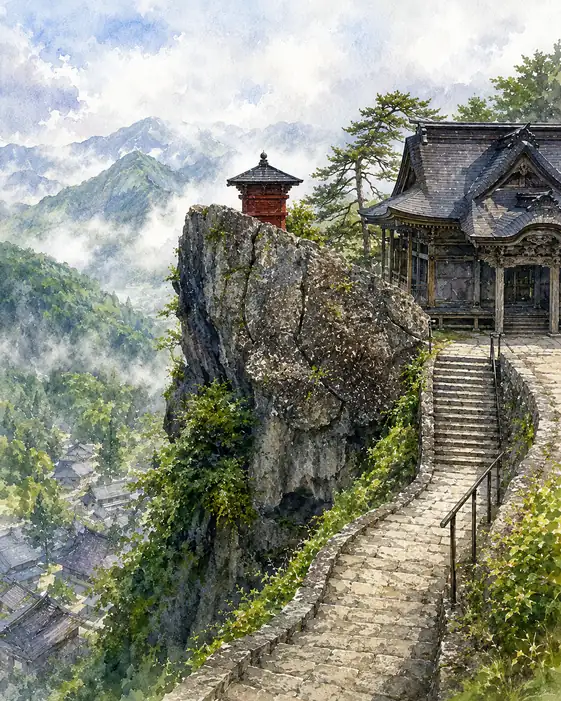 A Shrine Held Between Clouds
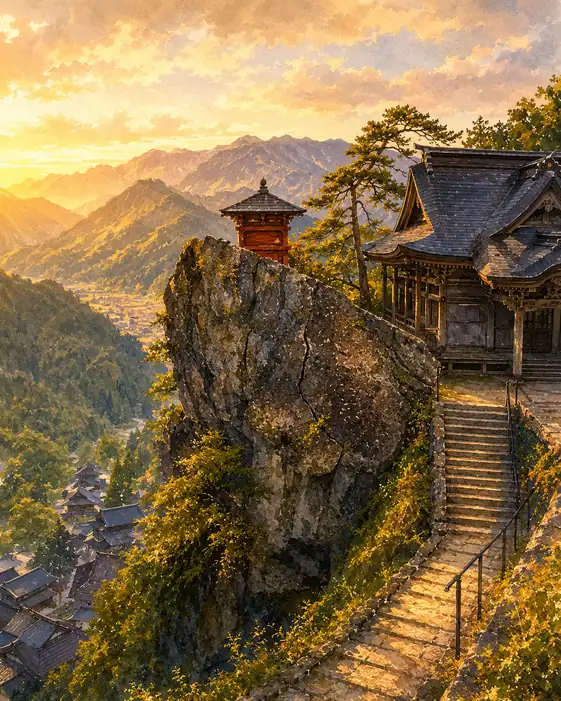 A Lone Vermilion Glow on Yamadera's Cliff Edge
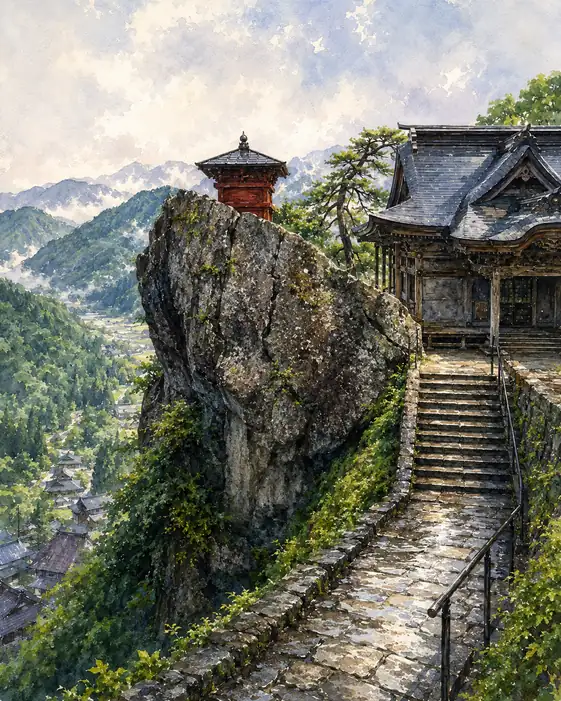 The Mountain Grants a Narrow Path
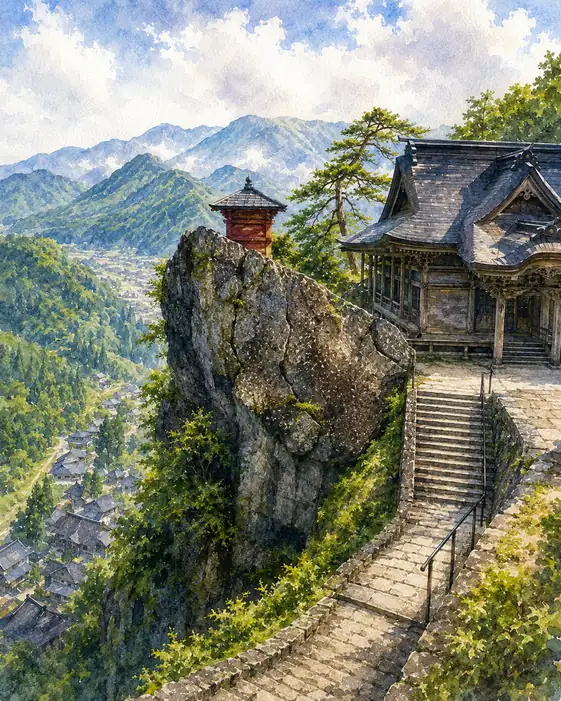 Where the Valley Learns to Pray