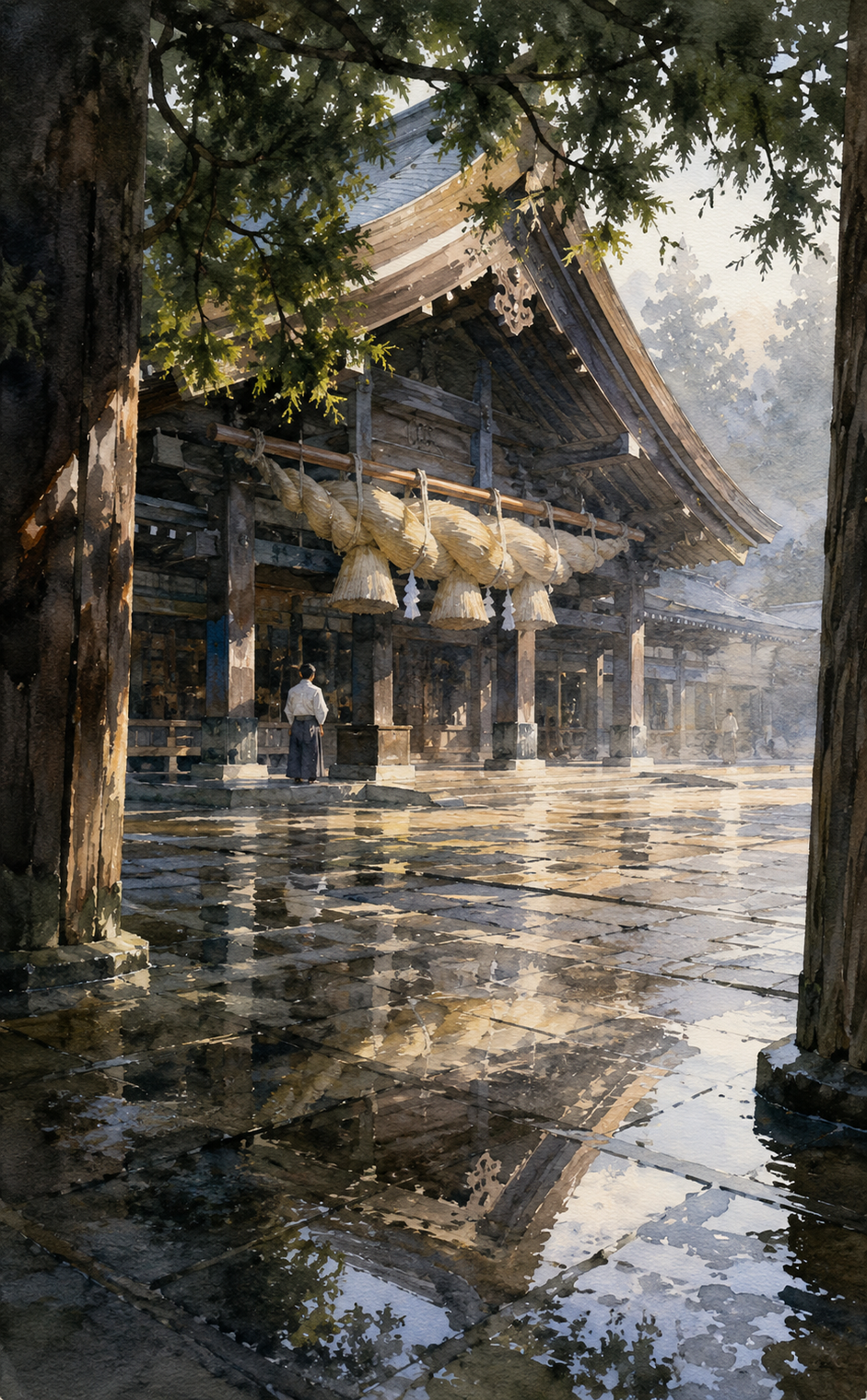
Rain Enters the House of Prayer
Critique
Introduction This landscape painting presents a shrine building mirrored on paving after rain. Its first impact comes from the frontal hall and its great sacred rope reflected with a small figure in the wet court. Description The image shows the frontal hall and its great sacred rope reflected with a small figure in the wet court. Its palette consists of brown timber and blue-gray stone joined by pale gold breaking through cloud. Forms decrease in size and clarity from foreground to distance, so air and light also convey depth. Analysis Compositionally, monumental trees frame the scene and architecture with reflection establishes a strong vertical axis. An edge directs attention toward the principal motif and background. Technically, beams and rope are finely described while broken strokes make the wet ground shimmer. Descriptive skill lies in coordinating light and dark, solid form and soft atmosphere. Interpretation and Evaluation The scene can be understood as intimacy produced when accidental weather enters a formally ceremonial space. Color carries stillness, tension, and passing time. Stable structure and selective accents keep the subject legible, while varied handling gives materials distinct presence. Conclusion The work succeeds by joining a clear subject to nuanced atmospheric painting. At first, attention rests on a shrine building mirrored on paving after rain, but prolonged viewing reveals how repetition, shifts of temperature, and changing visual pace support the whole. Description, composition, color, and technique remain mutually consistent, transforming a scenic motif into a calm and persuasive encounter.
Same Subcategory
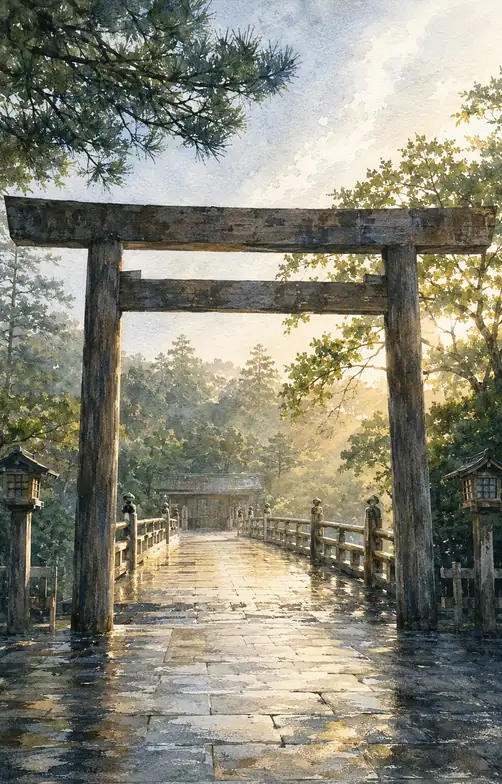 Morning Crosses the Ancient Threshold
Similar Artworks
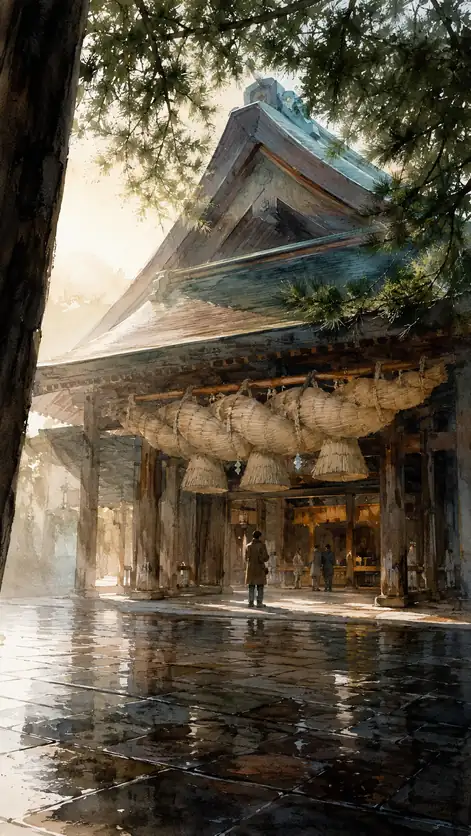 One Prayer Beneath the Great Rope
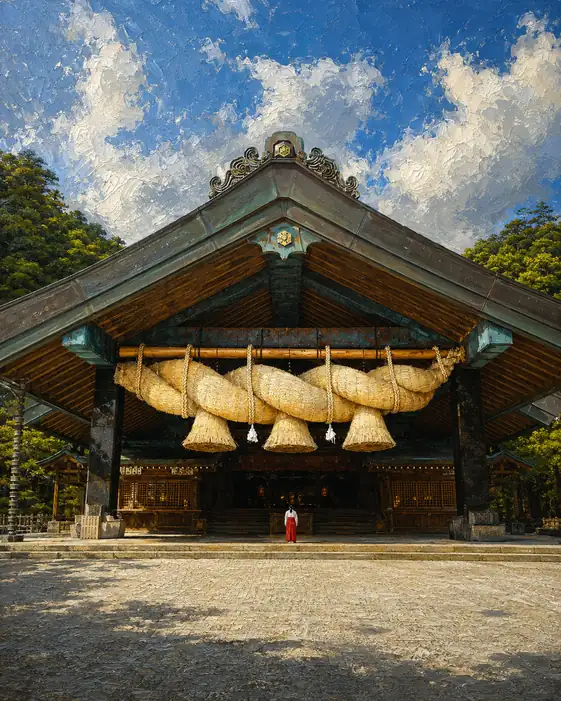 Summer Clouds over the Grand Shimenawa Sanctuary
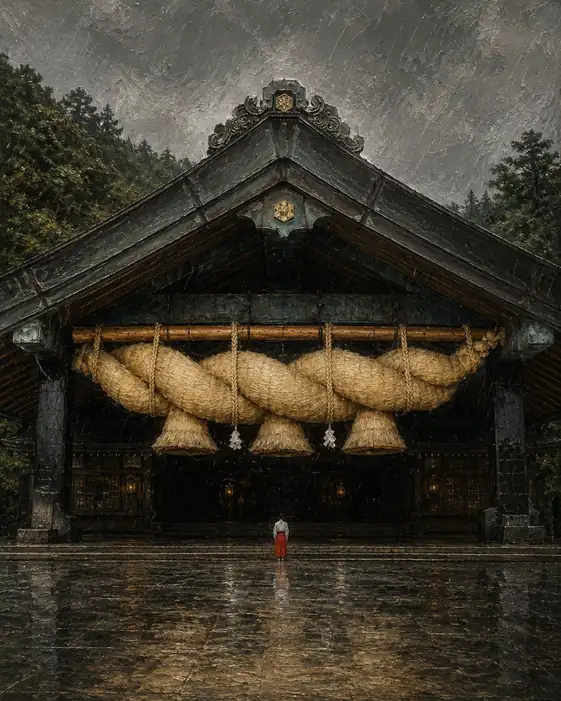 Maiden on Rain-Wet Flagstones before the Great Shimenawa
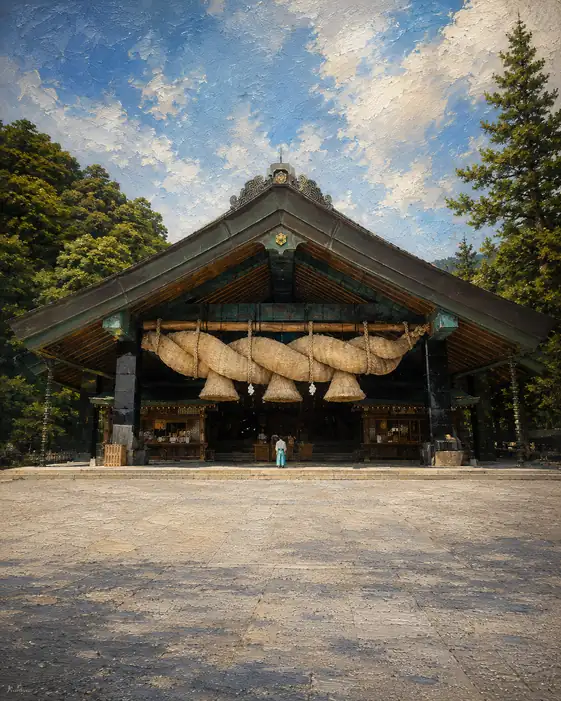 Open Courtyard before the Sacred Shimenawa
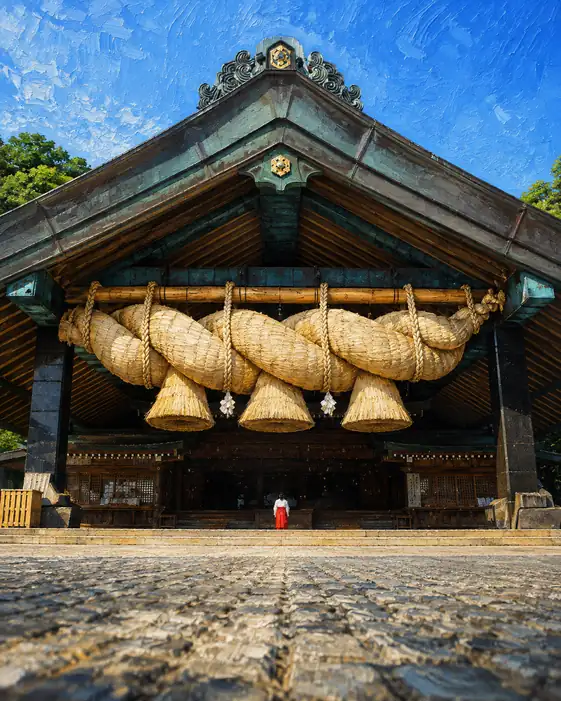 Low Angle View of the Great Shimenawa Sanctuary
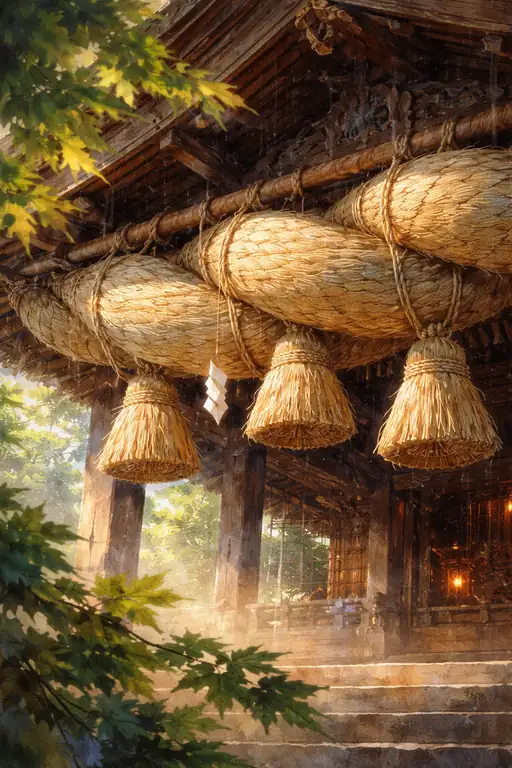 Echoes of the Divine in the Maple's Light
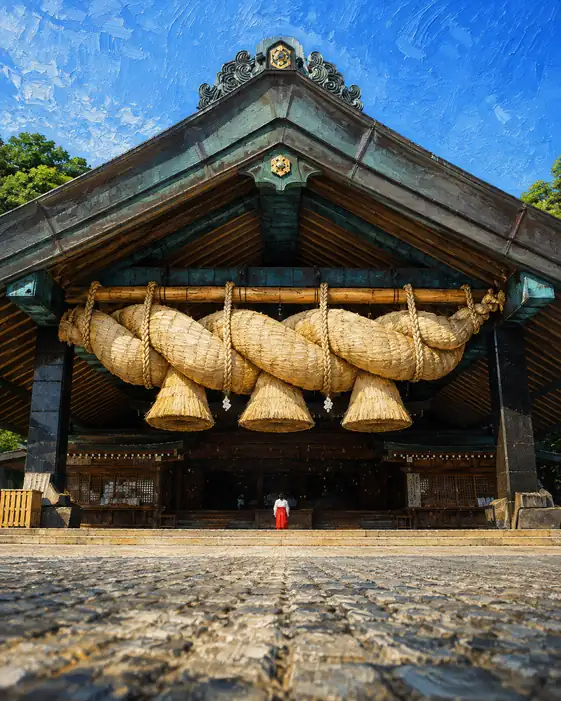 Izumo, a Prayer Binding the Sacred Realm
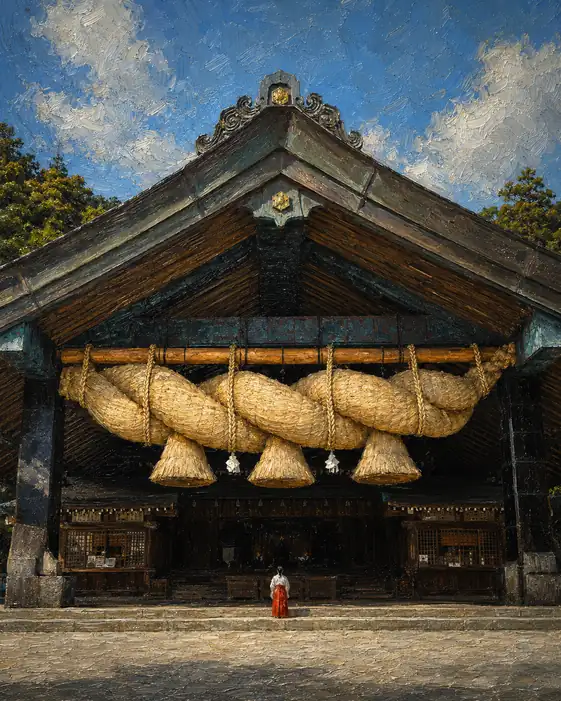 Maiden before the Sacred Shimenawa
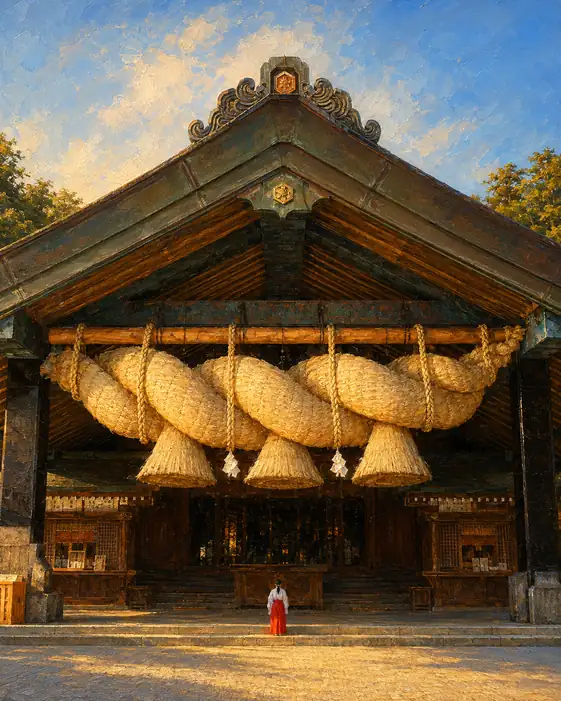 Golden Radiance on the Great Shimenawa
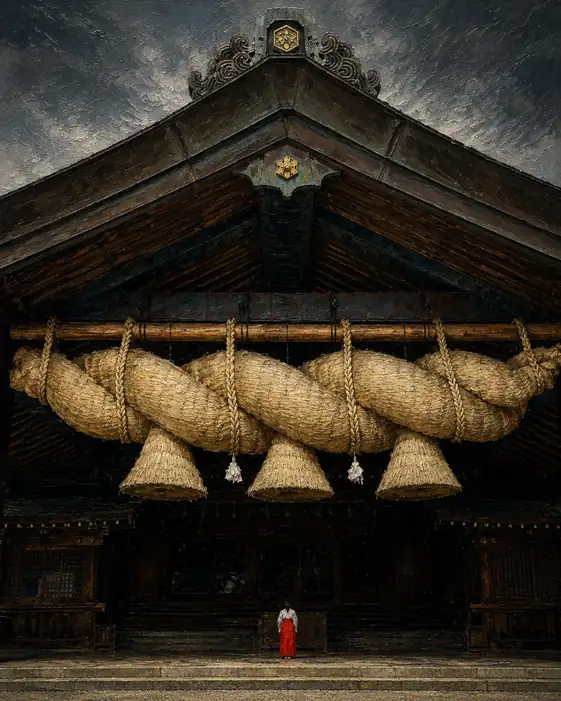 Solemn Gables and the Great Shimenawa