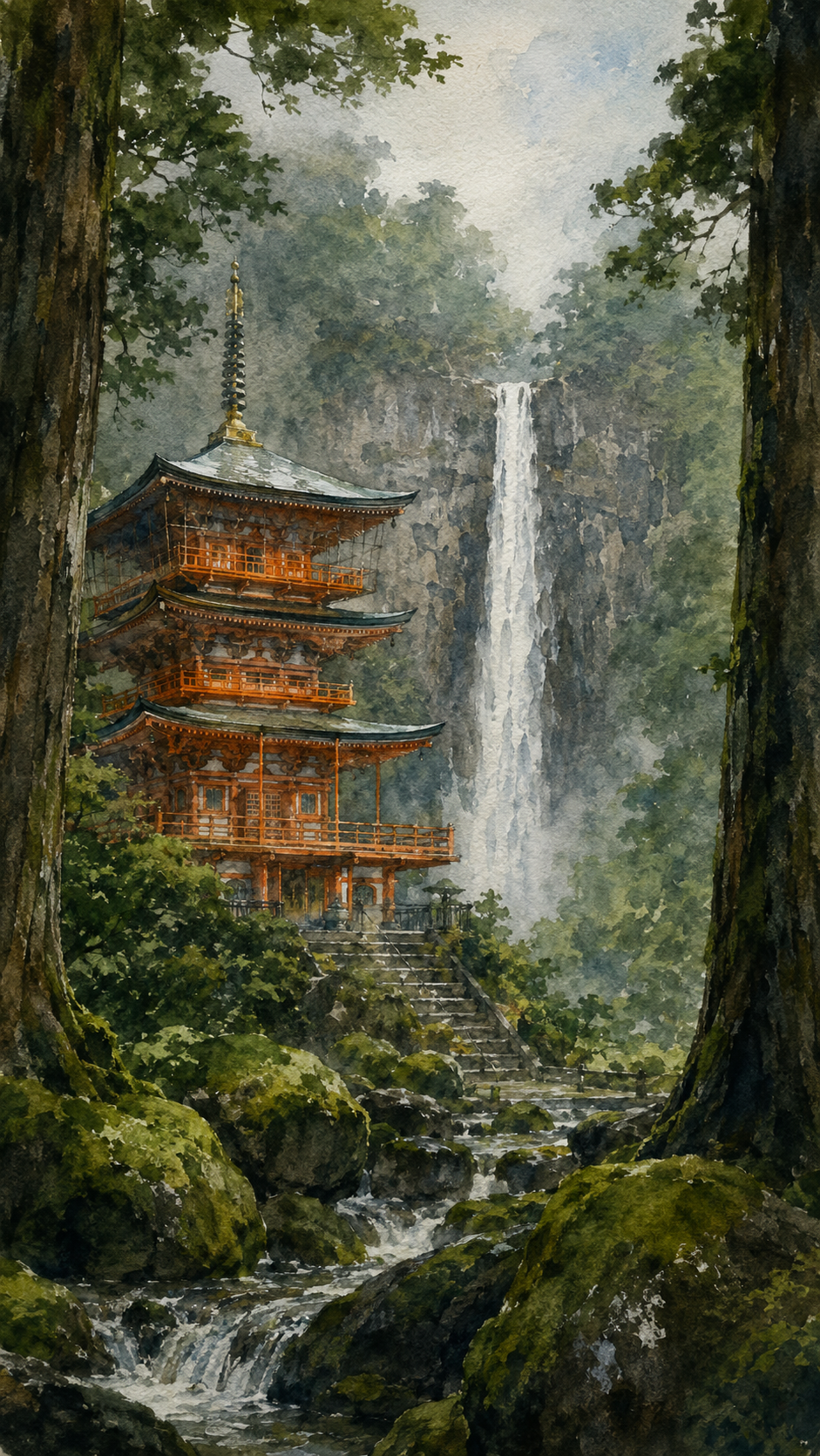
The Red Pagoda Measures the Waterfall
Critique
Introduction This landscape painting presents a vermilion pagoda standing beside a waterfall. Its first impact comes from the tower above foreground boulders and stream, enclosed by the distant fall and tall trunks. Description The image shows the tower above foreground boulders and stream, enclosed by the distant fall and tall trunks. Its palette consists of vermilion as the sole strong warm note against forest green, black rock, and white water. Forms decrease in size and clarity from foreground to distance, so air and light also convey depth. Analysis Compositionally, the gaze climbs triangularly from rocks to tower and fall, with the vertical format amplifying height. An edge directs attention toward the principal motif and background. Technically, rocks and trunks use dense dark paint while water and mist are rendered in translucent whites. Descriptive skill lies in coordinating light and dark, solid form and soft atmosphere. Interpretation and Evaluation The scene can be understood as human design functioning as a measure of the forest's immensity. Color carries stillness, tension, and passing time. Stable structure and selective accents keep the subject legible, while varied handling gives materials distinct presence. Conclusion The work succeeds by joining a clear subject to nuanced atmospheric painting. At first, attention rests on a vermilion pagoda standing beside a waterfall, but prolonged viewing reveals how repetition, shifts of temperature, and changing visual pace support the whole. Description, composition, color, and technique remain mutually consistent, transforming a scenic motif into a calm and persuasive encounter.
Same Subcategory
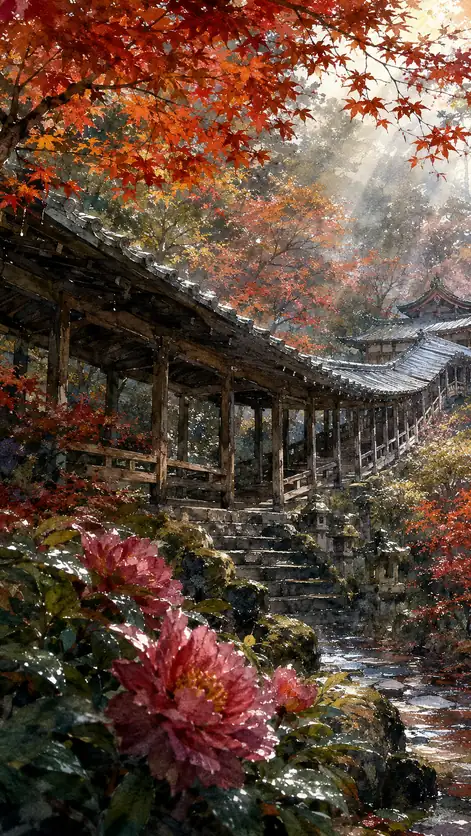 Autumn Bends Toward the Inner Hall
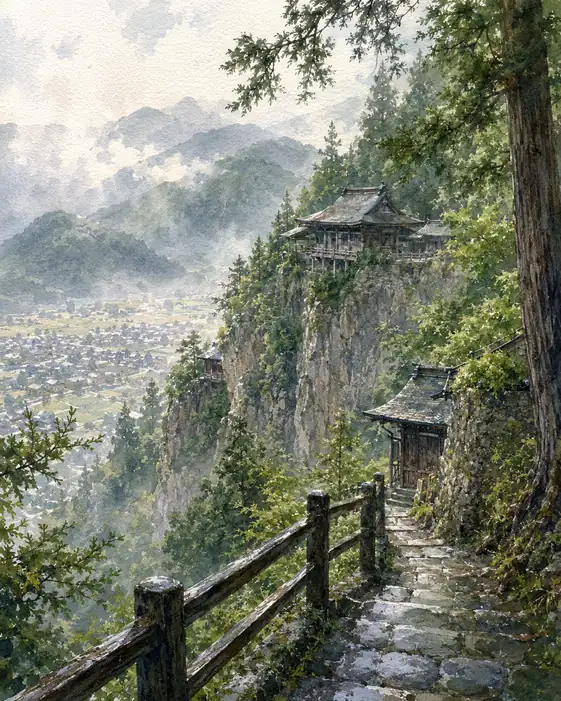 The Path That Teaches the Sky
Similar Artworks
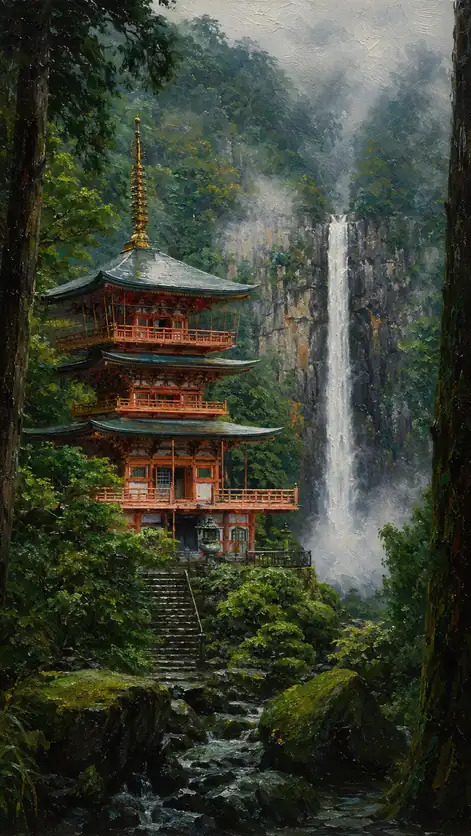 Between the Red Tower and Falling Heaven
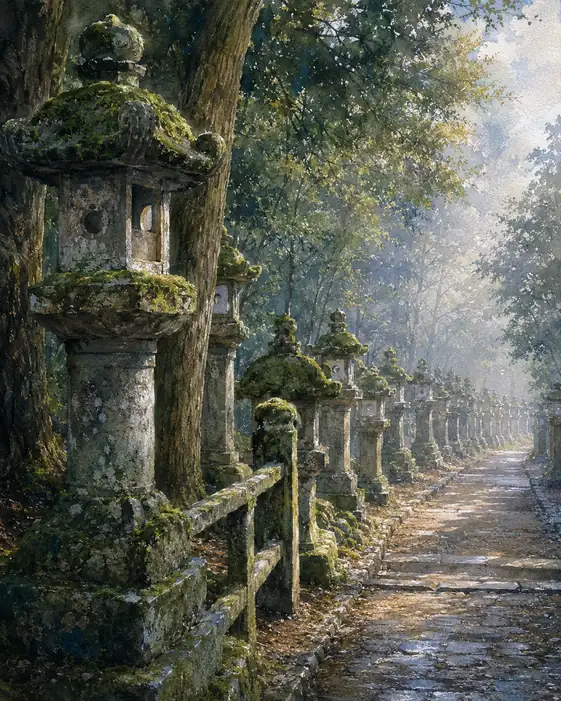 The Road Where Lanterns Become Forest
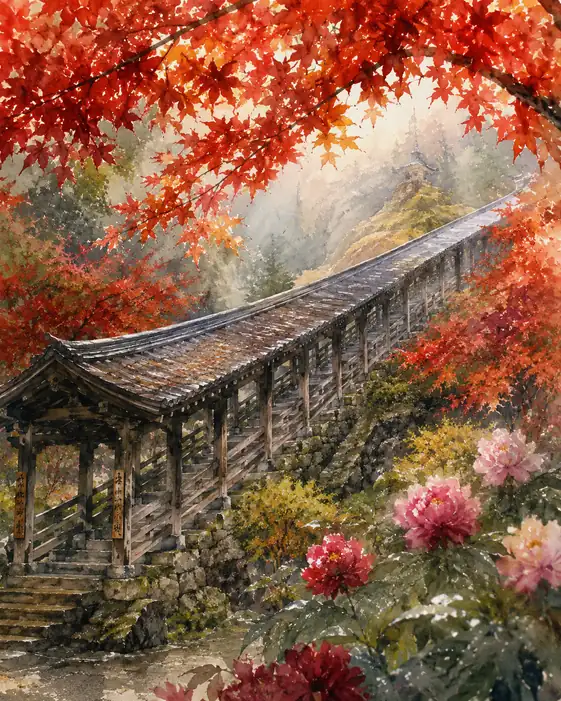 The Long Roof Carries Autumn Uphill
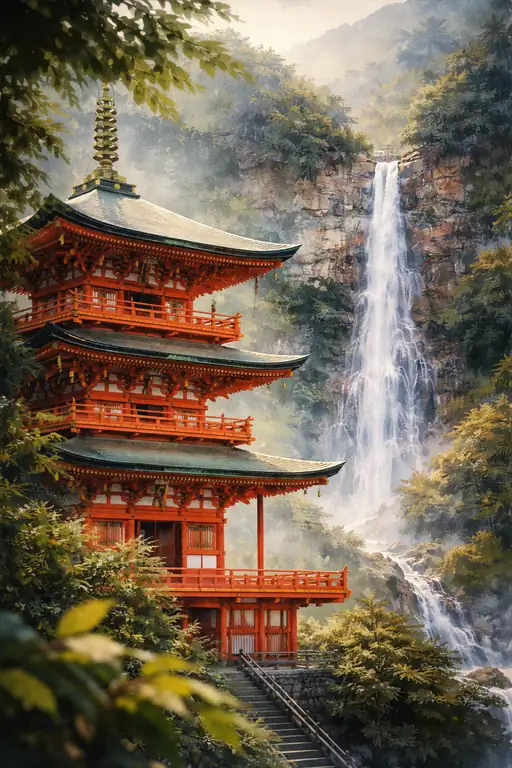 Harmony of the Sacred Falls
 The Sea Passes Through the Gate of Light
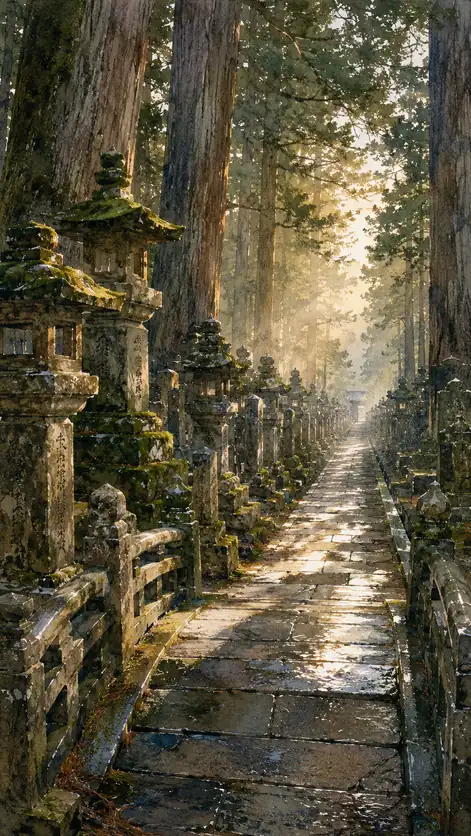 Morning Walks the Lantern Road
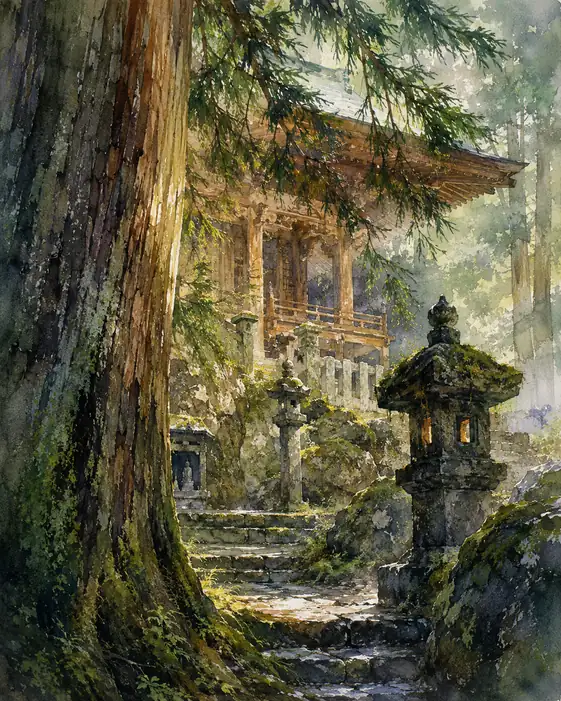 Sanctuary of the Ancient Cedars
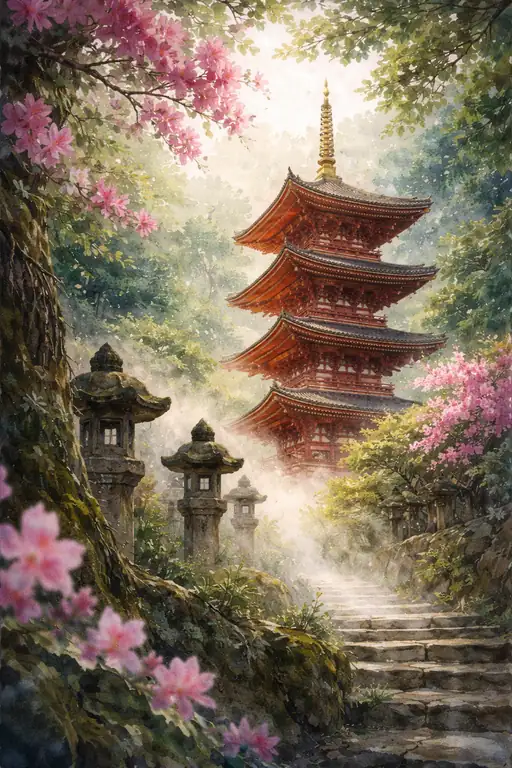 Sacred Pagoda Rising from the Morning Mist
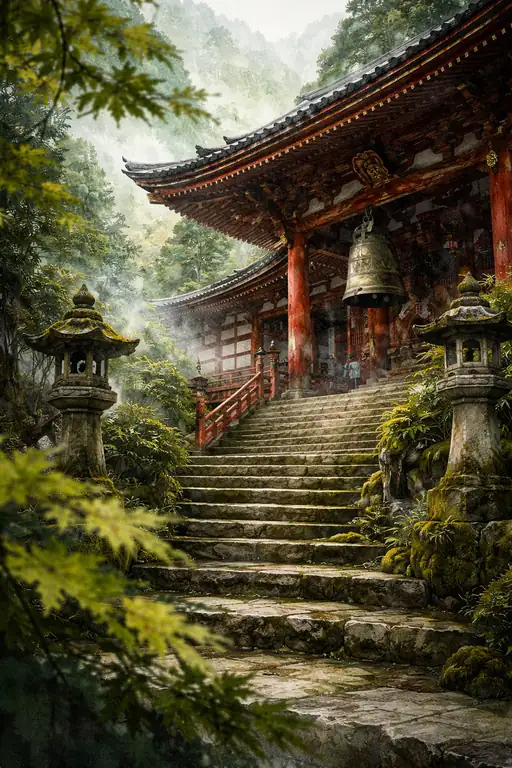 Echoes of the Sacred Mist
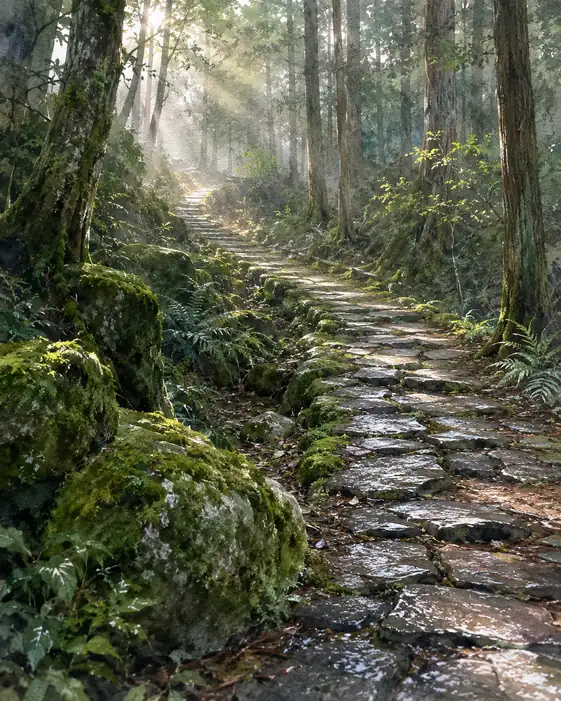 Footsteps Toward the Sacred Light