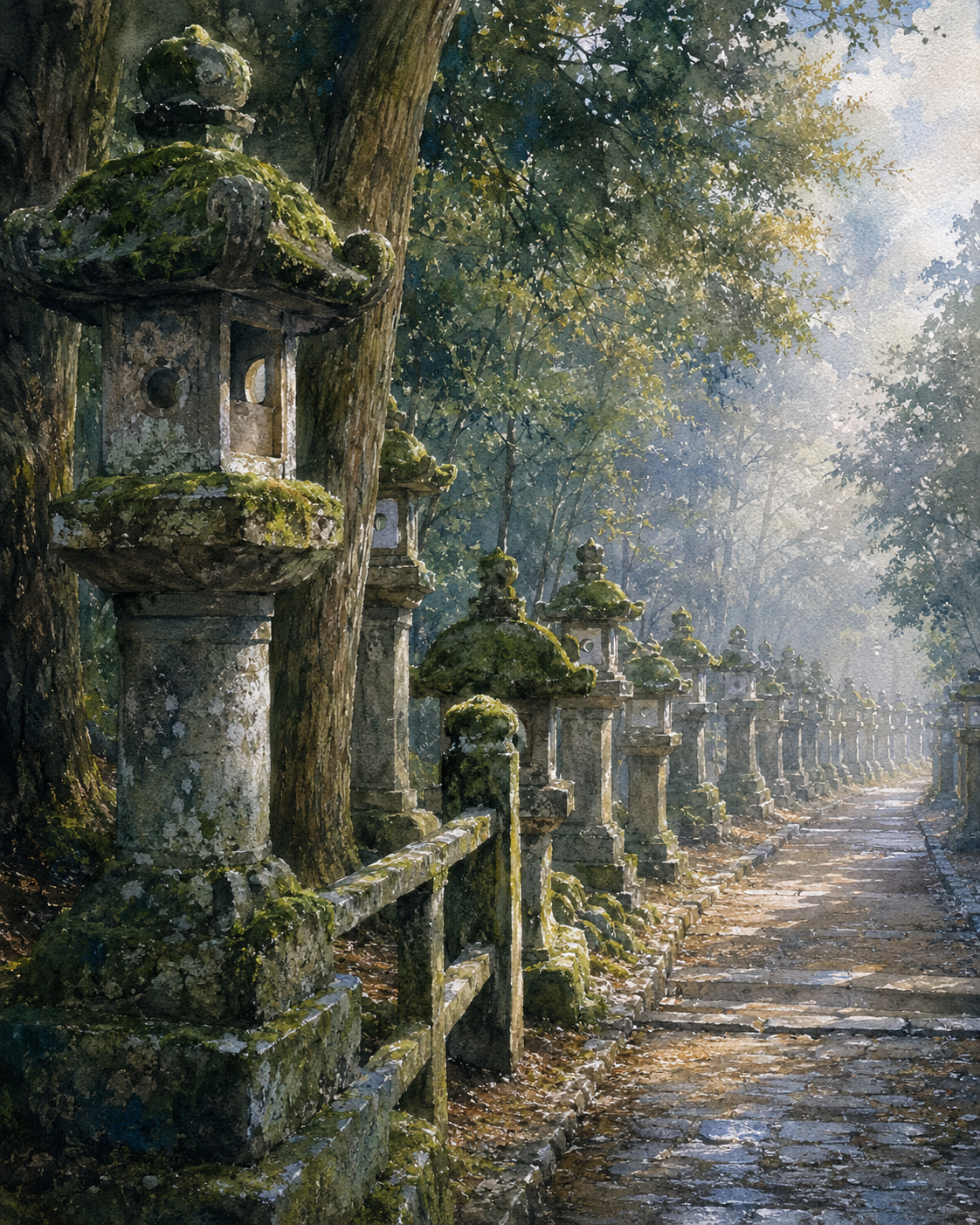
The Road Where Lanterns Become Forest
Critique
Introduction This landscape painting presents a misty approach guided by stone lanterns and cedars. Its first impact comes from parallel lantern rows enclosing a wet central road that converges on white light. Description The image shows parallel lantern rows enclosing a wet central road that converges on white light. Its palette consists of moss green, stone gray, and dark trunks layered with pale blue-white mist. Forms decrease in size and clarity from foreground to distance, so air and light also convey depth. Analysis Compositionally, symmetry and one-point perspective create order while the nearest lantern establishes scale. An edge directs attention toward the principal motif and background. Technically, speckled stone and granular light remain crisp as distance dissolves by degrees. Descriptive skill lies in coordinating light and dark, solid form and soft atmosphere. Interpretation and Evaluation The scene can be understood as repeated human forms gradually harmonizing with the forest's time. Color carries stillness, tension, and passing time. Stable structure and selective accents keep the subject legible, while varied handling gives materials distinct presence. Conclusion The work succeeds by joining a clear subject to nuanced atmospheric painting. At first, attention rests on a misty approach guided by stone lanterns and cedars, but prolonged viewing reveals how repetition, shifts of temperature, and changing visual pace support the whole. Description, composition, color, and technique remain mutually consistent, transforming a scenic motif into a calm and persuasive encounter.
Same Subcategory
 A River of Lanterns Finds the Red Lotus
Similar Artworks
 Morning Walks the Lantern Road
 Light Climbs the Ancient Steps
 Where Stone Lanterns Learn the Forest's Time
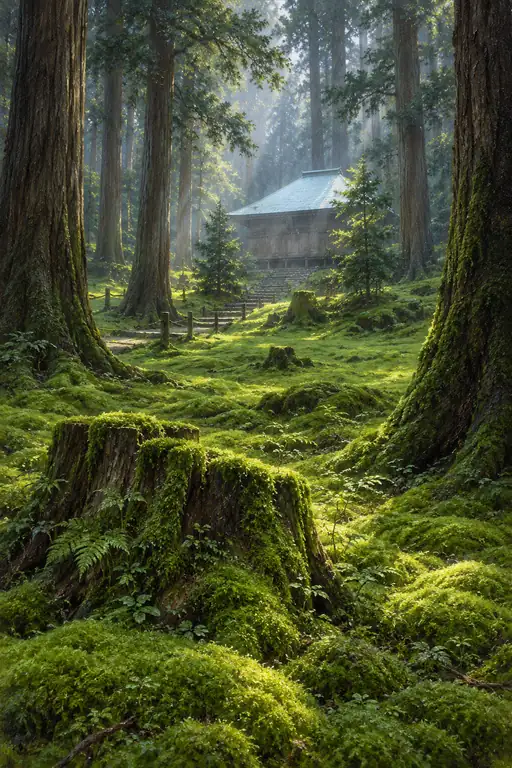 New Life Beside the Old Stump
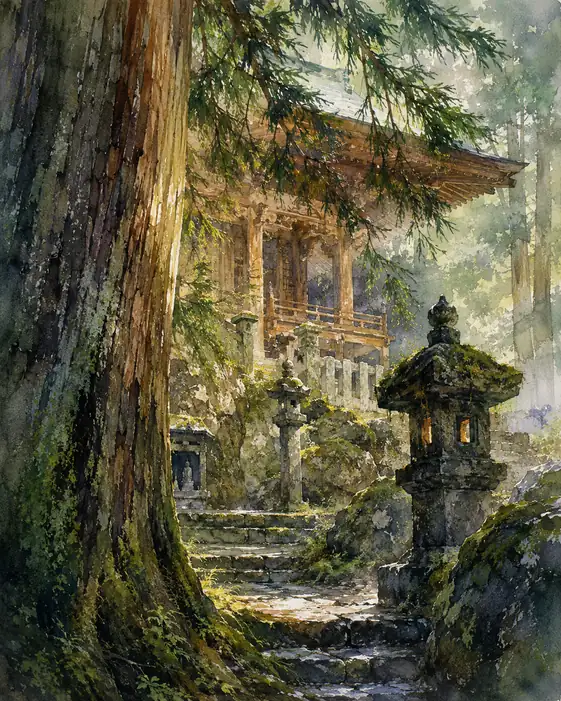 Sanctuary of the Ancient Cedars
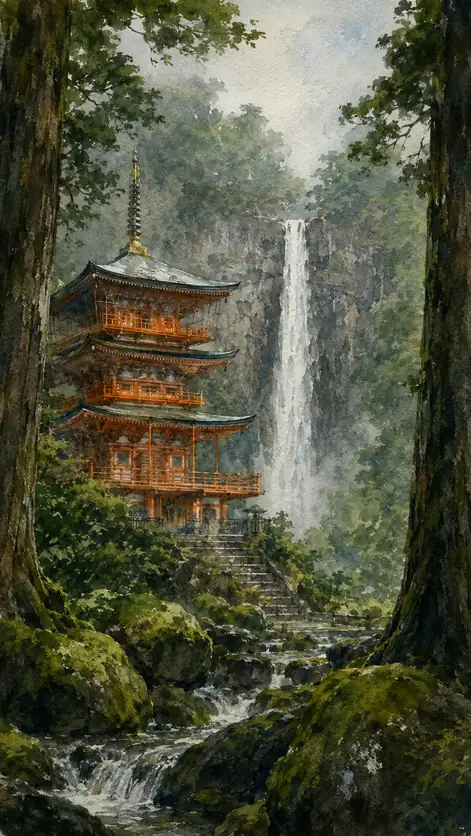 The Red Pagoda Measures the Waterfall
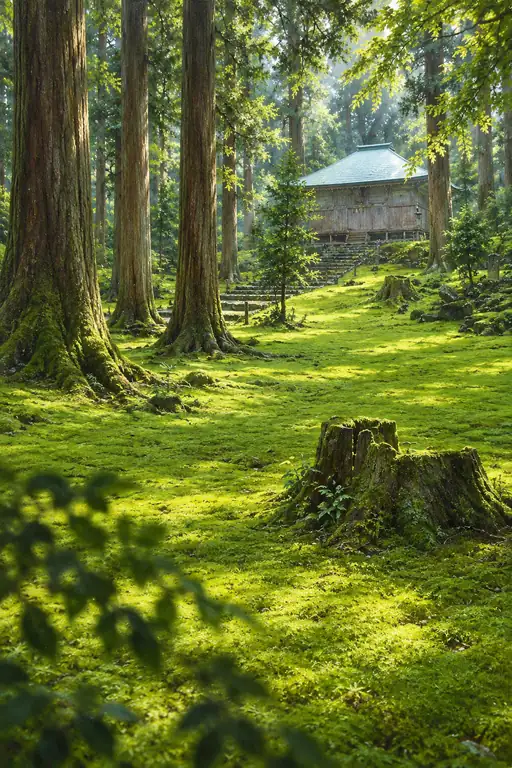 The Forest Opens Its Quiet Heart
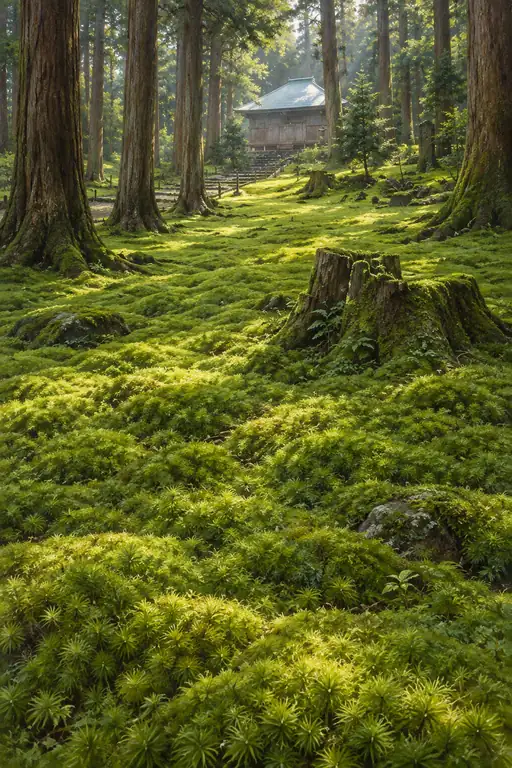 Prayer Among a Thousand Moss Stars
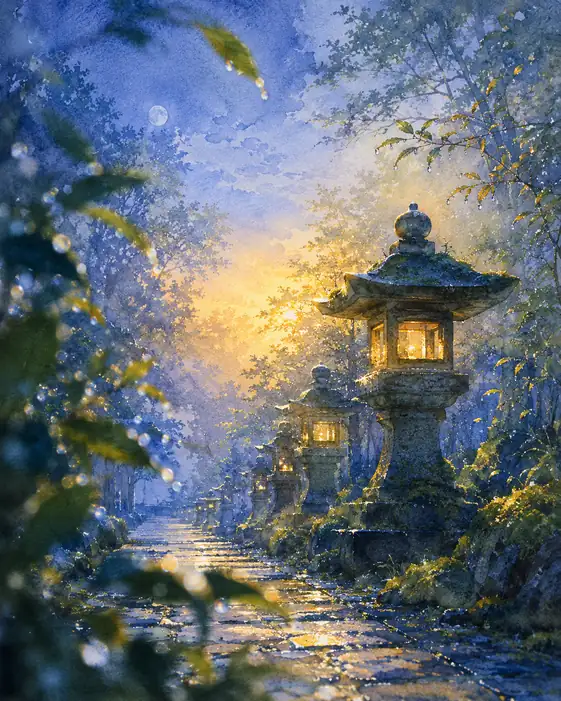 Stone Lanterns Guard the Blue Hour
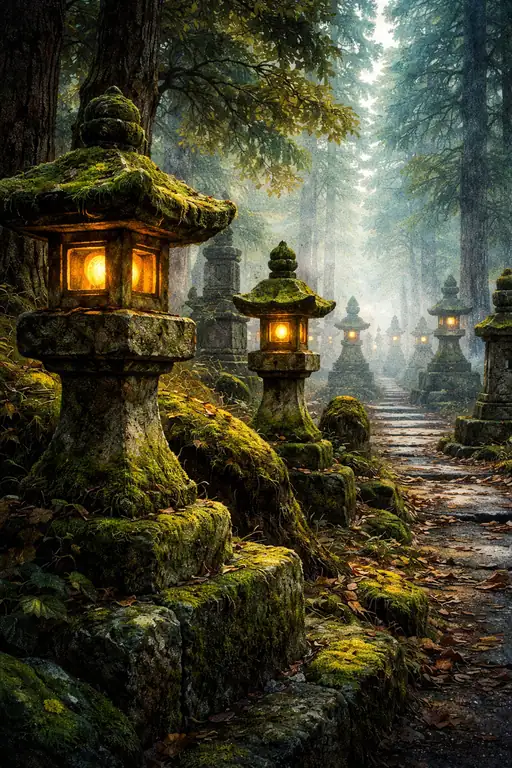 Whispers of the Ancient Lanterns