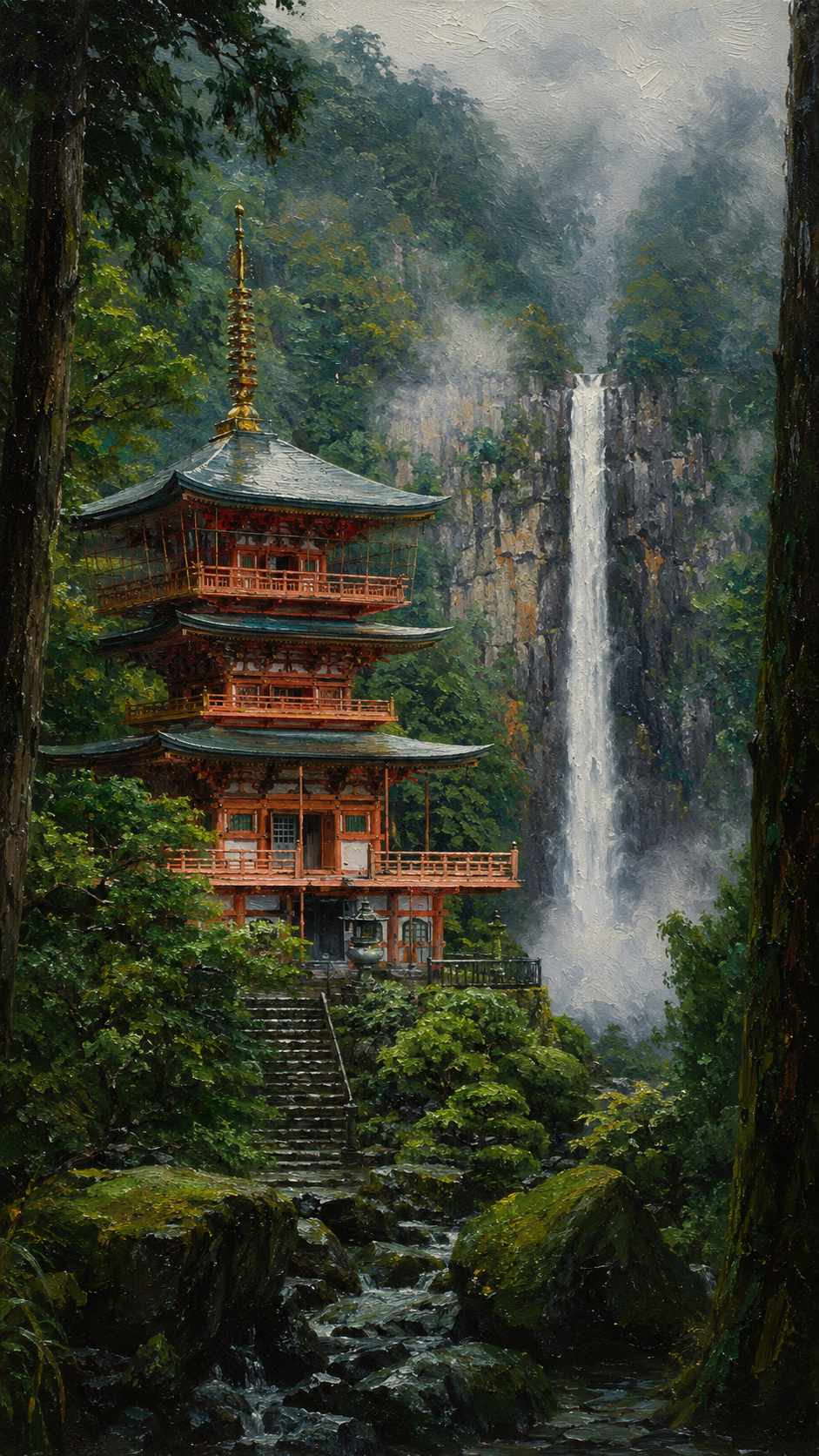
Between the Red Tower and Falling Heaven
Critique
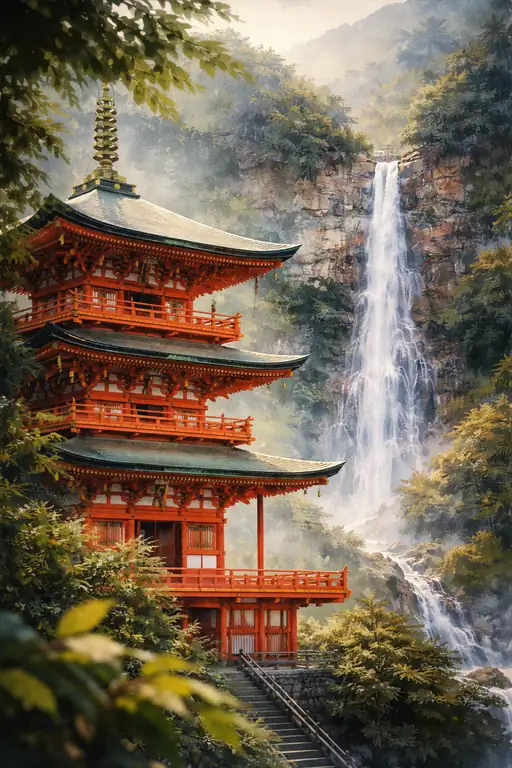
Introduction This landscape painting presents a vermilion pagoda facing a waterfall in a dense forest. Its first impact comes from the tower placed at lower left and a white fall descending in the right distance. Description The image shows the tower placed at lower left and a white fall descending in the right distance. Its palette consists of vermilion and white held within a field of deep green and brown-black. Forms decrease in size and clarity from foreground to distance, so air and light also convey depth. Analysis Compositionally, two offset verticals organize the tower and fall while rocks and trunks bridge their separation. An edge directs attention toward the principal motif and background. Technically, architectural detail is precise, whereas damp forest and spray are handled with dense texture and blur. Descriptive skill lies in coordinating light and dark, solid form and soft atmosphere. Interpretation and Evaluation The scene can be understood as a balance between architectural order and untamed natural force. Color carries stillness, tension, and passing time. Stable structure and selective accents keep the subject legible, while varied handling gives materials distinct presence. Conclusion The work succeeds by joining a clear subject to nuanced atmospheric painting. At first, attention rests on a vermilion pagoda facing a waterfall in a dense forest, but prolonged viewing reveals how repetition, shifts of temperature, and changing visual pace support the whole. Description, composition, color, and technique remain mutually consistent, transforming a scenic motif into a calm and persuasive encounter.
Same Subcategory
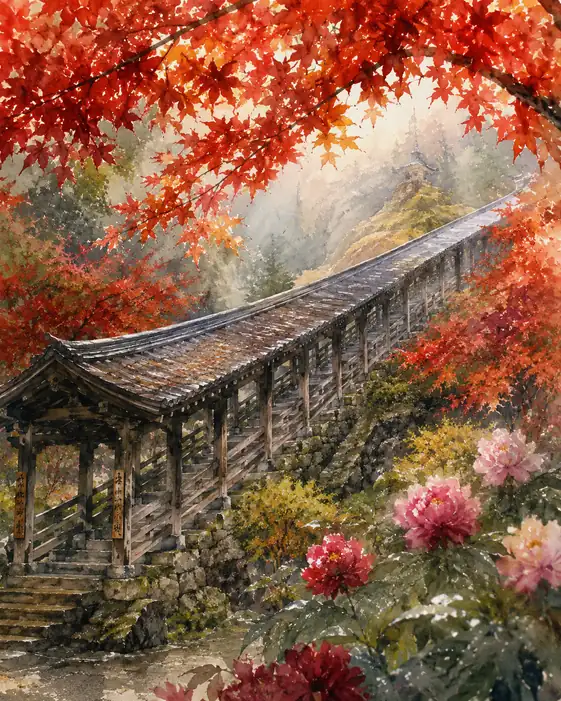 The Long Roof Carries Autumn Uphill
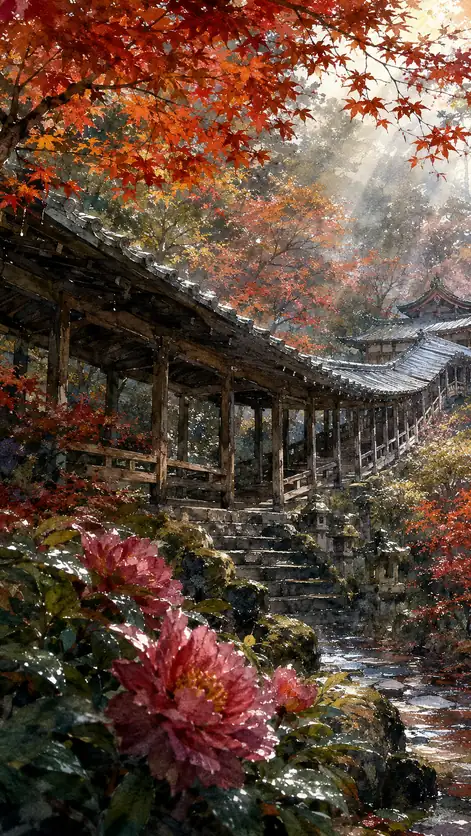 Autumn Bends Toward the Inner Hall
Similar Artworks
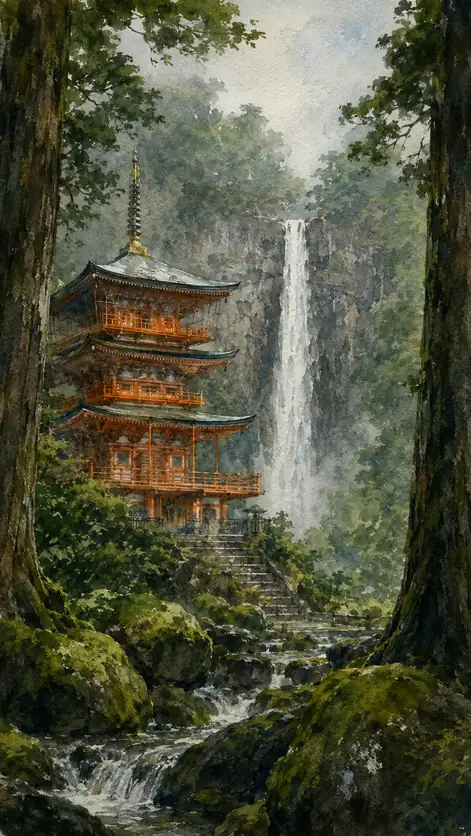 The Red Pagoda Measures the Waterfall
 Harmony of the Sacred Falls
 A Voice Through Mountain Mist
 A White Stroke from Heaven
 Eternal Prayer in the Vermilion Woods
 Sanctuary Within the Misty Cliffs
 The Shrine Where Mountains Exhale
 At the Edge Where Prayer Dwells
 The Mountain Leaves No Easy Prayer
 Every Roof Is Another Prayer