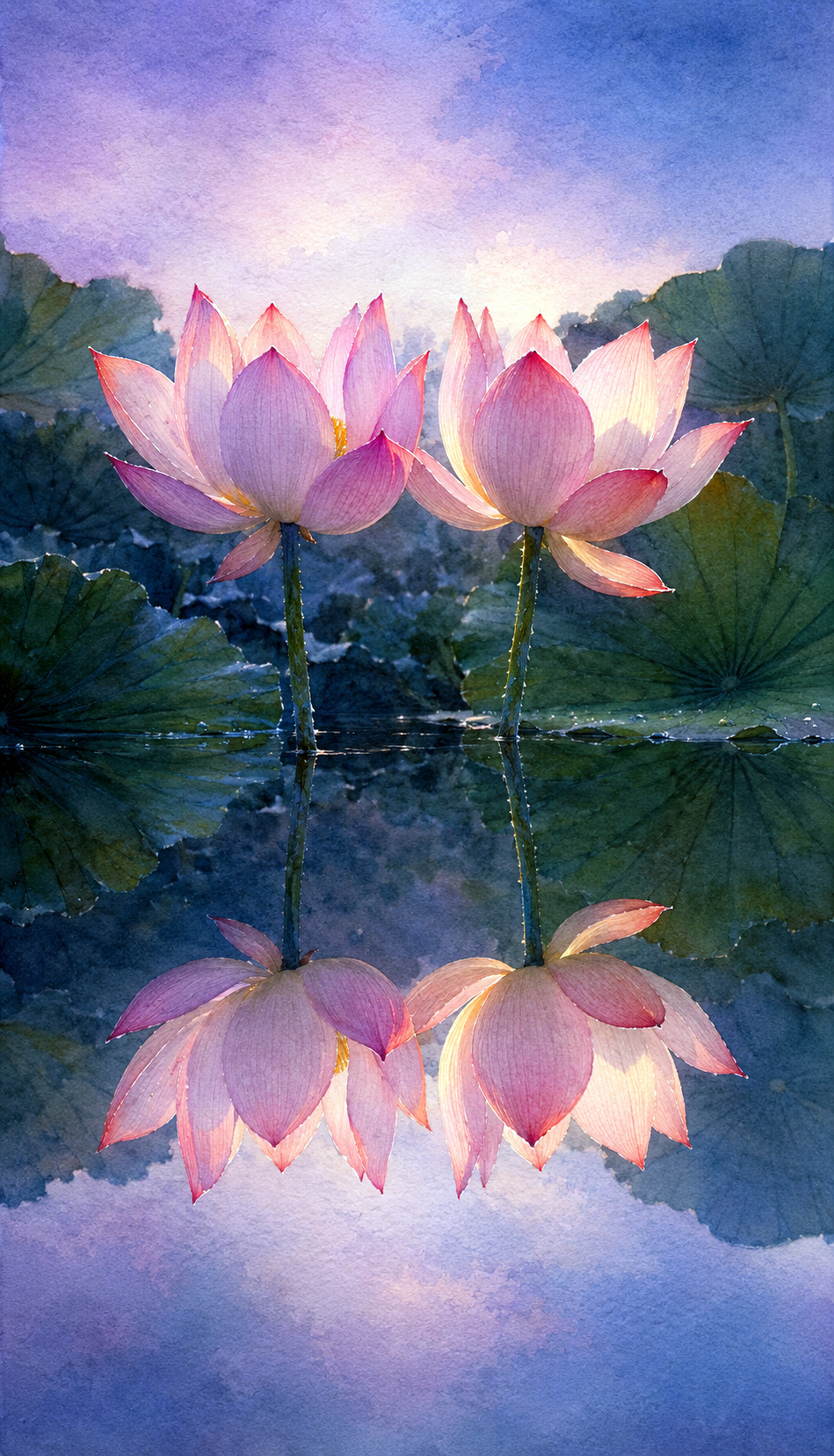
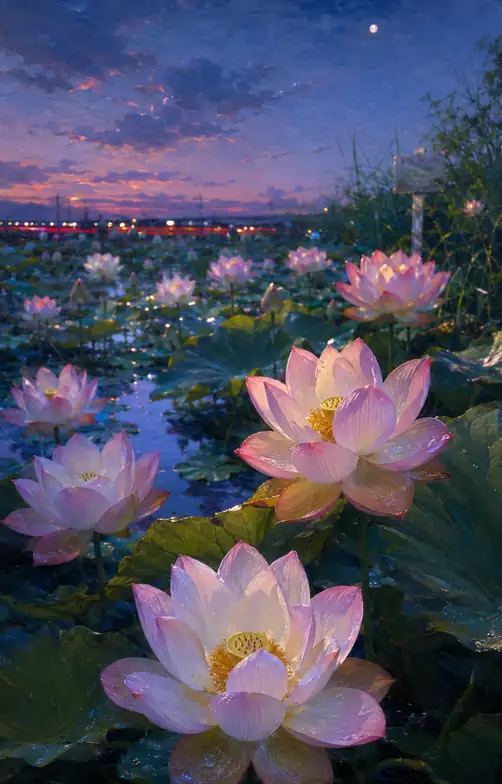
Twin Dawns Bloom in the Water Mirror
Critique
Introduction This work presents three pale lotus blossoms and their reflections at twilight. Recognizable visual material is organized through light, color, and scale so that the focus reads immediately. Initial scenic appeal gradually yields to the painted surface and its structure. Description In the composition, the flowers rise in a compact row above a nearly symmetrical band of water. The palette centers on pink, lavender, blue green, and small yellow accents, and shifts of value describe atmosphere and time. Spatial layers remain legible, carrying the eye through the image while small reflections and surface variations sustain close attention. Analysis The design is distinguished by the way balanced repetition is enlivened by slight differences in height and opening. Surrounding forms serve as frames, directional lines, and measured repetitions. Layered paint, broken strokes, and softer transitions preserve luminosity while keeping shadowed areas active. Detailed description and broad simplification are balanced, giving the scene clarity, depth, and a restrained visual rhythm. Interpretation and Evaluation The scene suggests how formal harmony remains credible because the flowers retain individual posture. Its convincing description, balanced composition, disciplined color, and responsive technique demonstrate control. Originality lies less in distorting recognizable forms than in intensifying their relationships of light, proportion, and distance. Decorative richness remains subordinate to the subject and supports a calm emotional register. Conclusion The work successfully joins accessible imagery with sustained attention to material and design. Description, color, composition, originality, and technique reinforce one another rather than competing for notice. What first appears primarily picturesque becomes, through longer viewing, a carefully ordered reflection on atmosphere, spatial structure, and the act of looking.
Same Subcategory
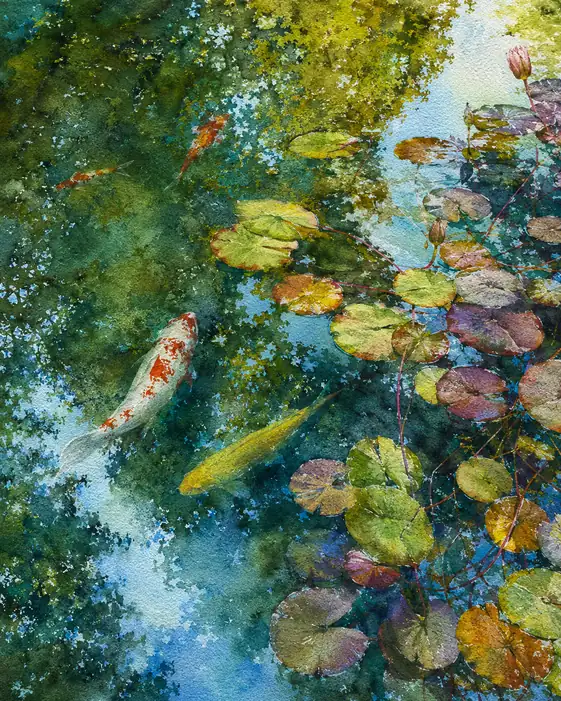 Two Lights Swimming Through the Sky — Two Wishes Beneath the Leaves —
Similar Artworks
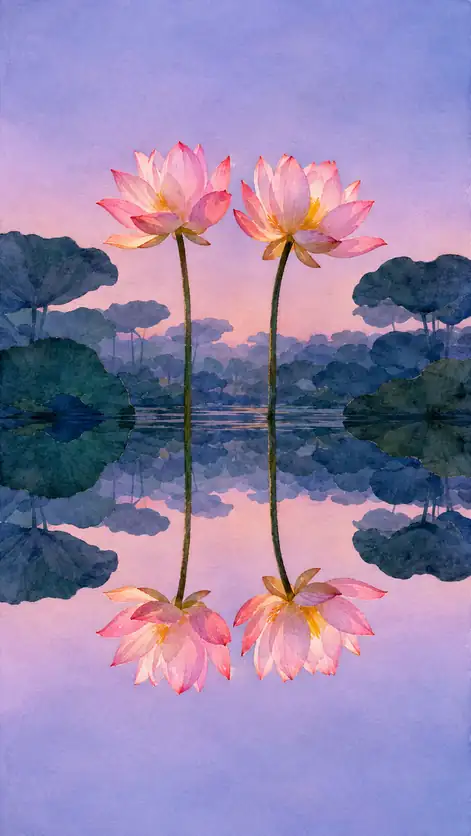 We Bloomed Twice in the Quiet
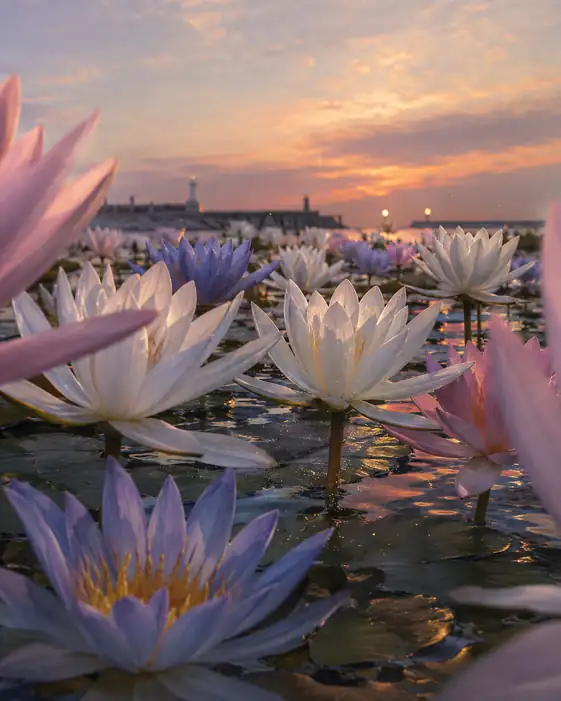 Lilies of the Twilight Harbor
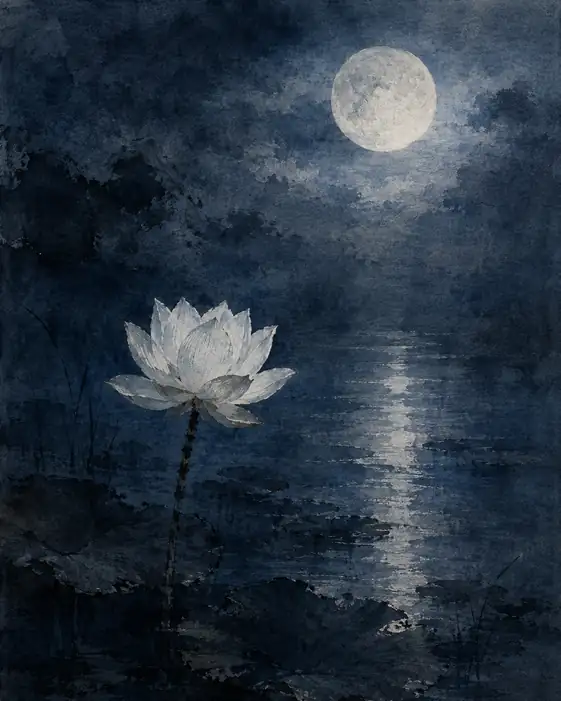 The Moon Entrusted to One Lotus
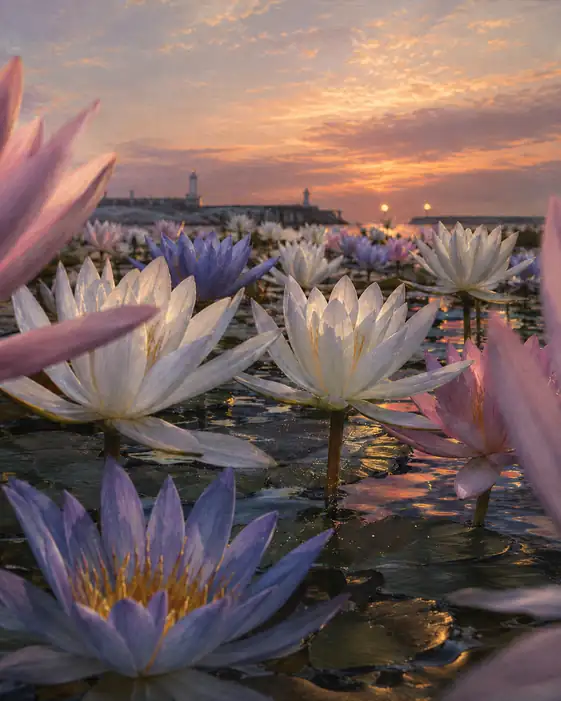 Water Lilies under the Sunset Harbor
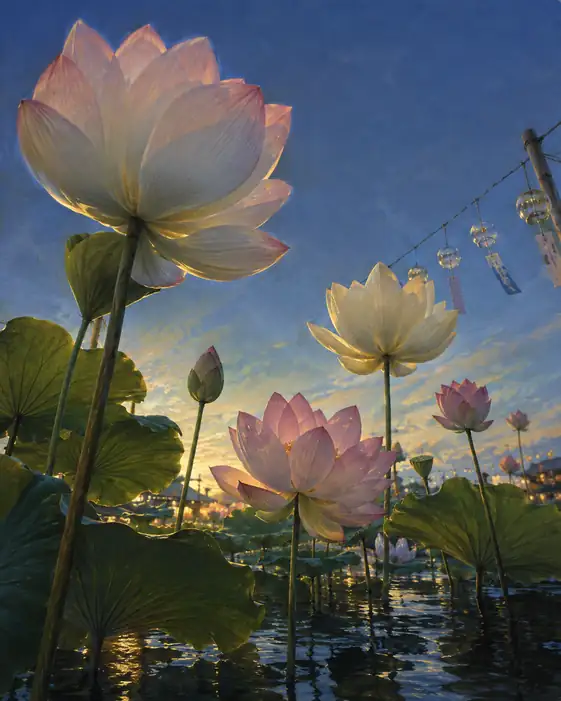 Lotus Blooms and Wind Chimes at Twilight
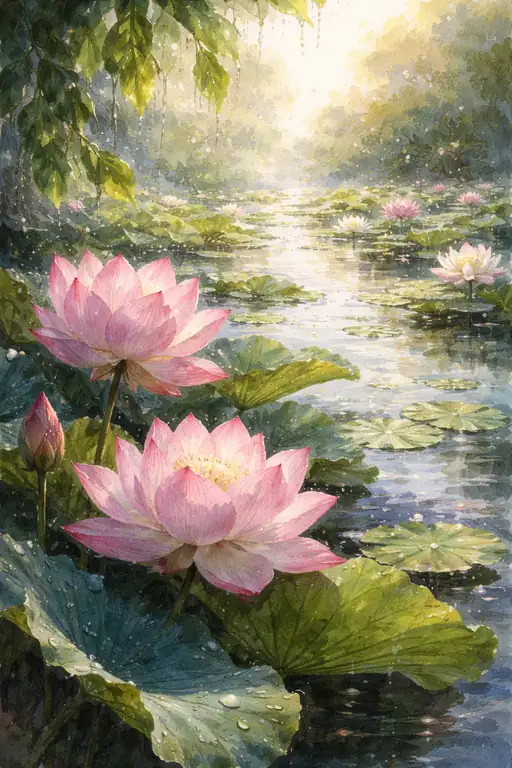 Awakening in the Golden Mist
 Petals between the Moon and the City Glow
 A Petal Teaches Water to Remember
 The Instant Before Goodbye
 Before the Morning Knows My Name