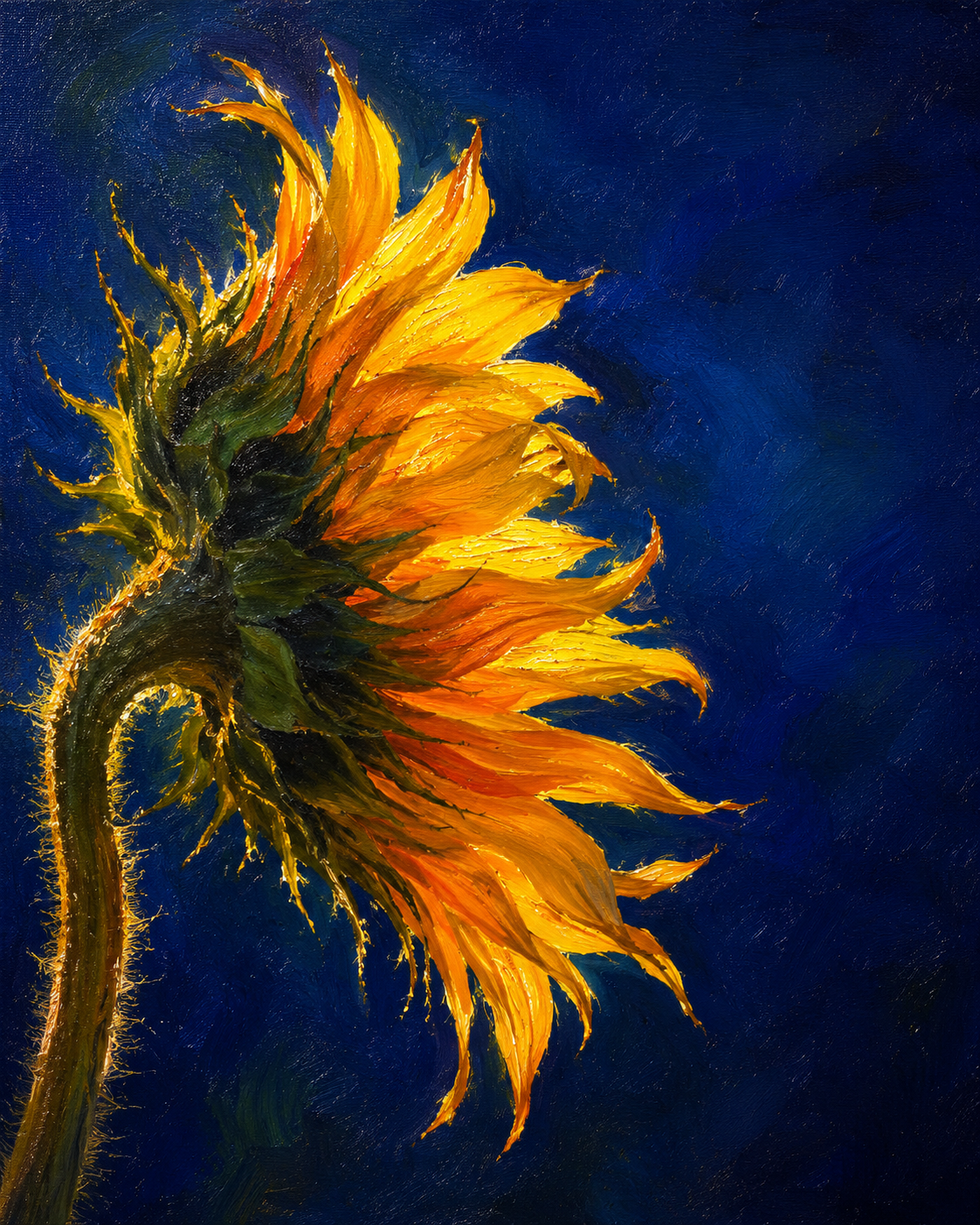
The Flame That Turned Toward Evening
Critique
Introduction This work presents a sunflower in profile glowing against a deep blue background. Recognizable visual material is organized through light, color, and scale so that the focus reads immediately. Initial scenic appeal gradually yields to the painted surface and its structure. Description In the composition, the curved stem rises from below and the swept petals flare toward the upper right. The palette centers on yellow, orange, ultramarine, and dark green, and shifts of value describe atmosphere and time. Spatial layers remain legible, carrying the eye through the image while small reflections and surface variations sustain close attention. Analysis The design is distinguished by the way energetic impasto follows the petals while the background remains broad and calm. Surrounding forms serve as frames, directional lines, and measured repetitions. Layered paint, broken strokes, and softer transitions preserve luminosity while keeping shadowed areas active. Detailed description and broad simplification are balanced, giving the scene clarity, depth, and a restrained visual rhythm. Interpretation and Evaluation The scene suggests how the flower's turn toward light becomes an image of resilient motion. Its convincing description, balanced composition, disciplined color, and responsive technique demonstrate control. Originality lies less in distorting recognizable forms than in intensifying their relationships of light, proportion, and distance. Decorative richness remains subordinate to the subject and supports a calm emotional register. Conclusion The work successfully joins accessible imagery with sustained attention to material and design. Description, color, composition, originality, and technique reinforce one another rather than competing for notice. What first appears primarily picturesque becomes, through longer viewing, a carefully ordered reflection on atmosphere, spatial structure, and the act of looking.
Same Subcategory
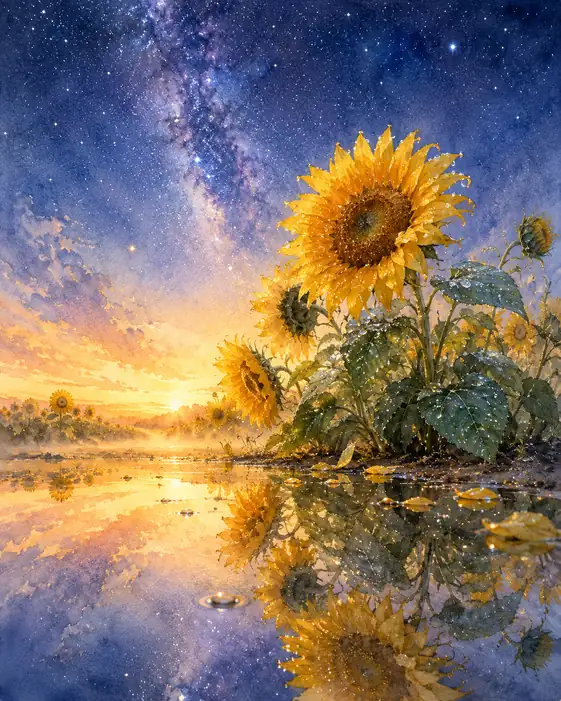 Sunflowers Blooming in the Galaxy Water Mirror
 I Grew Toward the Blue
Similar Artworks
 Where Yellow Meets Forever
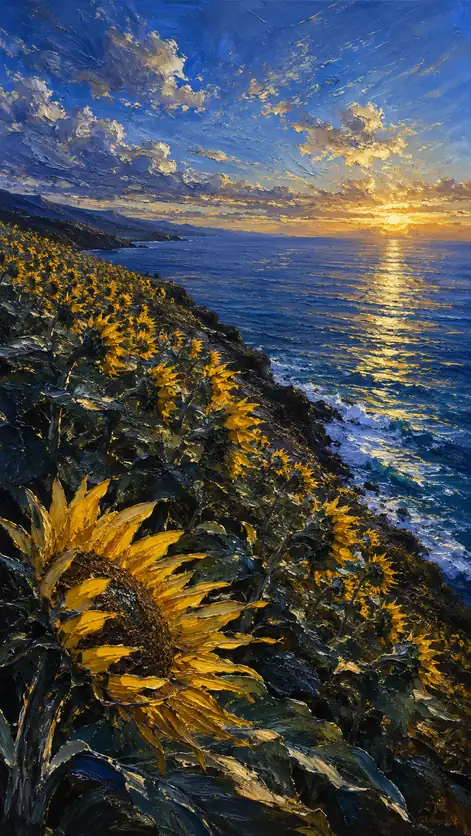 All Flowers Turned Toward Farewell
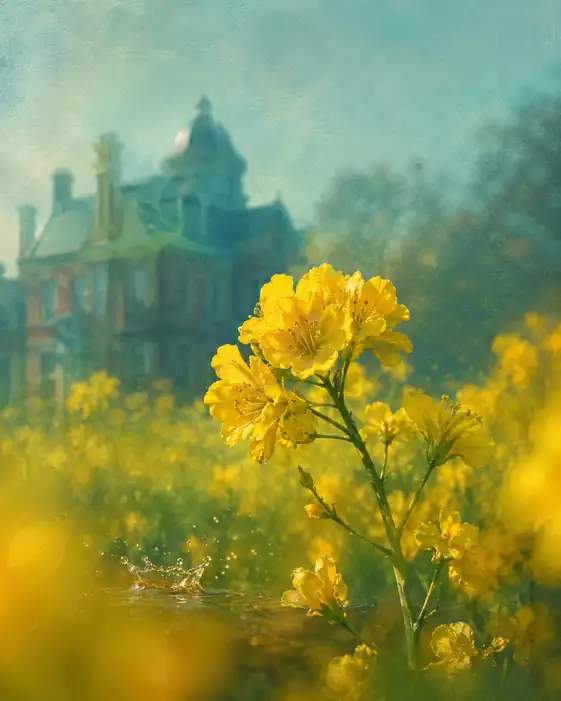 Canola Blossoms Before the Manor House
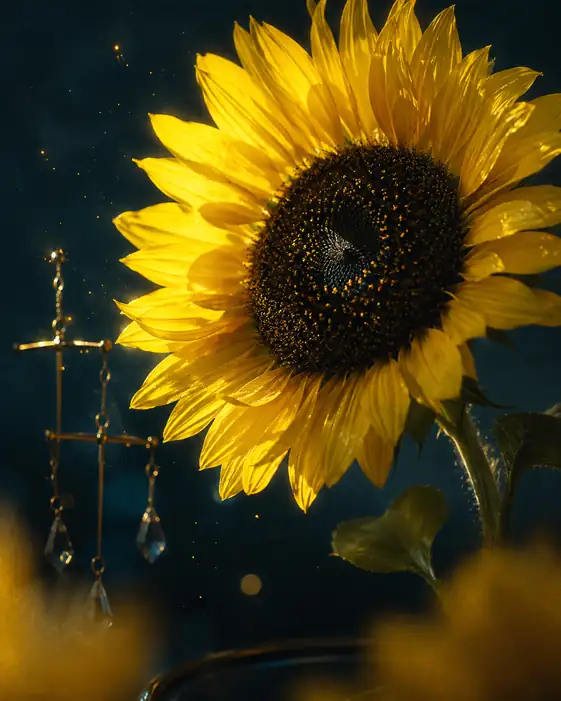 Sunflower Crown Beneath Prismatic Light
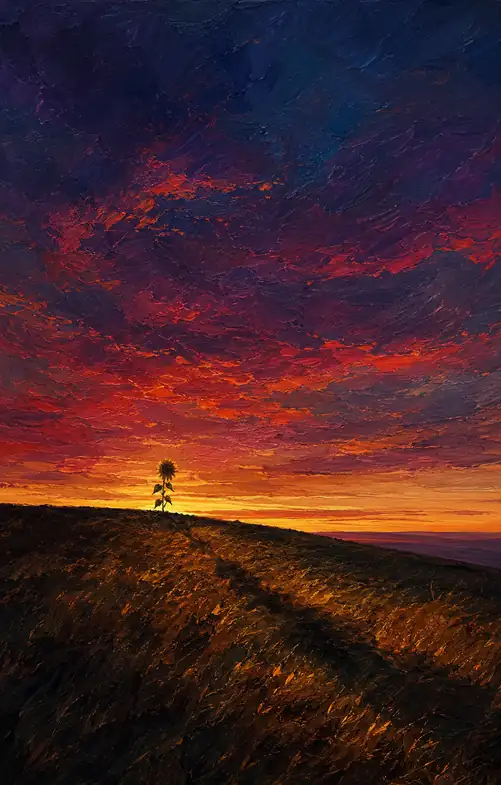 The Last Sunflower Holds the Horizon
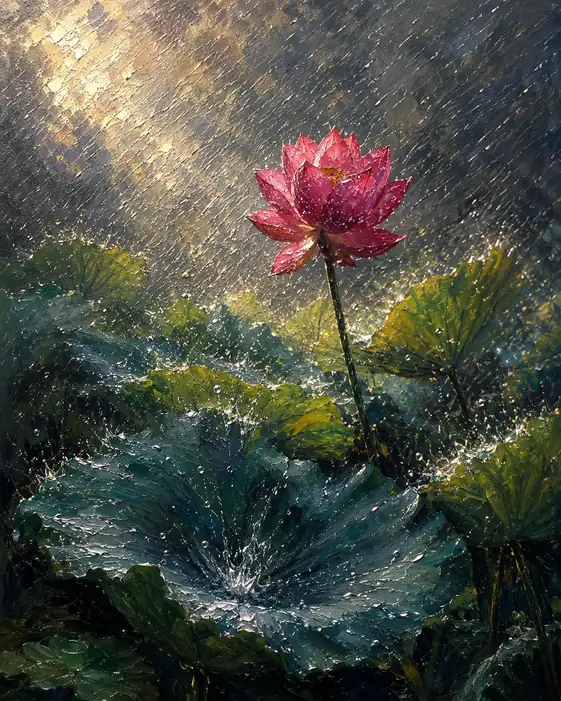 Unbowed Beneath the Storm
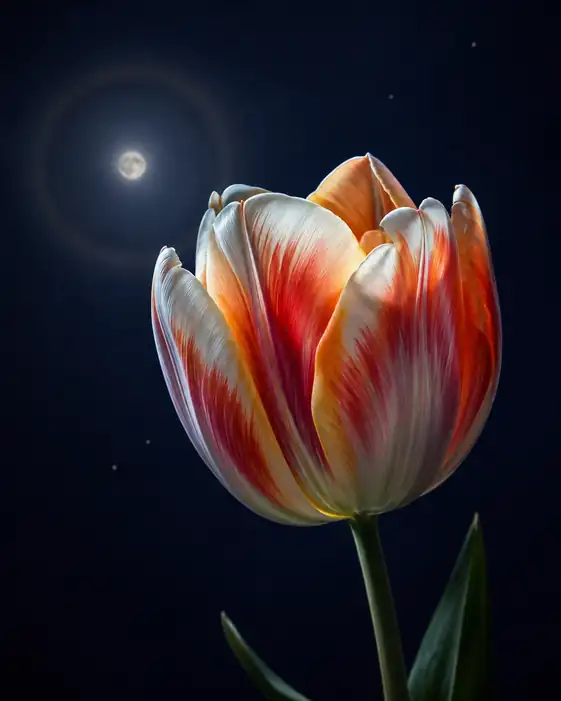 Moonlit Tulip Against the Night
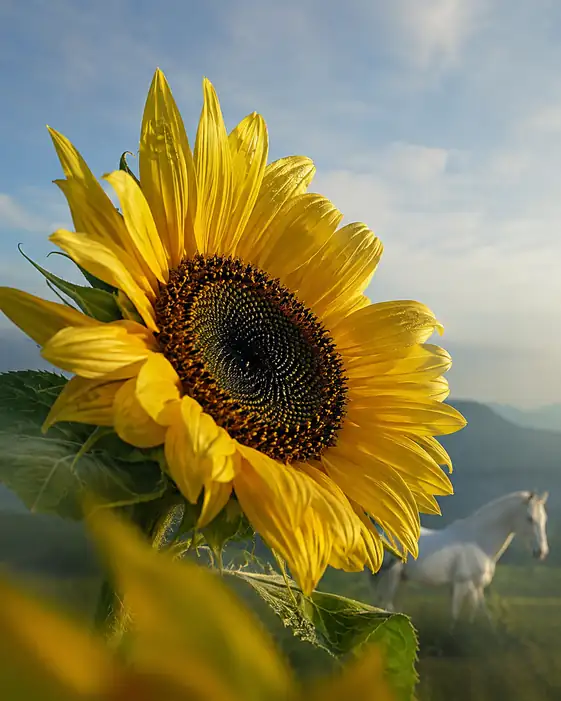 Pastoral Reverie with Sunflower and Steed
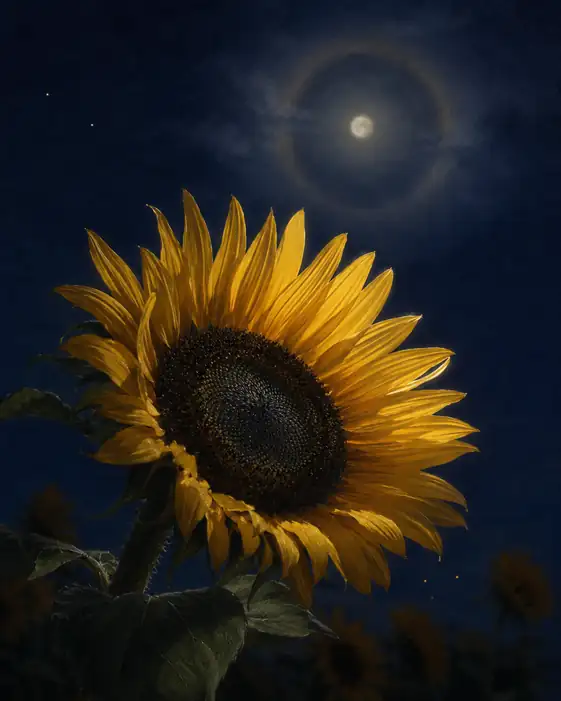 Halo of the Moon and the Golden Disc
 Golden Radiance and the Crystal Mobile