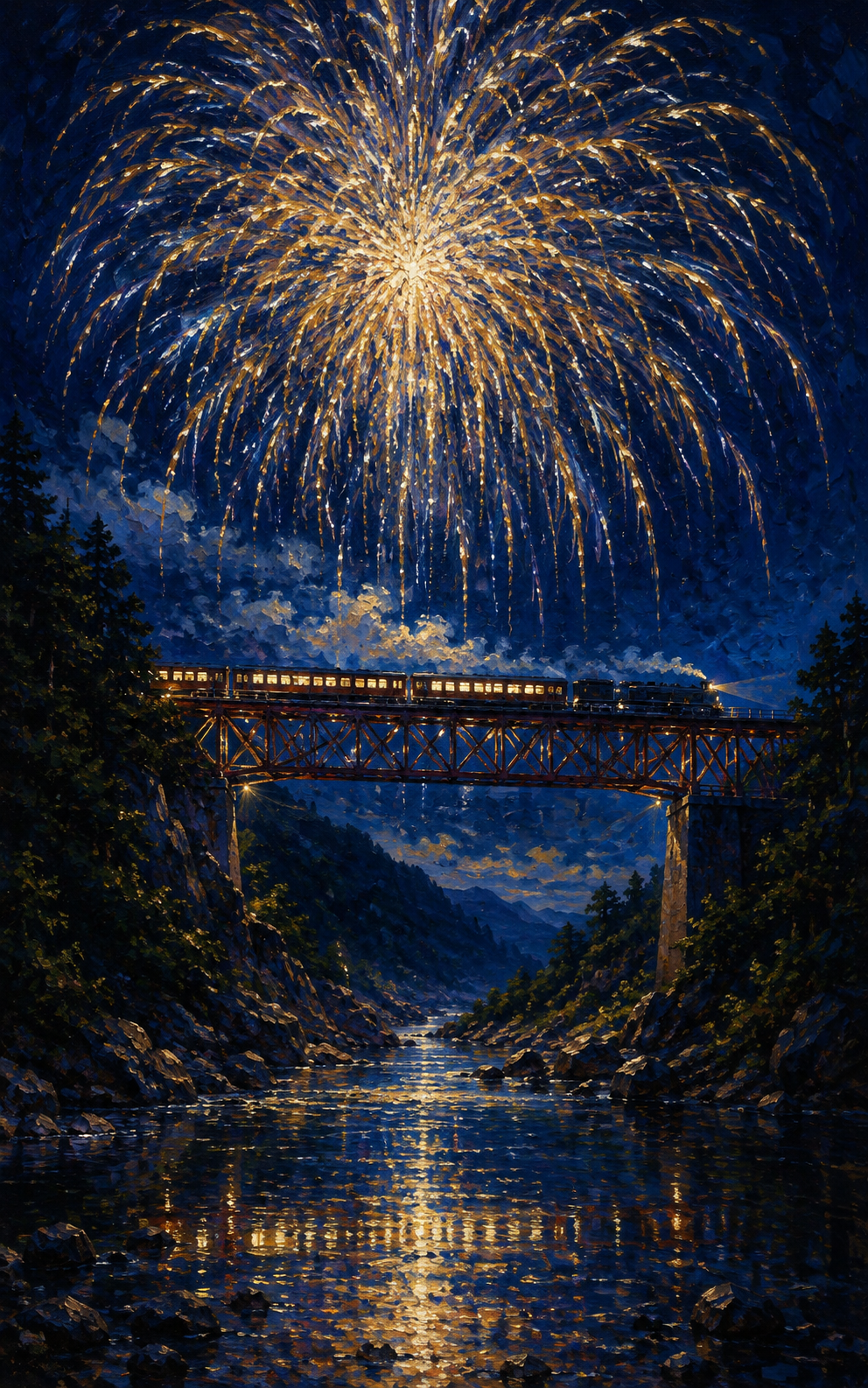
The Last Train Through Falling Light
Critique
Introduction This painting presents a steam locomotive crossing a gorge bridge beneath a weeping firework, carefully staging travel, spectacle, and stillness. Rather than depending on narrative detail, it establishes its subject through illuminated windows, golden trails above the bridge, and a reflection extending along the river. Description The principal forms are the steam locomotive crossing the bridge, golden trails overhead, and a reflection extending along the river. Around them, deep space enclosed by forest provide a quieter setting and prevent the focal motif from becoming isolated decoration. The palette is built from navy, gold, and dark green. Analysis The composition relies on the crossing axes of locomotive and bridge against the river, which guides the eye before it returns to the brightest area. Repeated marks and broken edges create a lively surface, while broader passages of color hold the scene together. Light is treated structurally: highlights define depth, reflections or shadows extend the main forms, and darker zones preserve visual rest. Painterly texture remains visible. Interpretation and Evaluation The work can be read as a study of a brief event made durable through painting. Its strongest achievement lies in the balance between immediate visual pleasure and measured organization. The drawing remains legible, the color relationships are controlled, and the composition gives the subject a distinct rhythm. Although the motif is familiar, the selected viewpoint and atmospheric treatment lend it individuality without forcing a fixed story. Conclusion At first glance, the painting is dominated by its luminous subject, but sustained viewing reveals how carefully the surrounding space regulates that brilliance. Its descriptive skill, color design, and confident technique turn a recognizable scene into a concentrated reflection on light, duration, and perception.
Same Subcategory
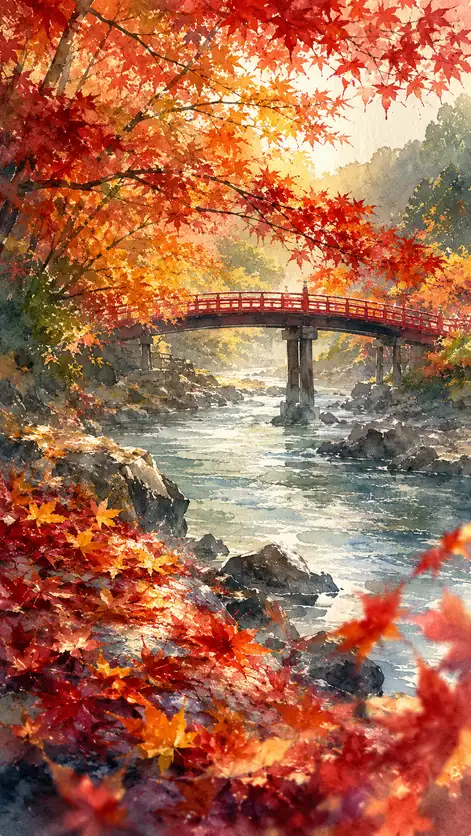 Where the River Carries Red Leaves
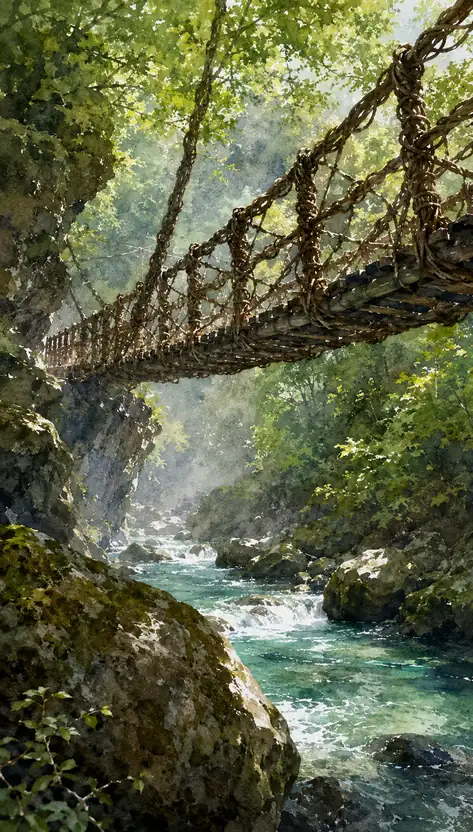 A Bridge Woven from Trust
Similar Artworks
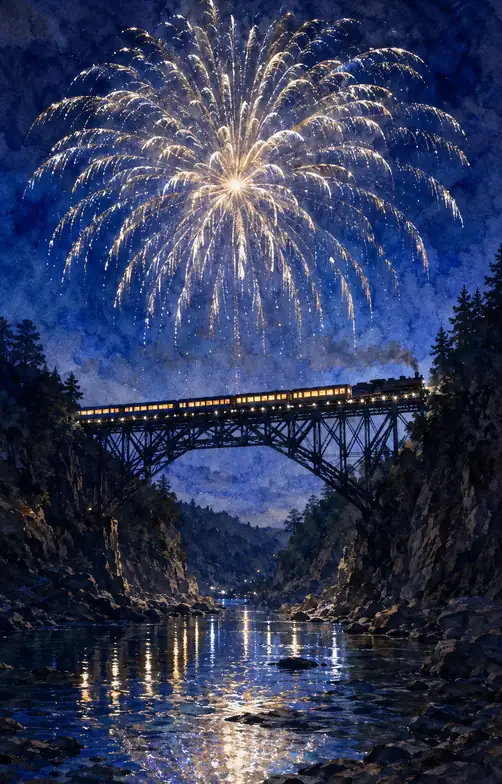 The Journey Beneath a Golden Hour
 Bridge of Golden Resilience
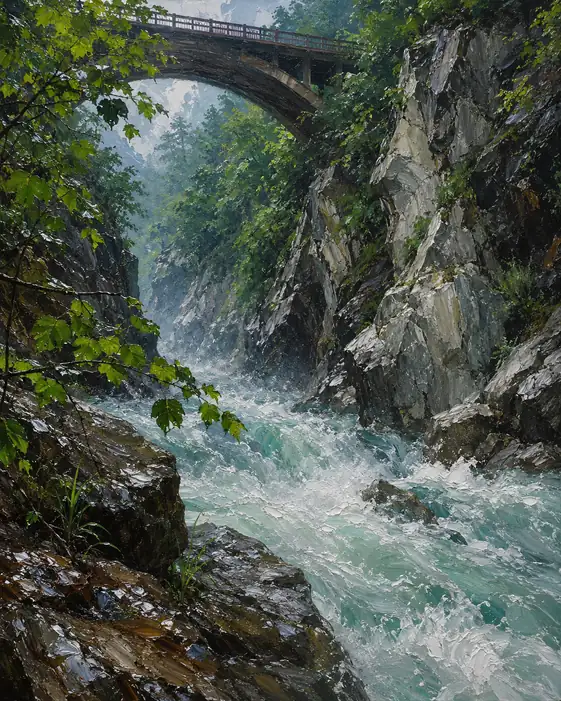 Under the Bridge, Water Awakens
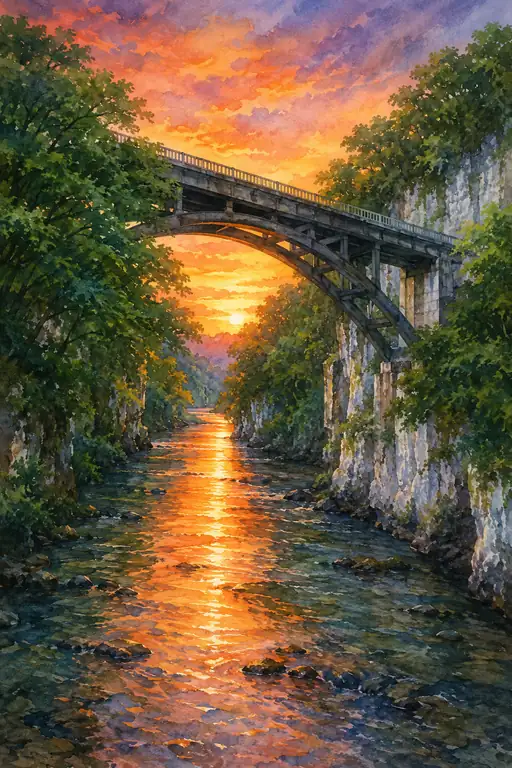 The River Carries the Last Fire
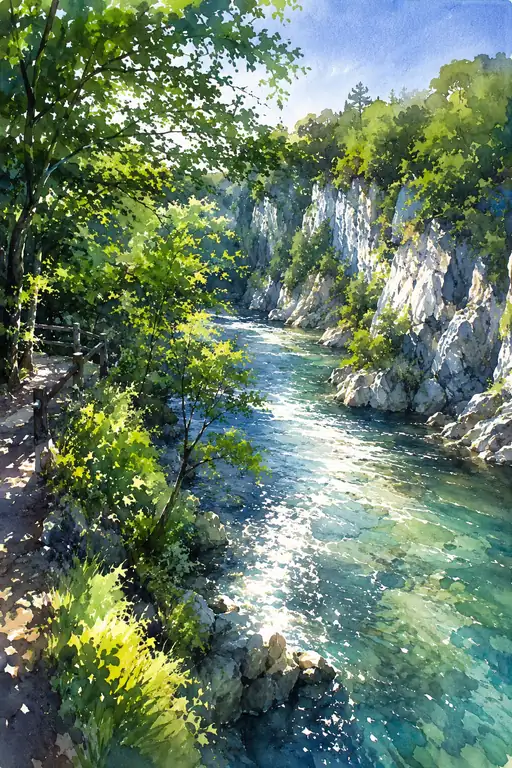 A Clear Current Beneath Green Silence
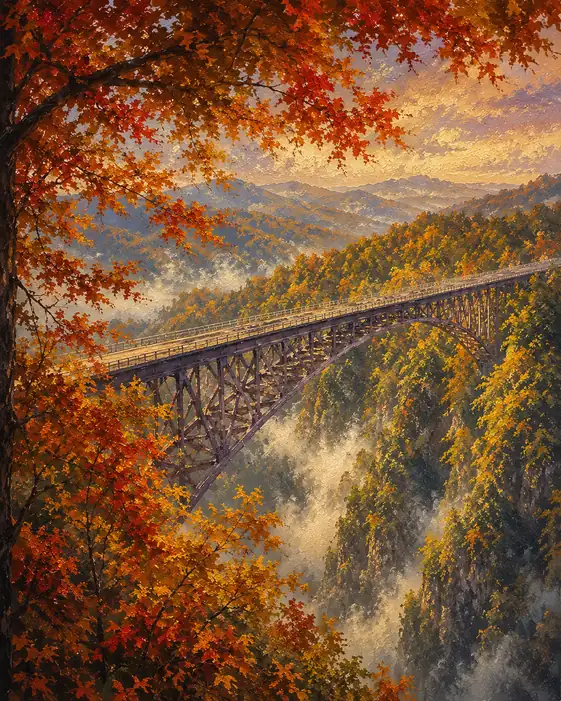 Autumn Leans Into the Crossing
 When Heaven Finds the Iron Arc
 The River Remembers Summer
 Autumn Suspended Over Deep Water
 Turquoise Through the Burning Leaves