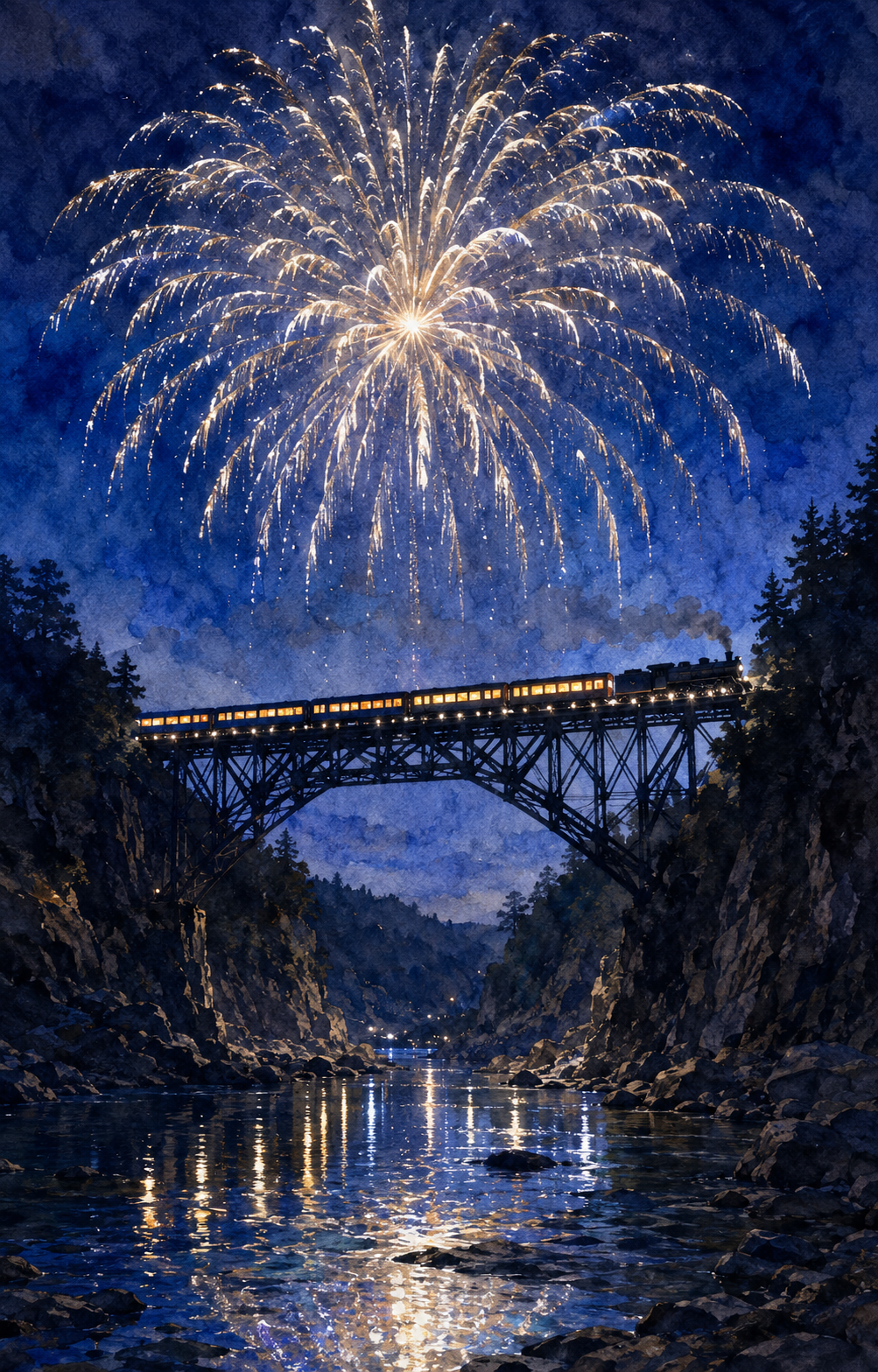
The Journey Beneath a Golden Hour
Critique
Introduction This work presents a train crossing a high bridge beneath a broad white firework. Recognizable visual material is organized through light, color, and scale so that the focus reads immediately. Initial scenic appeal gradually yields to the painted surface and its structure. Description In the composition, the bridge divides the gorge horizontally, with the burst and its reflection aligned above and below. The palette centers on white, indigo, blue-gray, and restrained amber, and shifts of value describe atmosphere and time. Spatial layers remain legible, carrying the eye through the image while small reflections and surface variations sustain close attention. Analysis The design is distinguished by the way long arcs of sparks answer the narrow line of illuminated carriages. Surrounding forms serve as frames, directional lines, and measured repetitions. Layered paint, broken strokes, and softer transitions preserve luminosity while keeping shadowed areas active. Detailed description and broad simplification are balanced, giving the scene clarity, depth, and a restrained visual rhythm. Interpretation and Evaluation The scene suggests how several durations are joined within one seemingly suspended moment. Its convincing description, balanced composition, disciplined color, and responsive technique demonstrate control. Originality lies less in distorting recognizable forms than in intensifying their relationships of light, proportion, and distance. Decorative richness remains subordinate to the subject and supports a calm emotional register. Conclusion The work successfully joins accessible imagery with sustained attention to material and design. Description, color, composition, originality, and technique reinforce one another rather than competing for notice. What first appears primarily picturesque becomes, through longer viewing, a carefully ordered reflection on atmosphere, spatial structure, and the act of looking.
Same Subcategory
 The Velocity of a Summer Day
Similar Artworks
 The Last Train Through Falling Light
 The Red Journey Across Green Silence
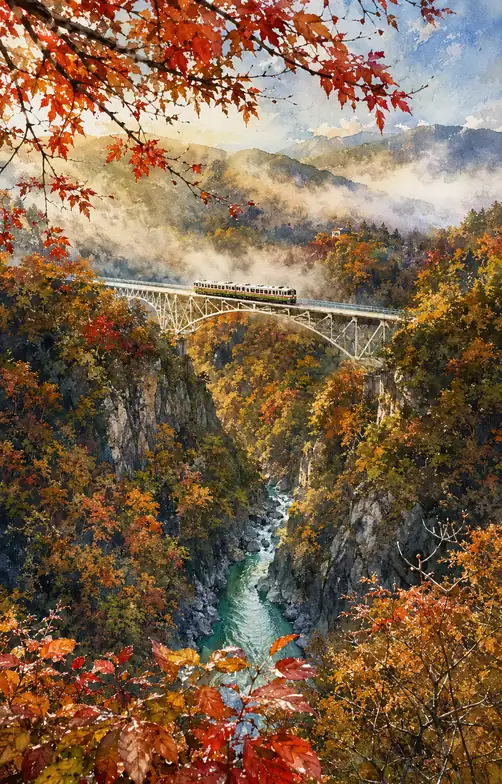 The Valley Remembers Our Passing
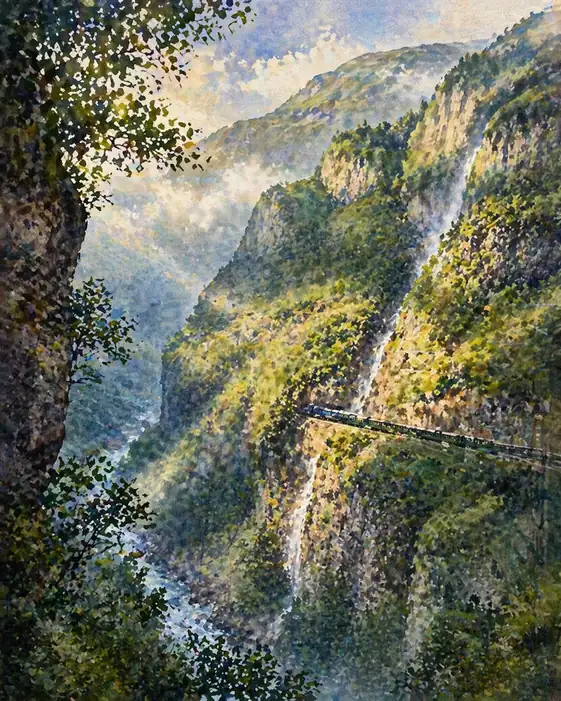 A Journey Carved in Emerald Mist
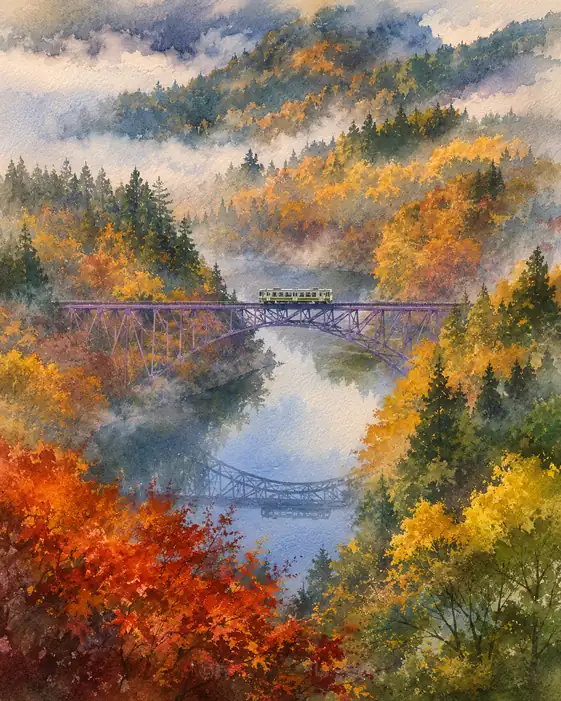 The Journey Autumn Refused to Forget
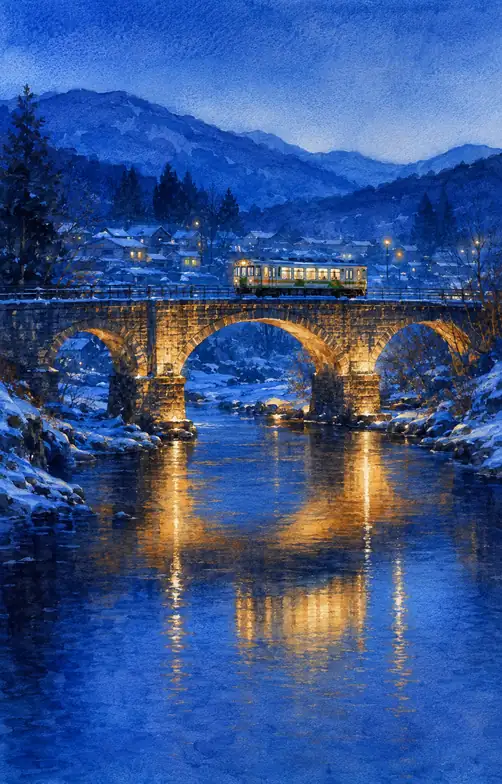 A Warm Window Crossing Winter
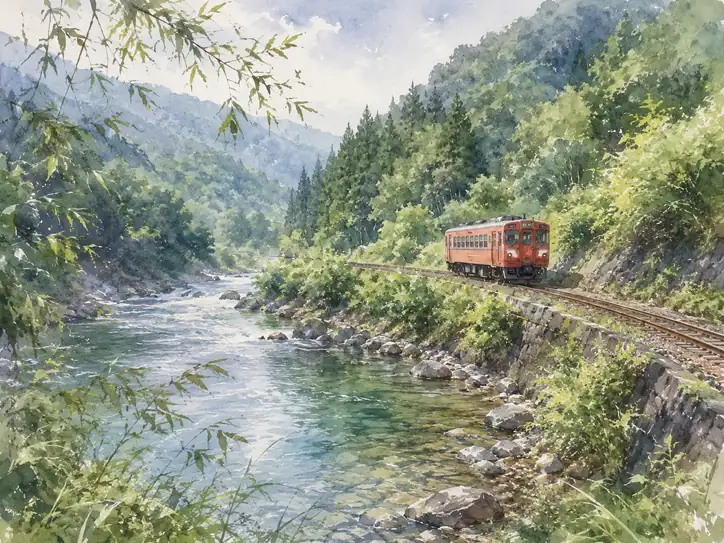 A Crimson Pulse Through the Emerald Gorge
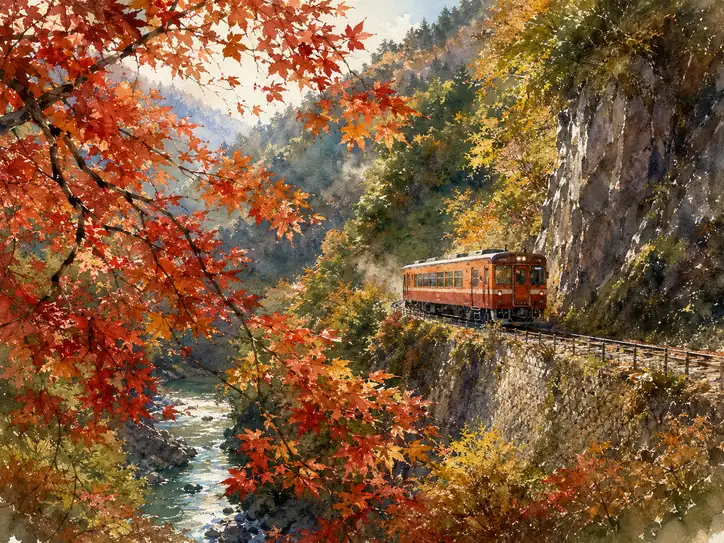 Nostalgia in Red: The Mountain Train’s Journey
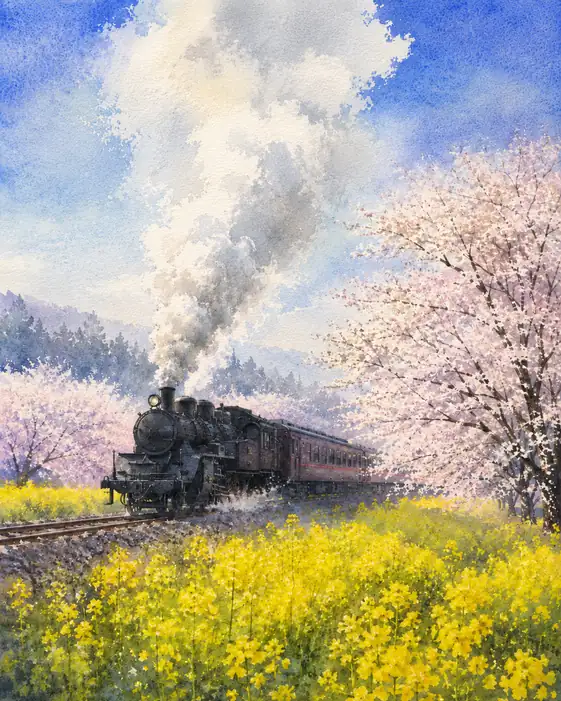 Spring Arrives Riding a White Cloud
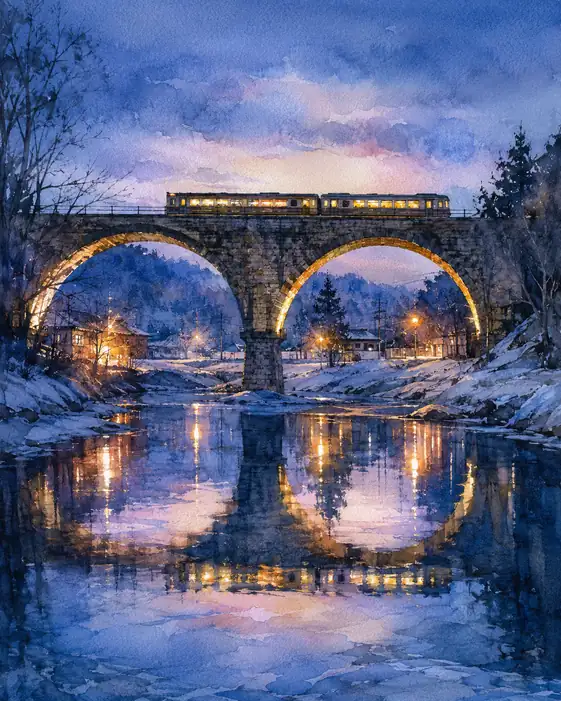 The Evening Train Crosses Two Moons