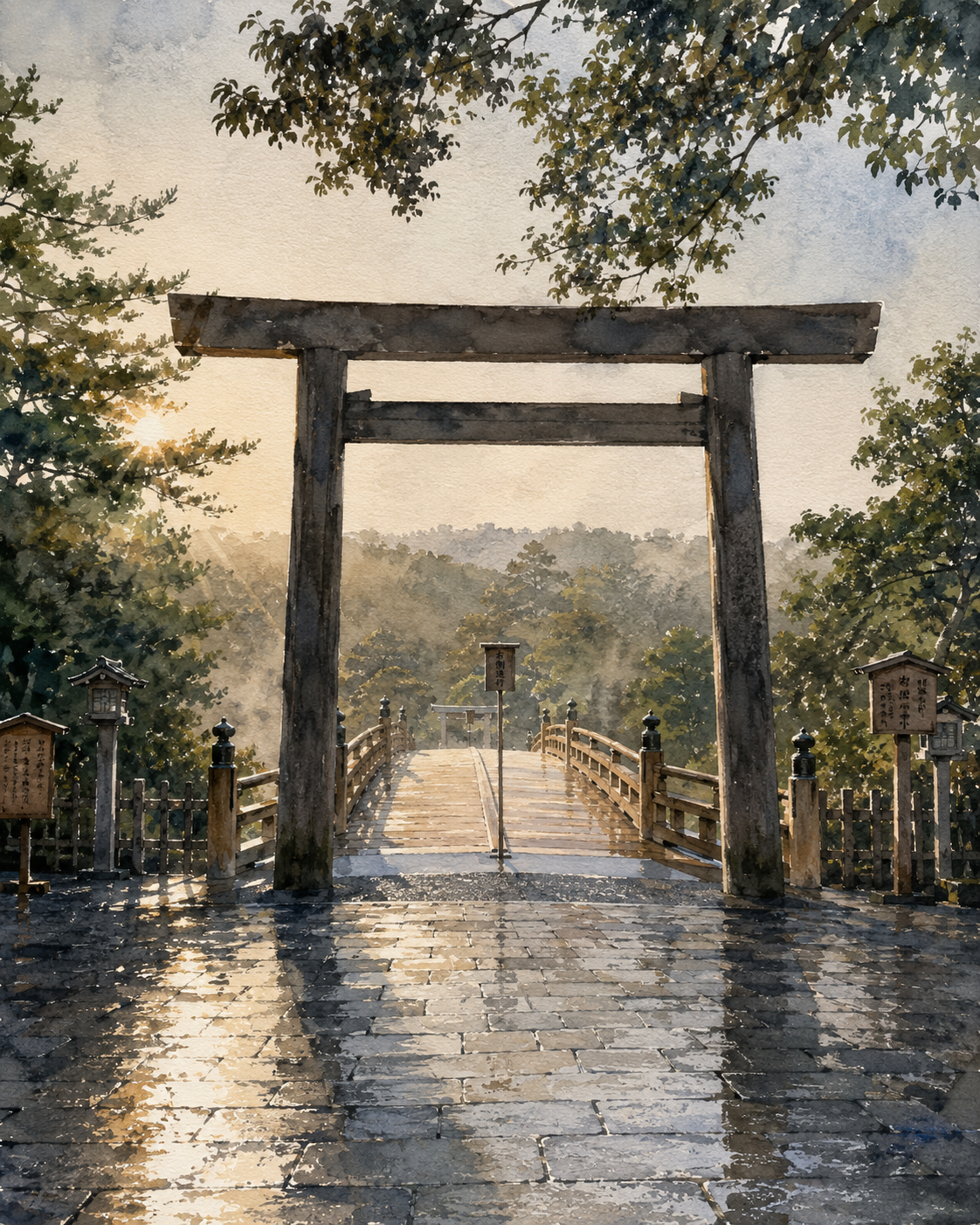
Beyond the Gate, Silence Begins
Critique
Introduction This work presents Uji Bridge at Ise Jingu through an impasto oil painting. It begins with a recognizable place, yet organizes light and color so that the subject reads immediately. The initial scenic appeal gradually gives way to an appreciation of the painted surface and its controlled structure. Description A large torii stands frontally before an arched bridge leading into a misty forest. Wet paving and flanking lanterns establish a strict central axis. Foreground, middle distance, and background remain clearly legible, carrying the eye steadily into space. The palette centers on gray-brown, deep green, pale gold, and blue-gray, and its shifts of temperature describe both time of day and atmosphere. Analysis The composition gives the principal motif a firm position while using surrounding forms as frames and directional lines. Restrained rough strokes build wood and stone, with brighter reflections expressing purified stillness. Warm and cool passages separate spatial layers, and the brightest accents establish a readable focus without flattening the quieter areas. Interpretation and Evaluation The scene functions as more than a record of a celebrated view; it becomes a meeting point between natural time and attentive observation. Its convincing description, balanced composition, disciplined color, and responsive technique demonstrate control. Originality lies less in distorting the place than in intensifying its light while preserving recognizable geography and architecture. Conclusion The work successfully joins accessible landscape imagery with sustained attention to material and design. Description, color, composition, and technique reinforce one another rather than competing for notice. What first appears primarily picturesque becomes, through longer viewing, a carefully ordered meditation on atmosphere, distance, and the act of looking.
Same Subcategory
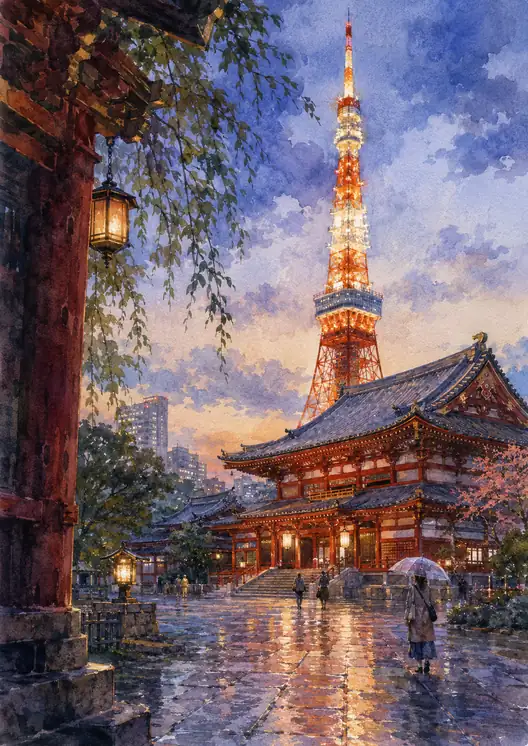 Whispers of the Red Glow on Wet Pavement
Similar Artworks
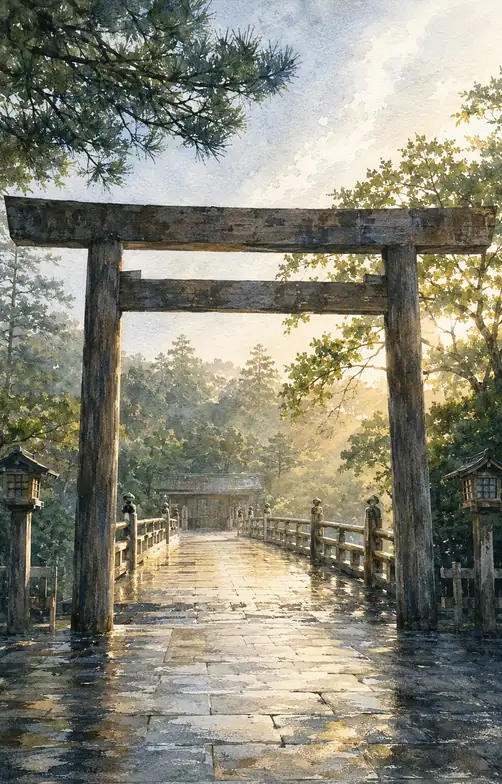 Morning Crosses the Ancient Threshold
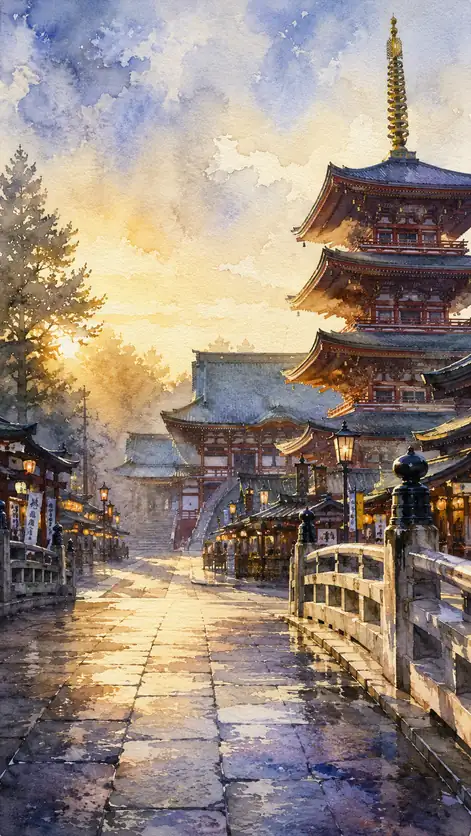 Morning Kindles the Vermilion Pagoda
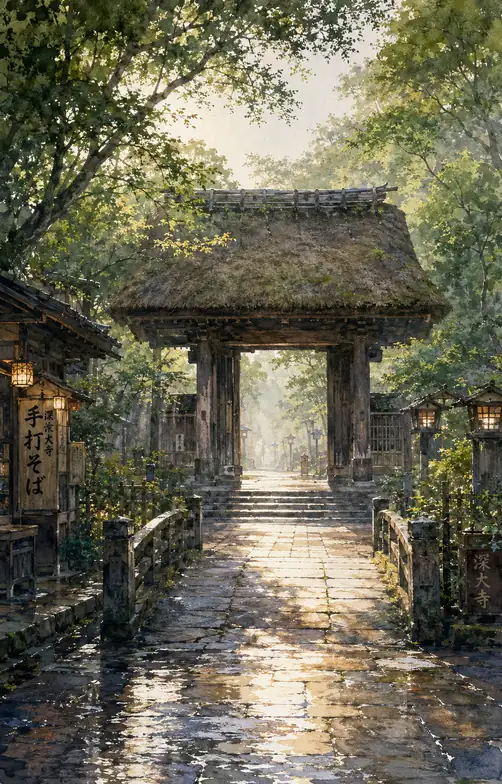 Morning Crosses the Rain-Washed Gate
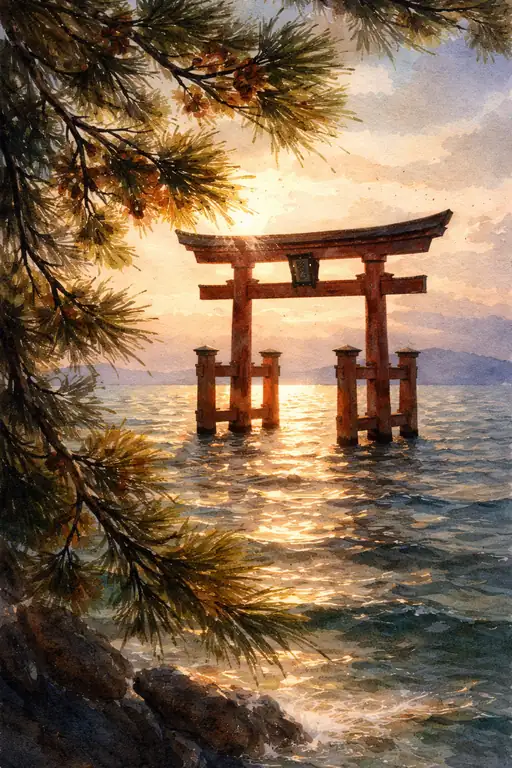 Whispers of the Golden Twilight
 Quiet Prayers under the Clearing Sky
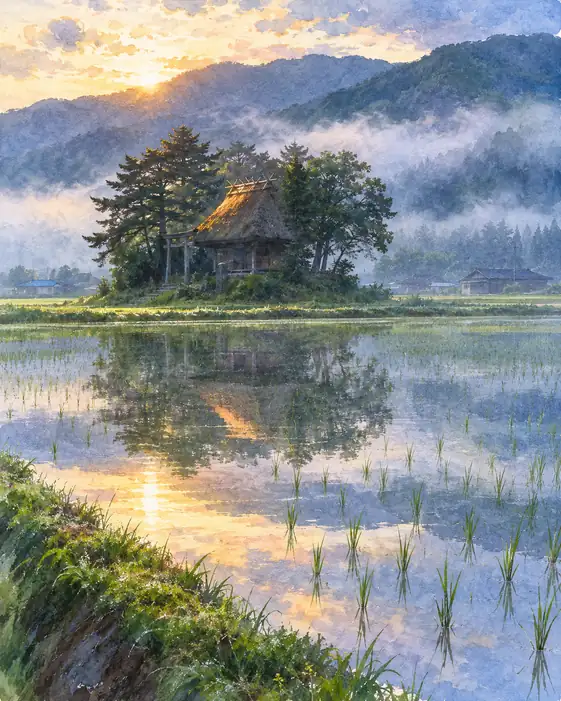 Dawn Keeps the Little Shrine Afloat
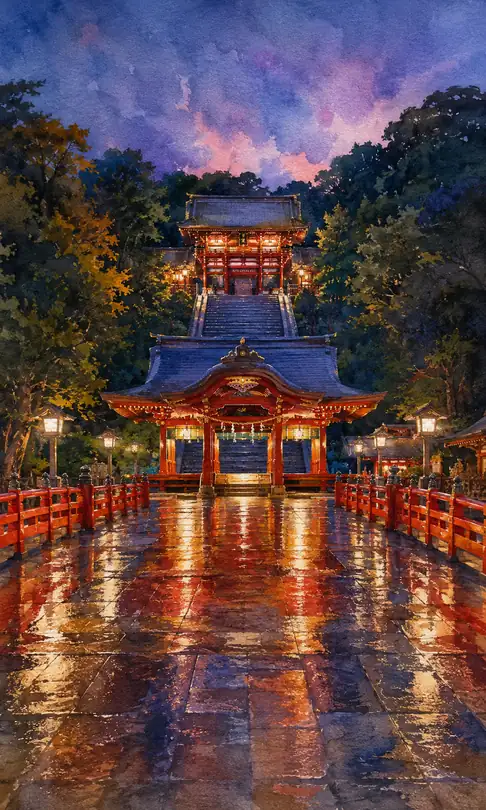 Beyond the Red Bridge, Evening Ascends
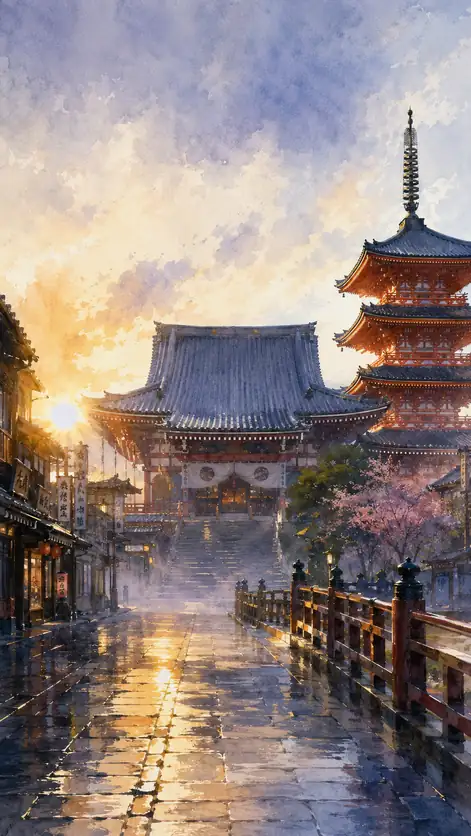 The Temple Morning Beyond the Rain
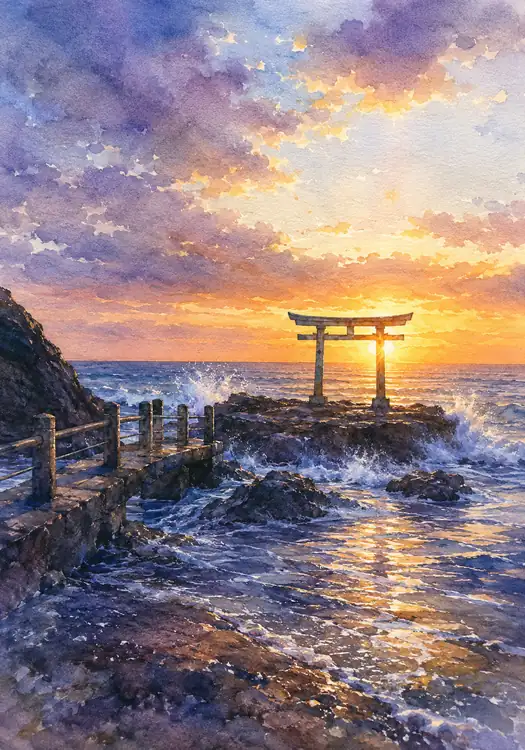 Waves Returning to the Gate of Light
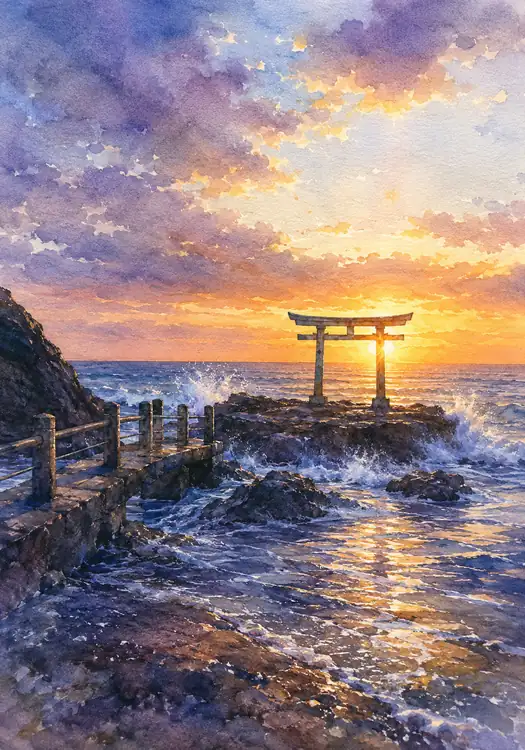 When the Sea Holds a Prayer