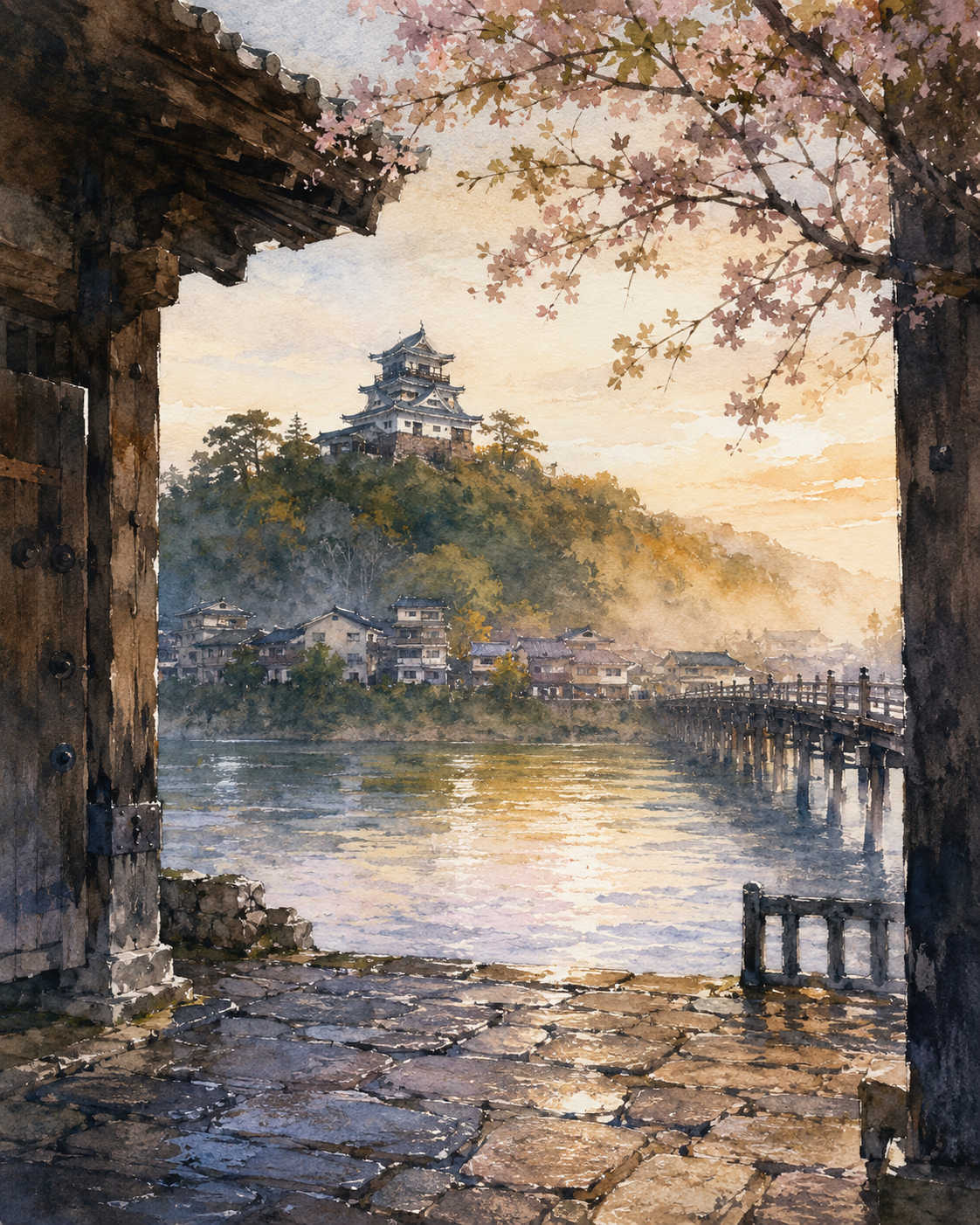
The Castle Beyond the Last Gate
Critique
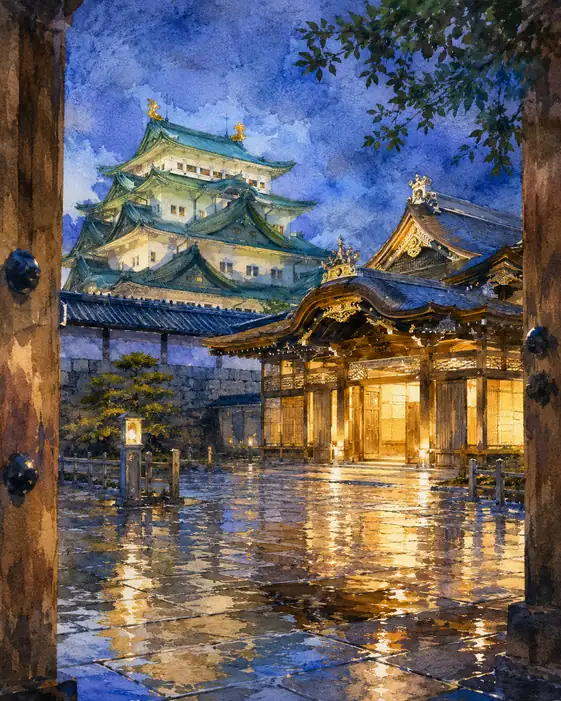
Introduction This work presents Inuyama Castle above the Kiso River through a transparent watercolor. It begins with a recognizable place, yet organizes light and color so that the subject reads immediately. The initial scenic appeal gradually gives way to an appreciation of the painted surface and its controlled structure. Description An old gateway opens onto river, bridge, and a hilltop keep in one sequence. Blossoms above and wet paving below direct the eye into the misty town. Foreground, middle distance, and background remain clearly legible, carrying the eye steadily into space. The palette centers on ink gray, light gold, blossom pink, and blue-gray, and its shifts of temperature describe both time of day and atmosphere. Analysis The composition gives the principal motif a firm position while using surrounding forms as frames and directional lines. White paper and light washes suggest mist and reflected light, while the dark gate quietly emphasizes the distant castle. Warm and cool passages separate spatial layers, and the brightest accents establish a readable focus without flattening the quieter areas. Interpretation and Evaluation The scene functions as more than a record of a celebrated view; it becomes a meeting point between natural time and attentive observation. Its convincing description, balanced composition, disciplined color, and responsive technique demonstrate control. Originality lies less in distorting the place than in intensifying its light while preserving recognizable geography and architecture. Conclusion The work successfully joins accessible landscape imagery with sustained attention to material and design. Description, color, composition, and technique reinforce one another rather than competing for notice. What first appears primarily picturesque becomes, through longer viewing, a carefully ordered meditation on atmosphere, distance, and the act of looking.
Same Subcategory
 Dreaming Palace in the Shimmering Water
Similar Artworks
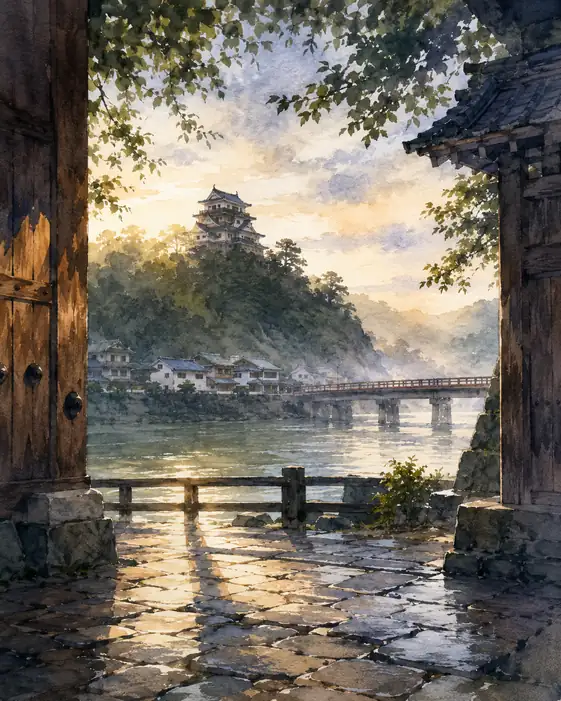 Morning Enters Through the Old Gate
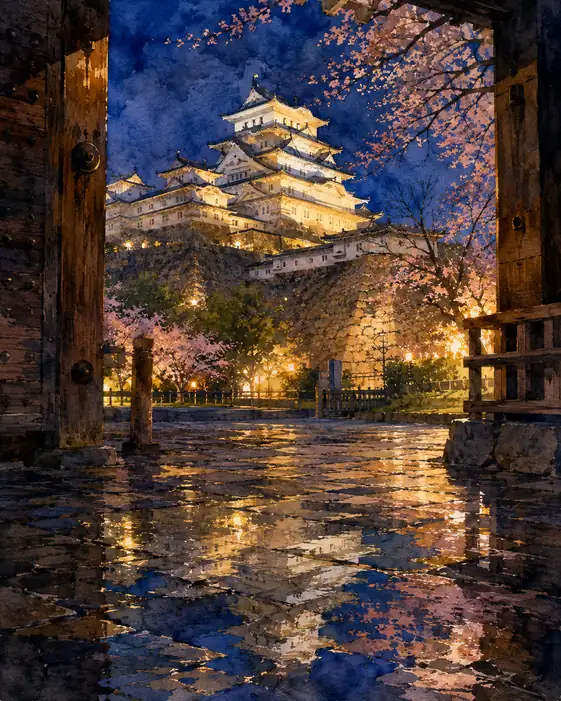 Night Enters Through Ancient Gates
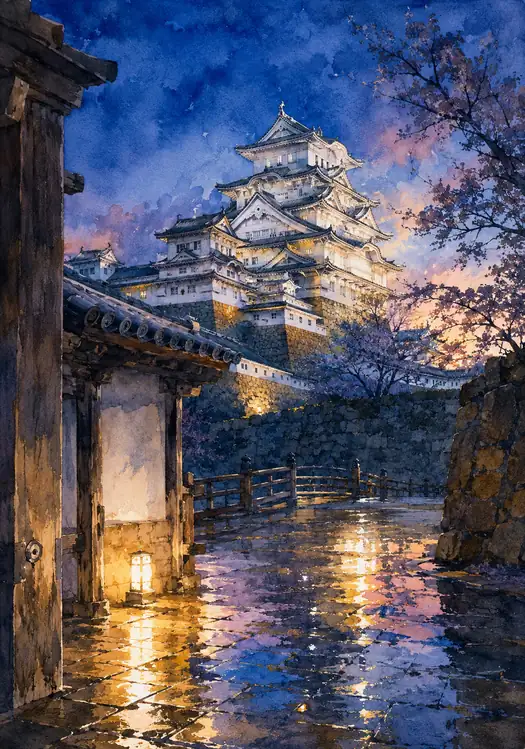 The Heron Rises After Rain
 Rain Polishes the Golden Moon
 The Castle Blooms after Rain
 Autumn Holds the Castle's Reflection
 Gold Waiting Beyond the Gate
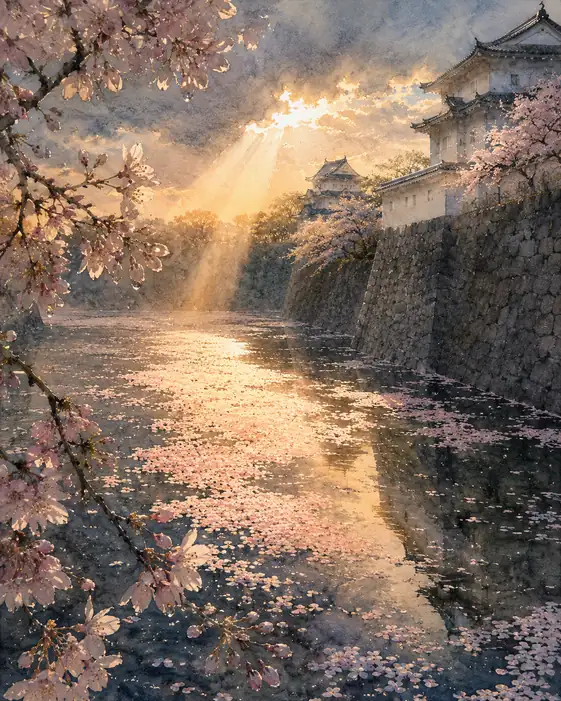 Resonance of Petals by the Sacred Keep
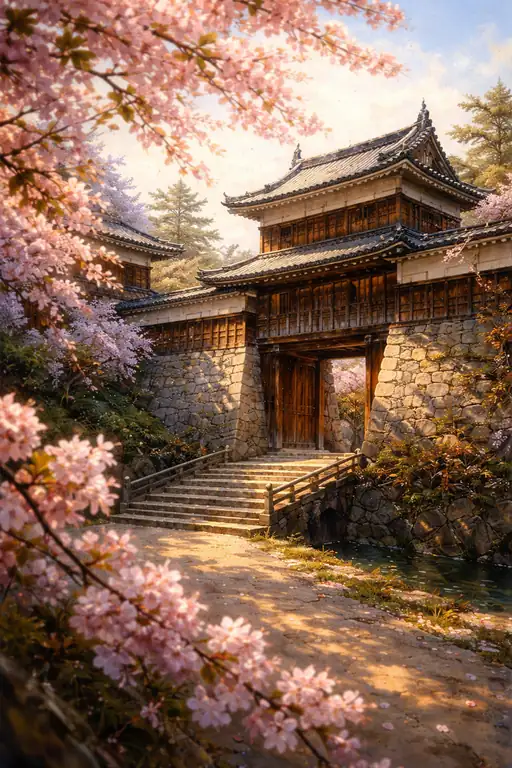 Spring's Gentle Embrace
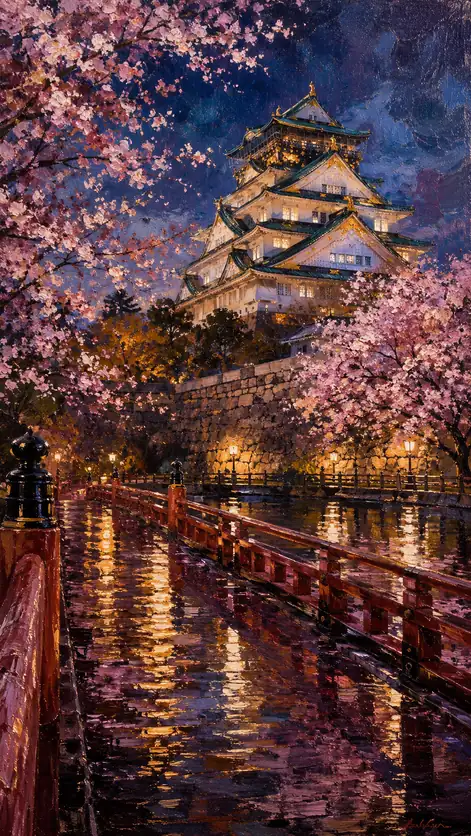 The Night Moat Holds a White Flame