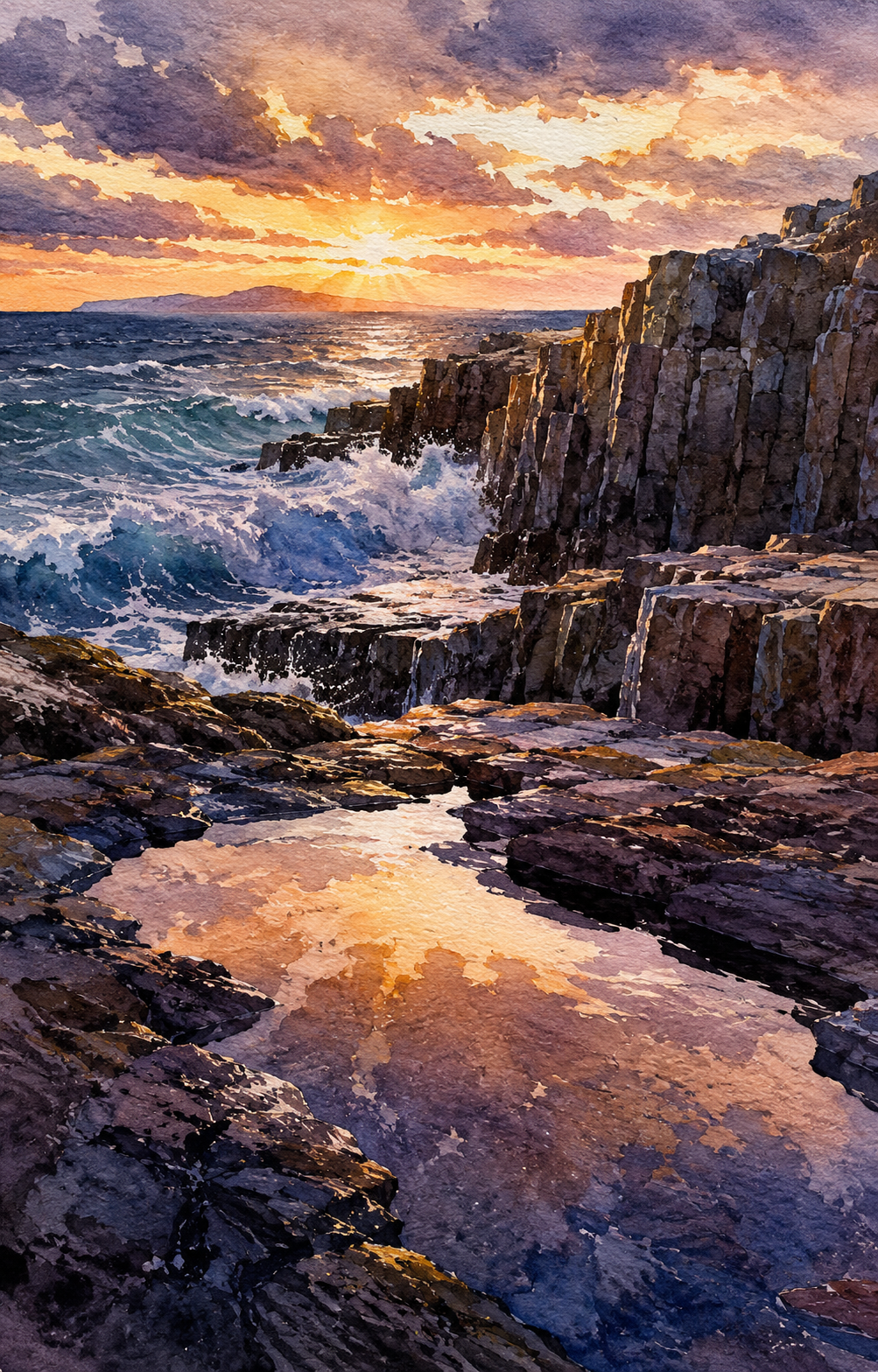
The Sea Breaks Every Perfect Line
Critique
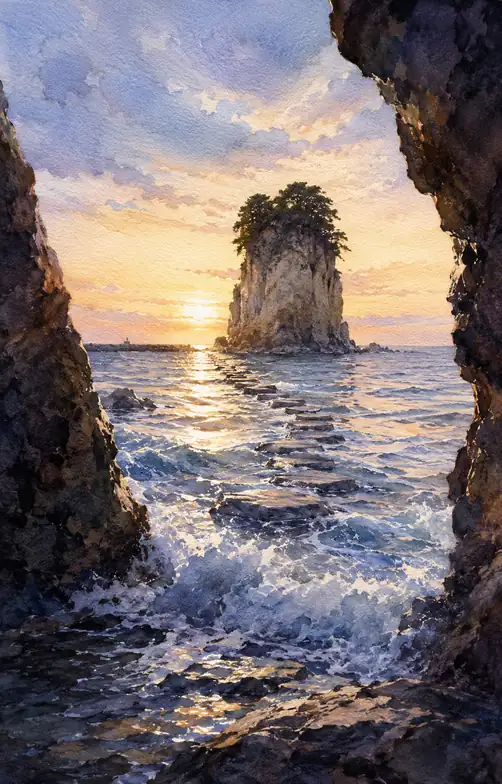
Introduction This landscape painting centers on a columnar-rock coast illuminated by sunset. It translates a recognizable place into an ordered arrangement of light, color, and spatial intervals. Description The foreground contains tide pools, wet rock shelves, and breaking waves. Beyond it, angular cliffs, rough sea, and sun between clouds establish a continuous movement from near space to the horizon. The palette is built from burnt brown, orange, deep blue, and white. Because low evening light turns tide pools into mirrors and reveals joints in the cliff, the highlights communicate a specific moment rather than functioning as decoration. Analysis In the composition, the right cliff and open sea at left form an asymmetrical triangle while reflections lead inward. Forms near the principal subject are relatively distinct, while peripheral and distant contours become softer. This controlled focus guides the eye through the vertical format and strengthens depth. Interpretation and Evaluation The work's central idea concerns the contrast between regularly fractured stone and irregular breaking waves. Its clear design, restrained palette, and directional light support one another without reducing the site to a simple emblem. Originality lies less in distortion than in selecting the most effective relationships from observed scenery. Some contrasts are heightened, but they remain consistent with the atmosphere and clarify the subject. Conclusion The painting balances descriptive precision with a coherent pictorial structure. Gradations from foreground to distance, measured value contrasts, and recurring colors lead attention steadily toward the main motif. What first appears primarily picturesque gradually becomes an attentive study of time and environment. Its drawing, composition, color, and handling are successfully integrated into a unified visual experience.
Same Subcategory
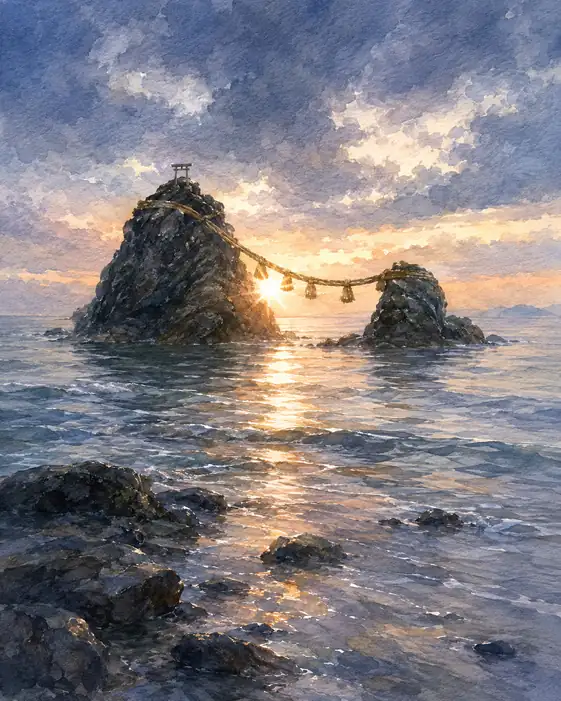 The Sun Between Two Vows
Similar Artworks
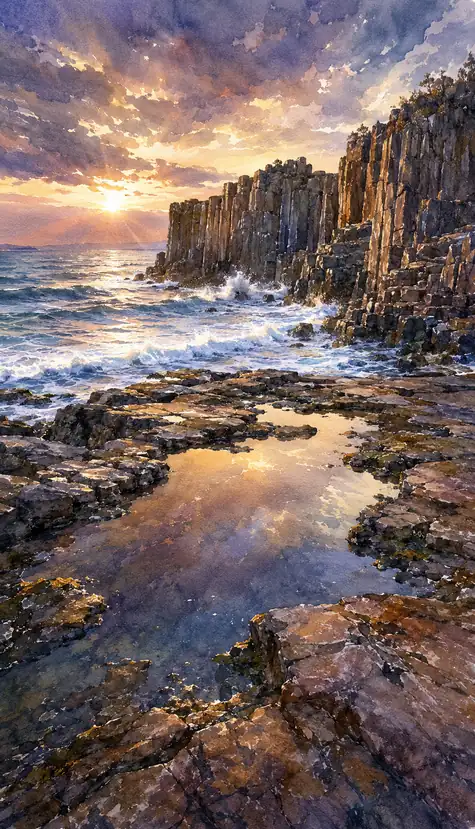 Stone Keeps Measure, Waves Forget
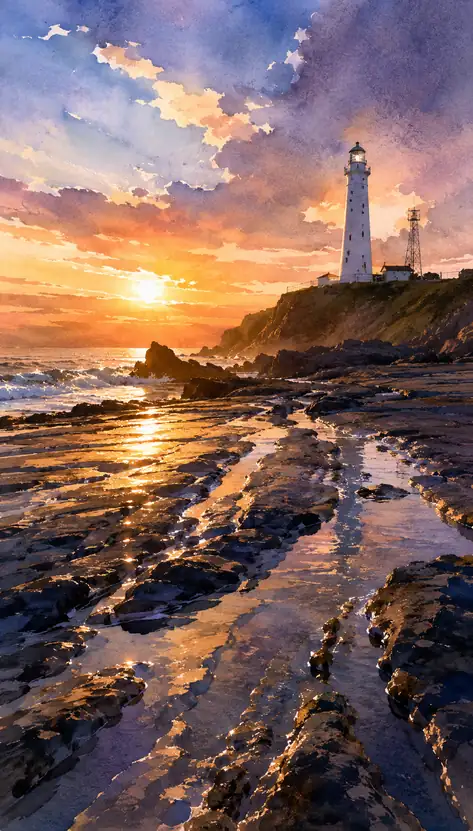 The White Light Watching Over Evening Calm
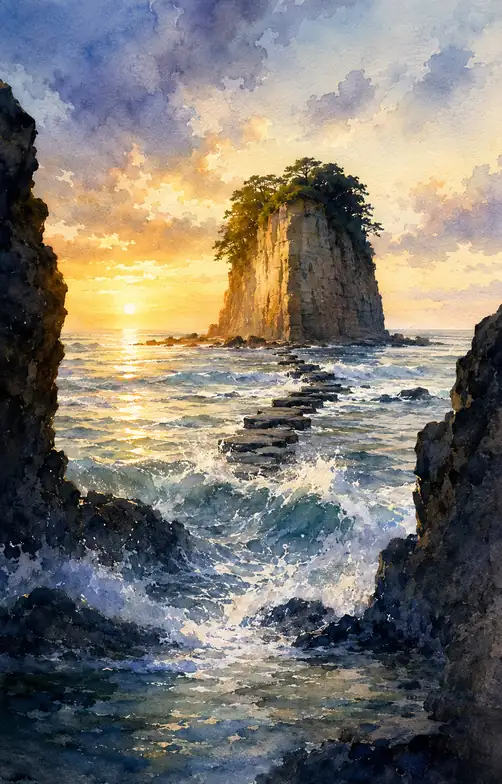 Beyond the Dark, the Sea Remembers Gold
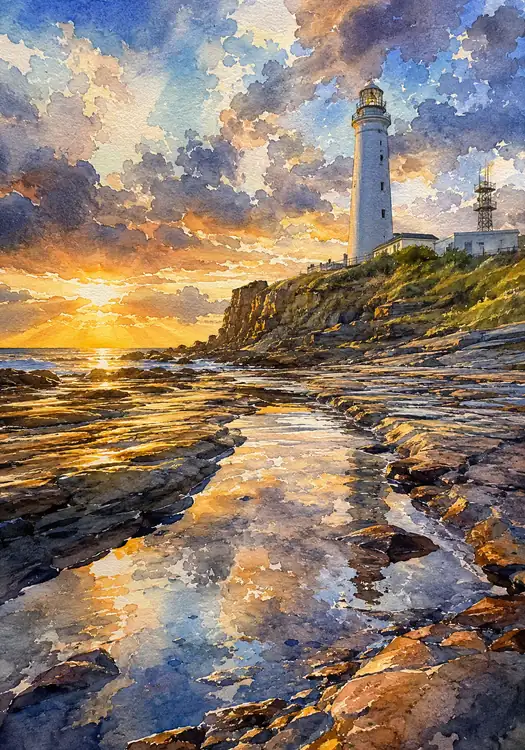 The Tidal Path to the White Tower
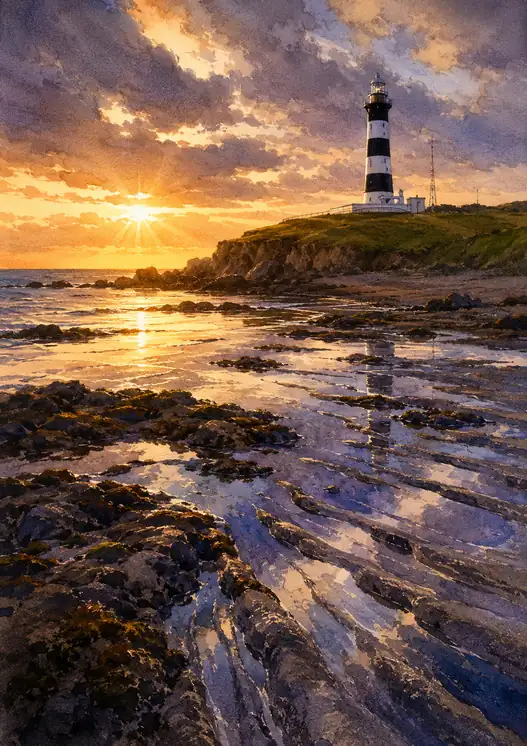 Beacon at the Edge of Day
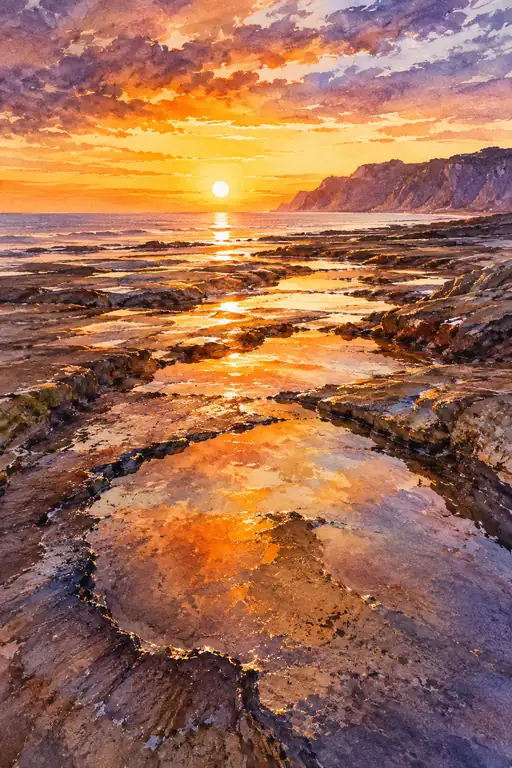 The Golden Mirror of Twilight
 The Geometric Dance of the Tides
 The Horizon Waiting Through Stone
 Steps Ascending into Afterglow
 Prayer Above the Tide