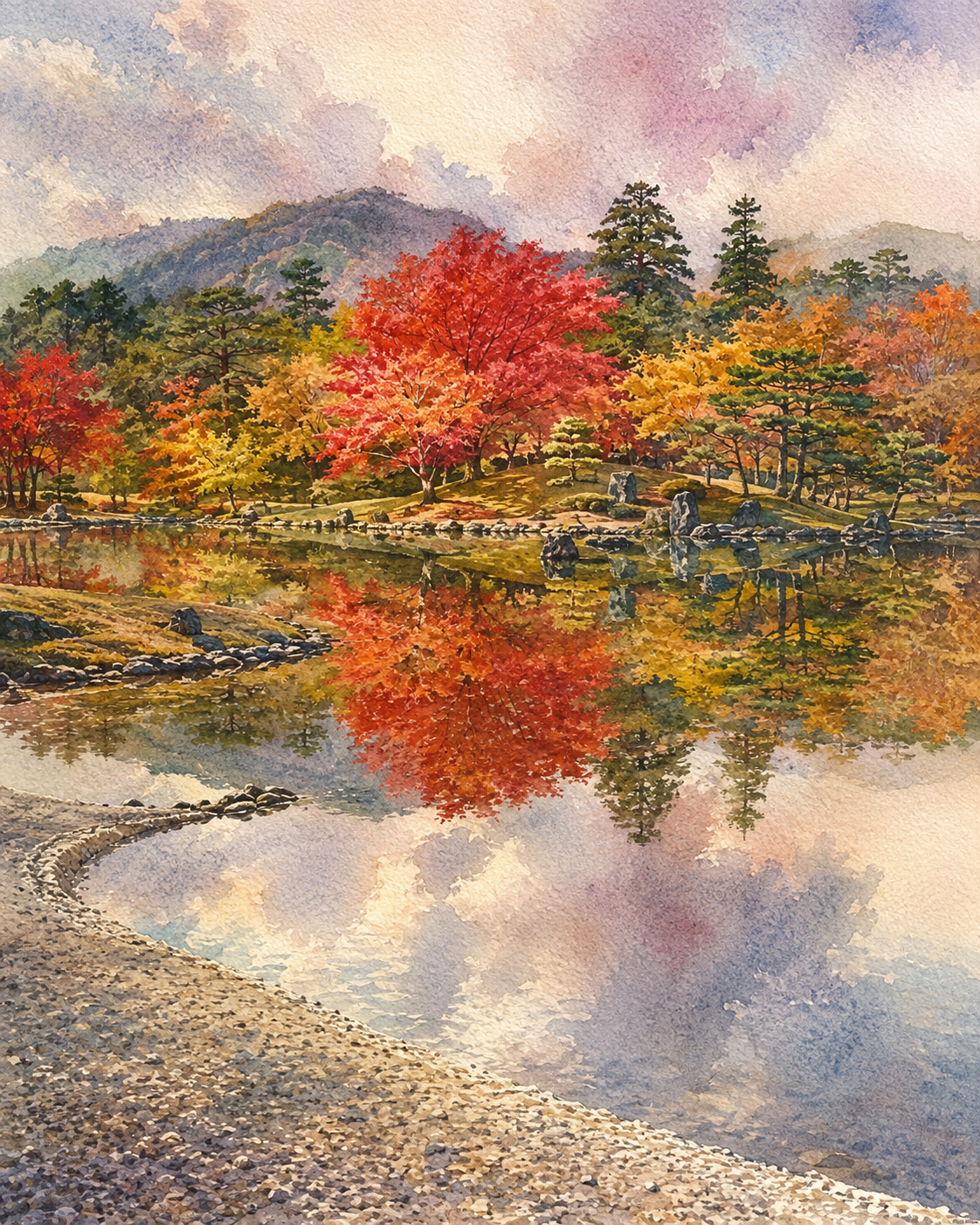
The Season Dreams Twice
Critique
Introduction This landscape painting centers on an autumn-colored garden mound and mirrorlike pond. It translates a recognizable place into an ordered arrangement of light, color, and spatial intervals. Description The foreground contains a curving pebble shore and red reflections. Beyond it, groups of autumn trees, garden rocks, and a hazy mountain form establish a continuous movement from near space to the horizon. The palette is built from red, orange, green, and violet gray. Because soft light weakens the boundary between the scene and its mirror image, the highlights communicate a specific moment rather than functioning as decoration. Analysis In the composition, the shore curve and tree verticals vary the pond's horizontality. Forms near the principal subject are relatively distinct, while peripheral and distant contours become softer. This controlled focus guides the eye through the vertical format and strengthens depth. Interpretation and Evaluation The work's central idea concerns the balance by which a cultivated garden accepts seasonal contingency. Its clear design, restrained palette, and directional light support one another without reducing the site to a simple emblem. Originality lies less in distortion than in selecting the most effective relationships from observed scenery. Some contrasts are heightened, but they remain consistent with the atmosphere and clarify the subject. Conclusion The painting balances descriptive precision with a coherent pictorial structure. Gradations from foreground to distance, measured value contrasts, and recurring colors lead attention steadily toward the main motif. What first appears primarily picturesque gradually becomes an attentive study of time and environment. Its drawing, composition, color, and handling are successfully integrated into a unified visual experience.
Same Subcategory
Similar Artworks
 Autumn Rests on the Shore of Paradise
 A Single Ripple in Twilight
 Ephemeral Fire of the Autumn Court
 Autumn's Embrace at the Still Water
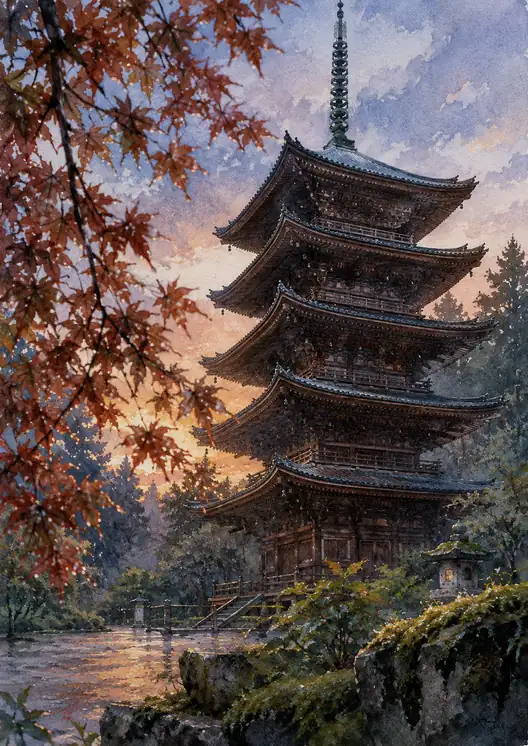 Autumn twilight, the Pagoda’s Silent Prayer
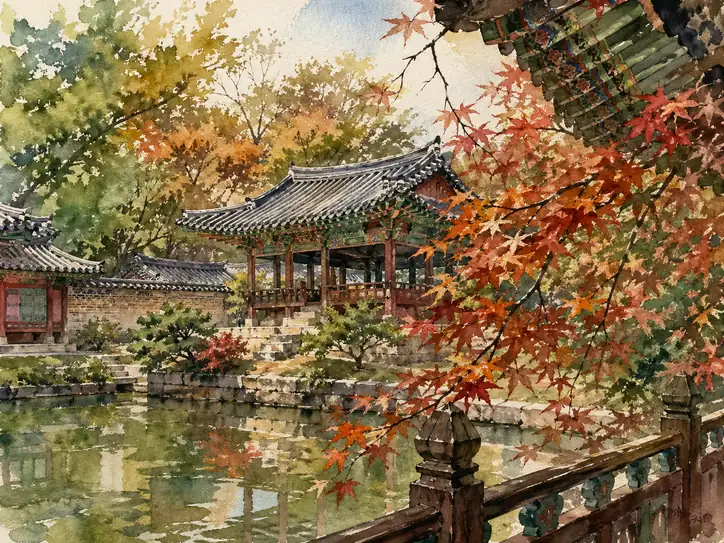 Whispers of Red in the Tranquil Garden
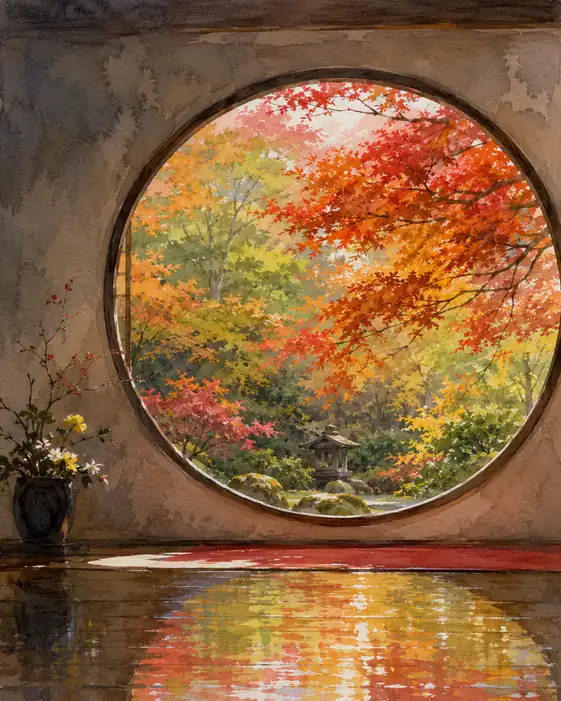 The Season Enters Without a Sound
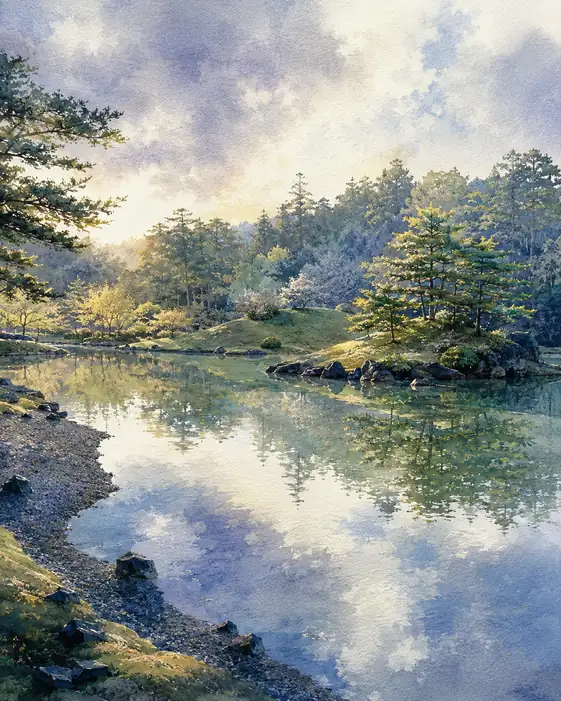 Morning Tranquility on the Sacred Island
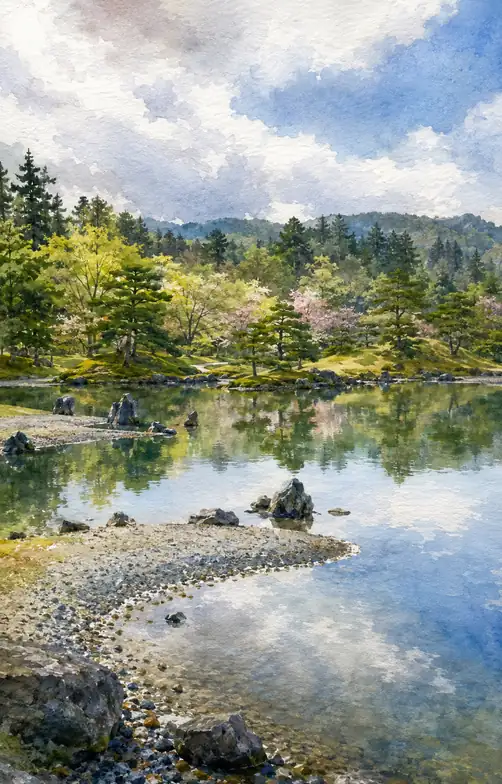 Pure Water Reflecting Sky and Stone
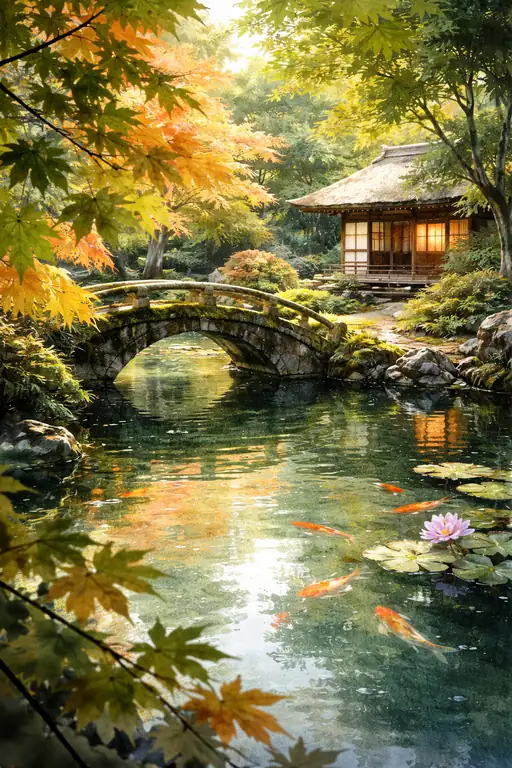 The Autumn Sanctuary of Koi