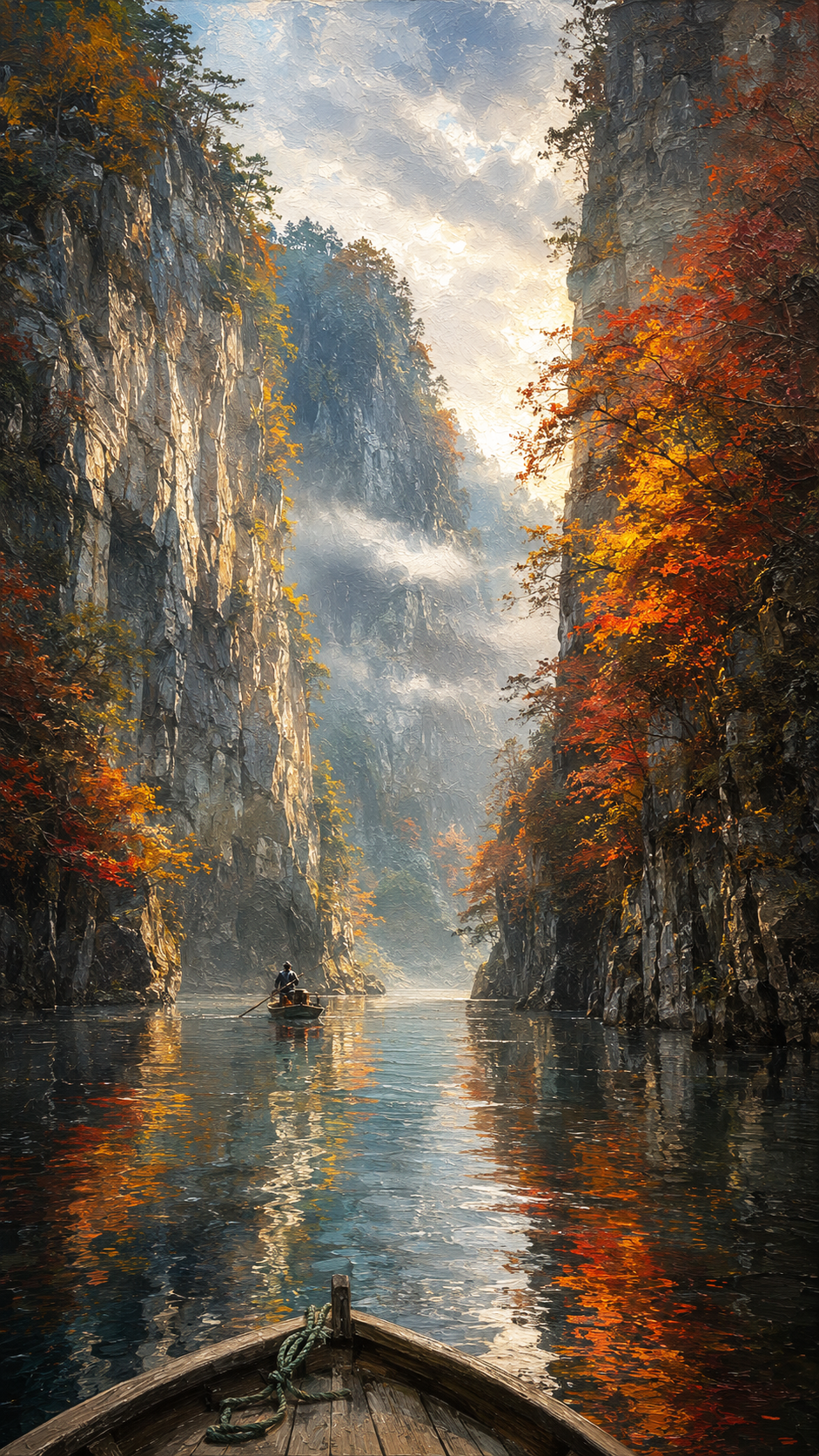
Between Stone's Silence and the Passing Oar
Critique
Introduction This landscape painting centers on a boat passing through a misty autumn gorge. It translates a recognizable place into an ordered arrangement of light, color, and spatial intervals. Description The foreground contains the bow at the bottom and red reflections on the water. Beyond it, sheer limestone, autumn leaves, and a slit of sky establish a continuous movement from near space to the horizon. The palette is built from orange, blue gray, black, and white. Because the bright sky above drops soft light into the ravine, the highlights communicate a specific moment rather than functioning as decoration. Analysis In the composition, the cliffs form strong vertical borders and compress the narrow channel toward center. Forms near the principal subject are relatively distinct, while peripheral and distant contours become softer. This controlled focus guides the eye through the vertical format and strengthens depth. Interpretation and Evaluation The work's central idea concerns the different temporal scales of the moving boat and immobile stone. Its clear design, restrained palette, and directional light support one another without reducing the site to a simple emblem. Originality lies less in distortion than in selecting the most effective relationships from observed scenery. Some contrasts are heightened, but they remain consistent with the atmosphere and clarify the subject. Conclusion The painting balances descriptive precision with a coherent pictorial structure. Gradations from foreground to distance, measured value contrasts, and recurring colors lead attention steadily toward the main motif. What first appears primarily picturesque gradually becomes an attentive study of time and environment. Its drawing, composition, color, and handling are successfully integrated into a unified visual experience.
Same Subcategory
Similar Artworks
 Where the River Borrows Autumn
 Autumn Whispers in the Sunlit Gorge
 When the Leaves Learned Fire
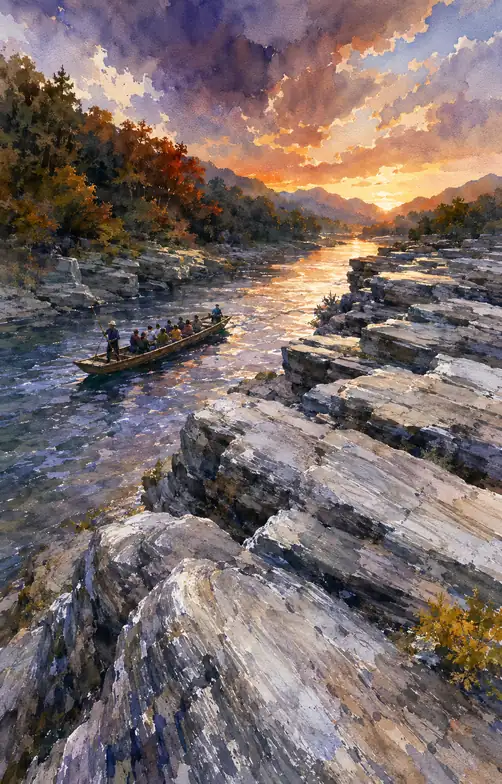 A Boat Through Ages of Stone
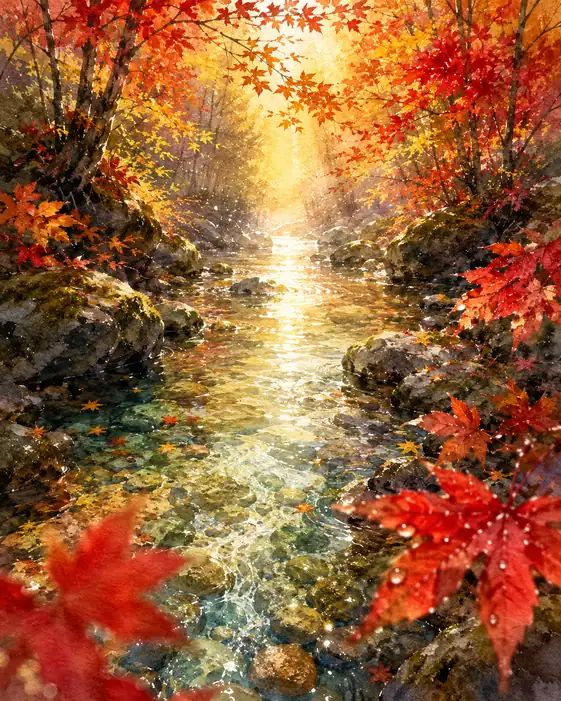 The Golden Beam through Autumn's Mirror
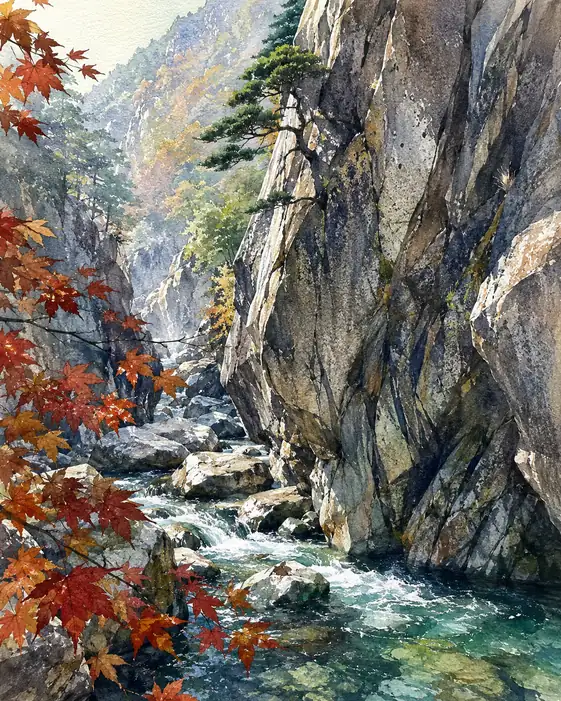 Echoes of Crimson and Stone
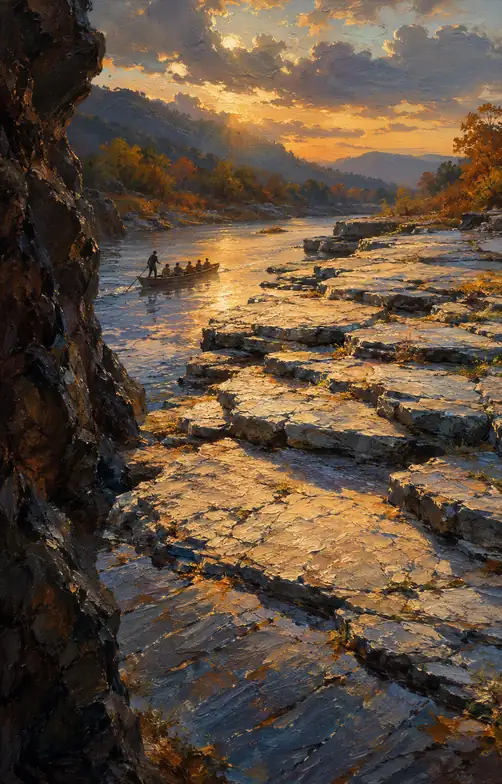 A Small Boat Crossing the Afterglow
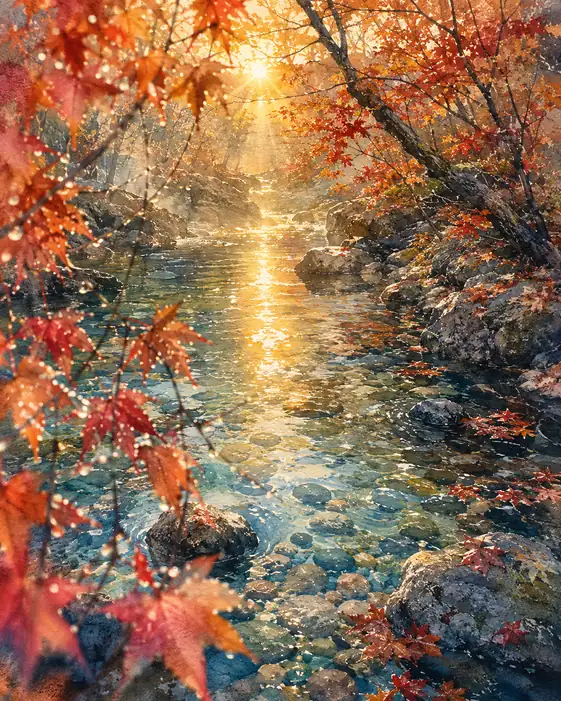 Ripples of Gold and Crimson Leaves
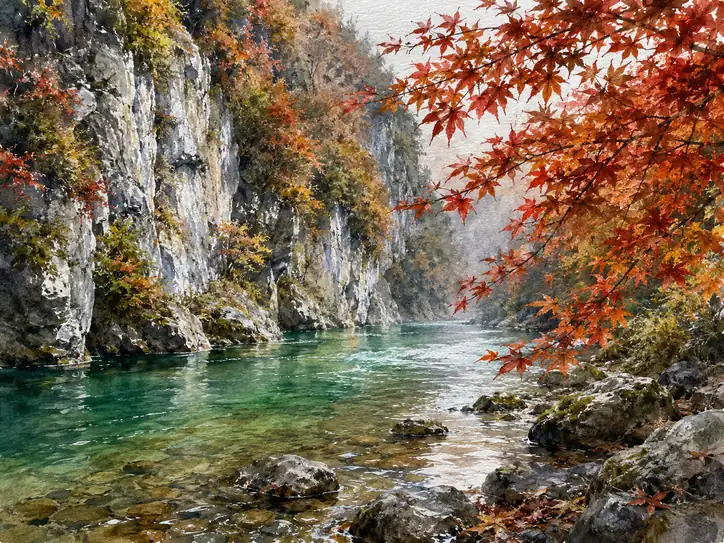 The Song of the Fire and the Stream
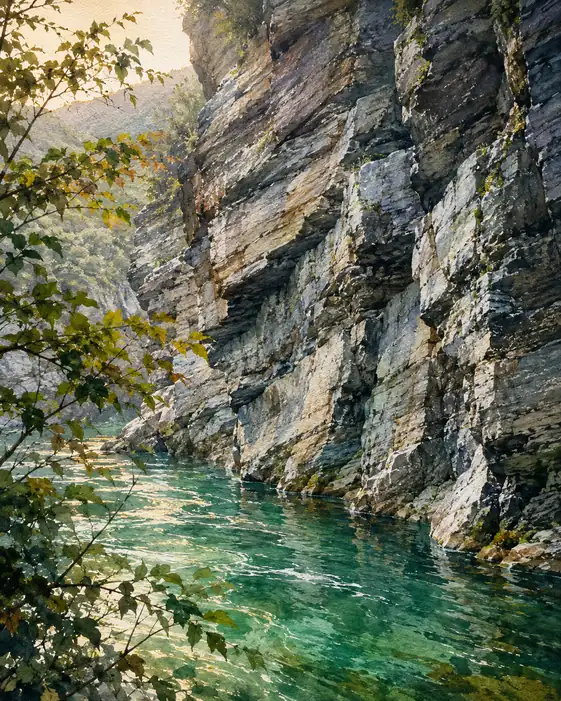 Emerald Depths of the Silent Gorge