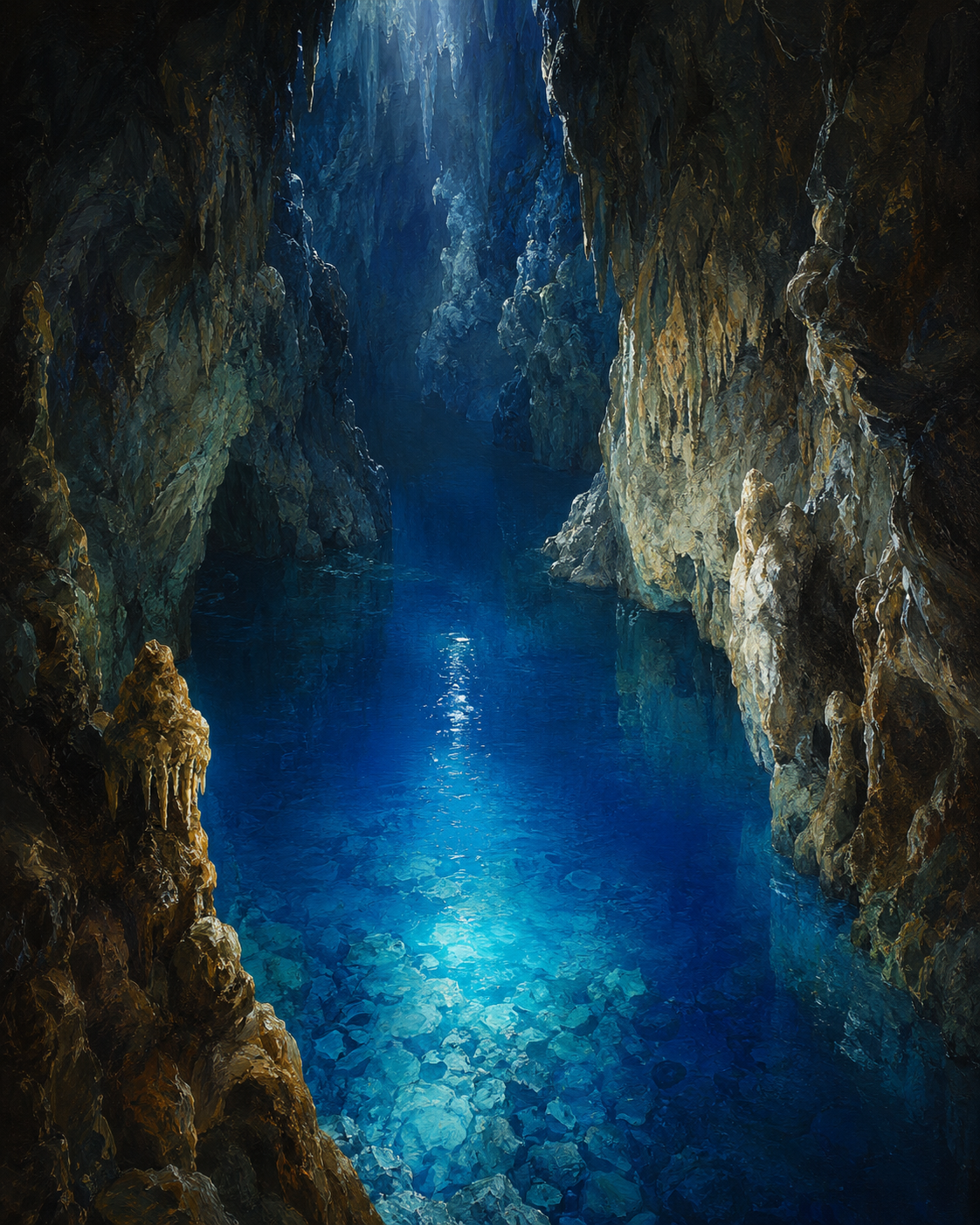
A Blue Secret Beneath the Earth
Critique
Introduction This landscape painting centers on a blue underground lake glowing within a dark limestone cave. It translates a recognizable place into an ordered arrangement of light, color, and spatial intervals. Description The foreground contains visible stones beneath clear water and dark rock edges. Beyond it, hanging formations, blue light from above, and deep water establish a continuous movement from near space to the horizon. The palette is built from deep blue, turquoise, black, and gray white. Because a narrow shaft of light descends from above into the water, the highlights communicate a specific moment rather than functioning as decoration. Analysis In the composition, cave walls on both sides enclose the central light and fix the gaze into depth. Forms near the principal subject are relatively distinct, while peripheral and distant contours become softer. This controlled focus guides the eye through the vertical format and strengthens depth. Interpretation and Evaluation The work's central idea concerns a composition in which the transparency of water itself becomes the subject. Its clear design, restrained palette, and directional light support one another without reducing the site to a simple emblem. Originality lies less in distortion than in selecting the most effective relationships from observed scenery. Some contrasts are heightened, but they remain consistent with the atmosphere and clarify the subject. Conclusion The painting balances descriptive precision with a coherent pictorial structure. Gradations from foreground to distance, measured value contrasts, and recurring colors lead attention steadily toward the main motif. What first appears primarily picturesque gradually becomes an attentive study of time and environment. Its drawing, composition, color, and handling are successfully integrated into a unified visual experience.
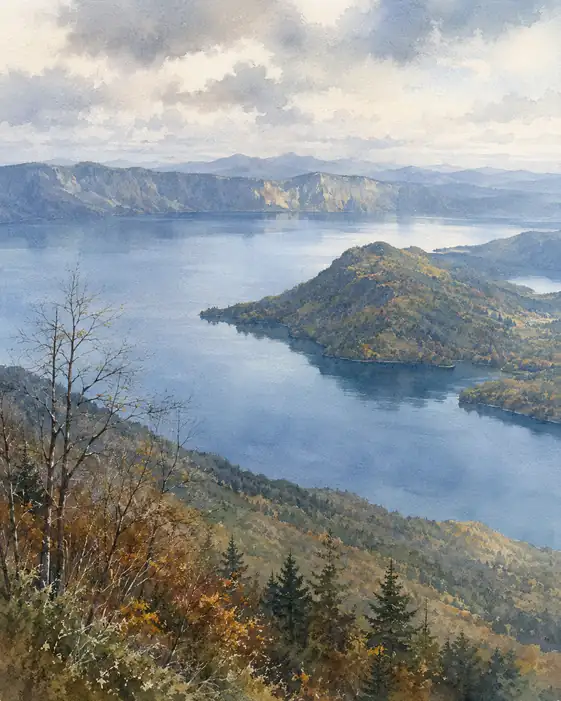 Panoramic Calm of Lake Towada from Hakka Pass
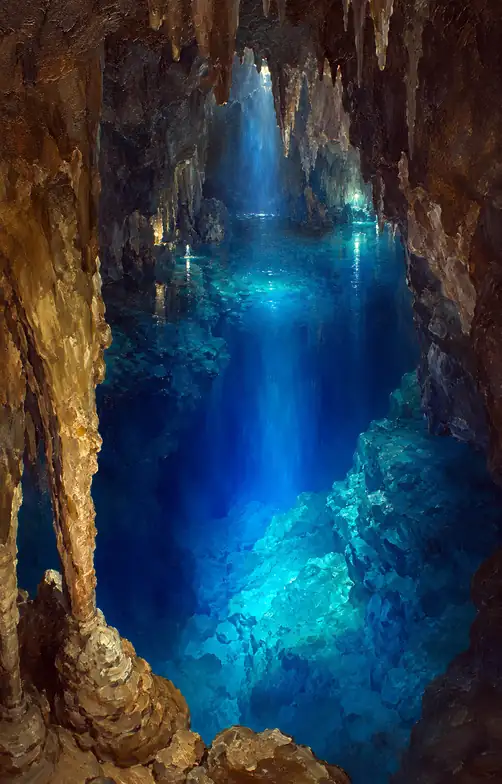 Dragonlight Unfurling in the Deep
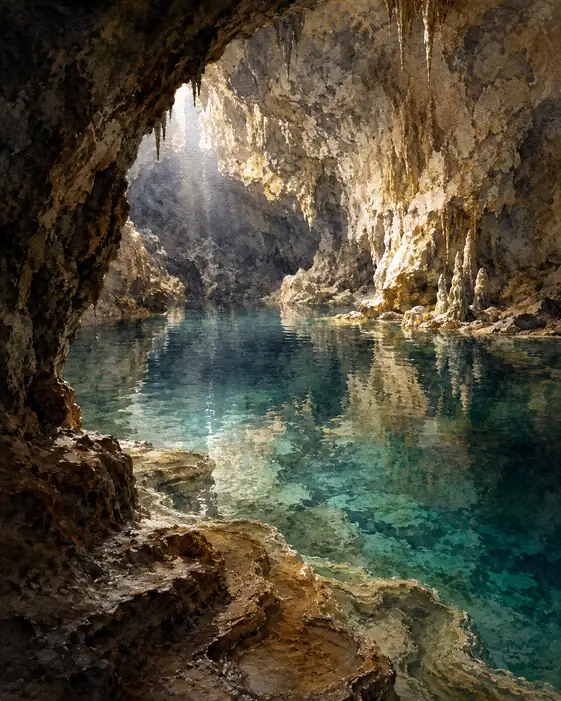 Echoes in the Crystal Void
 Sanctuary of Silent Blue
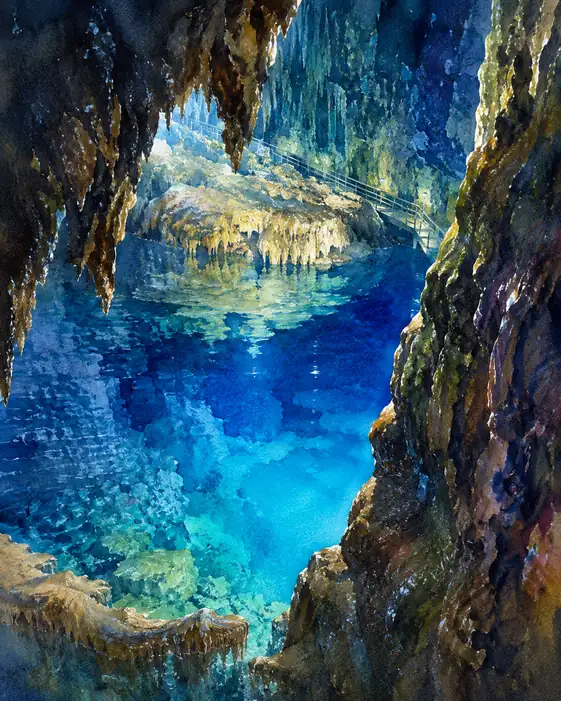 Luminous Depths: The Azure Sanctuary
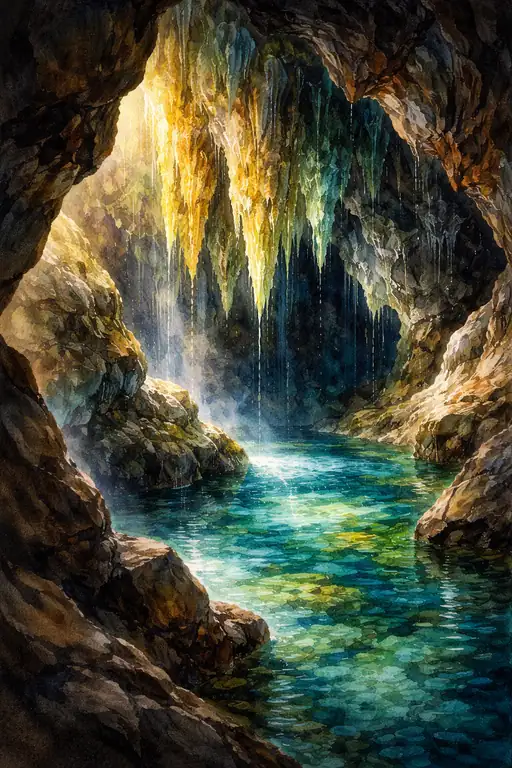 Light Found in Hidden Halls
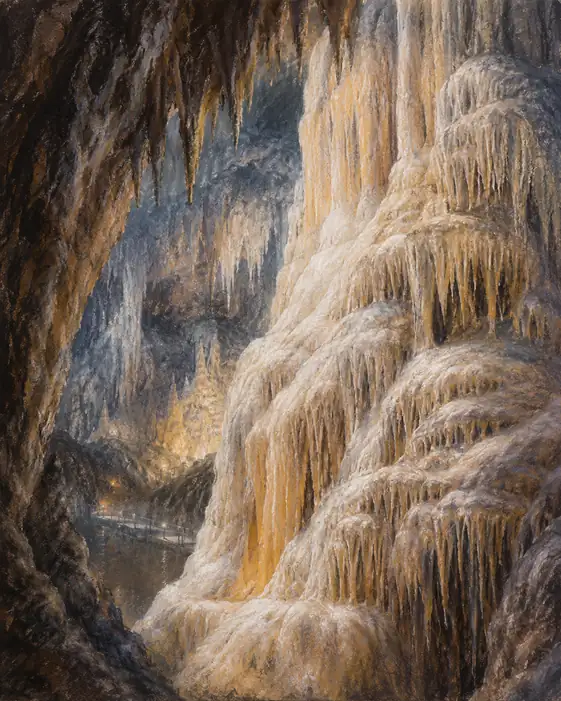 The Golden Cathedral of Subterranean Time
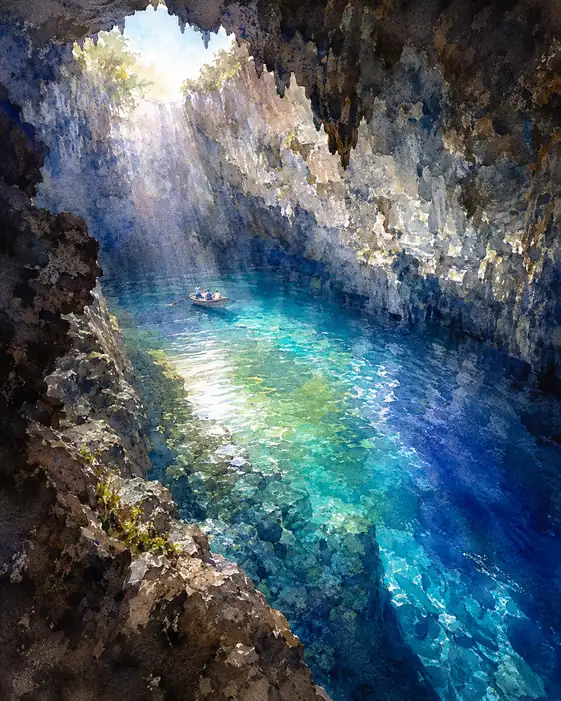 Celestial Light in the Hidden Cavern
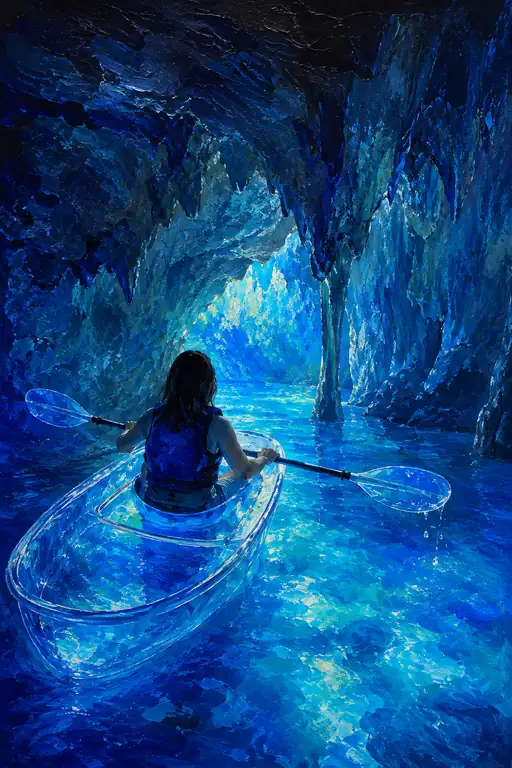 Into the Blue Silence
 Sanctuary of the Blue Mist
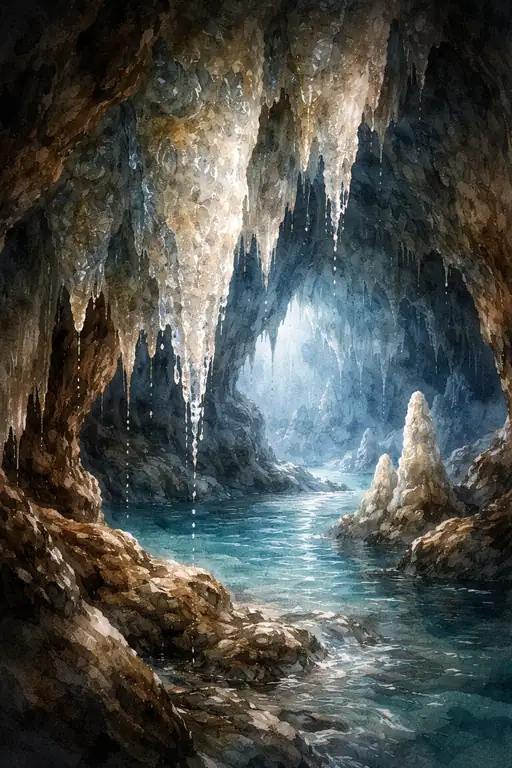 Tears of the Earth