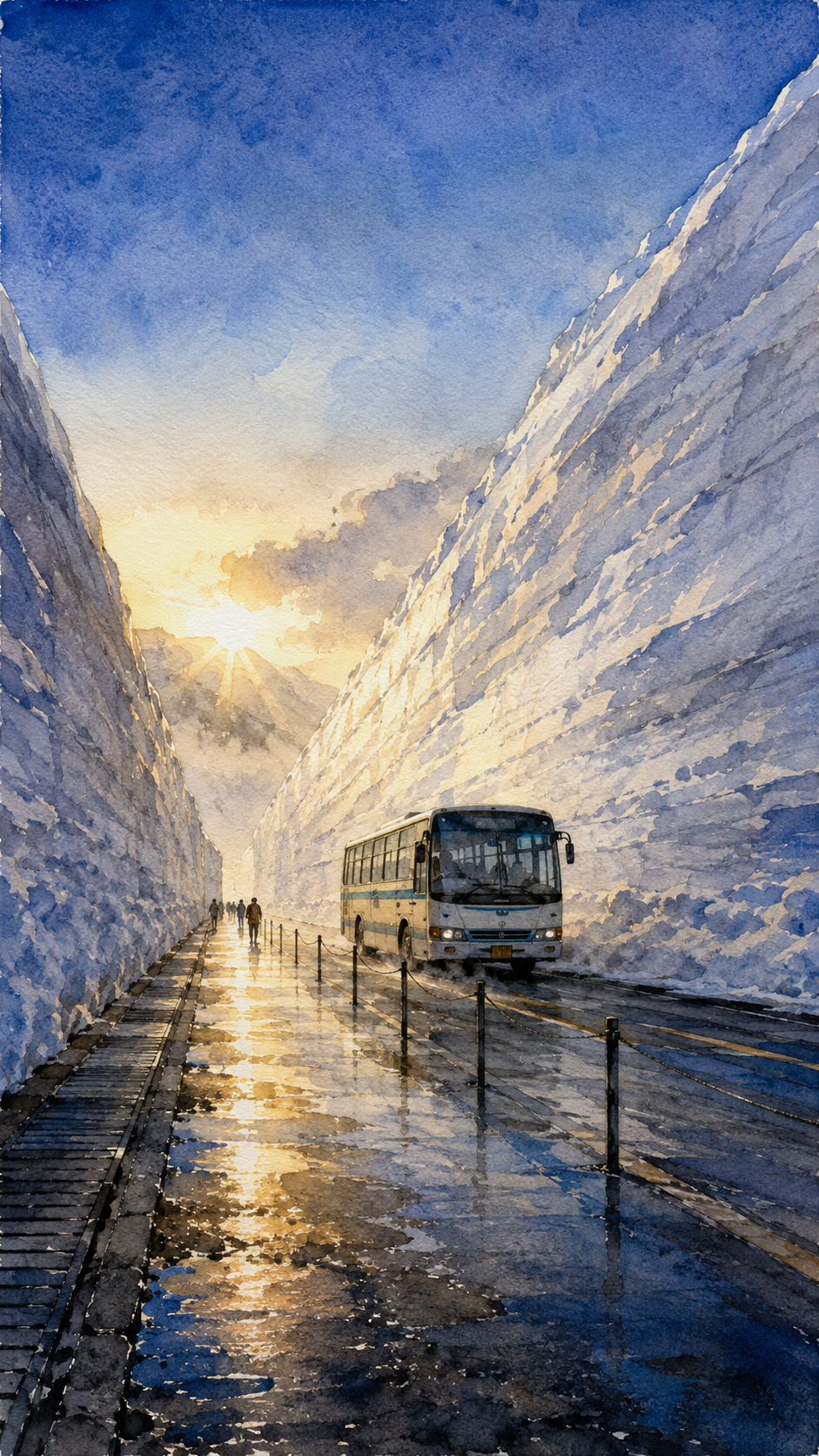
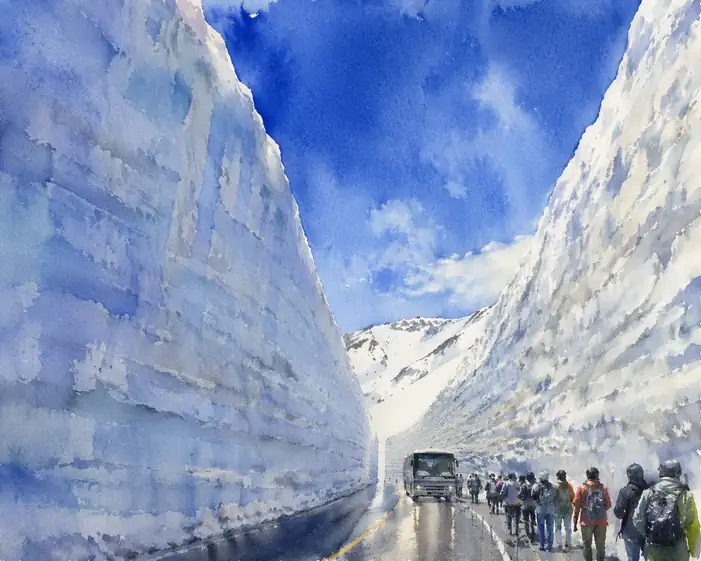
We Travel Through Winter's Cathedral
Critique
Introduction This landscape painting centers on a bus and pedestrians moving through a great snow corridor. It translates a recognizable place into an ordered arrangement of light, color, and spatial intervals. Description The foreground contains a glossy road and regularly spaced posts. Beyond it, high snow walls, distant mountains, and a bright sky establish a continuous movement from near space to the horizon. The palette is built from white, blue, amber, and black. Because evening light edges the snow walls with gold, the highlights communicate a specific moment rather than functioning as decoration. Analysis In the composition, the bus at right slightly breaks the symmetry and adds scale and motion. Forms near the principal subject are relatively distinct, while peripheral and distant contours become softer. This controlled focus guides the eye through the vertical format and strengthens depth. Interpretation and Evaluation The work's central idea concerns the intersection of temporary snow architecture and ordinary movement. Its clear design, restrained palette, and directional light support one another without reducing the site to a simple emblem. Originality lies less in distortion than in selecting the most effective relationships from observed scenery. Some contrasts are heightened, but they remain consistent with the atmosphere and clarify the subject. Conclusion The painting balances descriptive precision with a coherent pictorial structure. Gradations from foreground to distance, measured value contrasts, and recurring colors lead attention steadily toward the main motif. What first appears primarily picturesque gradually becomes an attentive study of time and environment. Its drawing, composition, color, and handling are successfully integrated into a unified visual experience.
Same Subcategory
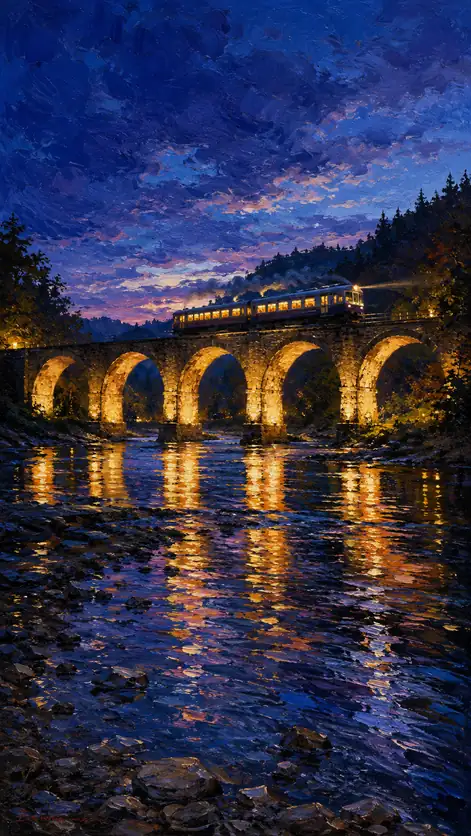 A Brief Constellation Crosses the Stone
Similar Artworks
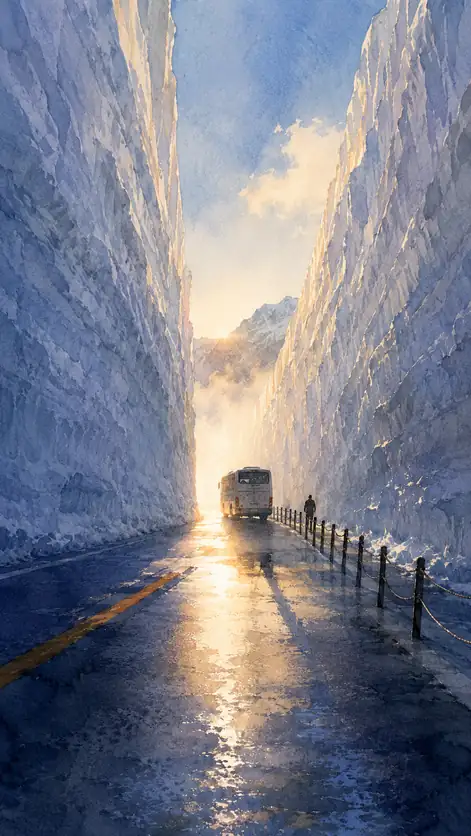 The Sun Waits Beyond the Walls of Snow
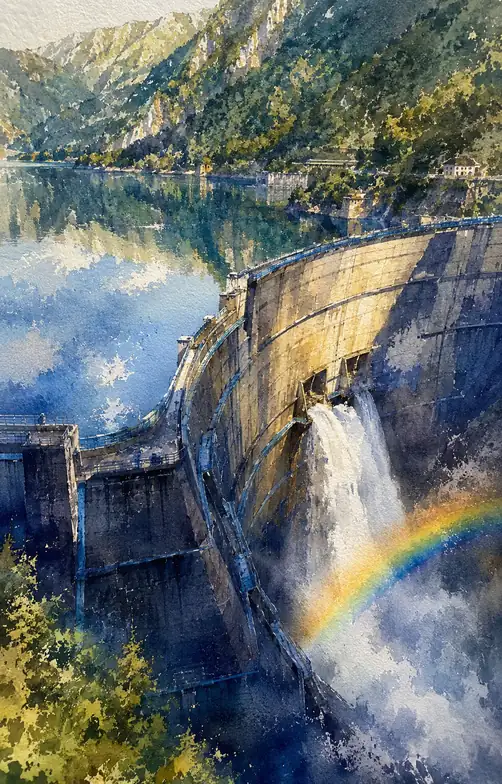 When the Mountain Lets the Water Speak
 Alpine Corridor: The White Passage
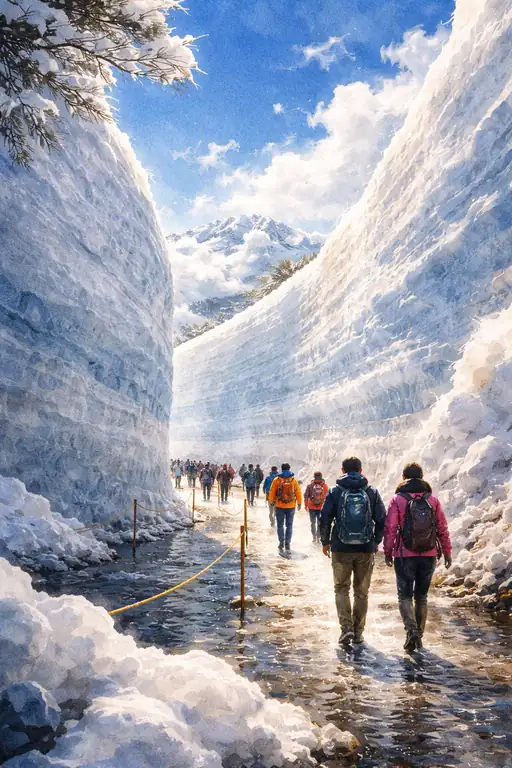 Footsteps Echoing in the Frozen Canyon
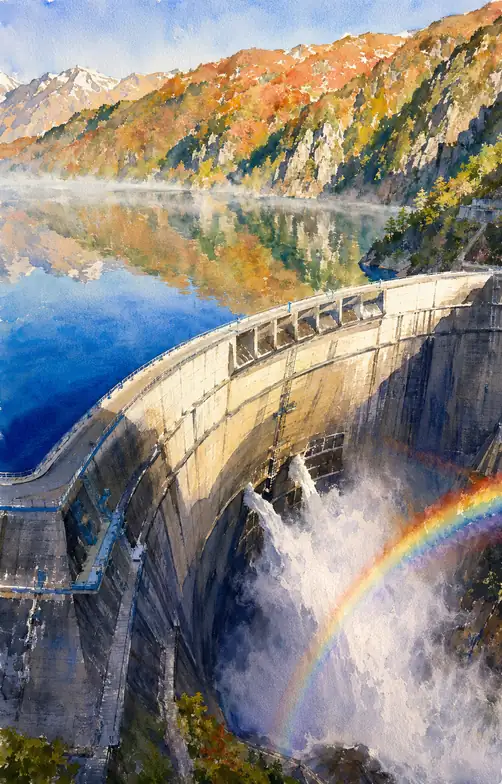 A Rainbow Bends to Human Hands
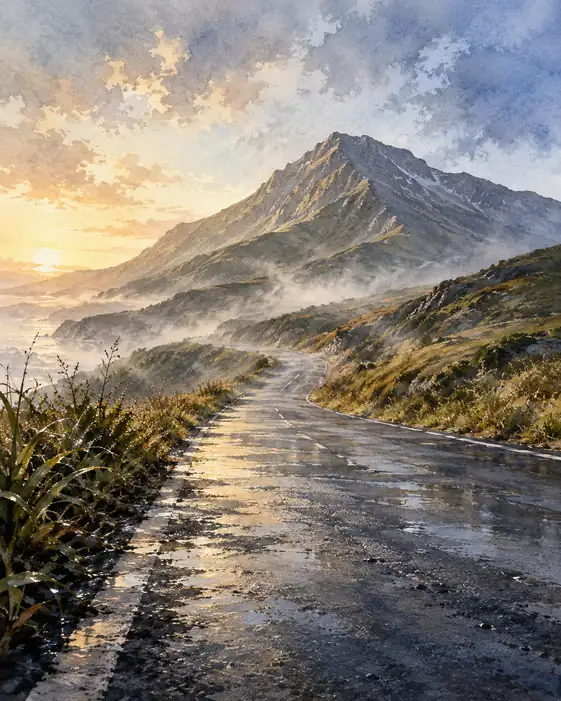 Winding Road to Mount Rausu under Sunset Light
 Where Wildflowers Dream of the Sky
 Whispering Heights
 Bridge to the Golden Horizon
 The Mountain Drinks Its Reflection