
Rain Between Two Silences
Critique
Introduction This painting depicts a tatami room facing a rain-soaked garden through a monumental circular opening. Blue hydrangeas, deep green foliage, and a stone lantern establish a seasonal setting, while the dim interior provides a sheltered point of view. The work is distinguished by its patient observation of moisture, softened light, and silence. Description The foreground is filled with wet-looking tatami whose dark borders form a measured grid. A flower arrangement occupies the lower left, and a restrained ceiling lamp hangs above. Beyond the round frame, vertical rain passes through trees and shrubs, pooling along a narrow path beside clusters of hydrangeas and a moss-covered lantern. Analysis The circle interrupts the rectangular structure of floor, ceiling, and walls, directing attention toward the garden. Receding bands of tatami create depth, while the slightly asymmetrical placement of flowers and lantern keeps the centered design active. Earthy browns inside meet cool greens and blues outside. Short, layered strokes blur distant vegetation, whereas firmer edges define the architecture. Interpretation and Evaluation Rain transforms the window from an opening into a quiet boundary between protection and exposure. The restrained palette and softened contours slow the act of looking, allowing minor differences in surface and tone to become important. The composition is lucid, the color is sensitively controlled, and the handling of wet textures is persuasive. Its imaginative value lies in presenting weather as an active organizer of space rather than a decorative effect. Conclusion The first impression of a tranquil rainy garden develops into an awareness of how shelter sharpens perception. Balanced geometry, nuanced color, and consistent brushwork make stillness feel substantial and carefully observed.
Same Subcategory
Similar Artworks
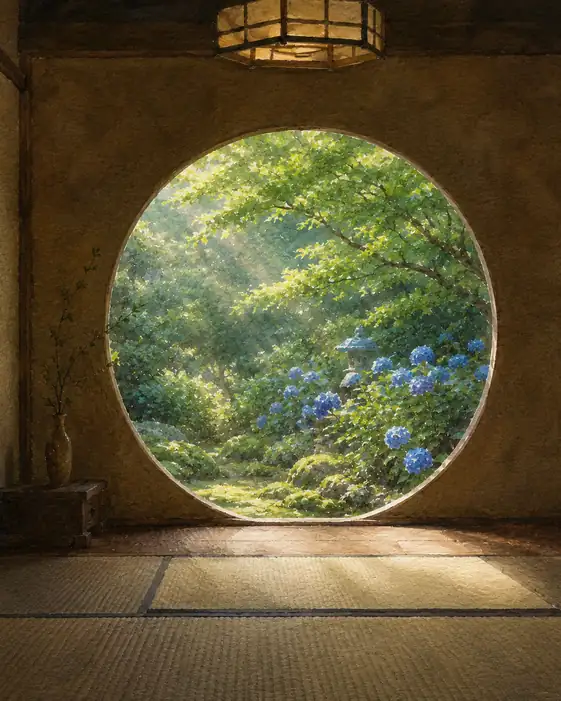 The Circle Holds the Morning
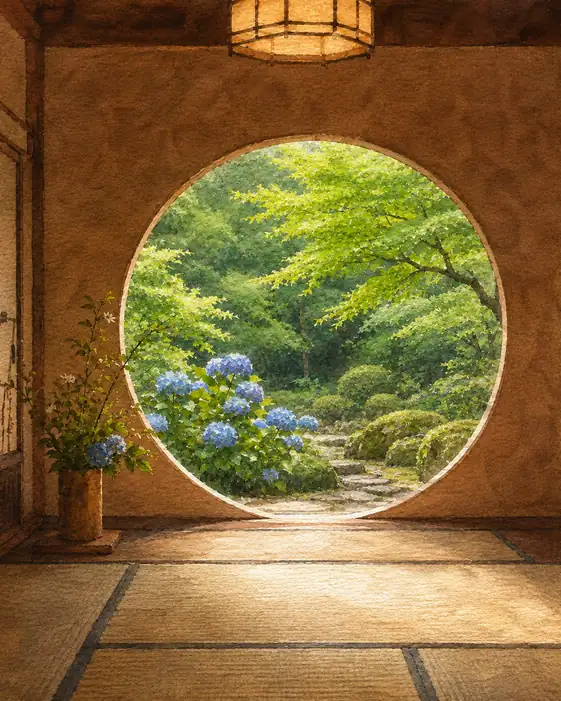 The Garden Breathes Through a Circle
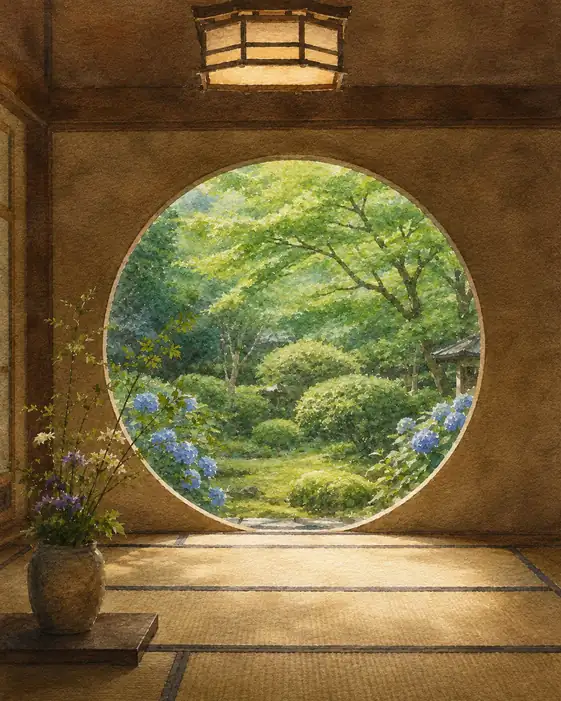 Summer Enters Without Footsteps
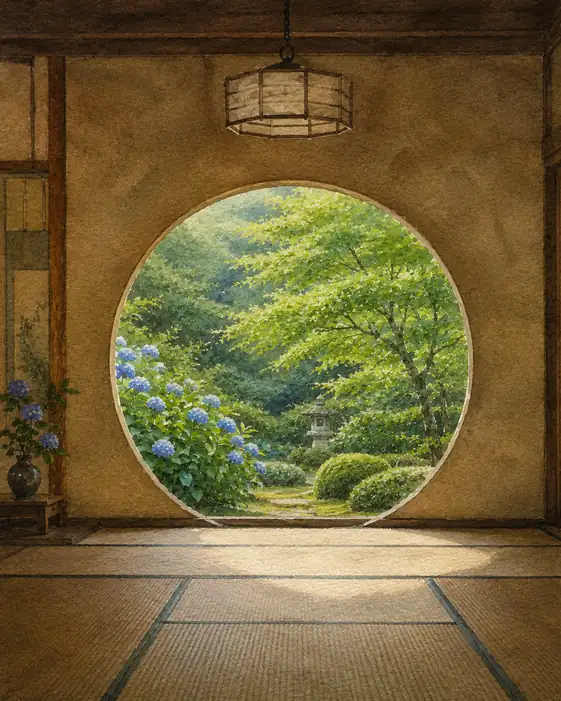 Where Stillness Learns the Light
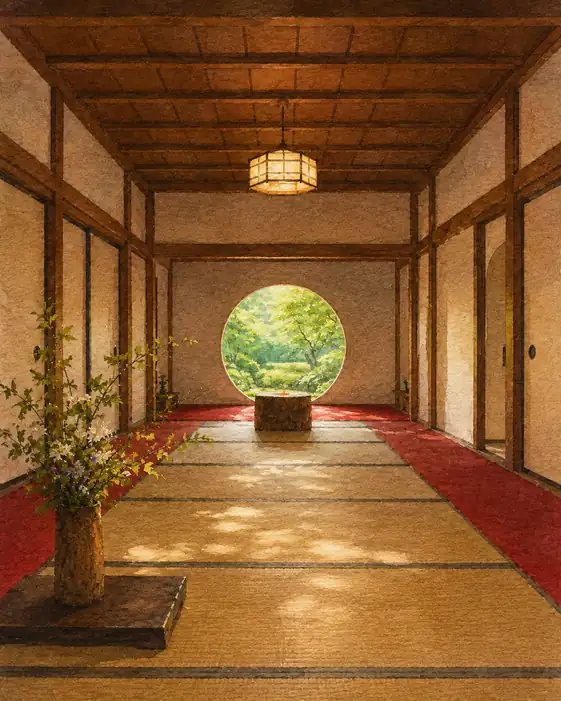 Green Breath Beyond the Circle
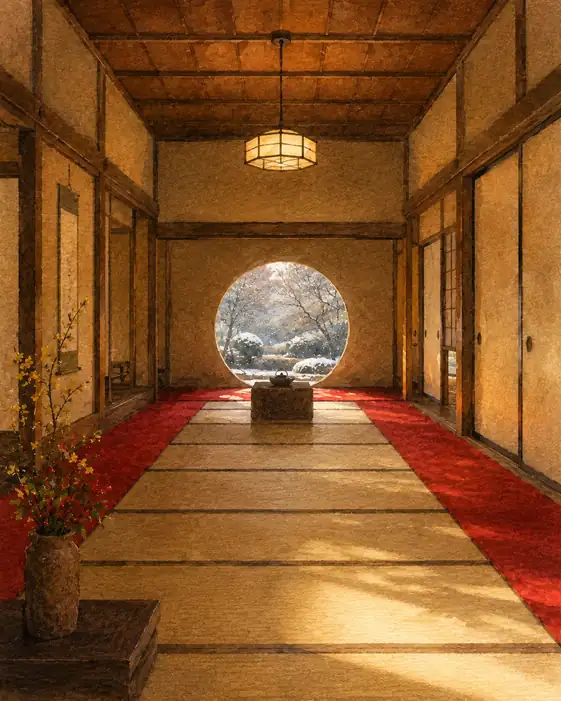 Winter, Warmly Framed
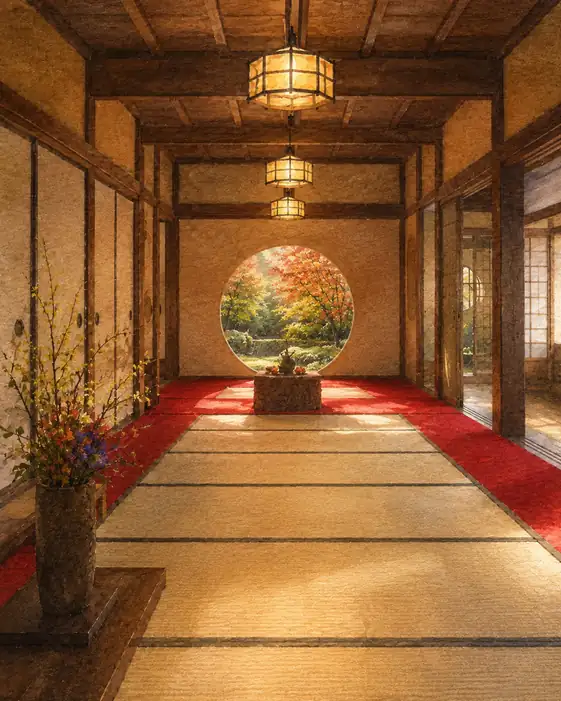 Autumn Held in a Circle
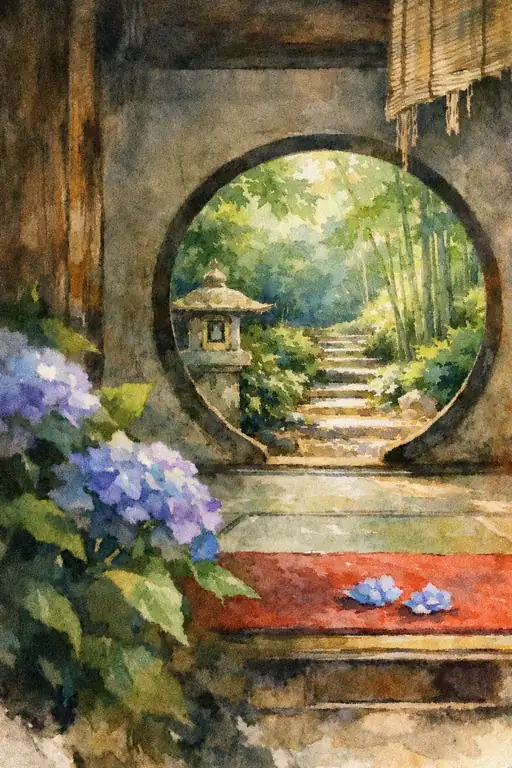 Glimpse of Rain-Kissed Hydrangeas
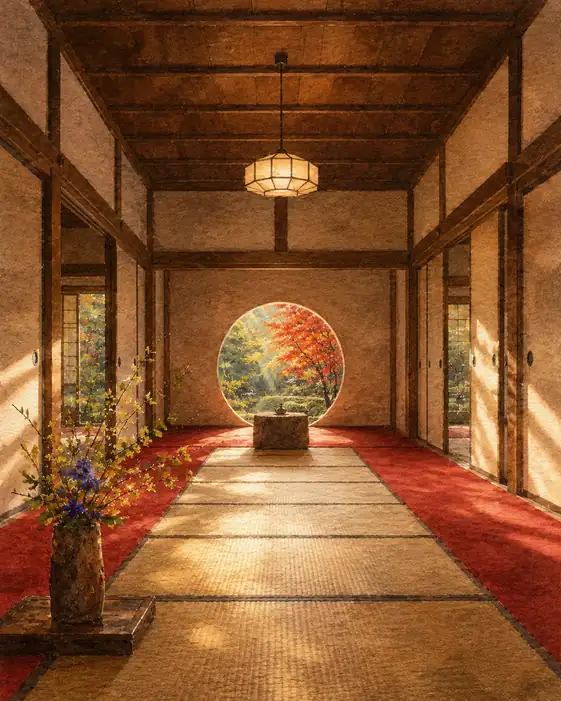 When Autumn Enters the Room
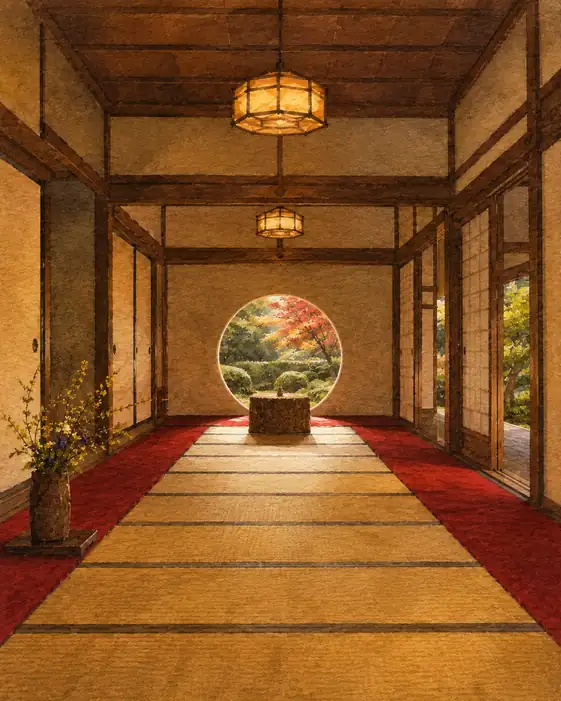 Emptiness Framing a Small Eternity