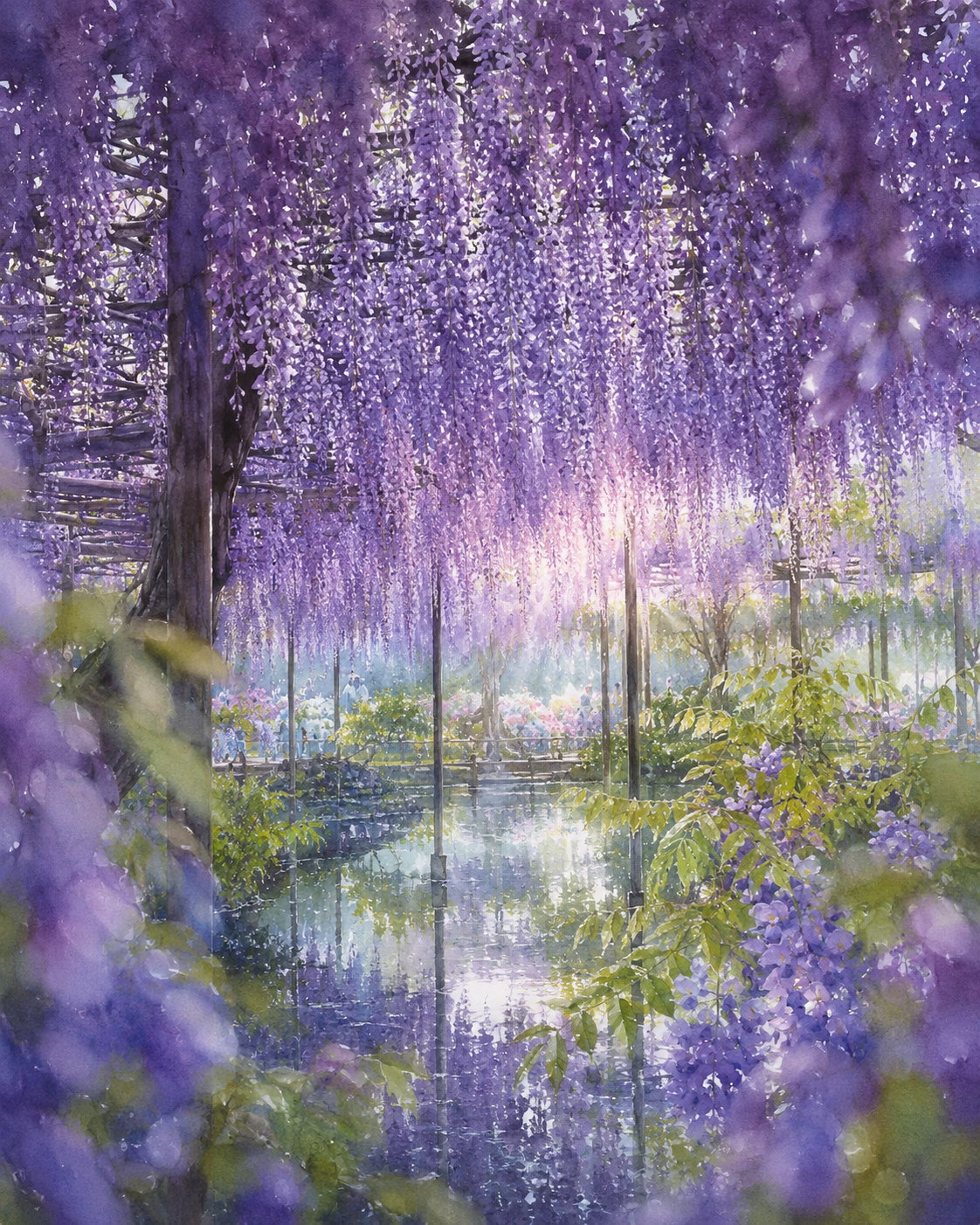
Wisteria Dreams Unravel on Water
Critique
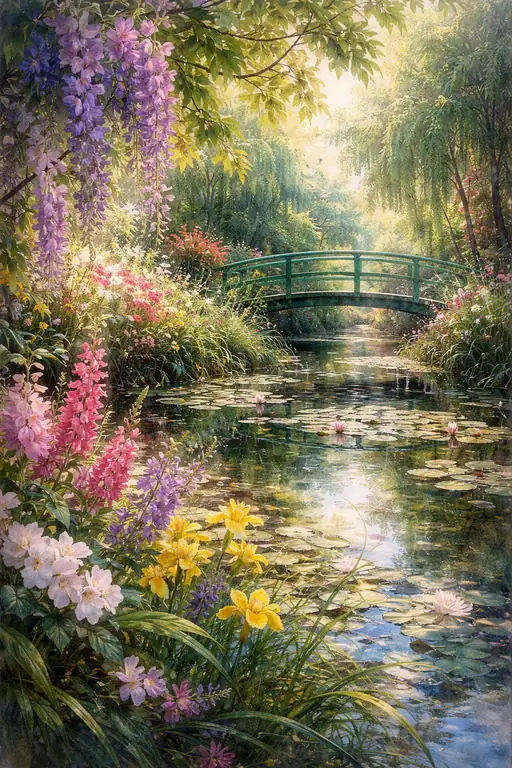
Introduction This painting presents a wisteria canopy cascading above a reflective pond. Its immediate appeal lies in the clarity of the principal motif and the measured conversion of natural or architectural light into painted color. The scene is accessible at first glance, yet its spatial organization rewards slower attention. Description The foreground contains blurred purple clusters at both sides. Beyond it, the main subject is surrounded by layered terrain, vegetation, buildings, water, or sky according to the setting. The palette is organized around violet, green, white, and blue, with small bright accents indicating moisture, illumination, motion, or distance. Analysis Compositionally, vertical flower strands repeat across the frame and meet their reflection below. Overlapping forms and changes of scale clarify recession, while alternating crisp and softened edges regulate the pace of looking. Varied brushwork gives solid elements weight and allows water, foliage, cloud, steam, or reflected light to remain mobile. Interpretation and Evaluation The work interprets the scene as an encounter between durable structure and temporary illumination. Its descriptive skill is strongest where surfaces remain legible without becoming mechanically detailed. The controlled composition and coherent color relationships create unity, while selective intensification of light contributes individuality. Transparent passages and denser strokes demonstrate a balanced technical approach. Conclusion The painting succeeds through the coordination of observation, design, color, and painterly handling. What first appears to be a direct scenic image gradually reveals a carefully staged sequence from foreground detail to the principal motif and surrounding atmosphere. This sustained structure gives the work accessibility and visual depth.
Same Subcategory
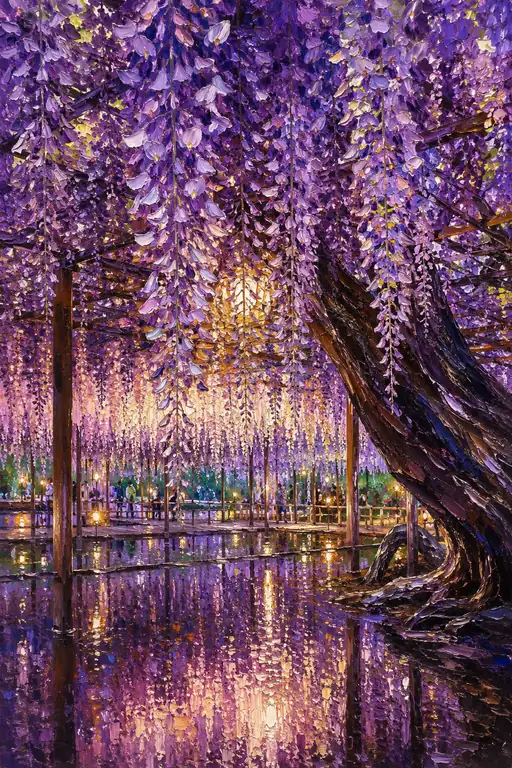 Mirror of the Violet Dream
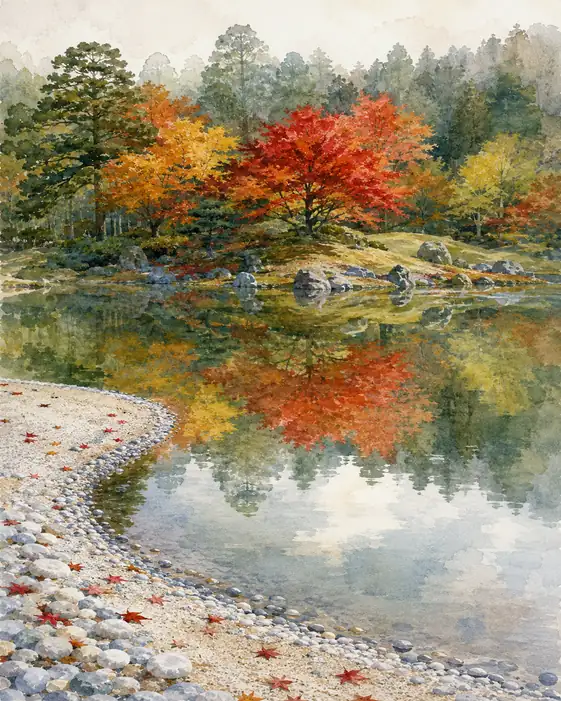 Autumn Rests on the Shore of Paradise
Similar Artworks
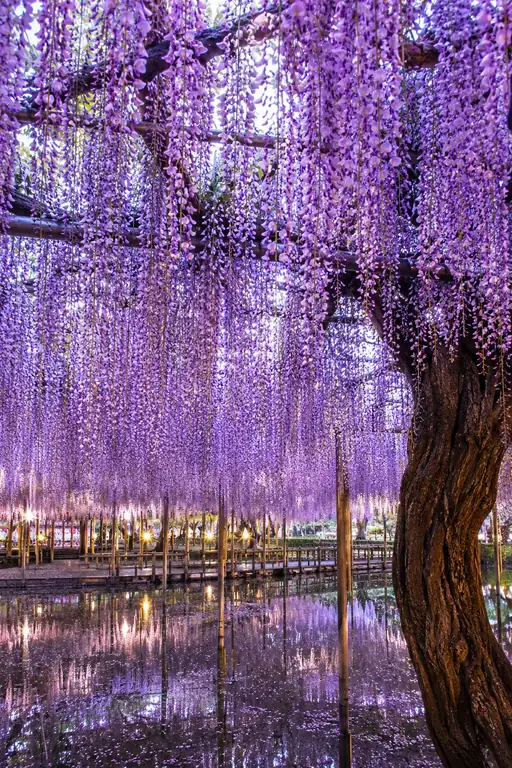 Mirror of the Violet Night
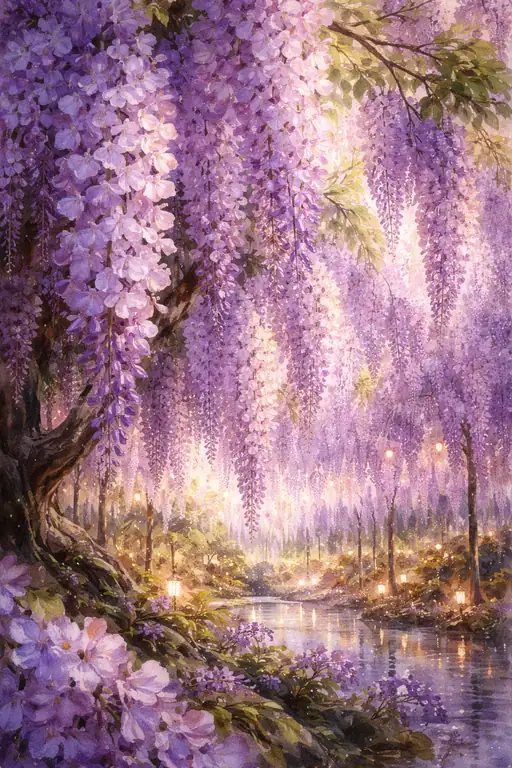 Whispers of Light Amidst the Wisteria's Slumber
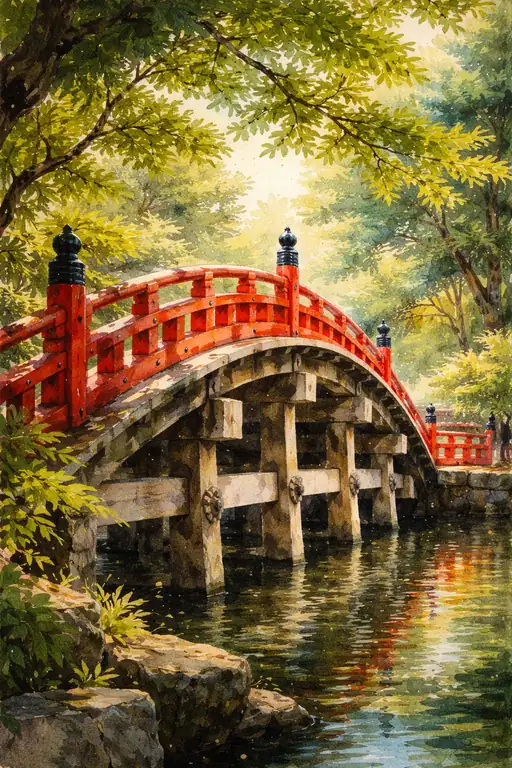 Crimson Arch Through the Sunlit Verdure
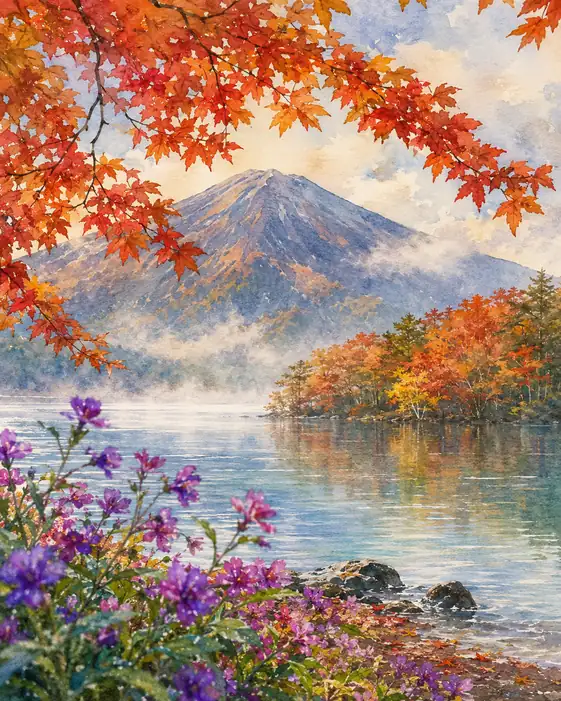 Autumn Beyond the Water Mirror
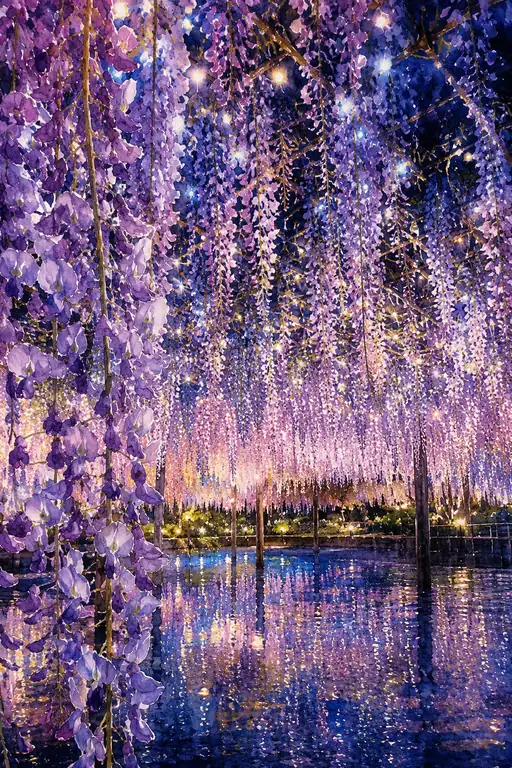 A Cascade of Whispering Dreams
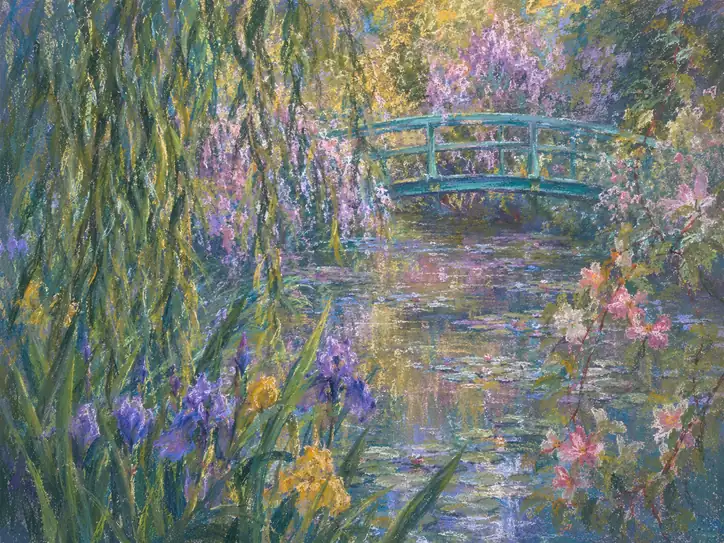 Where the Willows Whisper Secrets
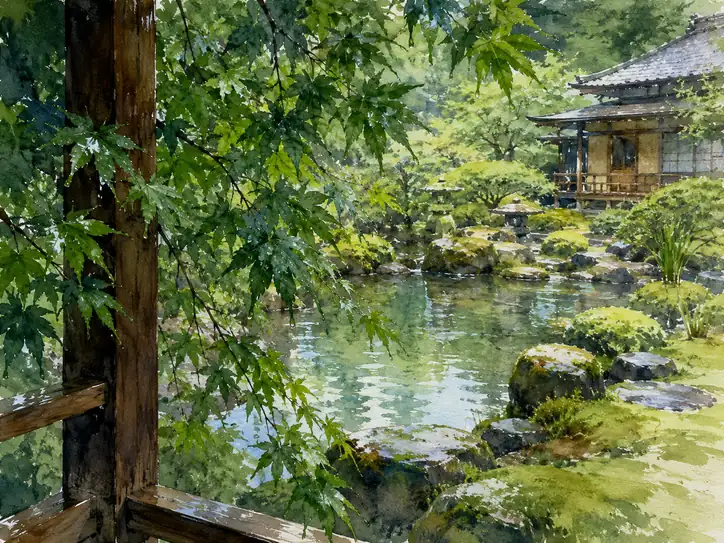 Whispers of the Summer Rain
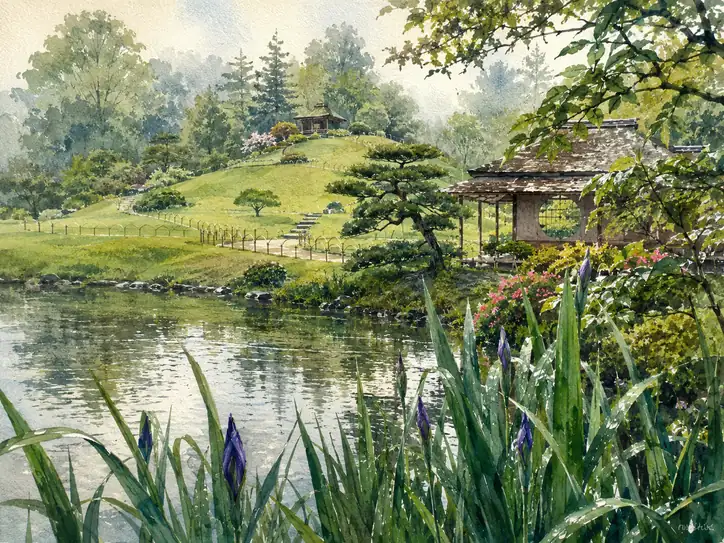 The Garden's Silent Breath
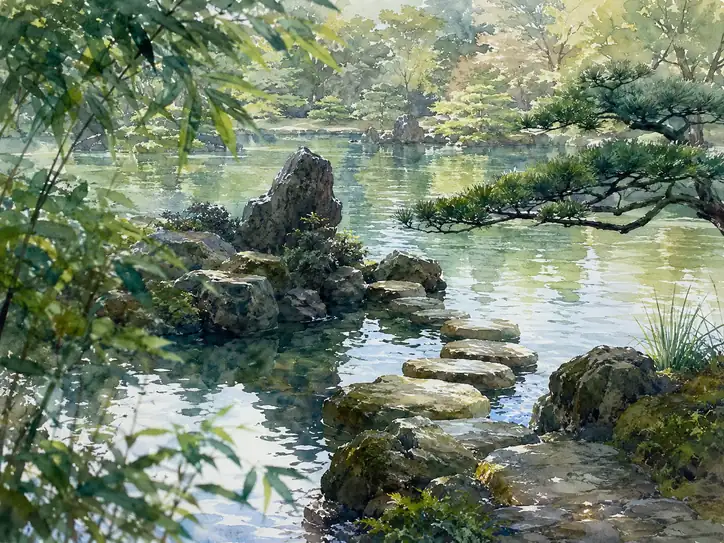 Path of Silent Stones
 Water Lilies in the Summer Garden