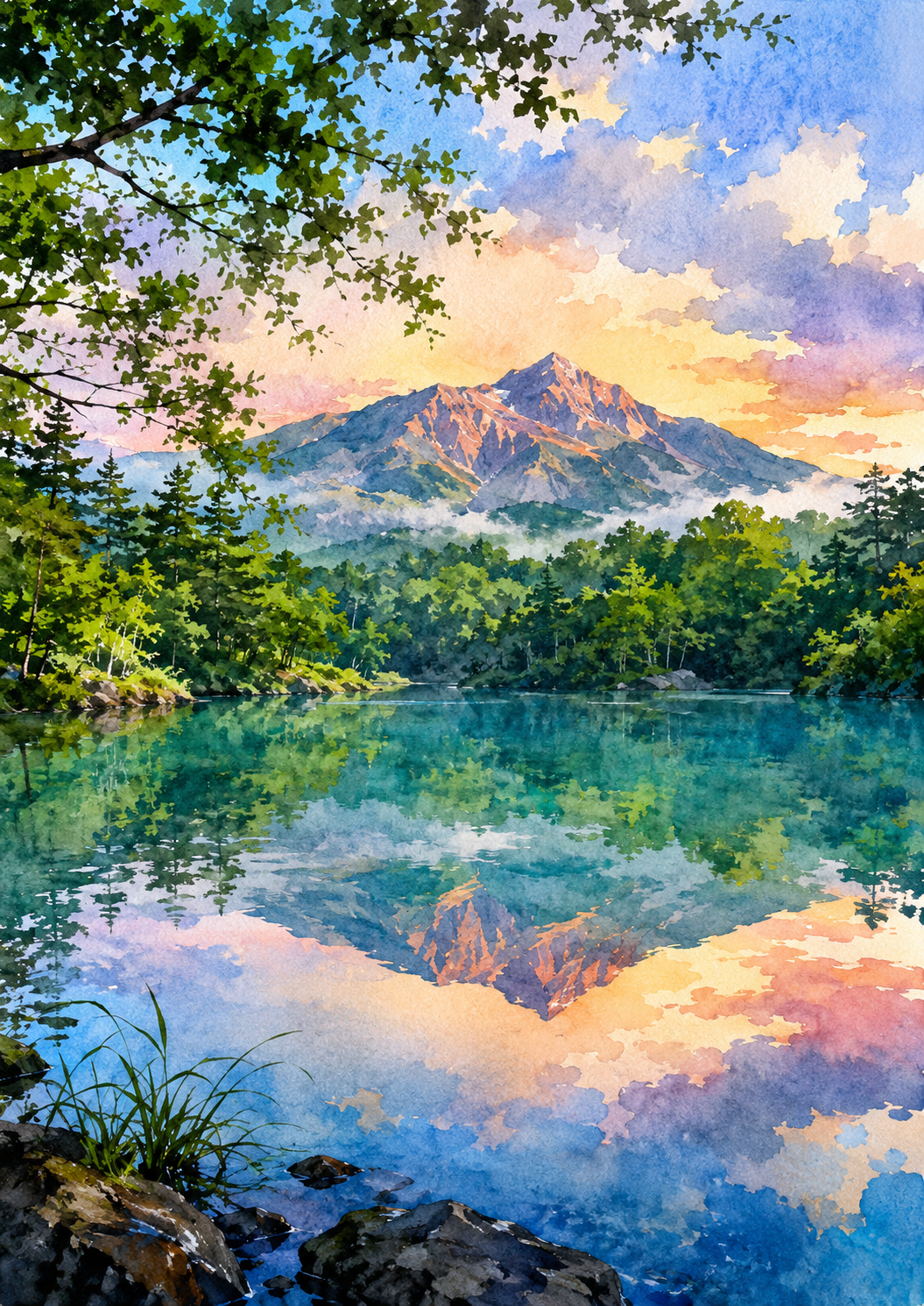
The Mountain Burns in an Azure Mirror
Critique
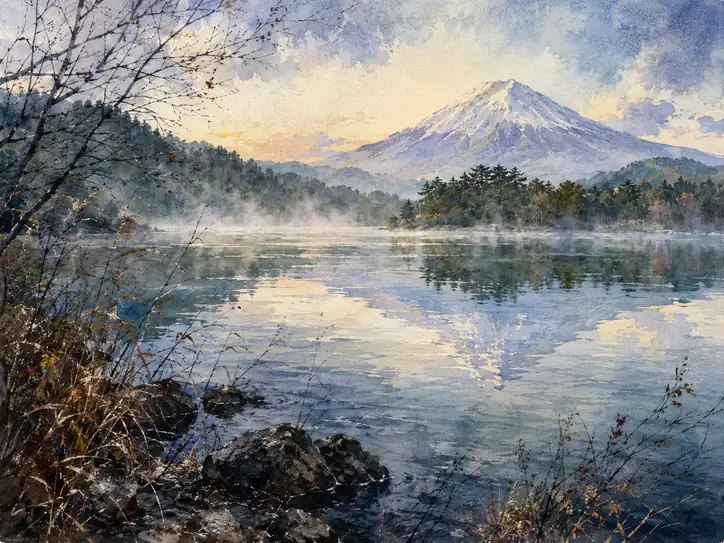
Introduction This landscape painting presents a bright blue-green pond reflecting a sunlit mountain beyond dense woodland. Its immediate appeal lies in the clear recognition of place-like features and in the measured transformation of natural light into painted color. The image favors attentive observation over anecdote, establishing a calm but purposeful viewing experience. Description The foreground contains rocks, grasses, and dark foliage at the shore. Beyond it, the main subject is surrounded by layered terrain, vegetation, architecture, water, or sky according to the scene. The palette is organized around cyan, leaf green, coral orange, and violet, with small passages of brighter pigment marking light, moisture, or distance. Analysis Compositionally, the mountain and its reflection form a centered diamond held within an irregular leafy frame. Overlapping forms and changes in scale clarify spatial recession, while alternating sharp and softened edges regulate the pace of looking. Varied brushwork gives solid forms weight and allows water, foliage, cloud, and reflected light to remain mobile. Interpretation and Evaluation The work interprets the site as an encounter between enduring structure and temporary illumination. Its descriptive skill is strongest where surfaces remain legible without becoming mechanically detailed. The controlled composition and coherent color relationships provide unity, while selective exaggeration of light contributes individuality and an emotionally restrained sense of wonder. Conclusion The painting succeeds through the coordination of observation, design, color, and painterly technique. What first appears to be a direct scenic image gradually reveals a carefully staged sequence from foreground detail to the principal motif and surrounding atmosphere. This sustained structure gives the work both accessibility and visual depth.
Same Subcategory
Similar Artworks
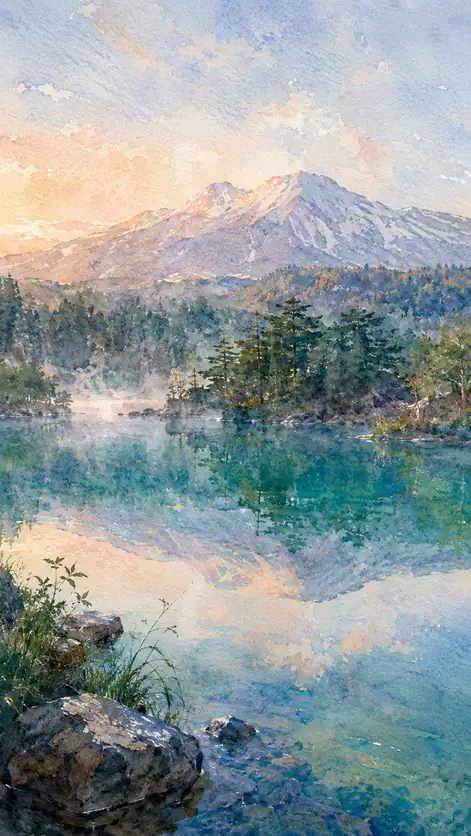 Daybreak Unfolds on the Turquoise Lake
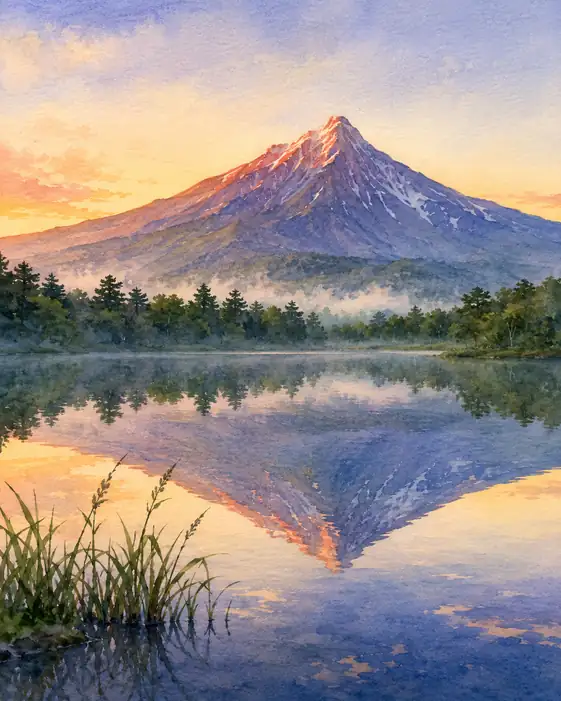 Morgenrot Glow over Mount Rishiri and the Quiet Pond
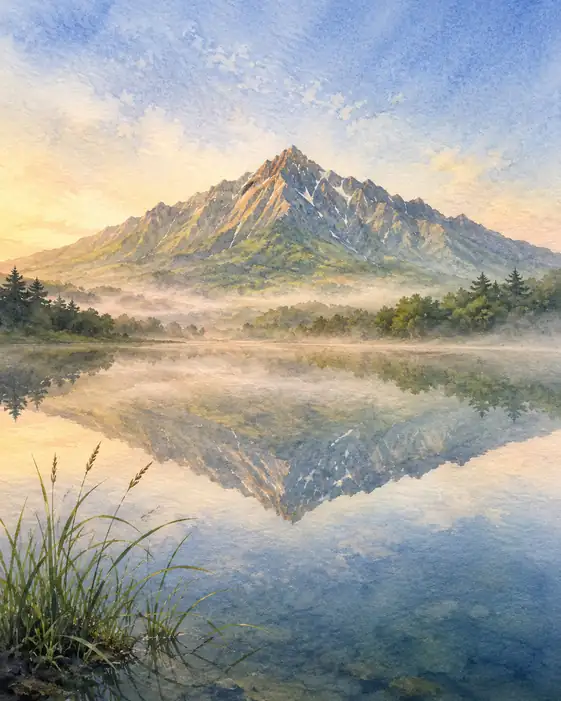 Rishiri Fuji Symmetrically Reflected on Otatomari Pond
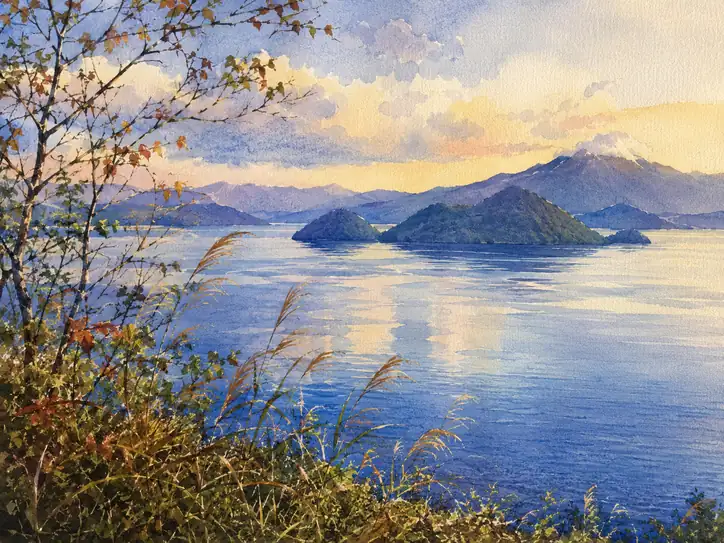 Luminous Calm Across the Water
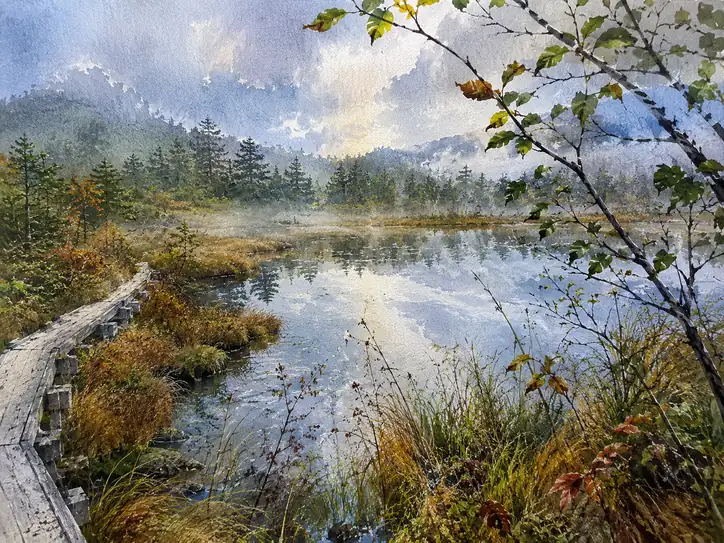 Steps Through the Morning Mist
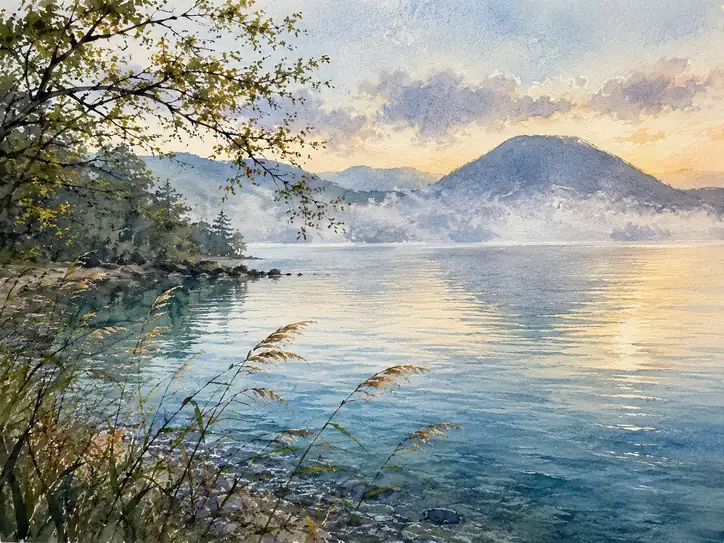 The Lake's Dreaming Glass
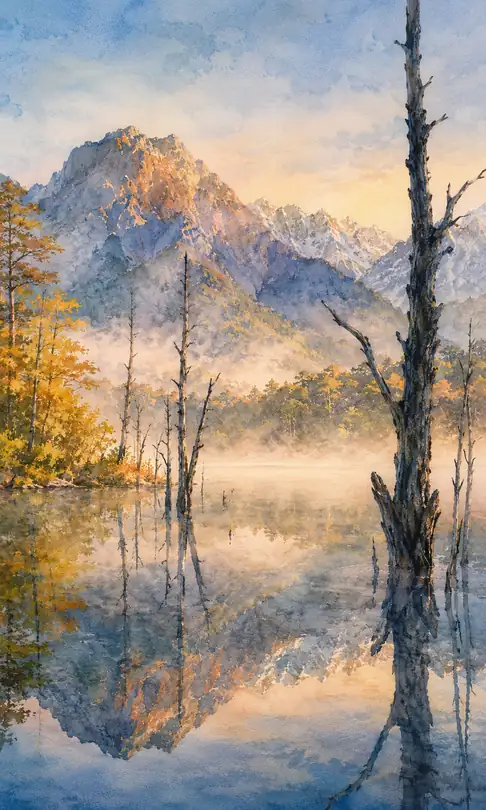 The Trees That Remember Fire
 Serenity in the Emerald Mirror
 Sanctuary in the Morning Mist
 Silent Mirror of the Sacred Mountain