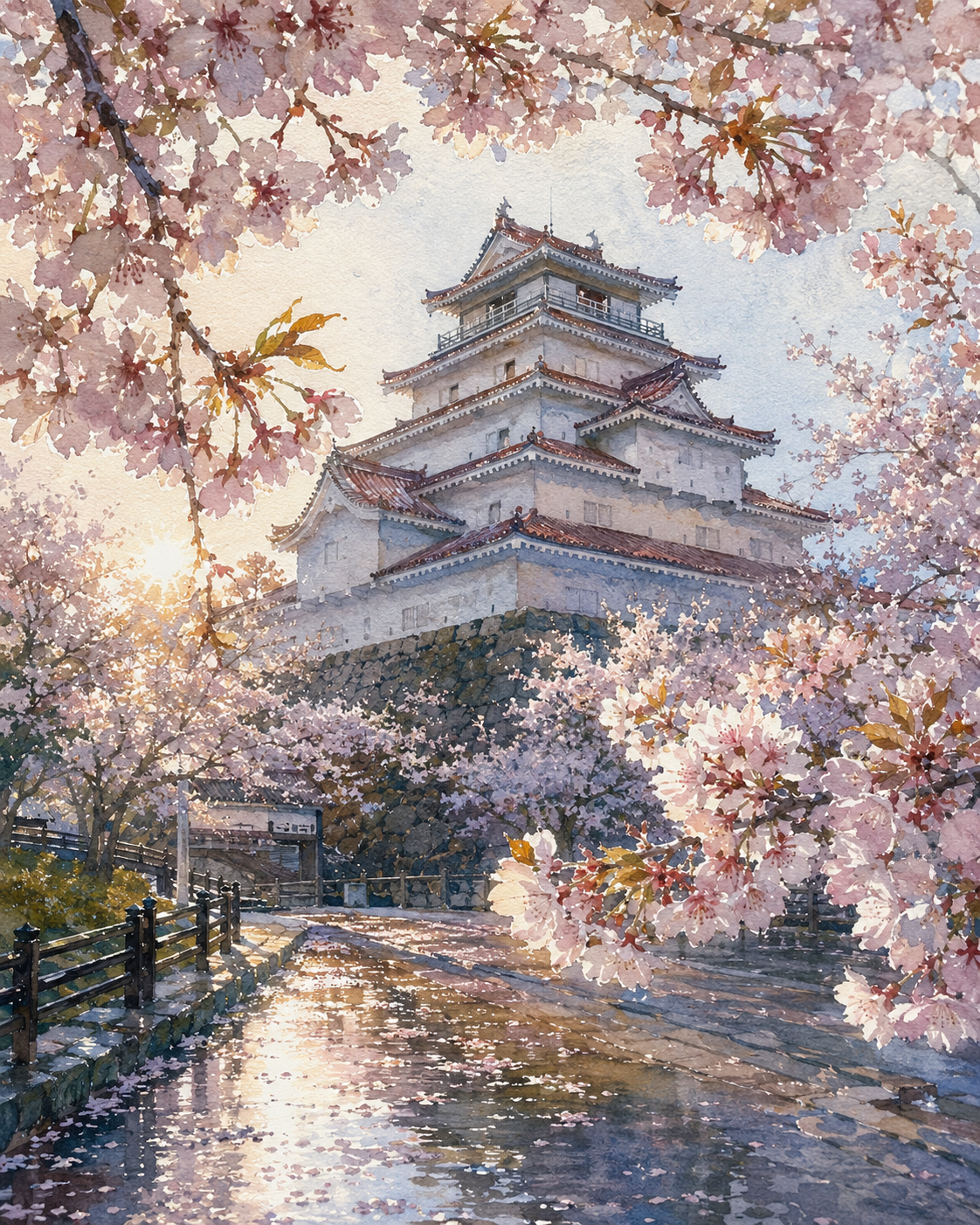
Spring Seen Through a Gate of Blossoms
Critique
Introduction This landscape painting presents a many-tiered castle keep framed by close cherry branches. Its immediate appeal lies in the clear recognition of place-like features and in the measured transformation of natural light into painted color. The image favors attentive observation over anecdote, establishing a calm but purposeful viewing experience. Description The foreground contains a wet path, railing, and blossoms receding toward the base. Beyond it, the main subject is surrounded by layered terrain, vegetation, architecture, water, or sky according to the scene. The palette is organized around ivory, pink, blue-gray, and reddish brown, with small passages of brighter pigment marking light, moisture, or distance. Analysis Compositionally, the upward view enlarges the keep while the path and branches guide attention from near detail to height. Overlapping forms and changes in scale clarify spatial recession, while alternating sharp and softened edges regulate the pace of looking. Varied brushwork gives solid forms weight and allows water, foliage, cloud, and reflected light to remain mobile. Interpretation and Evaluation The work interprets the site as an encounter between enduring structure and temporary illumination. Its descriptive skill is strongest where surfaces remain legible without becoming mechanically detailed. The controlled composition and coherent color relationships provide unity, while selective exaggeration of light contributes individuality and an emotionally restrained sense of wonder. Conclusion The painting succeeds through the coordination of observation, design, color, and painterly technique. What first appears to be a direct scenic image gradually reveals a carefully staged sequence from foreground detail to the principal motif and surrounding atmosphere. This sustained structure gives the work both accessibility and visual depth.
Same Subcategory
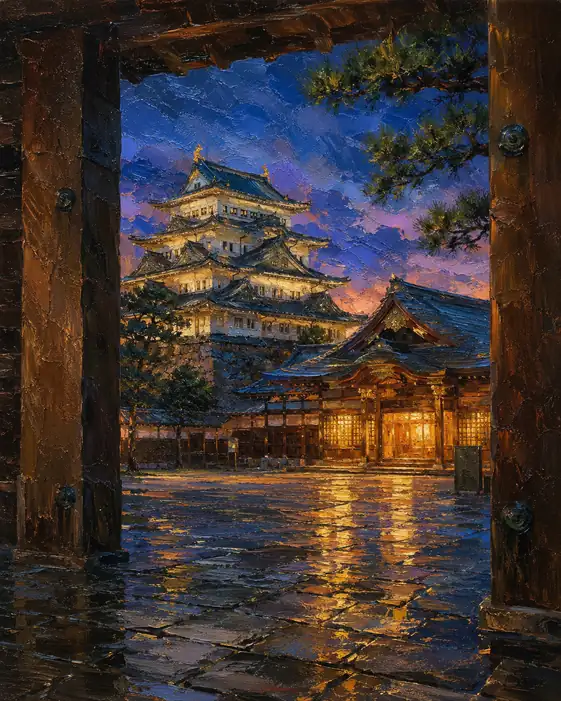 Gold Waiting Beyond the Gate
Similar Artworks
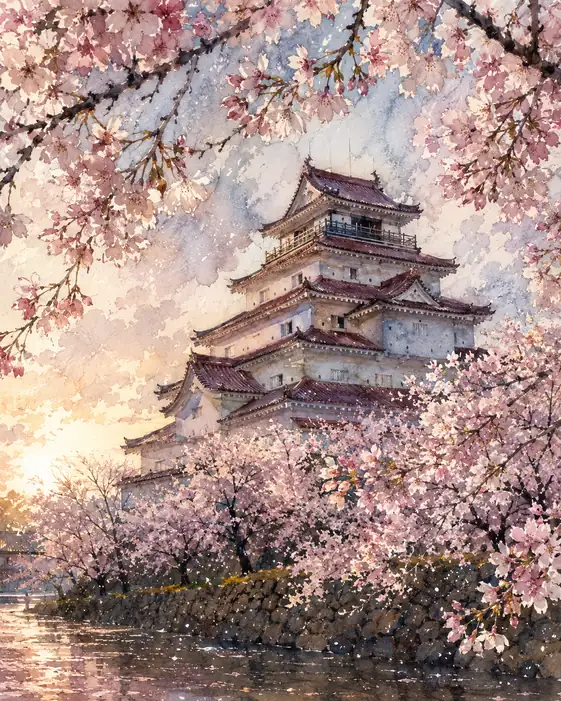 The Castle Afloat in Blossom Haze
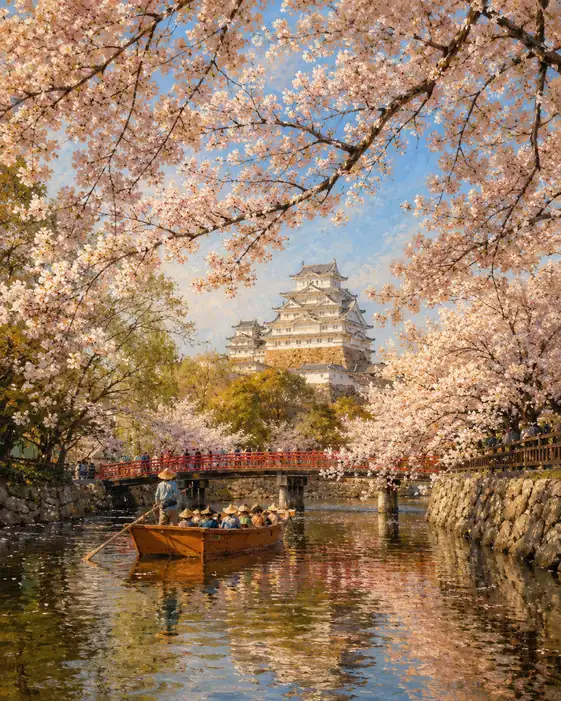 Golden Spring Sunlight on the Castle Moat
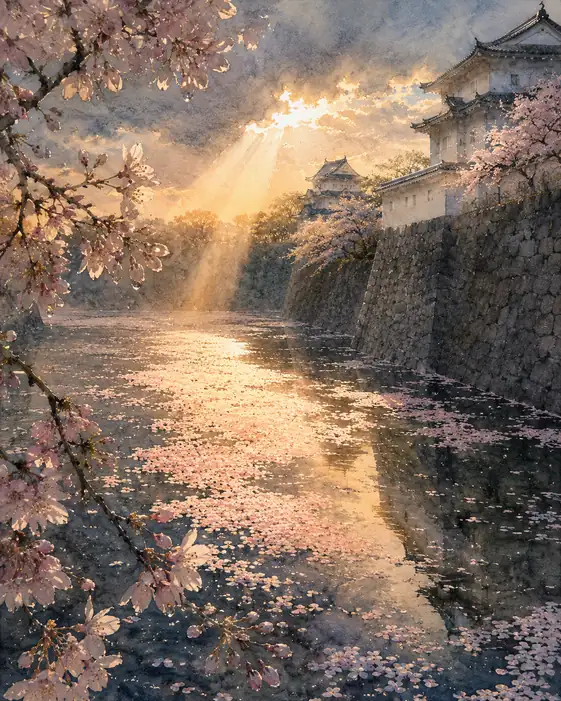 Resonance of Petals by the Sacred Keep
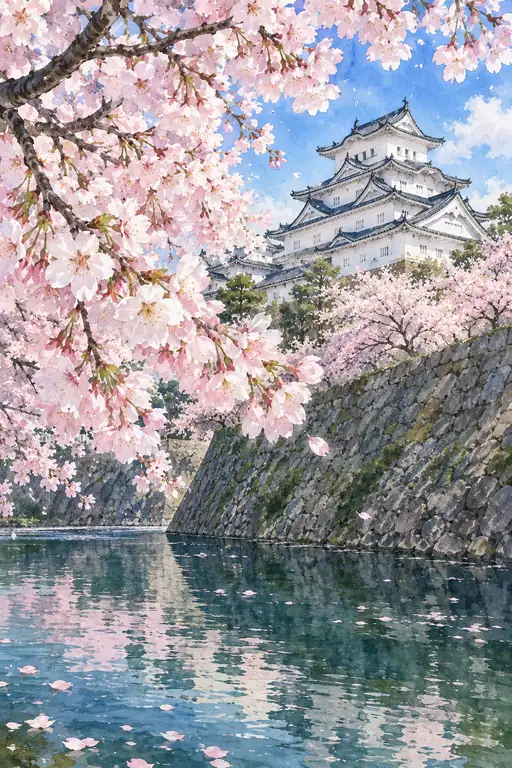 Spring Bloom over the Castle Moat
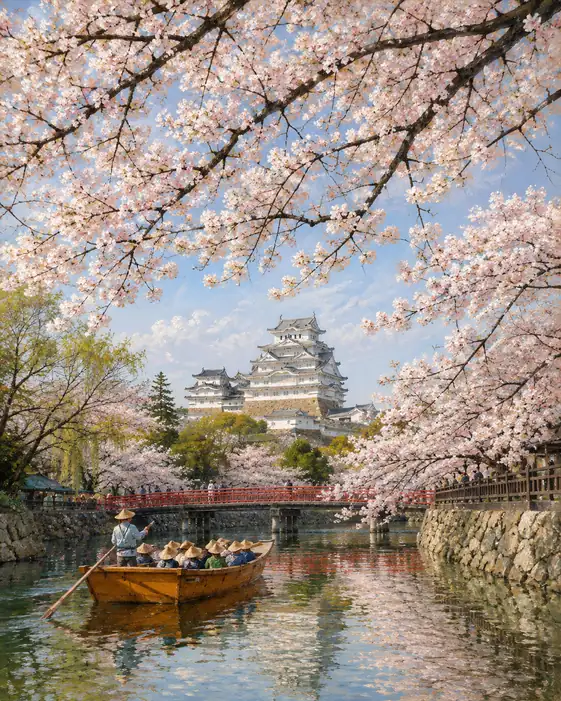 Passage Beneath Sakura Canopy
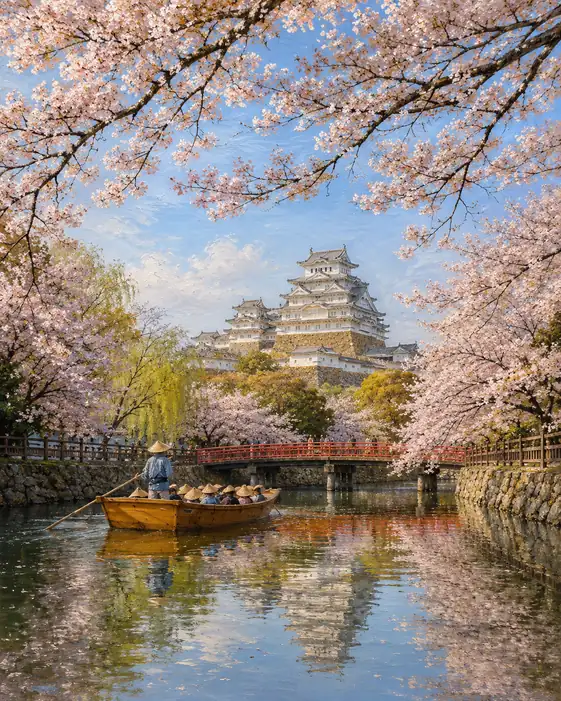 Cherry Blossom Splendor at the White Castle
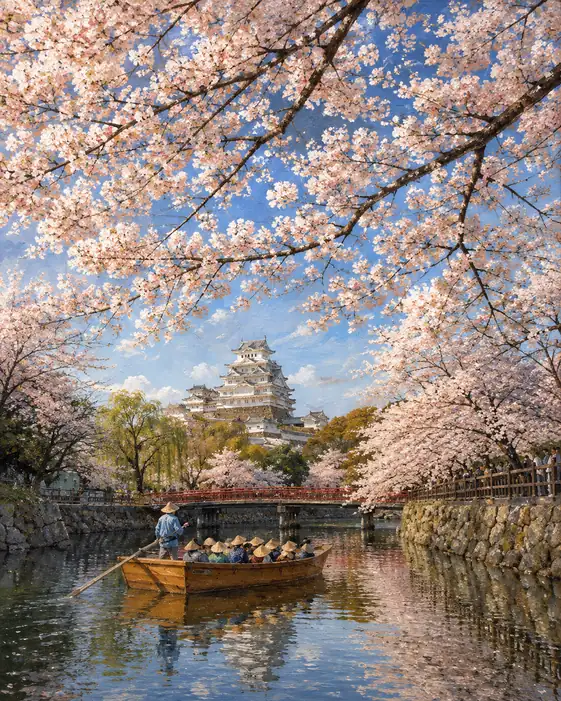 Spring Moat and the White Heron Castle
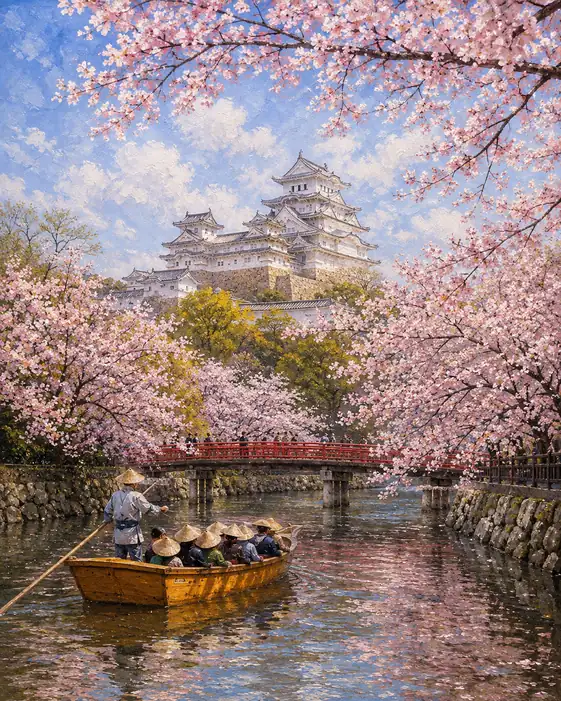 Rowing Through Spring Toward White Heron Castle
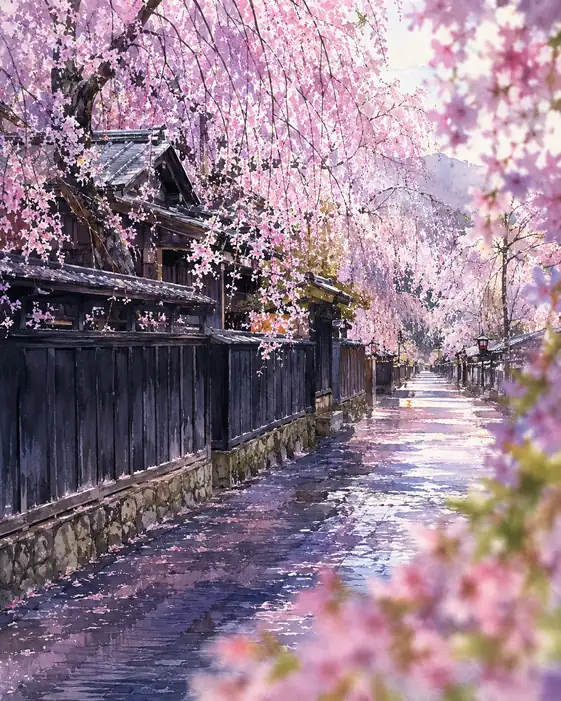 A Lane Through the Memory of Blossoms
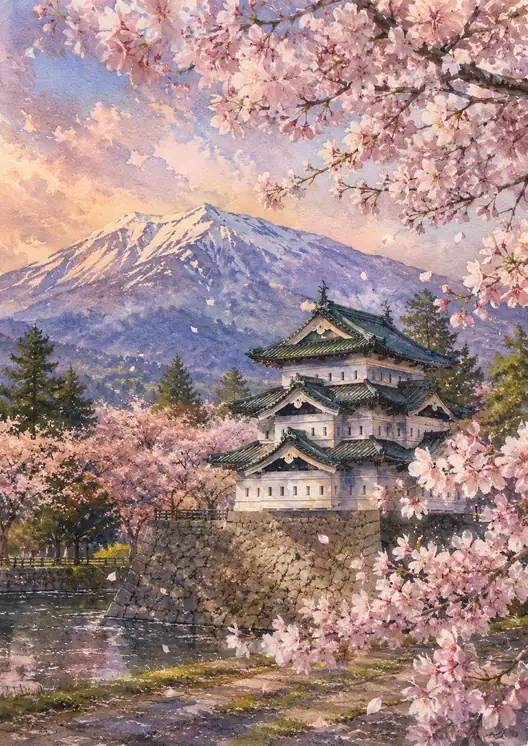 Eternal Keep, Fleeting Sakura