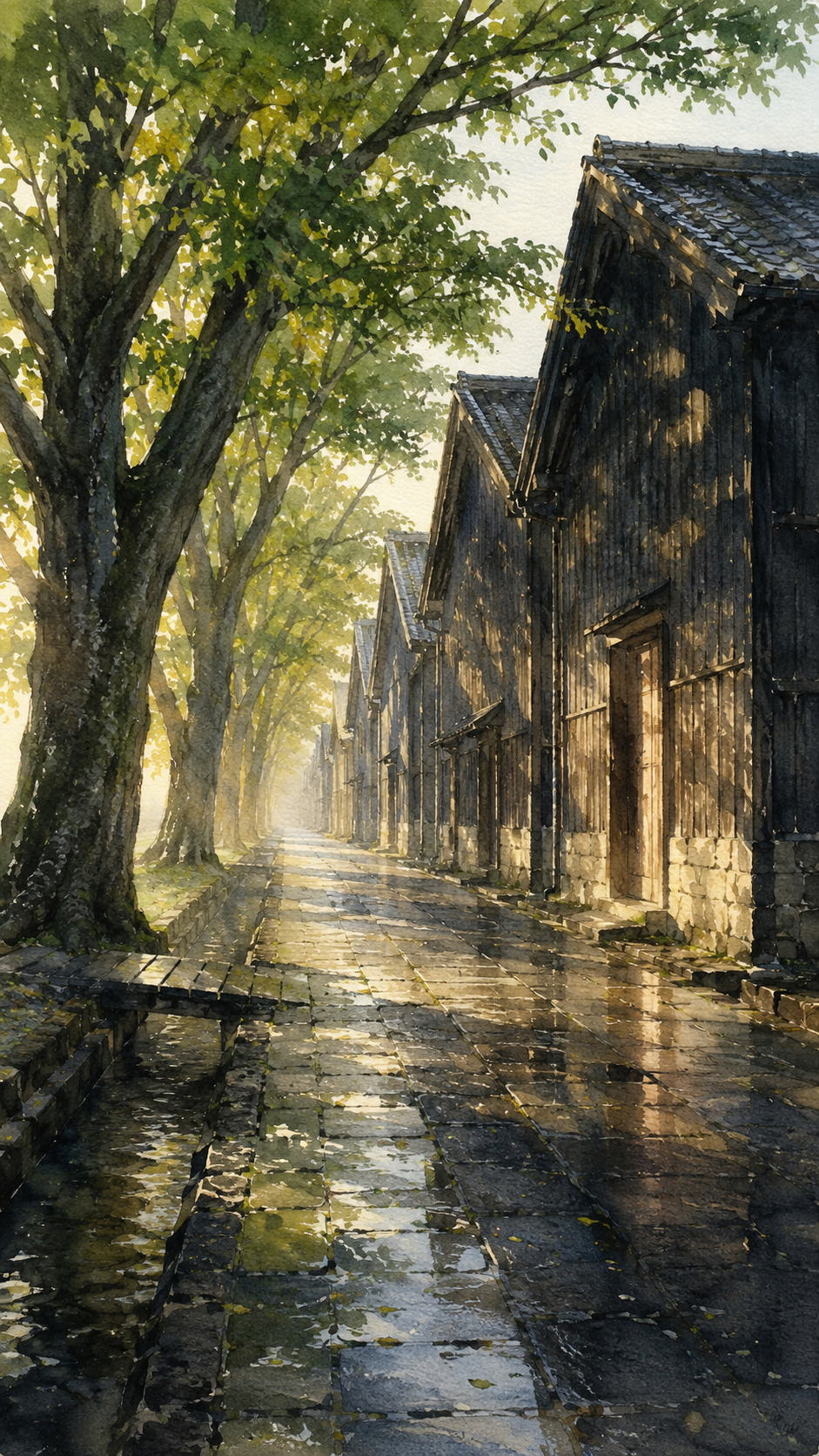
Morning Enters the Rain-Washed Lane
Critique
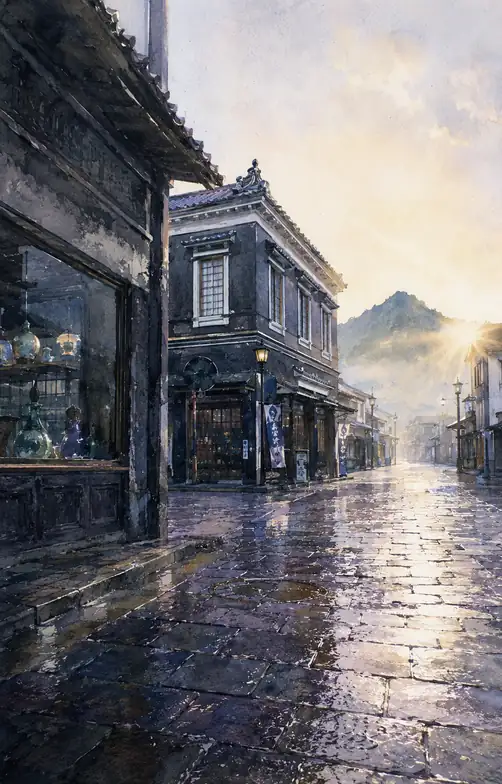
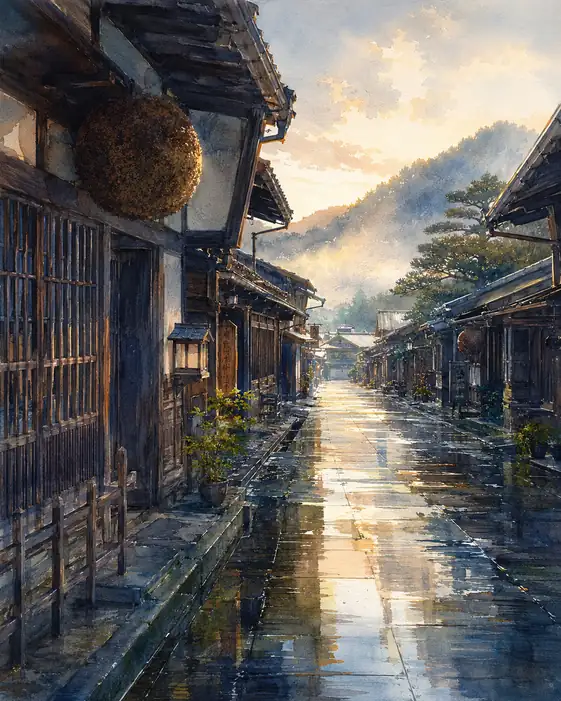
Introduction This landscape painting presents a row of dark historic storehouses extending beneath leafy trees. Its immediate appeal lies in the clear recognition of place-like features and in the measured transformation of natural light into painted color. The image favors attentive observation over anecdote, establishing a calm but purposeful viewing experience. Description The foreground contains a rain-washed lane striped with pools of sunlight. Beyond it, the main subject is surrounded by layered terrain, vegetation, architecture, water, or sky according to the scene. The palette is organized around black-brown, green, gold, and blue-gray, with small passages of brighter pigment marking light, moisture, or distance. Analysis Compositionally, repeated rooflines and tree trunks establish rhythm along a sharply receding perspective. Overlapping forms and changes in scale clarify spatial recession, while alternating sharp and softened edges regulate the pace of looking. Varied brushwork gives solid forms weight and allows water, foliage, cloud, and reflected light to remain mobile. Interpretation and Evaluation The work interprets the site as an encounter between enduring structure and temporary illumination. Its descriptive skill is strongest where surfaces remain legible without becoming mechanically detailed. The controlled composition and coherent color relationships provide unity, while selective exaggeration of light contributes individuality and an emotionally restrained sense of wonder. Conclusion The painting succeeds through the coordination of observation, design, color, and painterly technique. What first appears to be a direct scenic image gradually reveals a carefully staged sequence from foreground detail to the principal motif and surrounding atmosphere. This sustained structure gives the work both accessibility and visual depth.
Same Subcategory
 Silent Snow, Whispering Lights
Similar Artworks
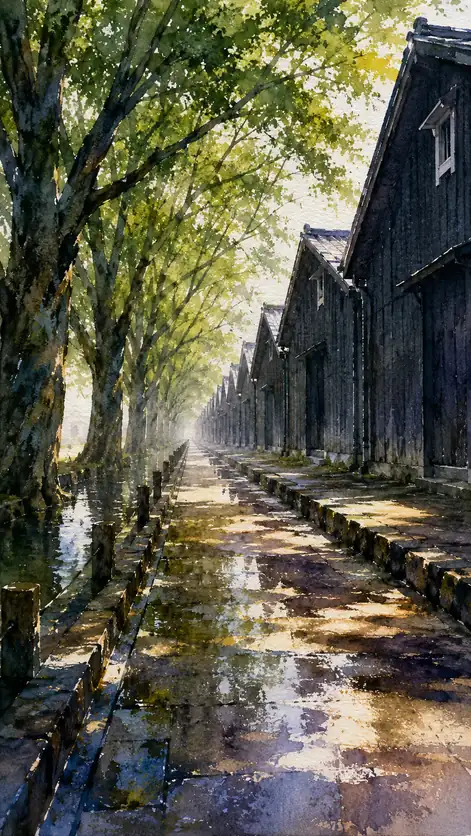 Where the Black Walls Fade into Light
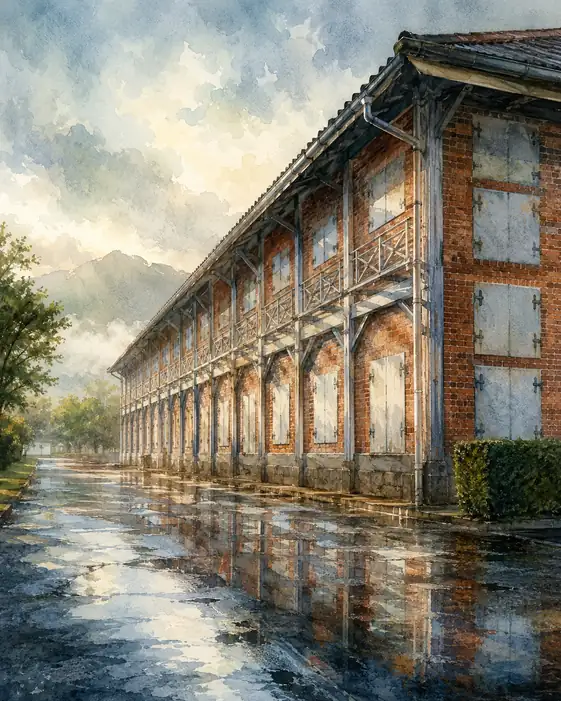 Weaving Time in Light
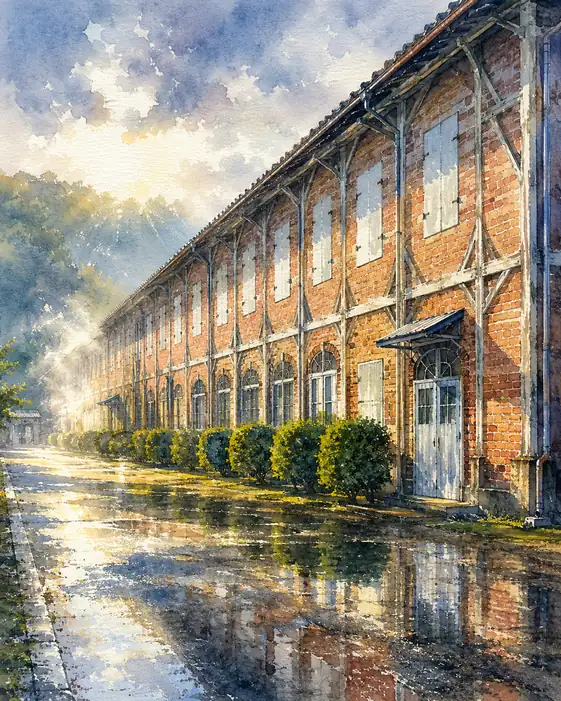 After Rain, the Bricks Remember
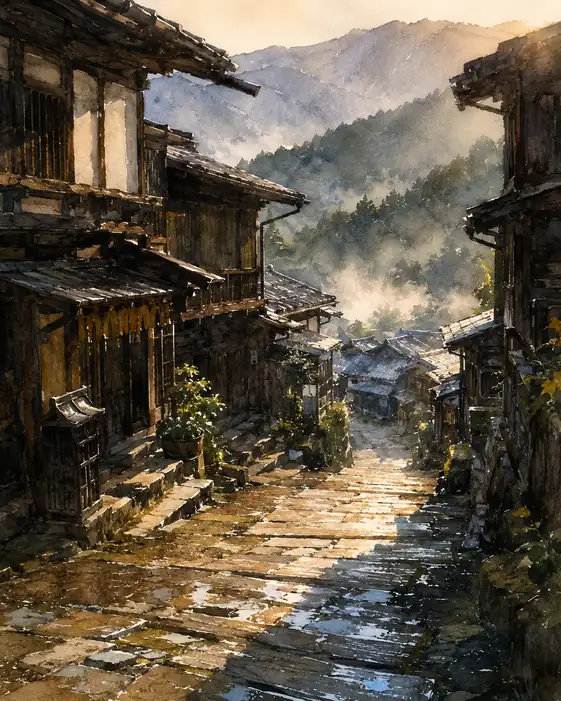 After Rain, the Road Remembers
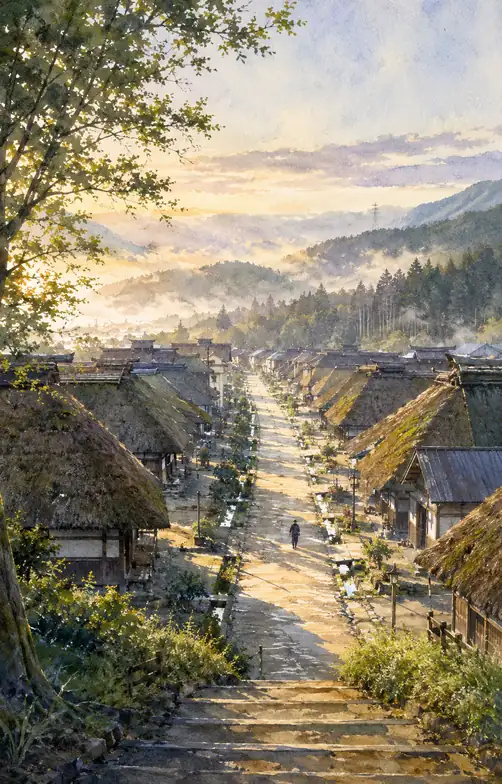 Light Descends into the Thatched Valley
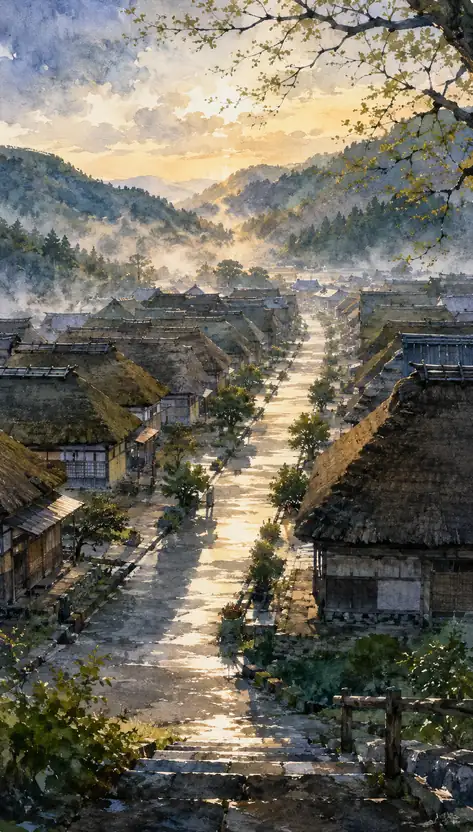 The Morning Road That Welcomed Travelers
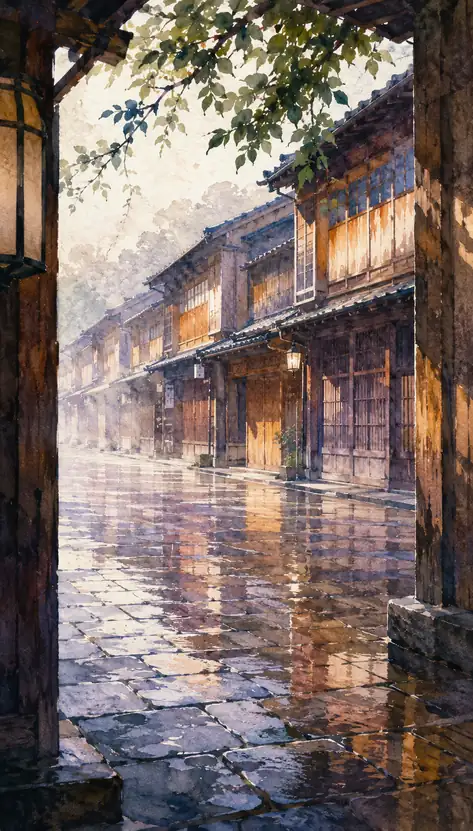 After the Rain, Time Shines
 Morning Polishes the Old Town
 Light Knocks on Every Lattice
 The Morning Hung a Cedar Moon