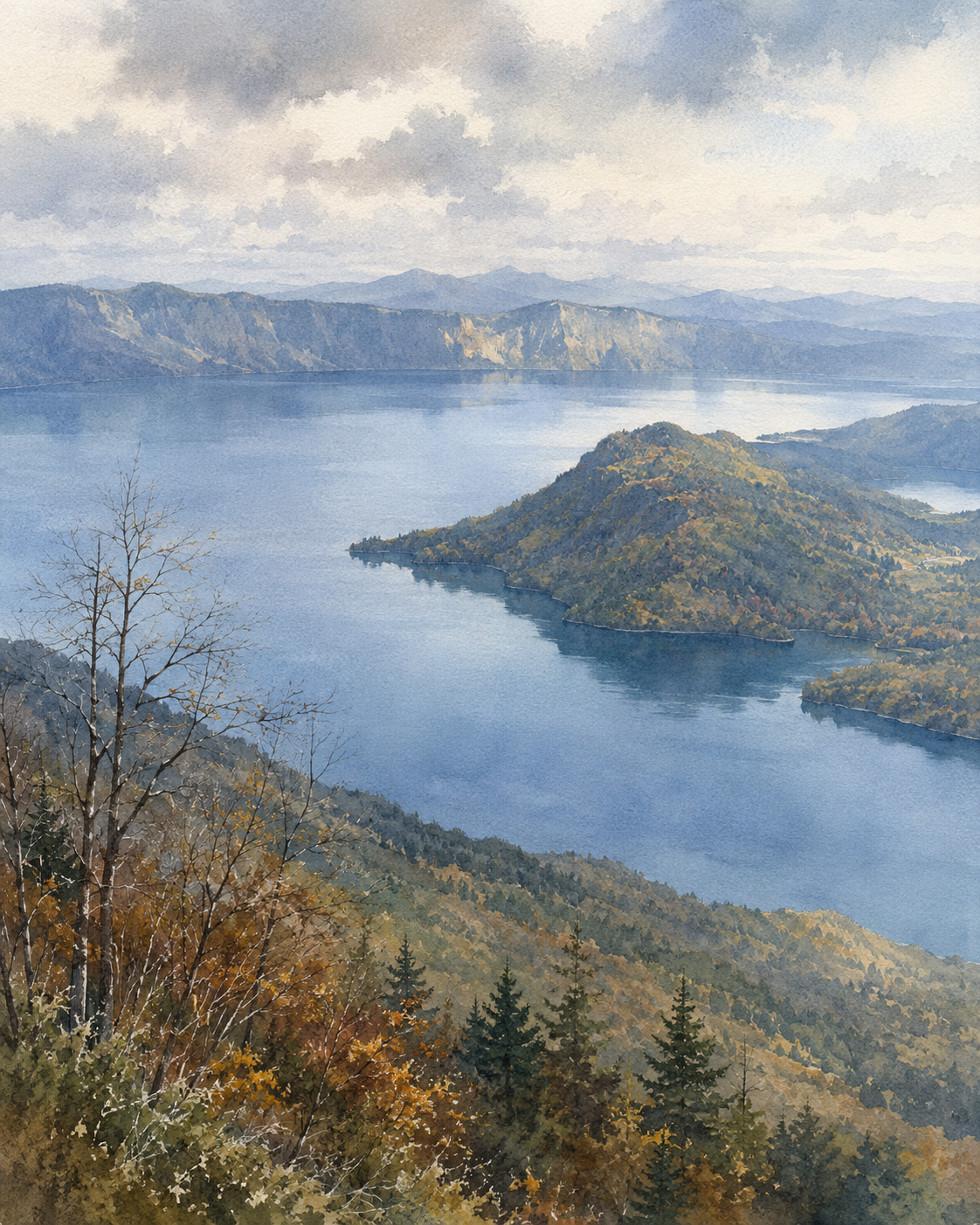
Panoramic Calm of Lake Towada from Hakka Pass
Critique
Introduction This painting presents Lake Towada seen from Hakka Pass, with the caldera rim and peninsulas unfolding below. It treats a recognizable place through controlled color and directed light. Its immediate appeal comes from atmosphere, but its structure rewards a much slower, carefully sustained look. Description Within the image, dark wooded slopes descend from both sides toward broad blue water, layered headlands, and a distant illuminated rim. The palette combines steel blue, olive, gray, pale gold, and muted violet. In addition, broken morning cloud sends selective light across the far crater wall while the near slopes remain subdued. These elements establish the setting while allowing the eye to move freely. Analysis The composition connects foreground emphasis with spatial recession. overlapping peninsulas clarify the lake's scale through gradual tonal recession. Edges shift between crisp description and soft transitions, producing depth without excessive detail. Warm and cool passages guide attention while maintaining harmony. Interpretation and Evaluation The painting studies attention, change, and the emotional weight of light. Its descriptive skill is evident in recognizable forms, while its strongest achievement is the coordination of composition and color. Layered, luminous strokes give the scene a gently idealized character. The arrangement avoids mere illustration by making atmosphere an active subject. Conclusion Taken as a whole, the work balances immediacy with measured construction. What first appears straightforward gradually reveals an exchange between light, color, texture, and space. Its value rests in transforming observation into a calm, resonant pictorial experience.
Same Subcategory
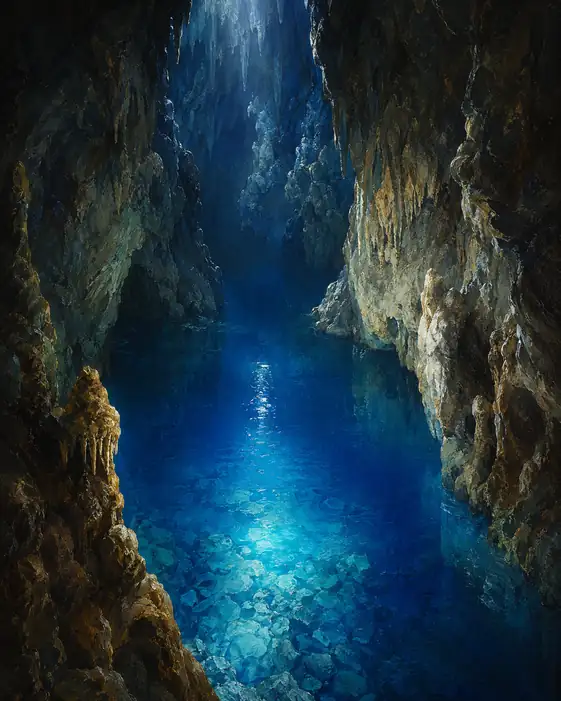 A Blue Secret Beneath the Earth
Similar Artworks
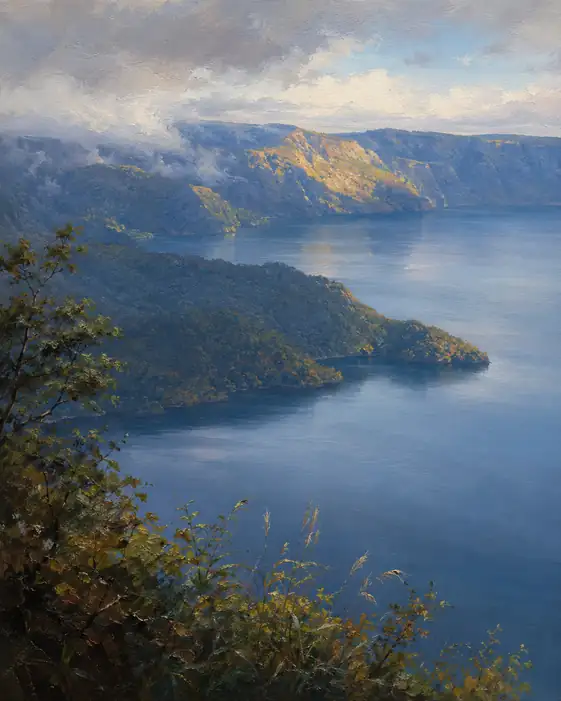 Sunbeams Piercing Clouds over Lake Towada and Crater Walls
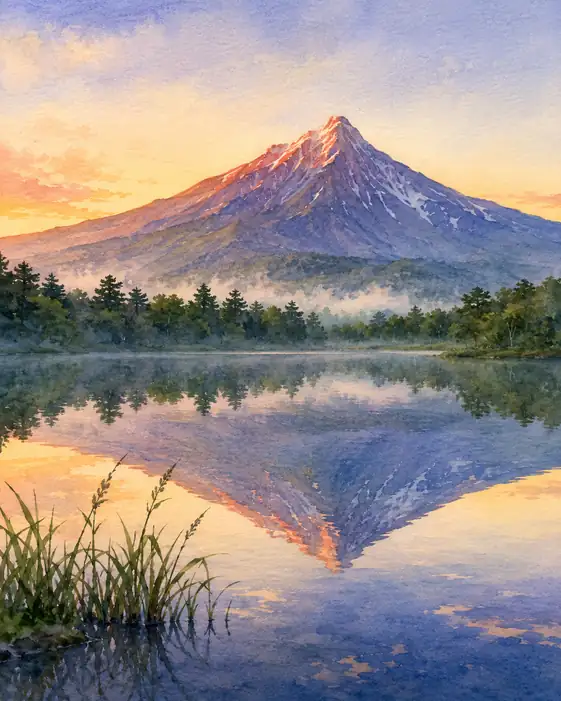 Morgenrot Glow over Mount Rishiri and the Quiet Pond
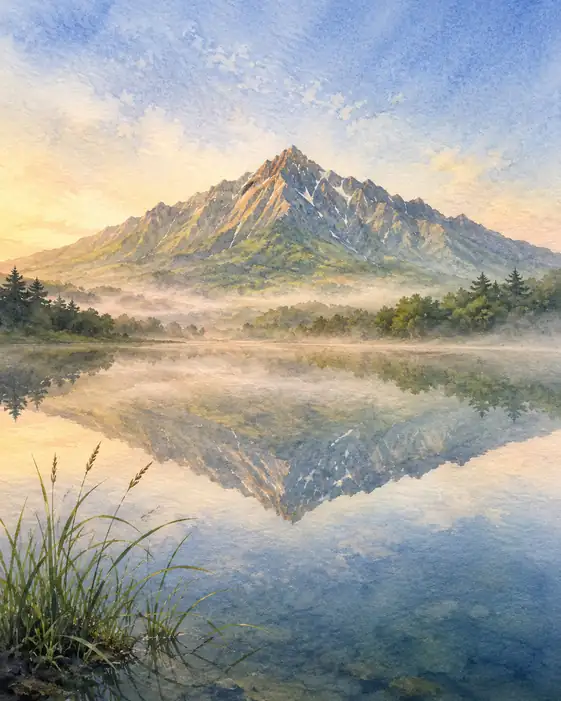 Rishiri Fuji Symmetrically Reflected on Otatomari Pond
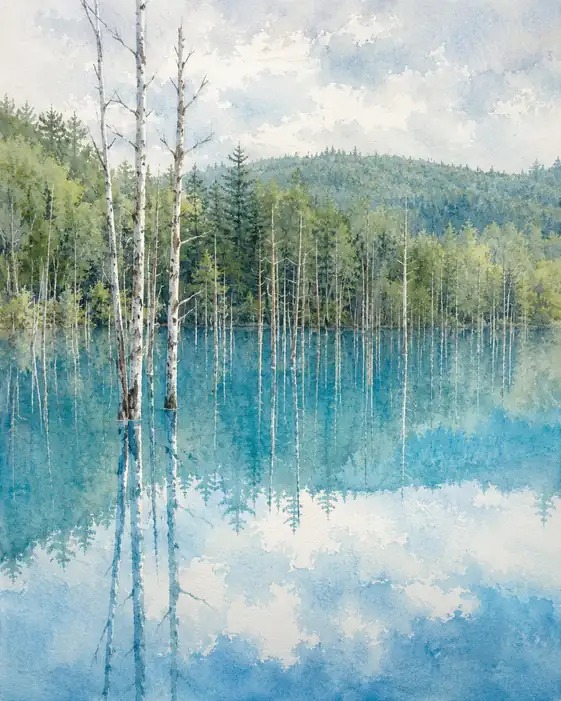 Birches Submerged in Blue Serenity
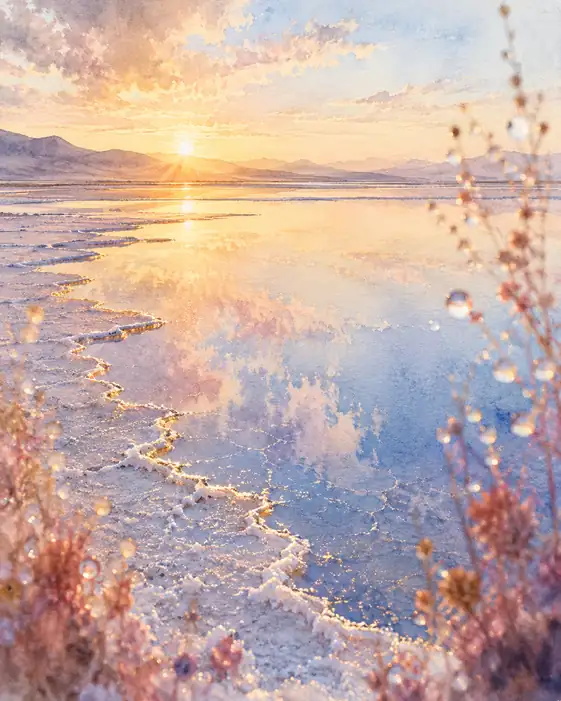 Sky Floating on the Silver Salt Lake
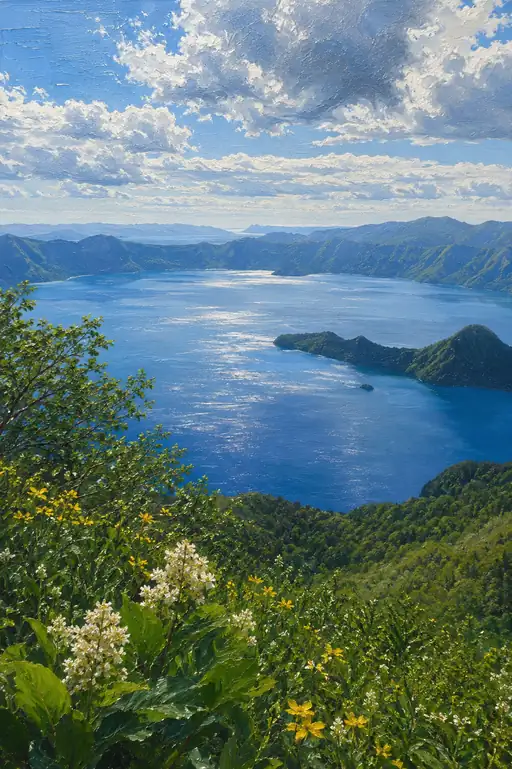 Where the Ancient Crater Dreams
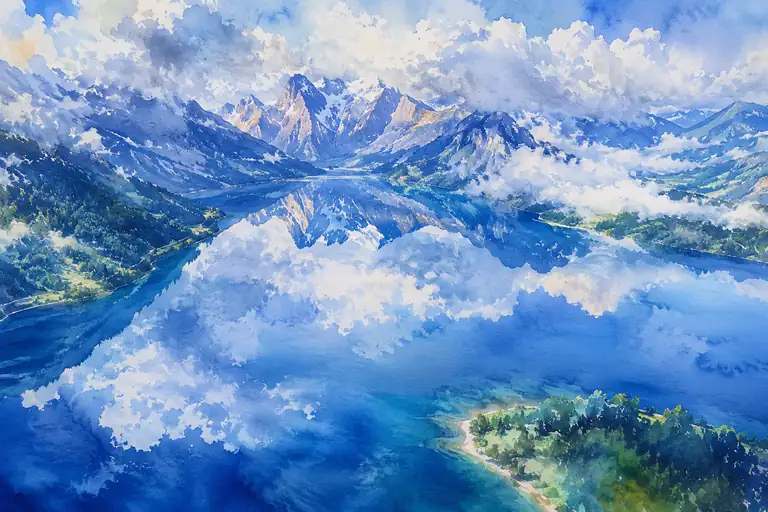 Where Earth and Sky Become One
 Caldera Mist and Silent Waters
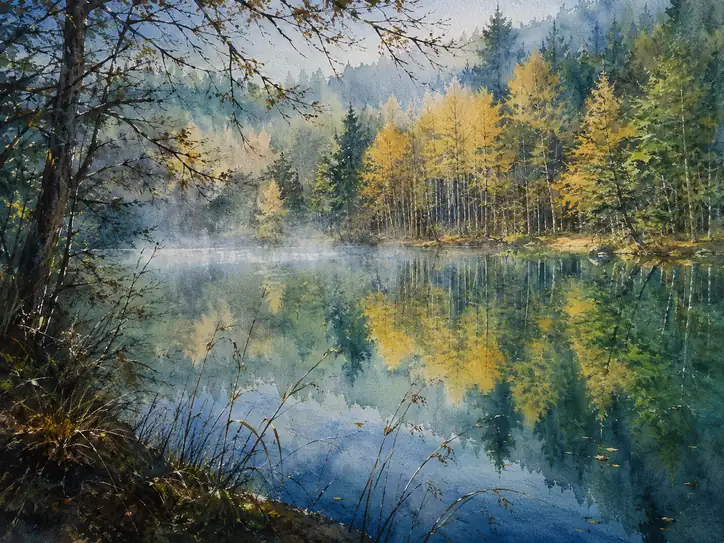 The Golden Mirror of My Soul
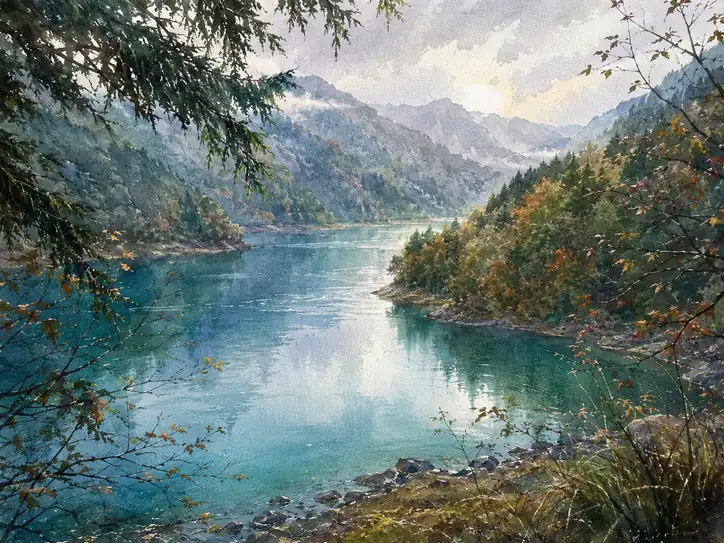 Echoes of Tranquility: The Sapphire Haven