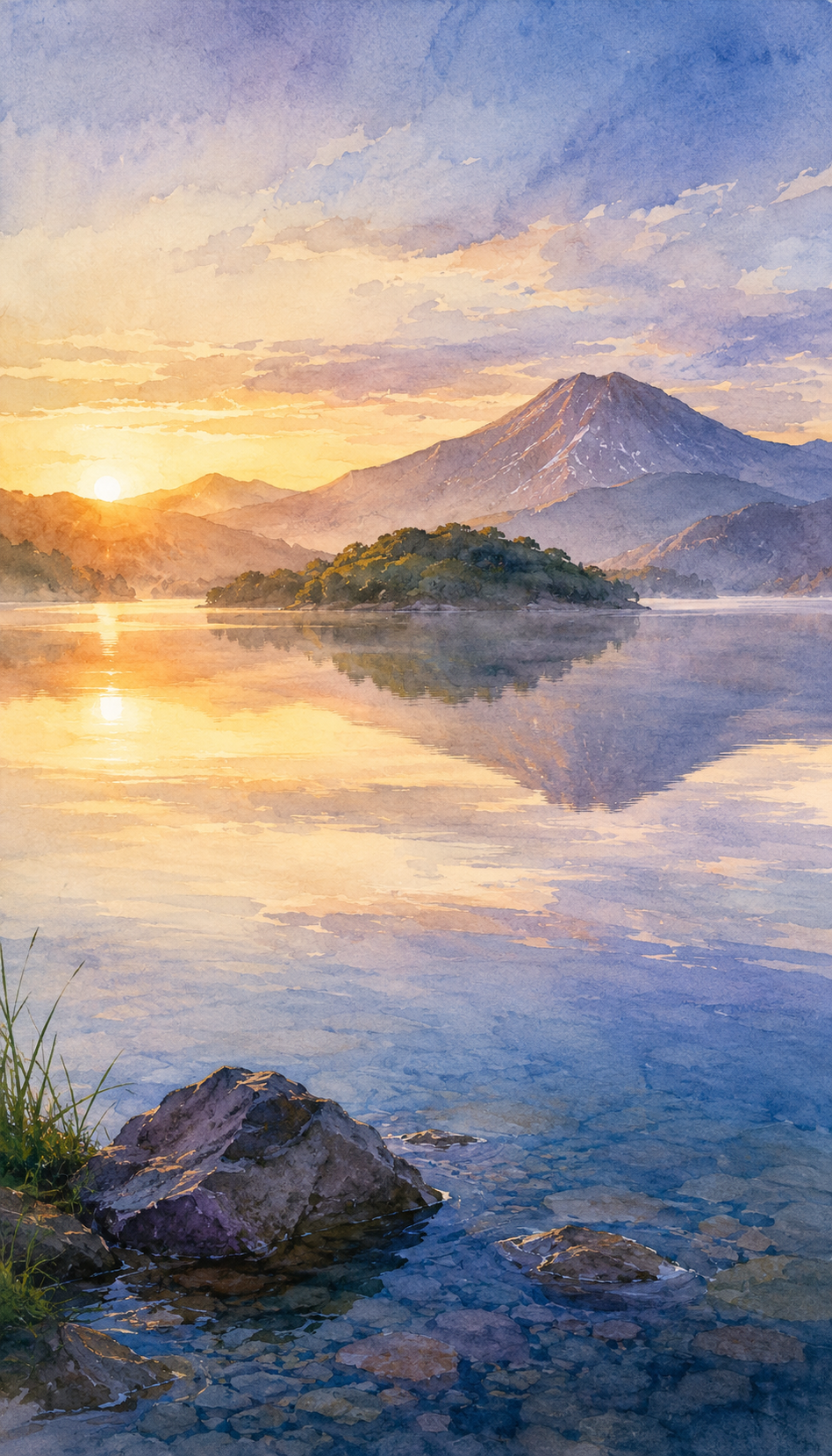
Reverse Reflection of Mount Yotei on Lake Toya
Critique
Introduction This painting presents a calm mountain lake reflecting a conical peak and pale sunrise. The visible subject, color relationships, and lighting establish its basic visual information without requiring external context. Its first impression is direct, yet the arrangement encourages a slower reading of distance, surface, and atmosphere. Description The scene is organized so that the mountain and its reflection create a stable near-symmetry across the horizon. Supporting forms clarify the setting while leaving the principal motif dominant. Light separates reflective passages, solid edges, and softer zones of air. Foreground detail gives way gradually to broader shapes in the distance. Analysis The composition gains coherence from repeated lines, balanced intervals, and a controlled distribution of light and dark. The technique relies on thin mist, quiet tonal transitions, and carefully modulated reflections. Color contrast guides attention, while shifts in scale create convincing depth. The descriptive skill is strongest where distinct textures remain legible without disrupting the unity of the whole. Interpretation and Evaluation The image can be interpreted as a study of still water turning geological scale into a contemplative image. Its composition is persuasive because the principal direction is reinforced by secondary rhythms rather than isolated from them. The color design balances vivid accents with quieter supporting tones. Originality emerges through the transformation of familiar scenery into a concentrated pattern of light, movement, and spatial tension. Conclusion Overall, the work joins careful observation with a deliberately heightened atmosphere. What initially appears to be a straightforward view gradually reveals a sustained examination of reflection, rhythm, and visual passage. The painting succeeds because technique, color, and structure consistently support the same measured mood.
Same Subcategory
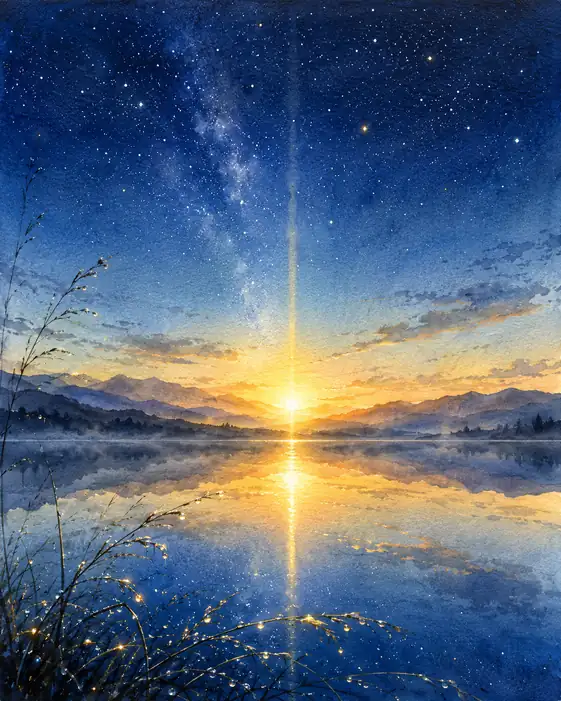 Where Night and Morning Share a Mirror
Similar Artworks
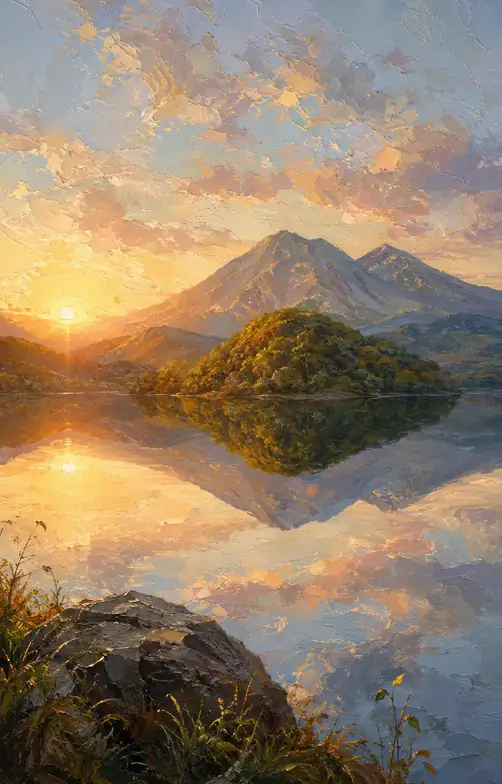 Golden Sunrise over Lake Toya and Nakajima Island
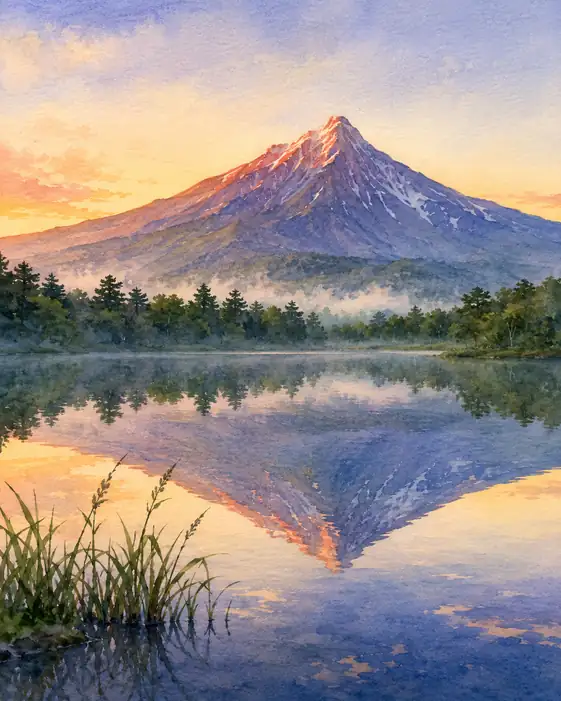 Morgenrot Glow over Mount Rishiri and the Quiet Pond
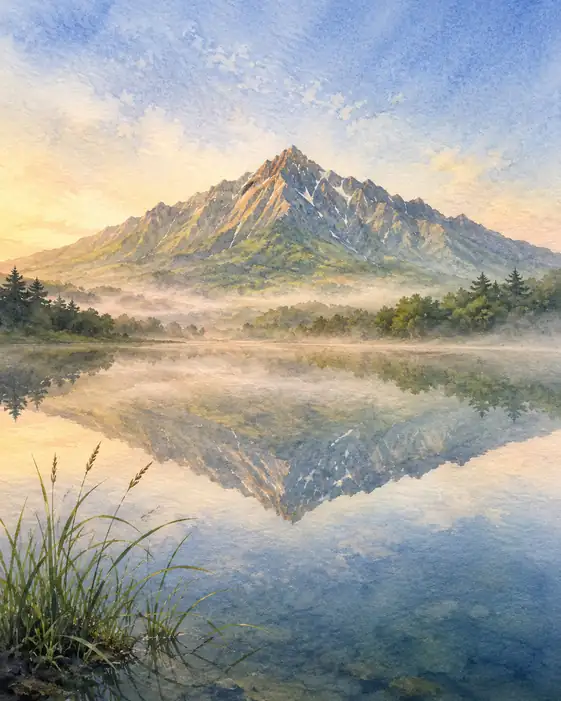 Rishiri Fuji Symmetrically Reflected on Otatomari Pond
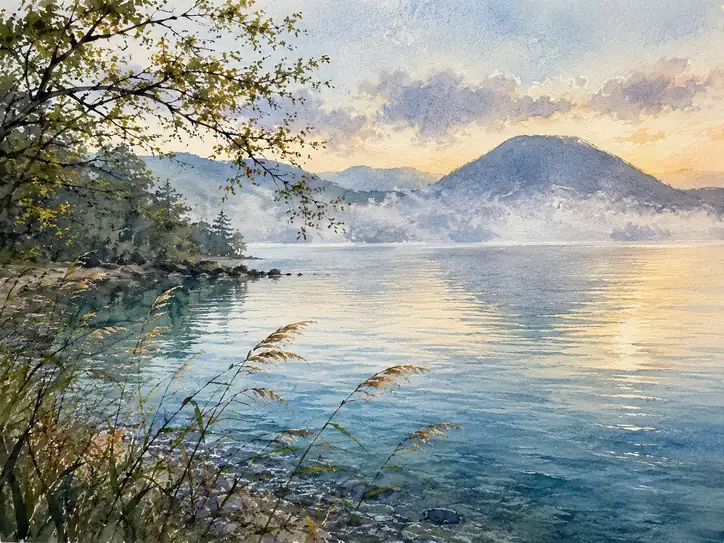 The Lake's Dreaming Glass
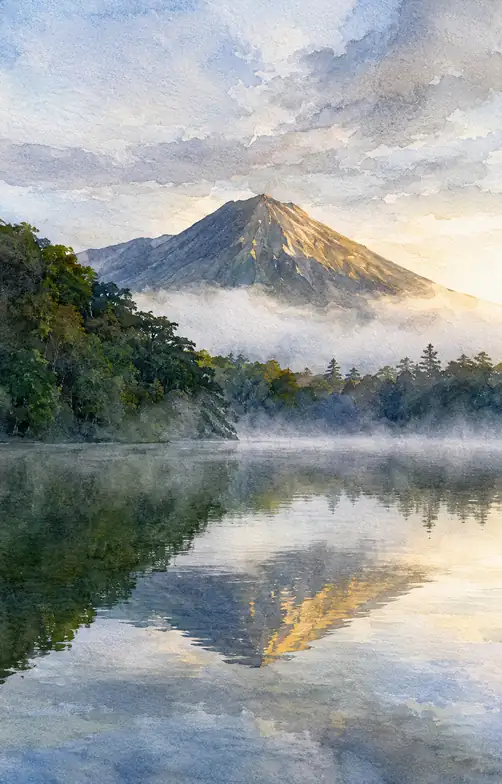 The Mountain Dreams Twice
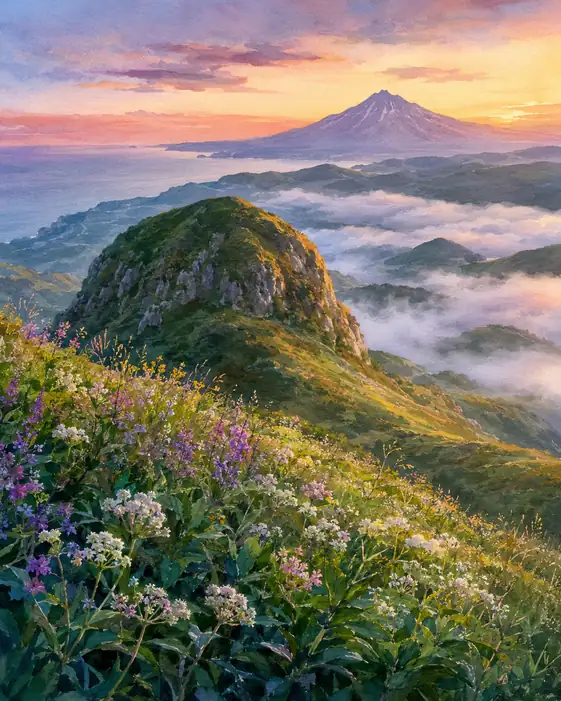 Mount Rishiri Beyond the Twilight Sea of Rebun
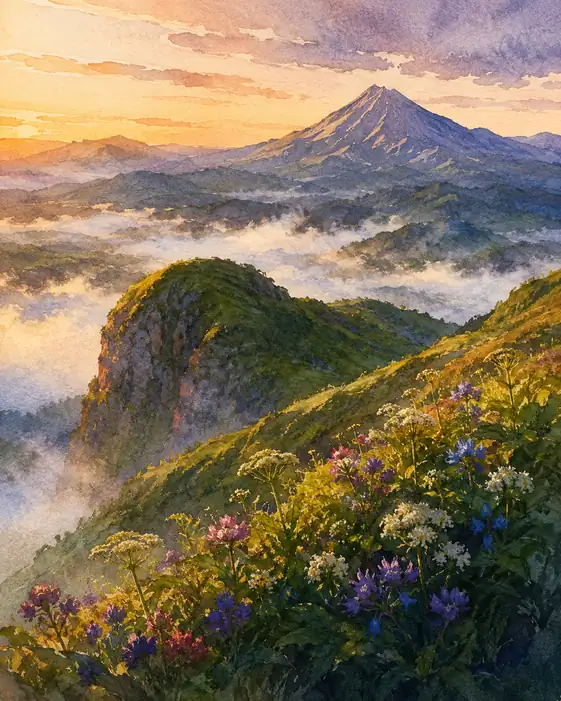 Alpine Blossoms and Mount Rishiri Floating over Clouds
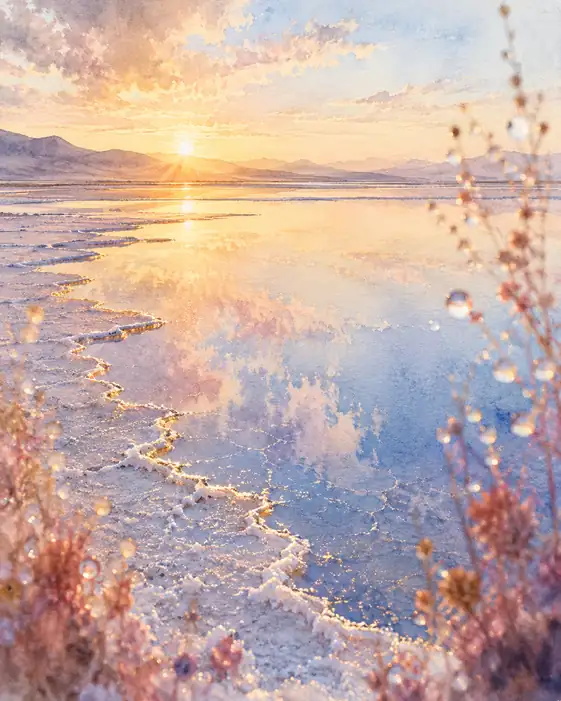 Sky Floating on the Silver Salt Lake
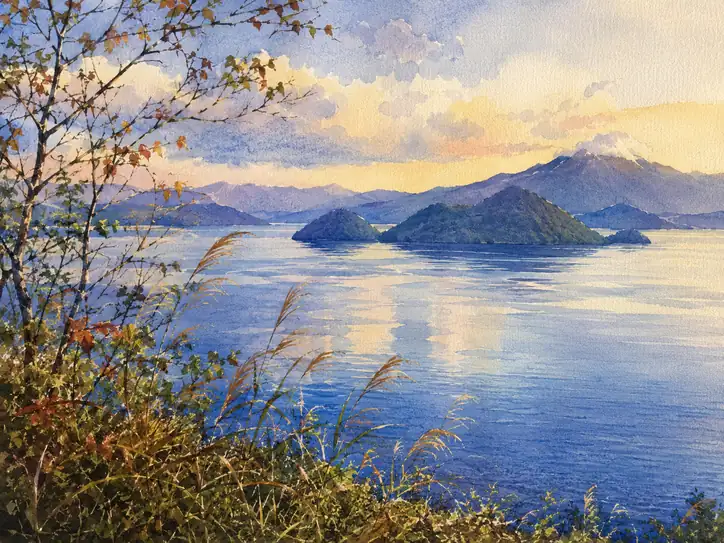 Luminous Calm Across the Water
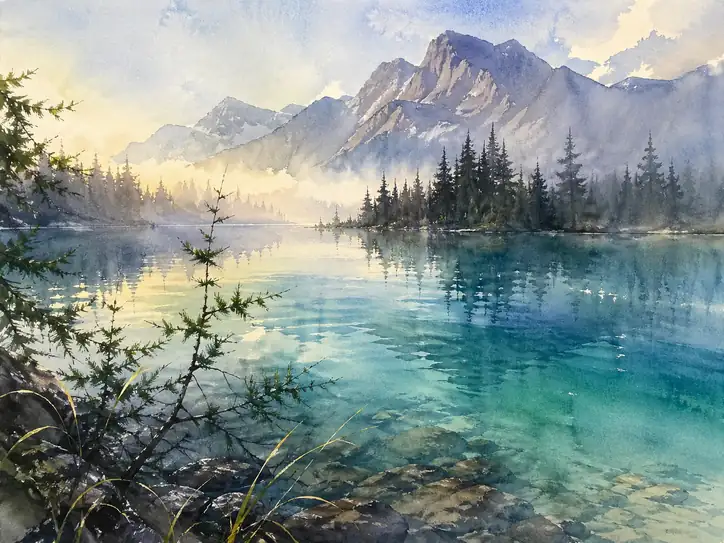 Crystal Morning in the Silent Valley