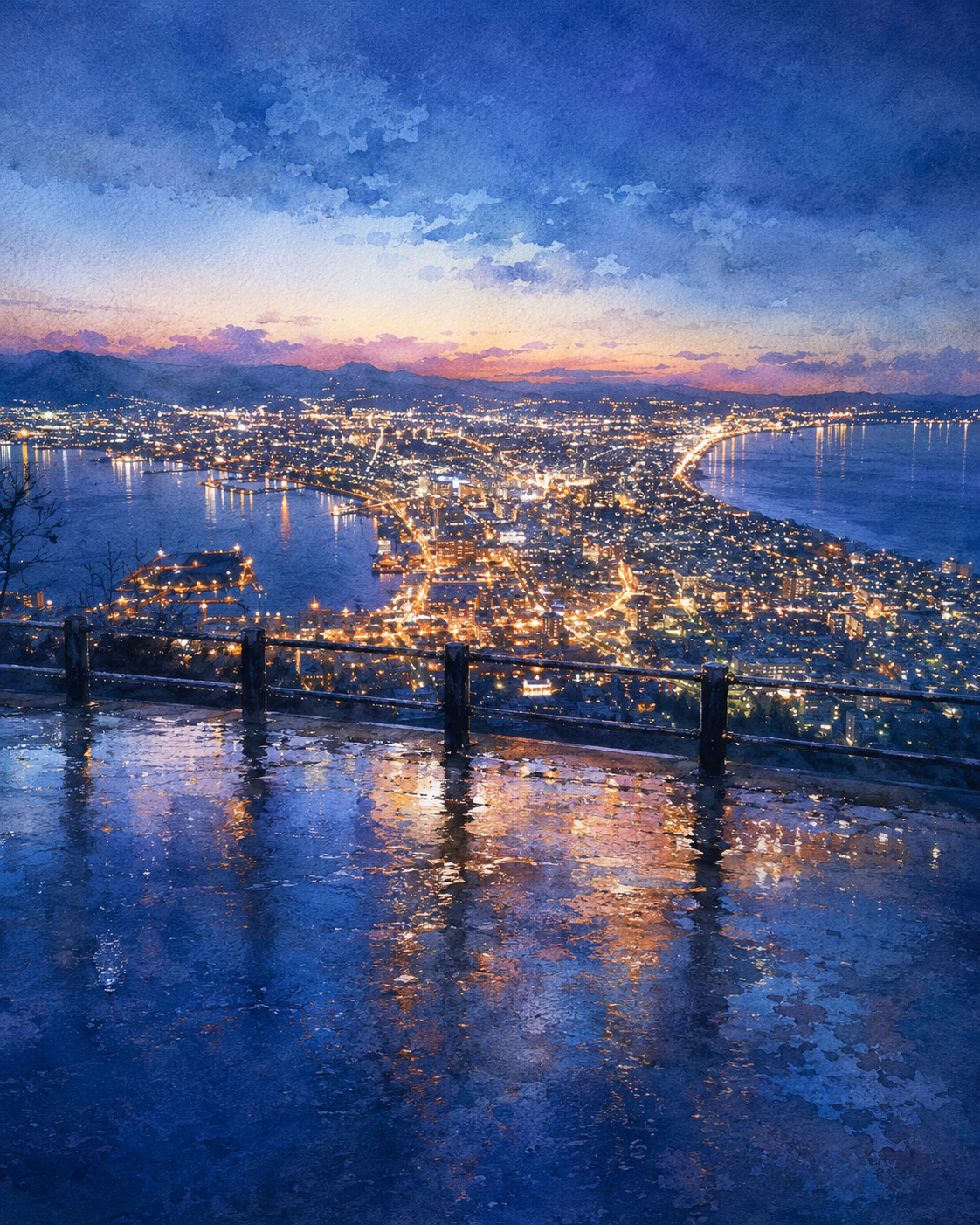
Lights Linking Two Seas
Critique
Introduction This painting presents the night panorama from Mount Hakodate, with city lights between two dark bays. It treats a recognizable place through controlled color and directed light. Its immediate appeal comes from atmosphere, but its structure rewards a much slower, carefully sustained look. Description Within the image, the illuminated urban strip curves through the center and narrows toward the distant land, bordered by water on both sides. The palette combines amber, white, cobalt, violet, and black. In addition, blue-hour sky and countless lamps remain distinct, with long reflections extending into the harbor. These elements establish the setting while allowing the eye to move freely. Analysis The composition connects foreground emphasis with spatial recession. small variations in light density reveal streets, shorelines, and the city's characteristic constricted shape. Edges shift between crisp description and soft transitions, producing depth without excessive detail. Warm and cool passages guide attention while maintaining harmony. Interpretation and Evaluation The painting studies attention, change, and the emotional weight of light. Its descriptive skill is evident in recognizable forms, while its strongest achievement is the coordination of composition and color. Layered, luminous strokes give the scene a gently idealized character. The arrangement avoids mere illustration by making atmosphere an active subject. Conclusion Taken as a whole, the work balances immediacy with measured construction. What first appears straightforward gradually reveals an exchange between light, color, texture, and space. Its value rests in transforming observation into a calm, resonant pictorial experience.
Same Subcategory
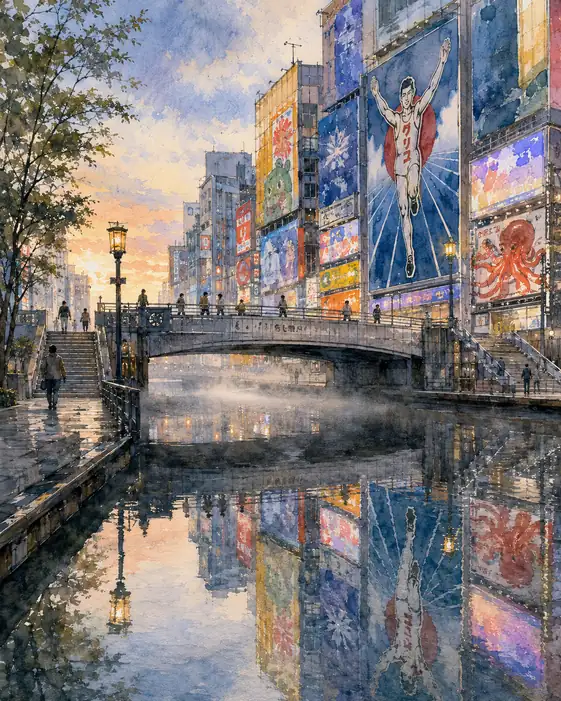 The River Borrowed the City's Dreams
Similar Artworks
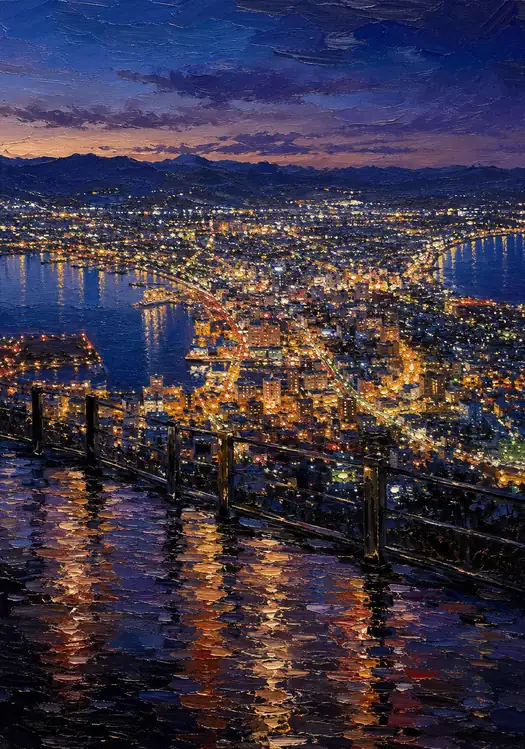 Jewel Box of Lights Between Two Seas
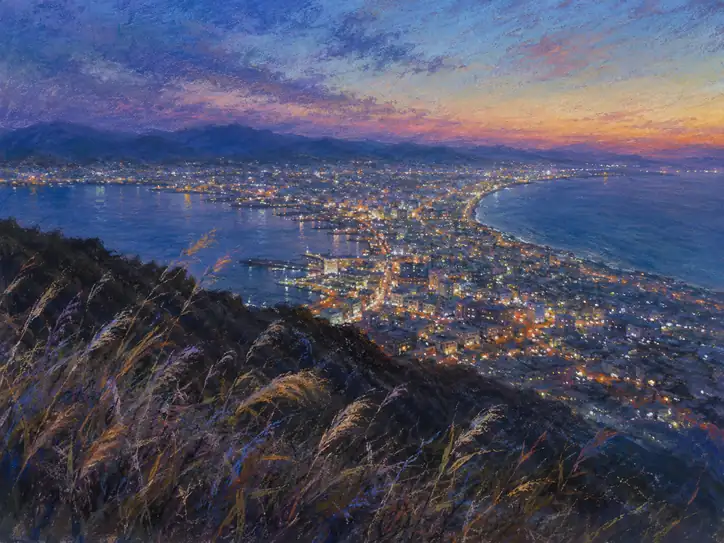 The Cradle of Shimmering Dreams
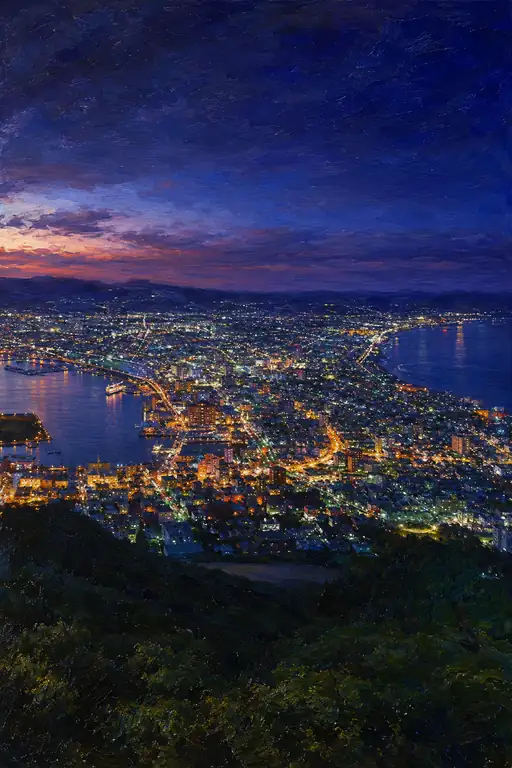 Where the Sky Meets the Sea of Light
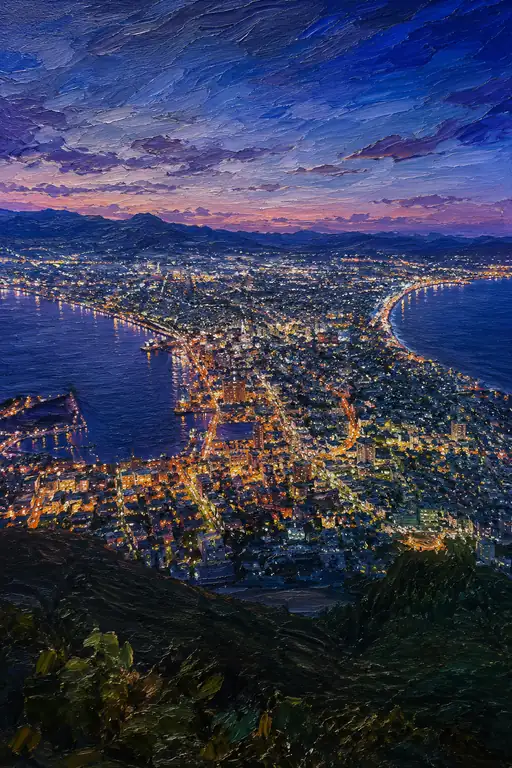 Hourglass of the Whispering Light
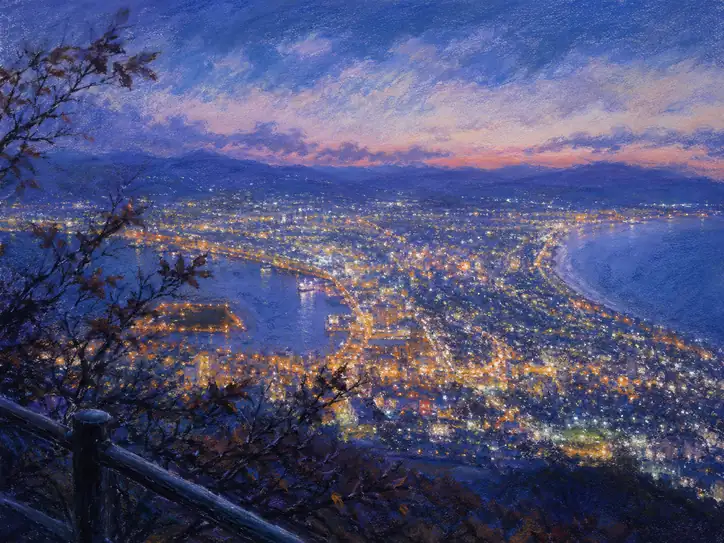 The City's Jeweled Islet
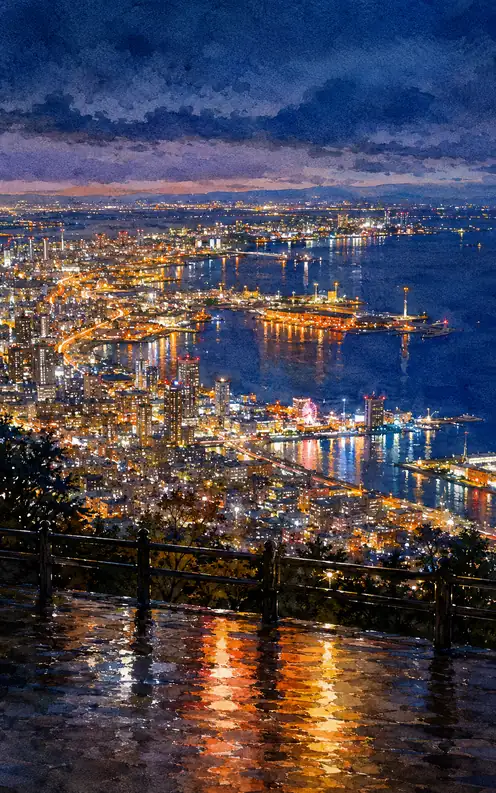 Rain Carries the City Lights Home
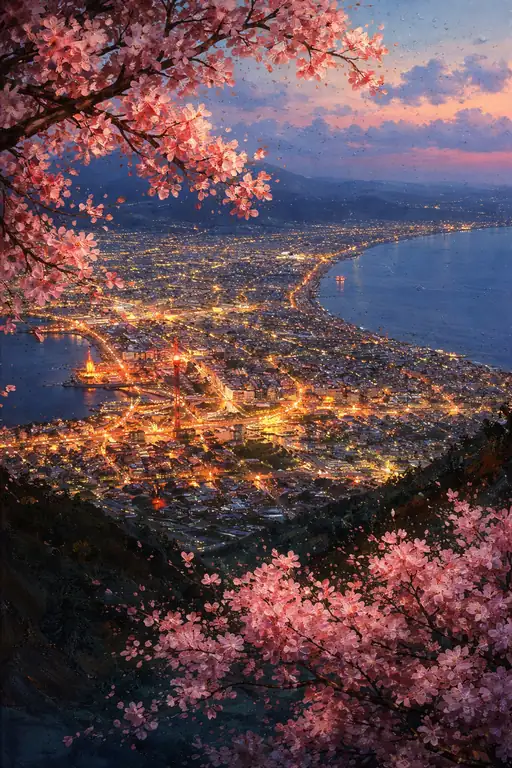 City of Stardust Beyond the Blossoms
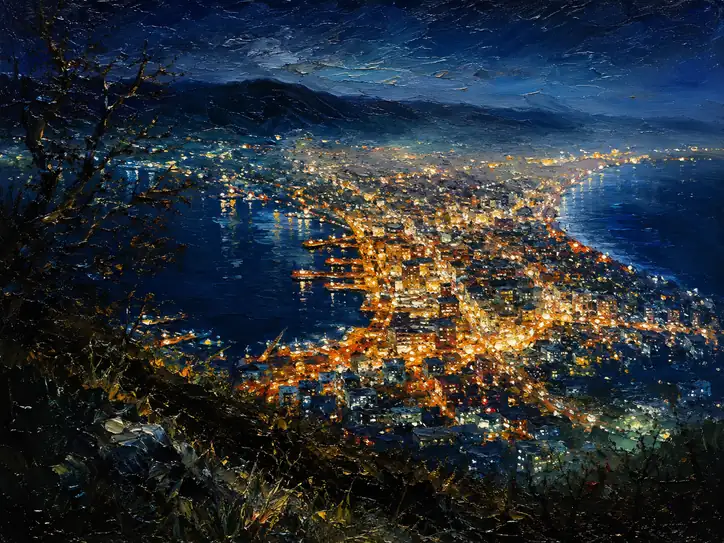 Between the Darkness and the City Glow
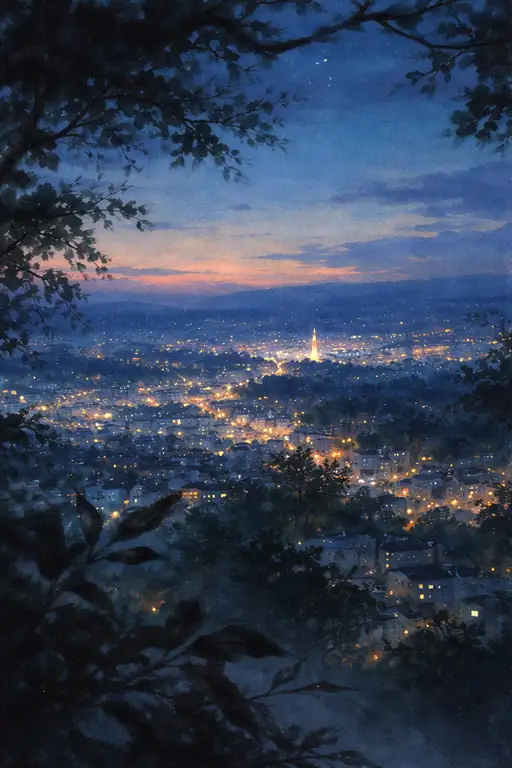 Whispers of the Dreaming City
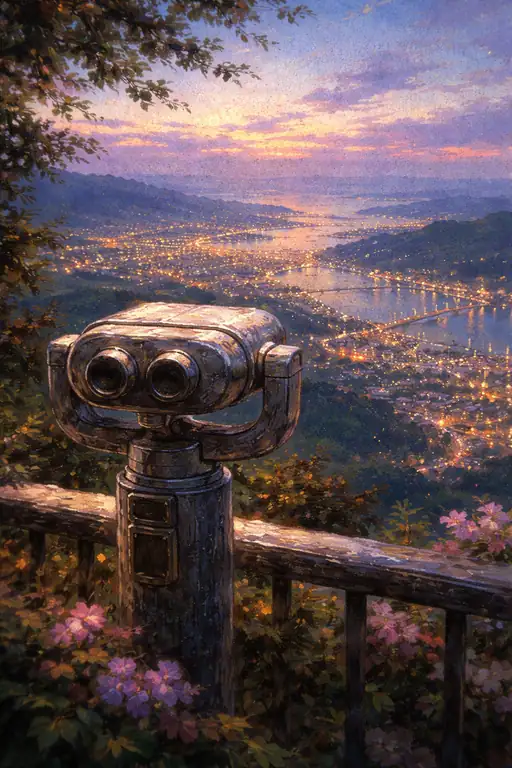 Twilight's Golden Observation