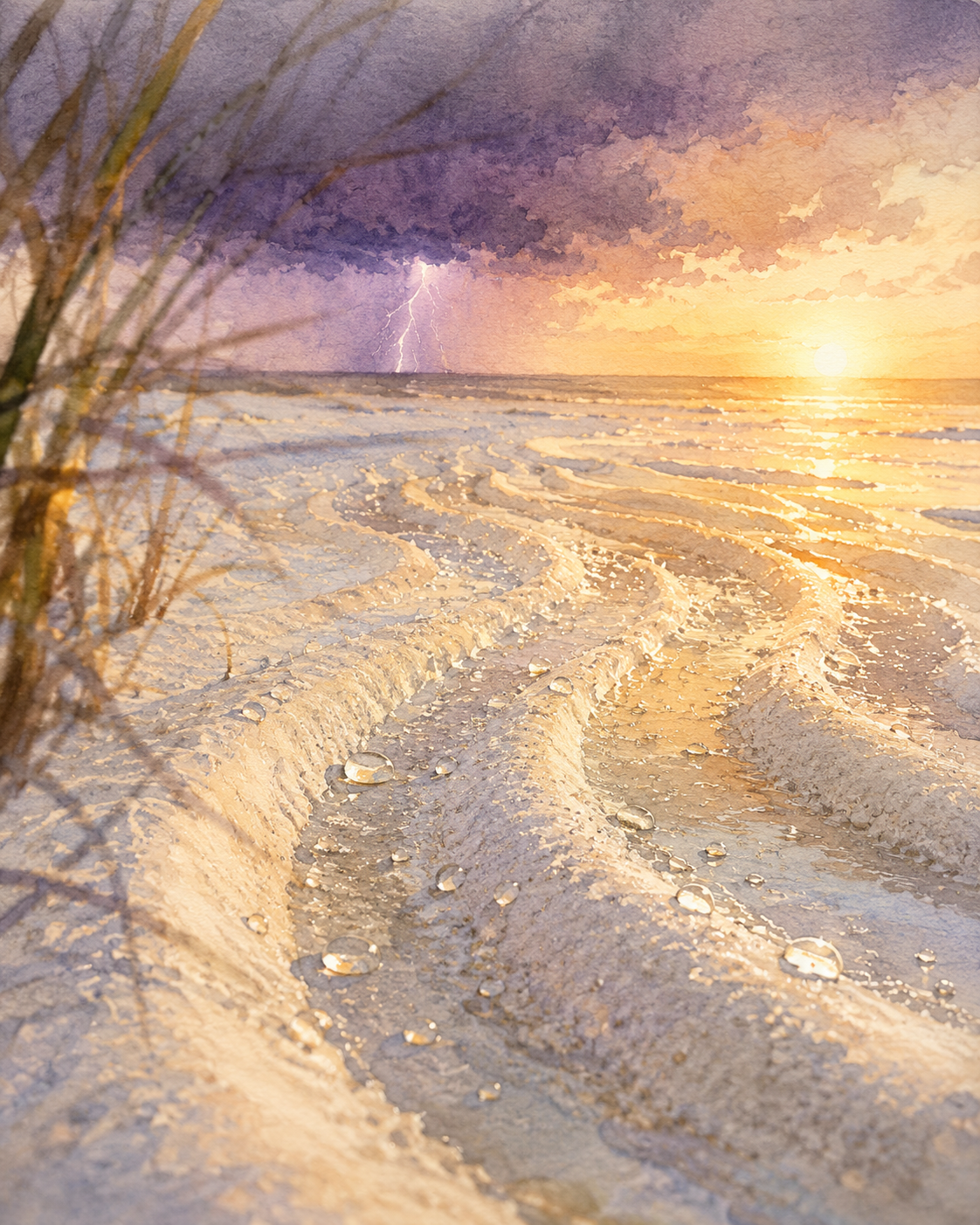
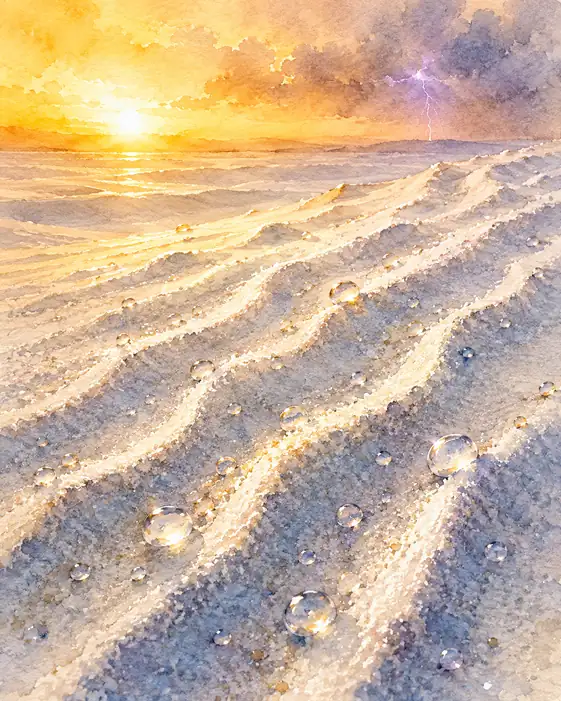
Lightning Flash on the Twilight Strand
Critique
Introduction This painting presents a curving winter shoreline at sunset. It treats a familiar motif through controlled color and directed light. Its immediate appeal comes from atmosphere, but its structure rewards a much slower, carefully sustained look. Description Within the image, the sweeping edge of snow leads from the lower foreground toward a radiant horizon. The palette combines lavender, peach, silver blue, and soft brown. In addition, low light glances across ice and shallow water in horizontal bands. These elements establish the setting while allowing the eye to move freely. Analysis The composition connects foreground emphasis with spatial recession. bare grasses provide delicate counter-lines to the broad curve. Edges shift between crisp description and soft transitions, producing depth without excessive detail. Warm and cool passages guide attention while maintaining harmony. Interpretation and Evaluation The painting studies attention, change, and the emotional weight of light. Its descriptive skill is evident in recognizable forms, while its strongest achievement is the coordination of composition and color. Layered, luminous strokes give the scene a gently idealized character. The arrangement avoids mere illustration by making atmosphere an active subject. Conclusion Taken as a whole, the work balances immediacy with measured construction. What first appears straightforward gradually reveals an exchange between light, color, texture, and space. Its value rests in transforming observation into a calm, resonant pictorial experience.
Same Subcategory
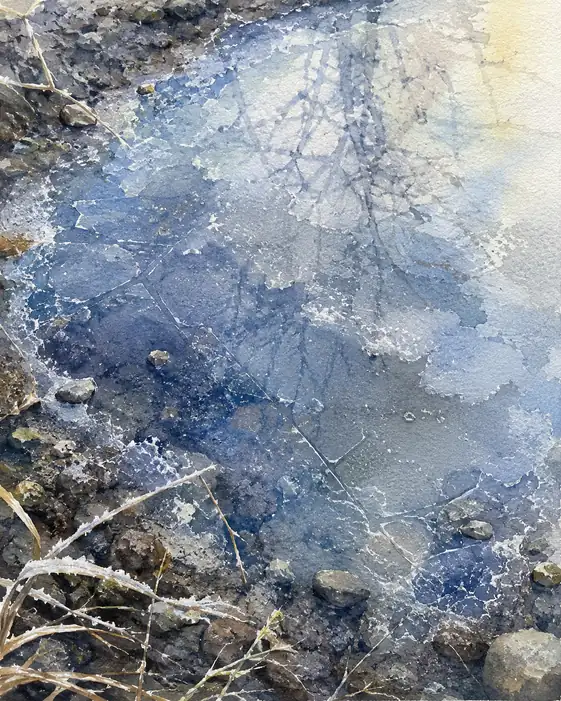 Crystalline Memories of a Winter Morning
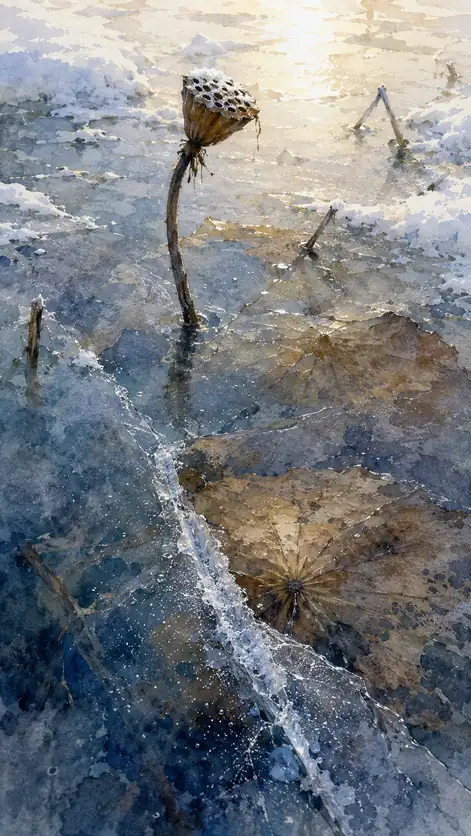 Summer's Memory Beneath the Ice
Similar Artworks
 Golden Ripples on the Ebbing Strand
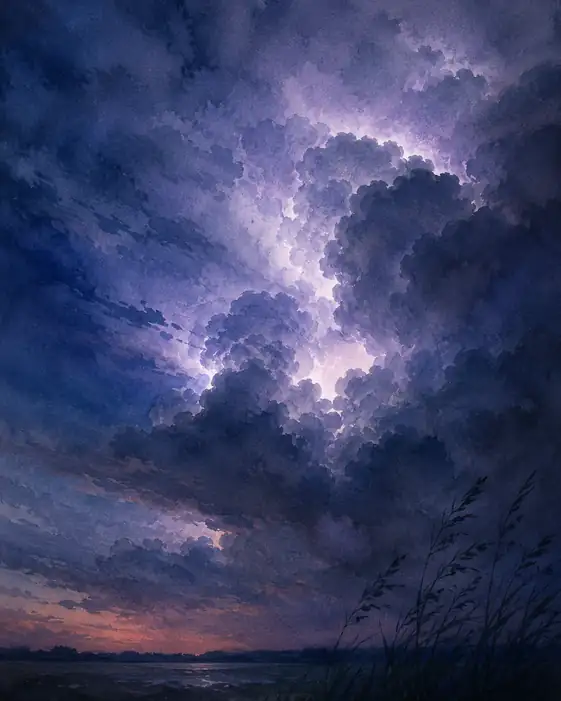 A Symphony Within the Clouds
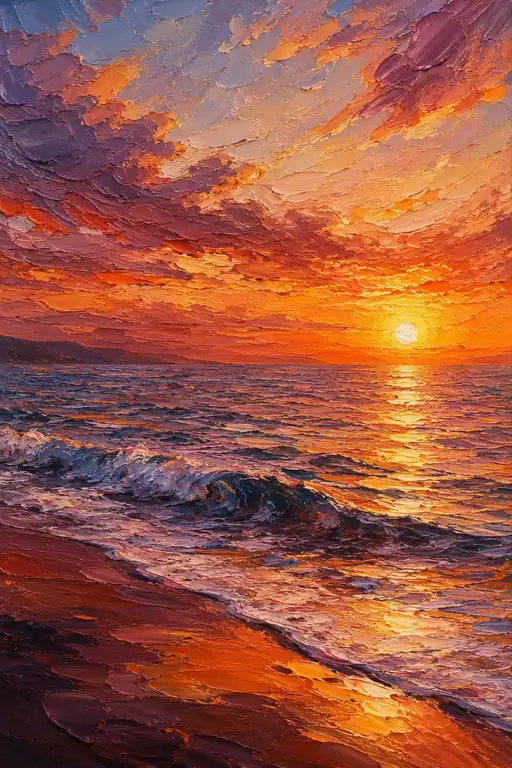 Where the Sunset Meets the Roaring Tide
 The Cloud Builds a Palace of Light
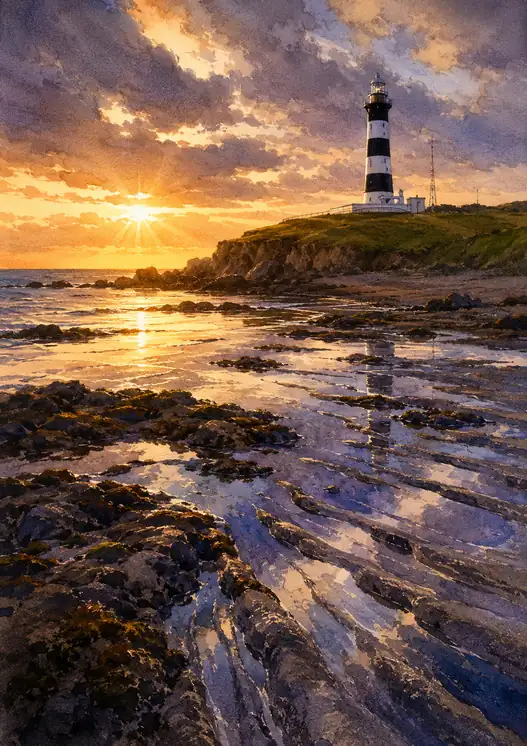 What Remains at Day's End
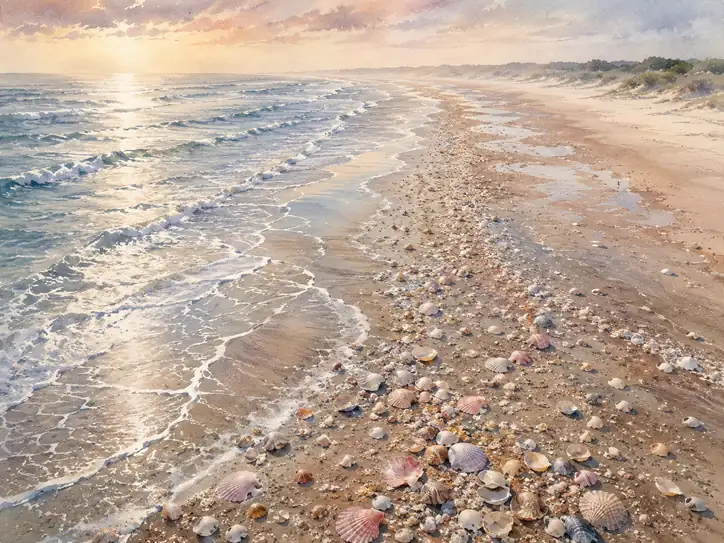 Whispers Left by the Tide
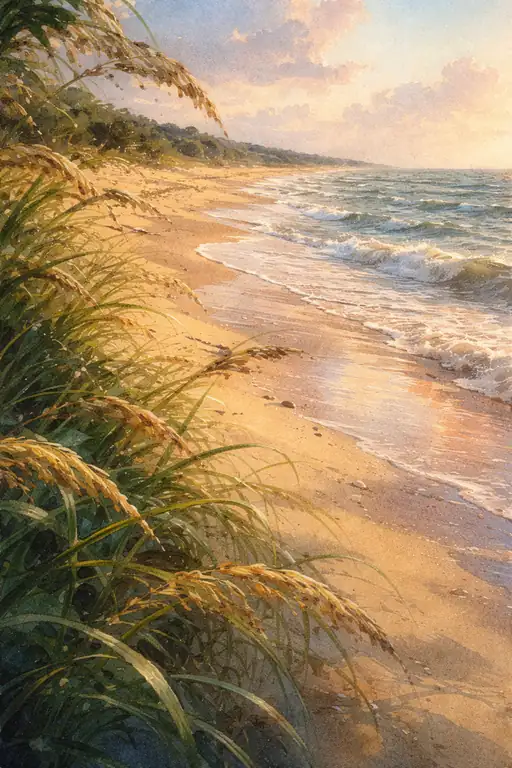 Golden Grace of the Shore
 A Whispered Pulse Before the Tempest
 Winter Calm on the Snowy Lakeshore
 Golden Resonance at the Shore