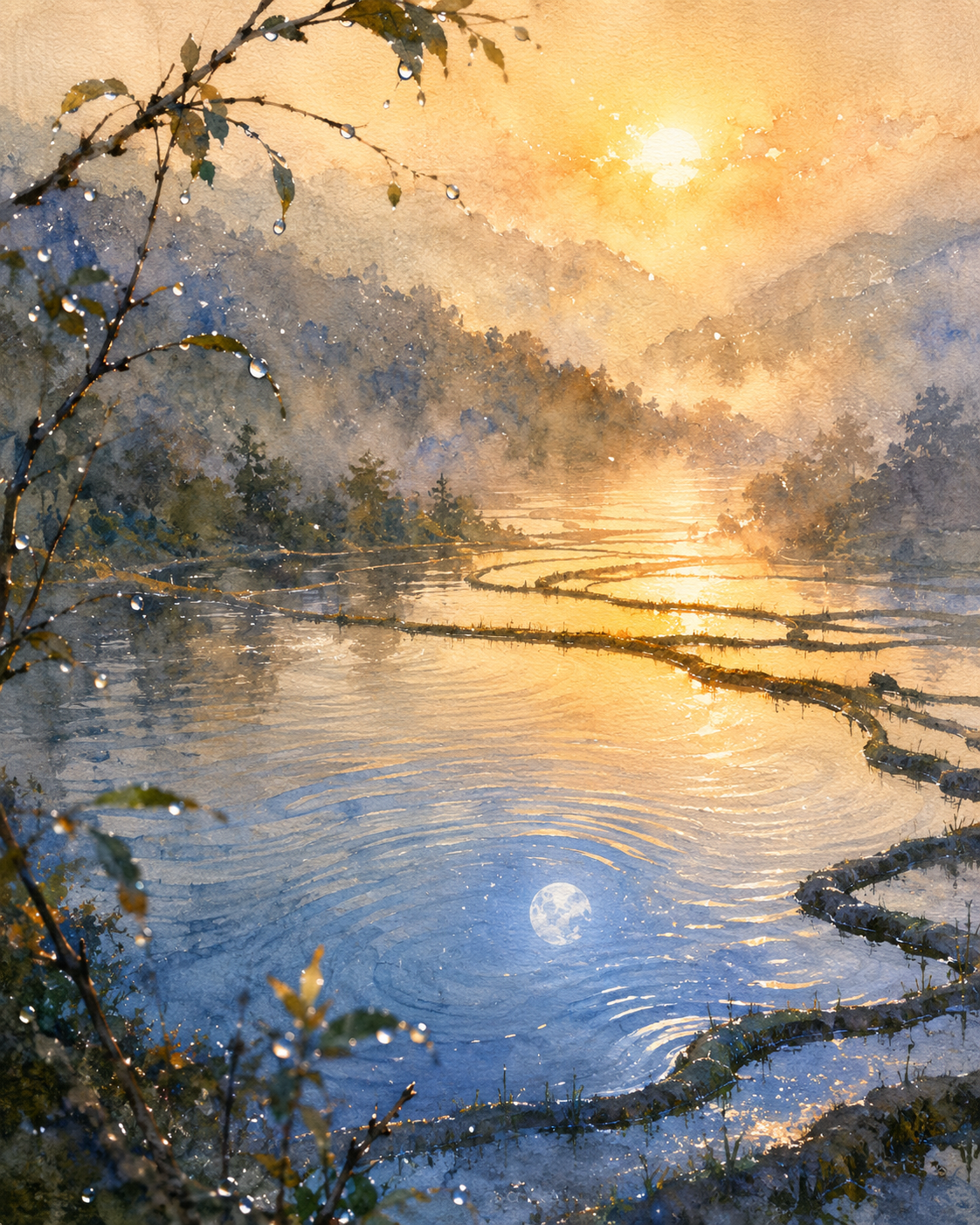
Where the Moon Sleeps in Golden Water
Critique
1. Introduction This painting presents terraced rice fields reflecting the moon within golden morning light. Light, moisture, and living forms meet within one interval. Seasonal time and hope are communicated through natural action. 2. Description Curving flooded terraces recede into a mountain valley, while the nearest pool holds a moon image and concentric ripples. Foreground forms are specific and soften with distance. Reflections, droplets, or bubbles convey space and brevity without human figures. 3. Analysis Gold sky and reflections contrast with blue-gray mountains and water, and the pale moon becomes a quiet focus. Terrace curves carry the eye inward; sun and moon answer vertically, while dark branches provide near scale. Sharp detail alternates with dissolved washes to separate focus from atmosphere. Composition, color, light, and technique form a coherent rhythm, and the principal silhouette remains legible within the vertical format. 4. Interpretation and Evaluation The work can be interpreted as symbols of different times meeting in water when natural conditions align only once. Its draftsmanship is clearest in small light effects, while its composition connects one subject to broad environmental layers. Selective saturation communicates wonder, stillness, and vitality. Transparent or textured handling is appropriate, and the alignment of natural phenomena gives the image originality. 5. Conclusion The first impression is one of luminous beauty, but closer study reveals a scene dependent on a brief alignment of season, weather, and light. Linking an expansive landscape to minute moisture condenses long time into one instant. The result presents natural change as a persuasive image of hope.
Same Subcategory
 Lingering Flame of the Quiet Evening
Similar Artworks
 Ripples of the Morning Moon on Golden Fields
 Morning Symphony Across the Water Terraces
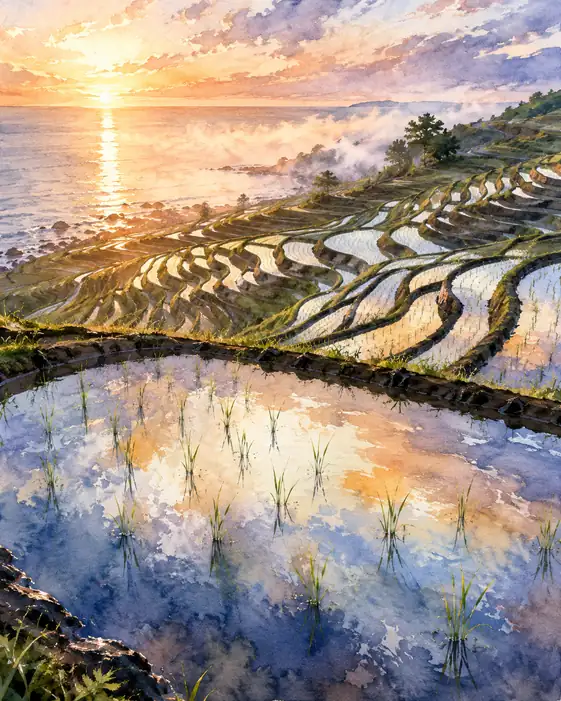 A Thousand Hands Gather the Sun
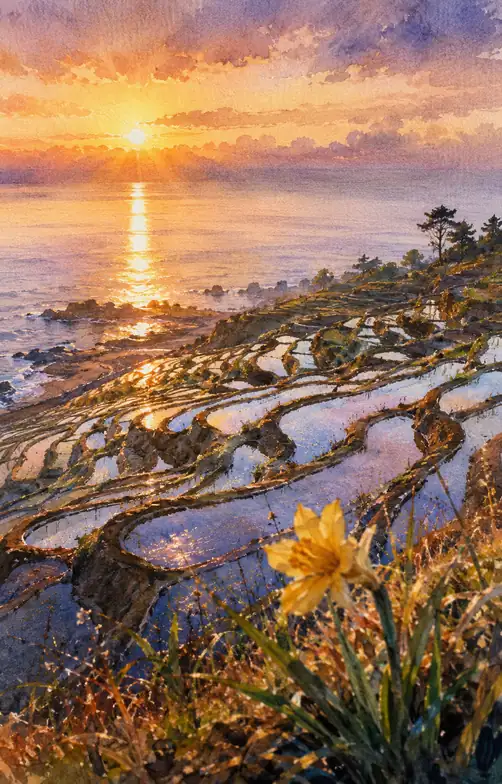 Every Step Holds a Piece of Dawn
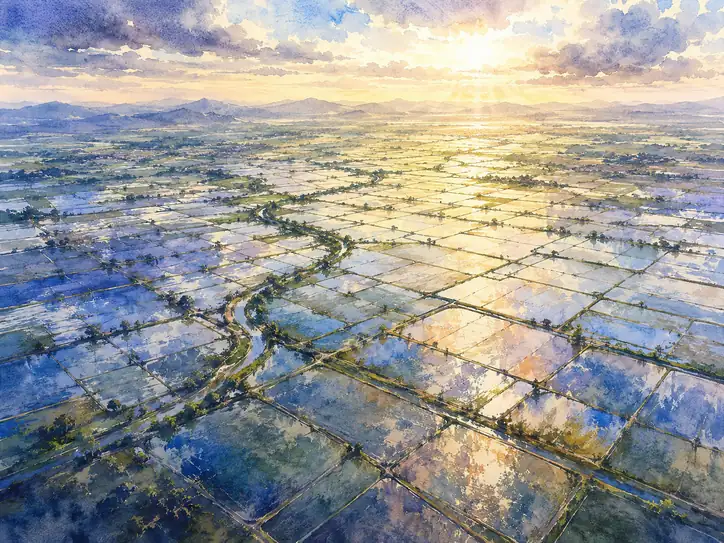 The Quiet Mirror of the Earth
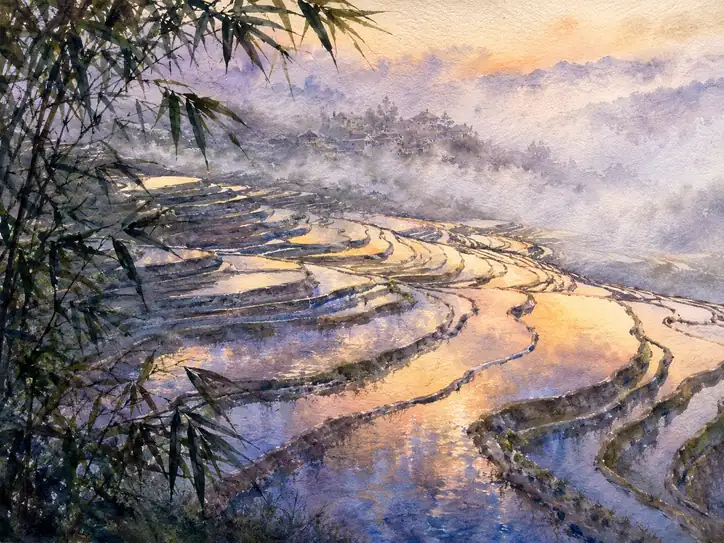 The First Light on Terraced Dreams
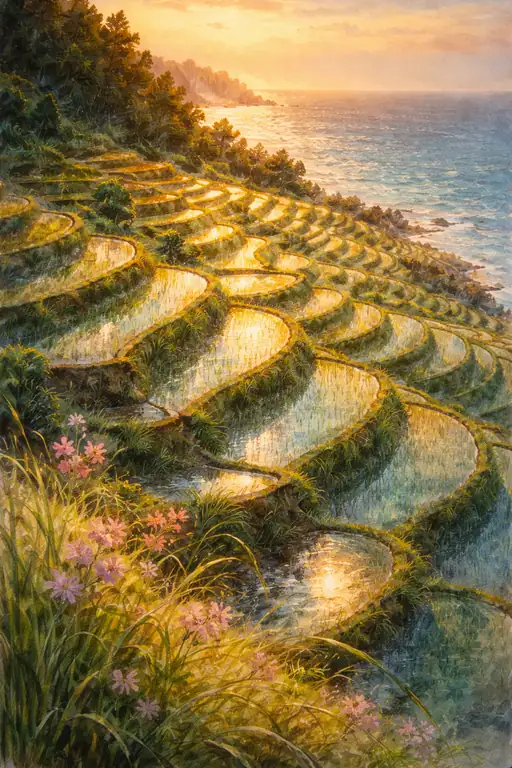 Golden Terraces: The Sunset's Embrace
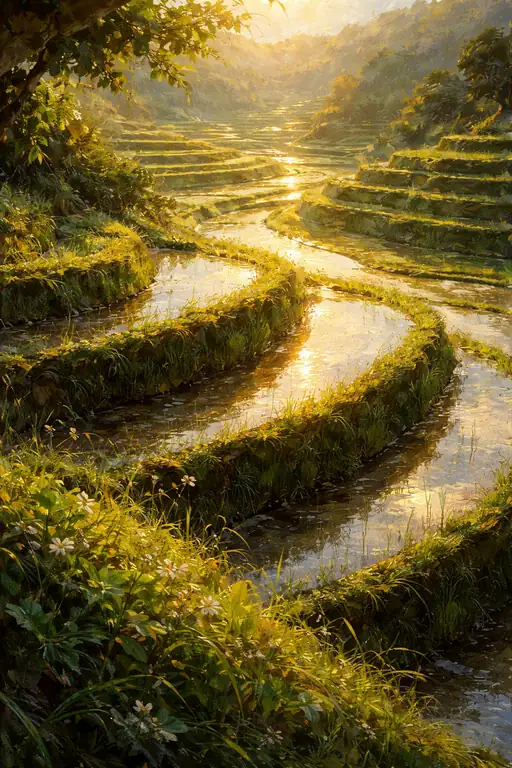 Echoes of Light on the Terraces
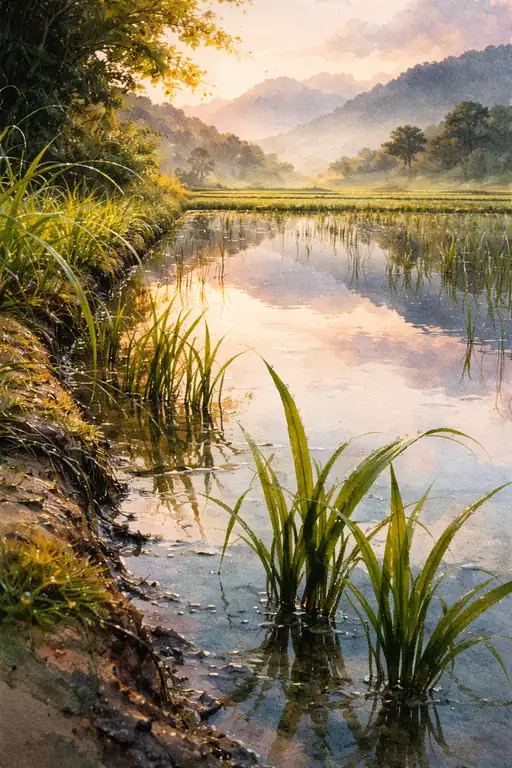 Golden Dawn's Reflection
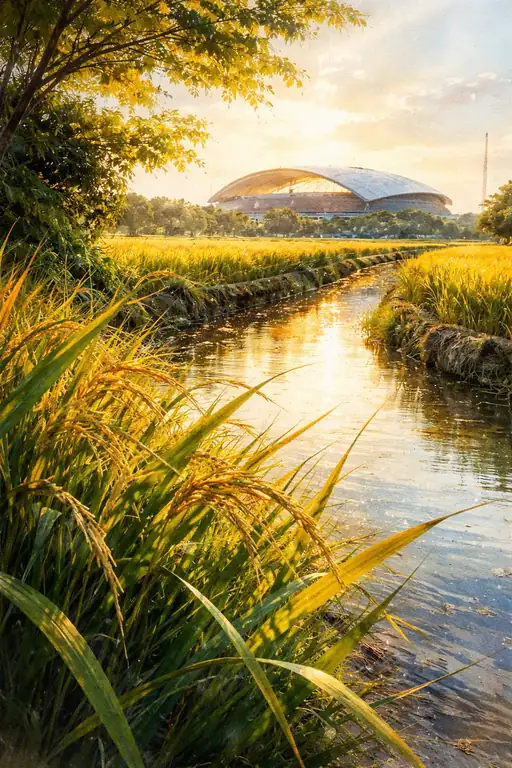 Woven Earth: Tracks to the Future