
Silent Hymn of Highland Dew
Critique
1. Introduction This painting presents a sunrise emerging above a sea of clouds and transparent dew. Light, moisture, and living forms meet within one interval. Seasonal time and hope are communicated through natural action. 2. Description The sun appears at the center of dense cloud, upper clouds radiate outward, and dew-lined grasses rise at lower right. Foreground forms are specific and soften with distance. Reflections, droplets, or bubbles convey space and brevity without human figures. 3. Analysis Blue-gray and violet cloud meet intense yellow, orange, and white, while droplets act as tiny mirrors. A central symmetry is gently disturbed by the grasses, which give foreground scale to the immense weather. Sharp detail alternates with dissolved washes to separate focus from atmosphere. Composition, color, light, and technique form a coherent rhythm, and the principal silhouette remains legible within the vertical format. 4. Interpretation and Evaluation The work can be interpreted as cloud, dew, and light briefly joining into a complete natural form. Its draftsmanship is clearest in small light effects, while its composition connects one subject to broad environmental layers. Selective saturation communicates wonder, stillness, and vitality. Transparent or textured handling is appropriate, and the alignment of natural phenomena gives the image originality. 5. Conclusion The first impression is one of luminous beauty, but closer study reveals a scene dependent on a brief alignment of season, weather, and light. Linking an expansive landscape to minute moisture condenses long time into one instant. The result presents natural change as a persuasive image of hope.
Same Subcategory
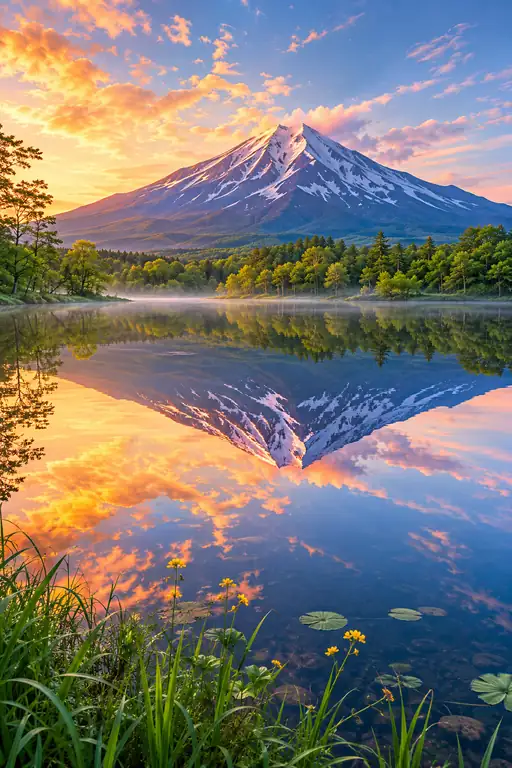 Mirror of the Sacred Awakening
Similar Artworks
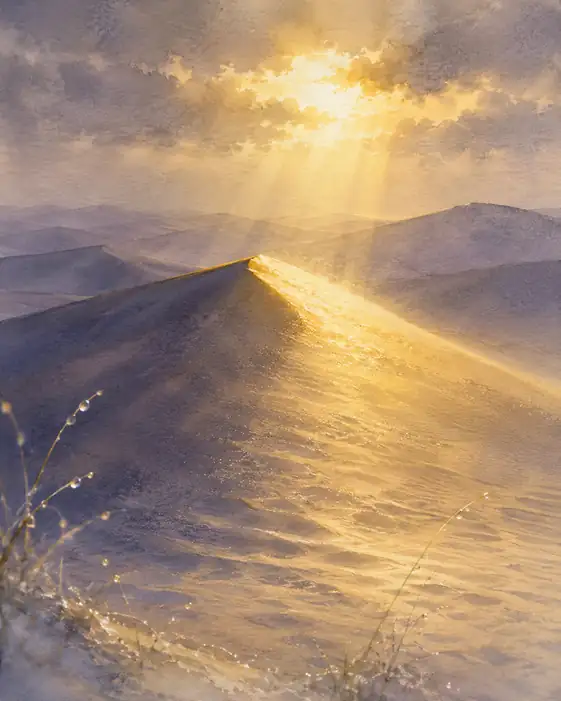 Golden Crest in the Silent Solitude
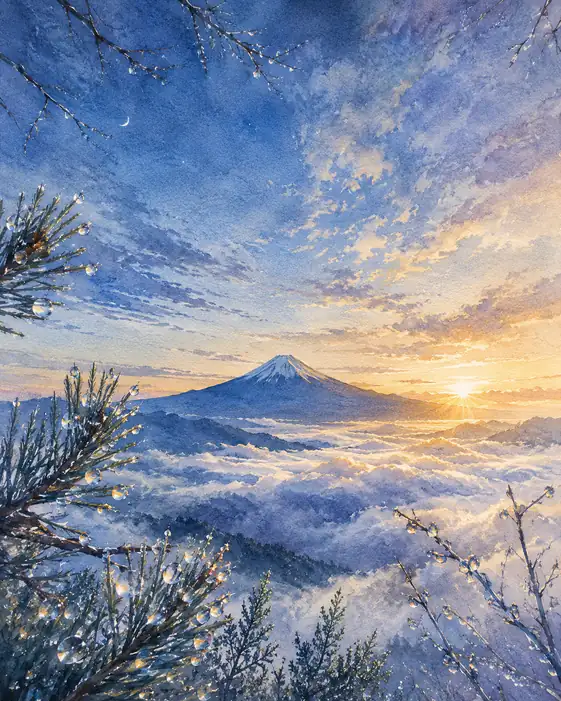 Reign of Light Above the Cloud Sea
 Field of Tulips Awakening in Dawn’s Light
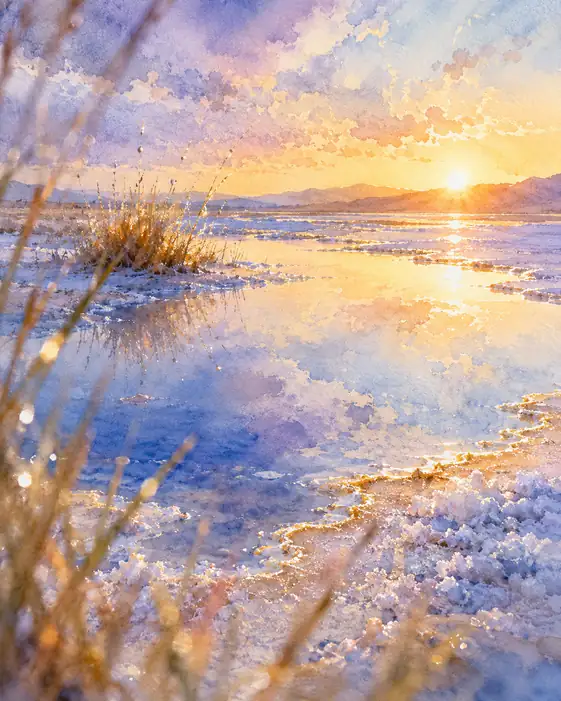 Lavender Twilight on the Crystal Salt Lake
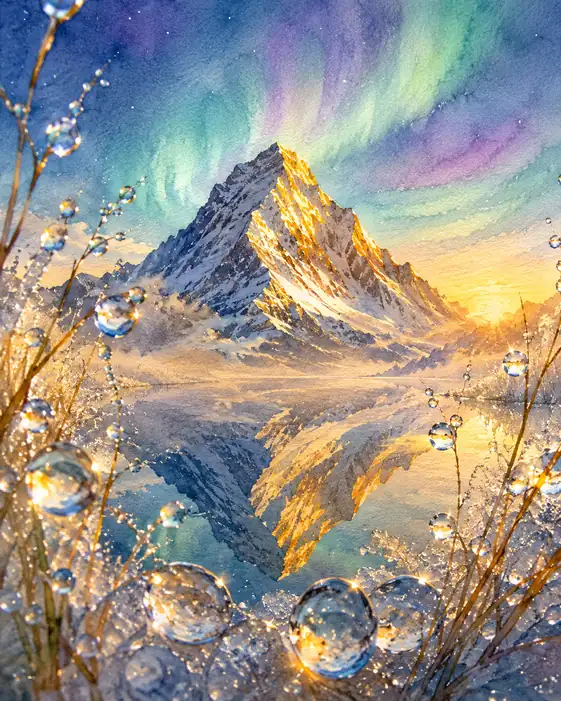 Auroral Canopy over the Glowing Peak
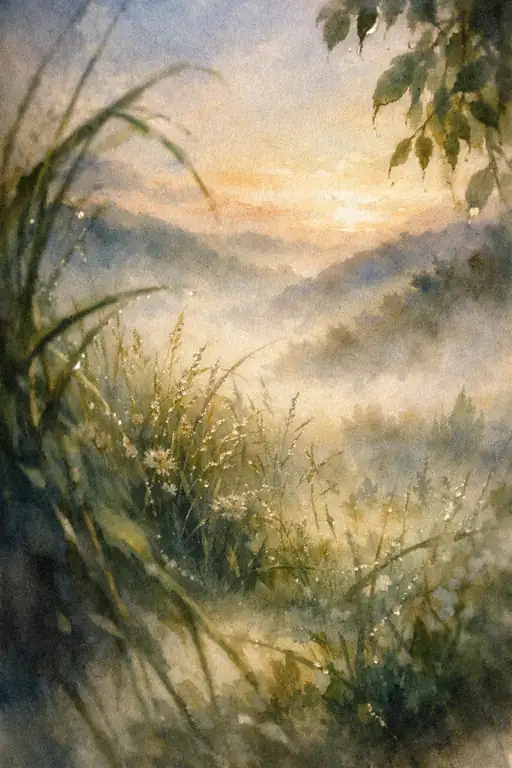 Glimmering Resurgence of the Morning Mist
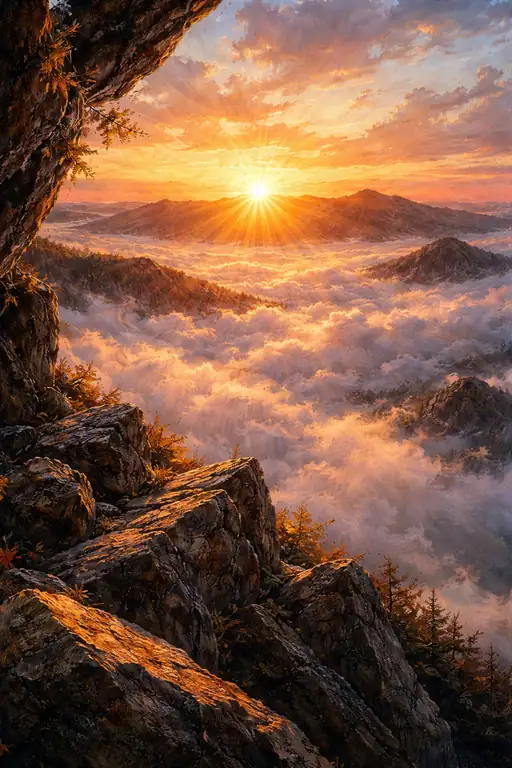 Golden Ascent over the Misty Ridges
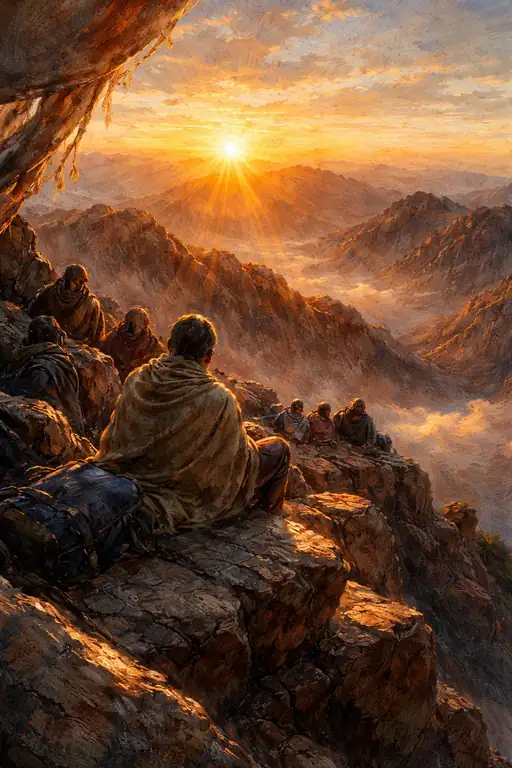 A Moment of Awe Before the Dawn
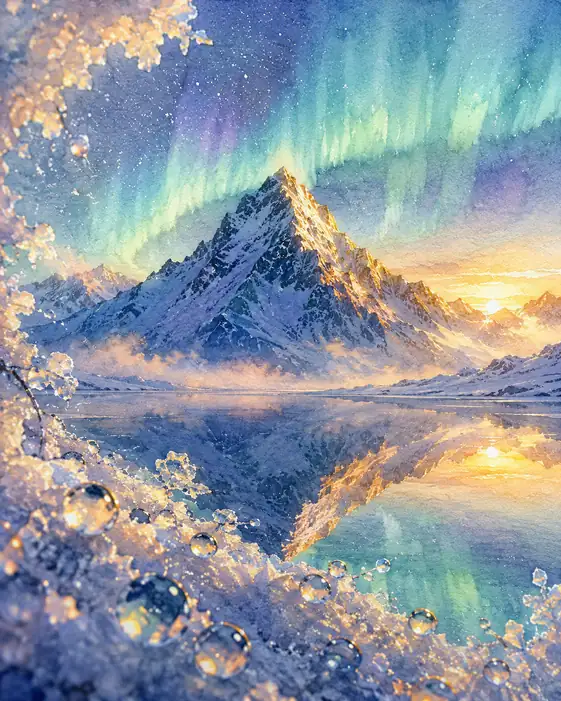 Aurora Dancing over the Frozen Peak
 Sky Floating on the Silver Salt Lake