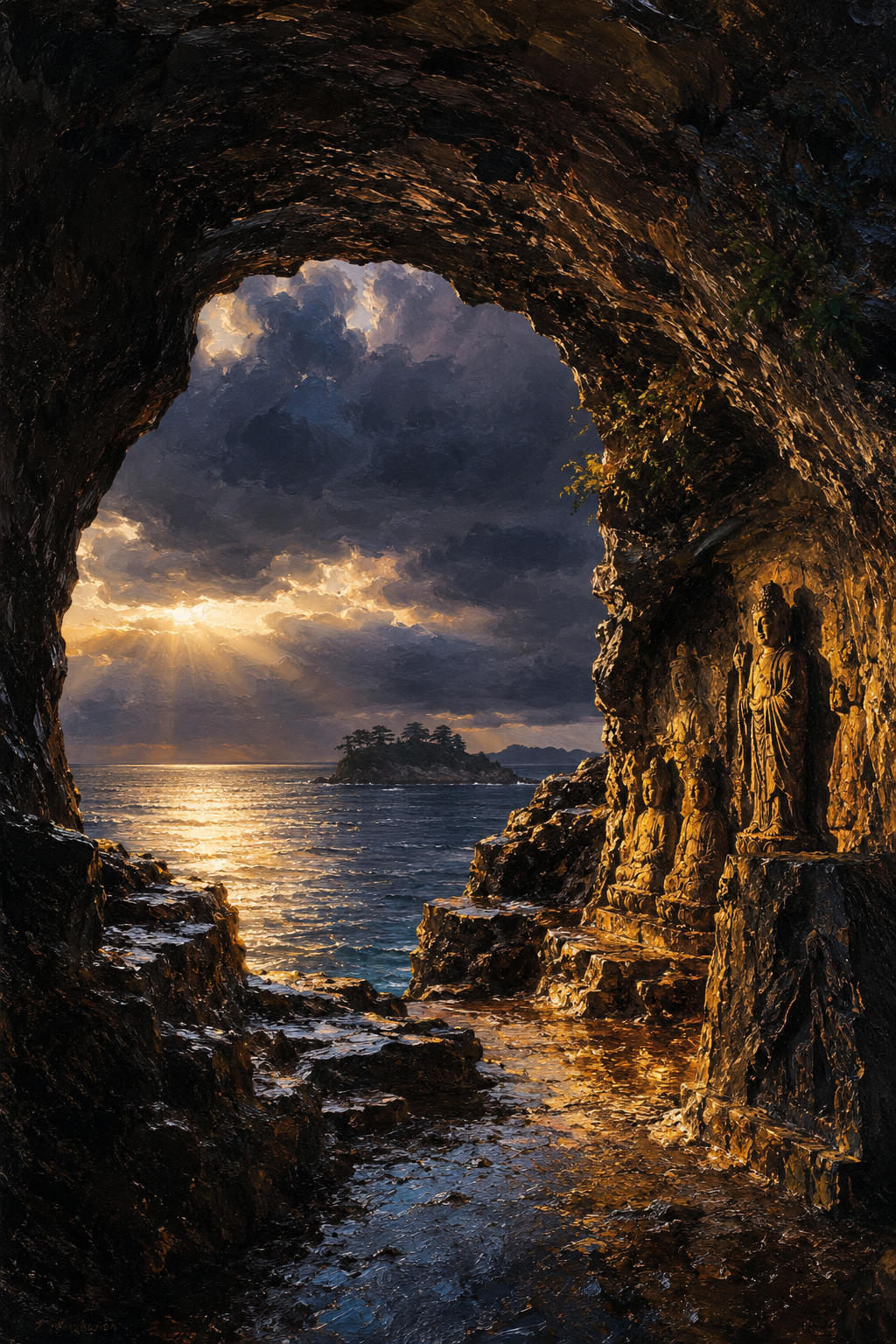
Prayer of the Wet Stone
Critique
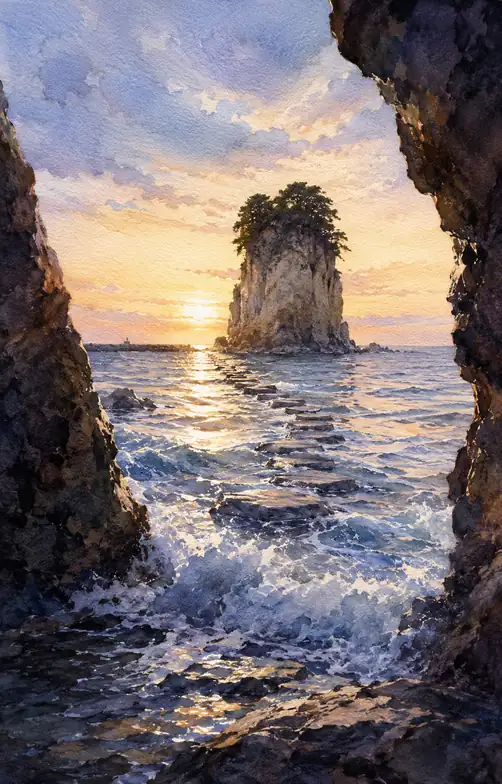
1. Introduction This watercolor painting illustrates the stone caves of Ojima Island in Matsushima. The artwork dramatically captures the moment immediately following a sudden evening shower. The mystical view from inside the dark cave toward the sea invites viewers into a solemn world. 2. Description In the foreground, wet rocky surfaces and ancient Buddhist statues are carved into the cave walls, illuminated by a sharp ray of sunlight. Through the natural stone archway, a brilliant path of golden light reflects on the sea. In the distance, a solitary island stands under a receding dark blue raincloud. 3. Analysis The artist uses the dark cave interior as a natural frame, creating a powerful value contrast with the bright seascape outside. The textures of the wet stones are rendered with precise brushwork. The golden reflection on the water and the distant island function as two distinct focal points, balancing the image. 4. Interpretation and Evaluation The painting beautifully represents the transition of weather and the quiet presence of faith embodied by the stone statues. The contrast between deep shadow and warm sunlight shows exceptional technical control. This unique choice of viewpoint imbues the natural landscape with a profound sense of spiritual reflection. 5. Conclusion Initially, the scene draws attention with its strong contrast, but closer observation reveals a delicate balance of moisture and light. The harmony between the dark rocks and the glowing ocean is executed masterfully. Ultimately, this work stands as a powerful depiction of nature's majesty and peaceful quietude.
Same Subcategory
Similar Artworks
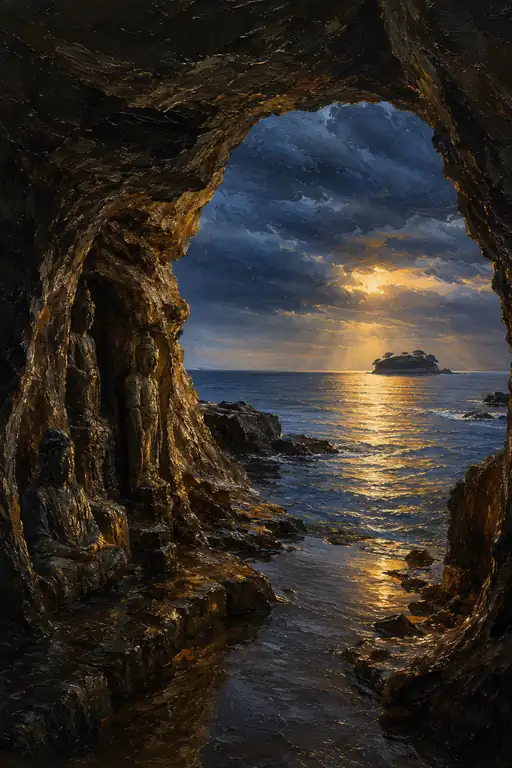 Sanctuary of Light and Shadow
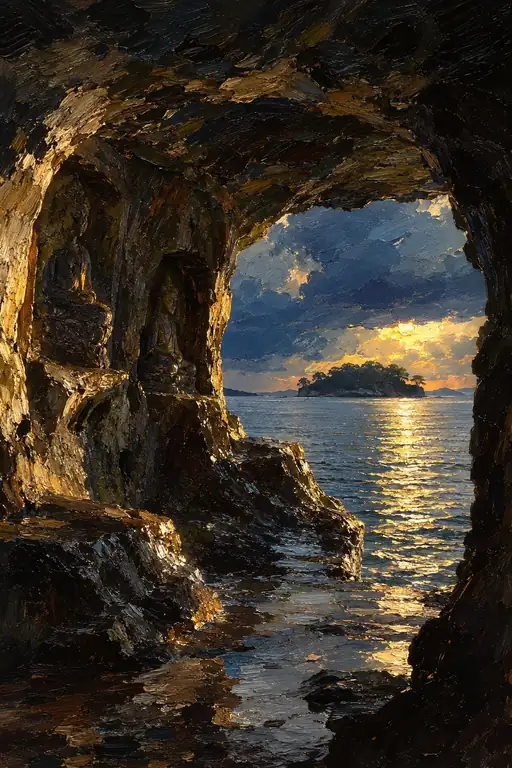 Golden Path from the Shadows
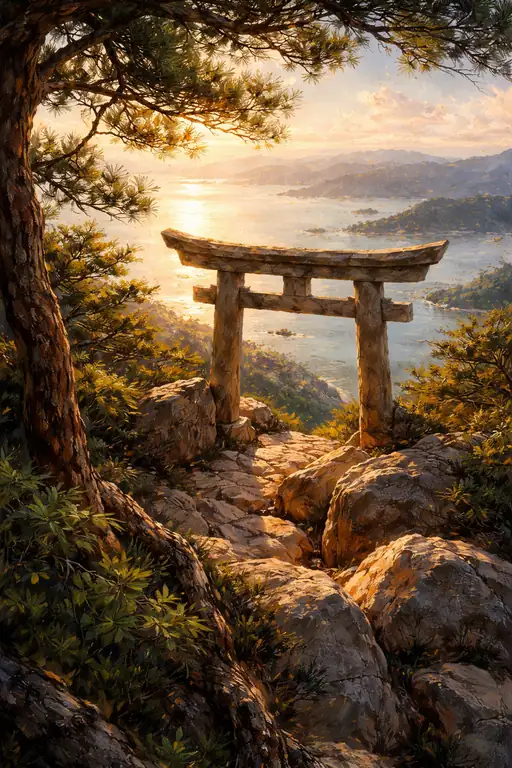 Golden Gateway to the Distant Isles
 The Horizon Waiting Through Stone
 Quietness After the Storm
 Bridge to the Burning Sky
 Pathway to the Dawn's Whisper
 Eternity Engraved in Stone
 Whispers of the Golden Sanctuary
 A Radiant Sunset over the Sacred Isle