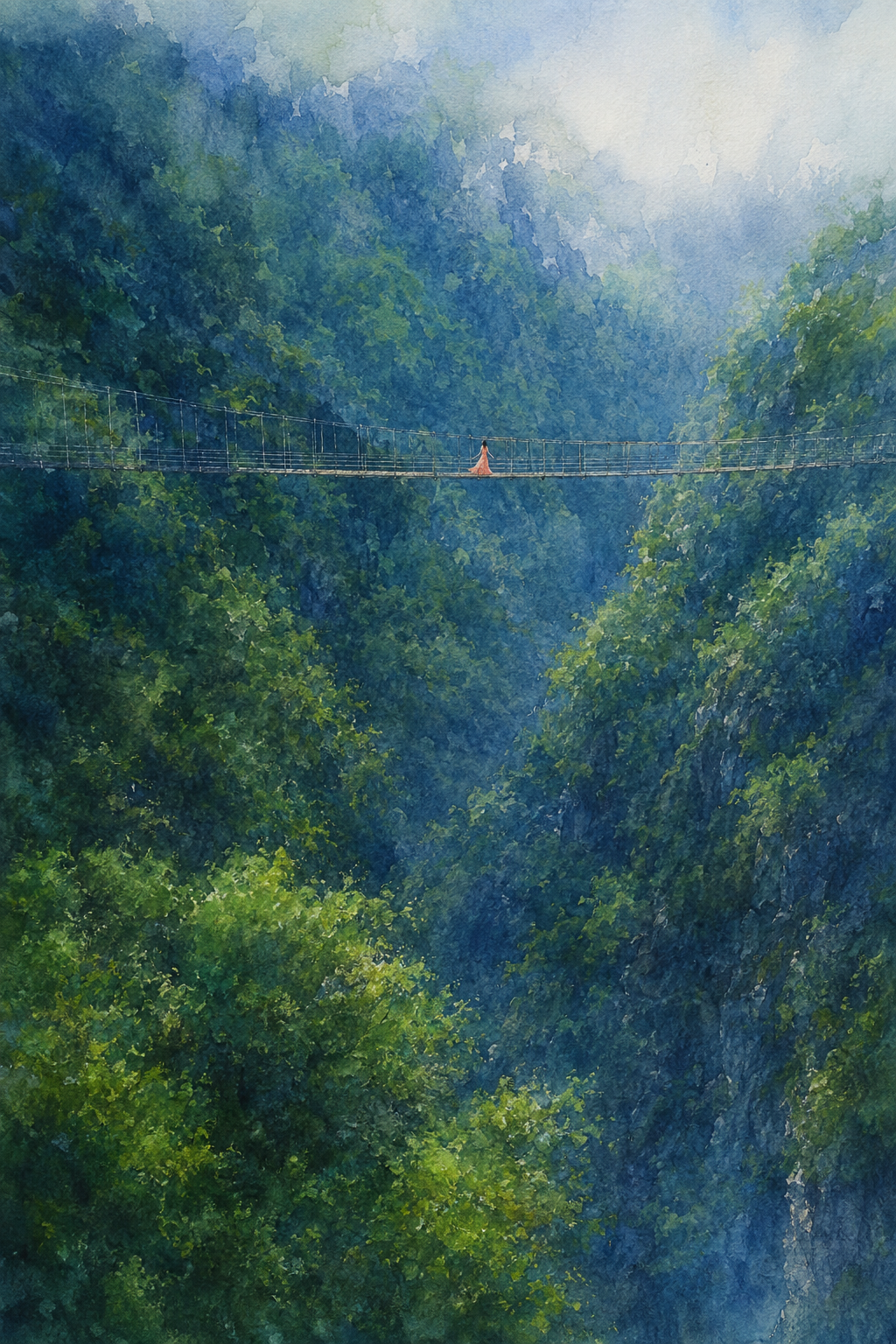
Crossing the Emerald Gorge
Critique
1. Introduction This painting depicts a narrow suspension bridge crossing a deep forest gorge, with one person standing near its center. The figure is extremely small in relation to the landscape, making distance, height, and isolation primary concerns. Although structured as a landscape, the act of crossing carries psychological weight. 2. Description The bridge runs horizontally across the upper portion, where a person in red-orange clothing stands near the middle. Dense trees fill both sides and the lower field, while the gorge floor disappears into blue haze. Pale light descends from above and touches the distant slopes and bridge. Thin cables and supports form lucid lines among irregular foliage. 3. Analysis The horizontal span crossing the vertically deep gorge emphasizes exposure and instability. Red-orange functions as the only warm note within a broad blue-green field, creating a precise focal point. Layered, broken strokes describe dense trees, while reduced contrast in the distance produces convincing atmospheric depth. The extreme difference in scale effectively communicates the magnitude of the setting. 4. Interpretation and Evaluation The bridge is a practical connection, but it can also symbolize transition, decision, and danger. The paused figure occupies an interval between advance and retreat, and this stillness makes the surrounding depth more perceptible. The lucid composition, varied green-blue color, and rendering of mist and vegetation are all accomplished. Creating narrative focus through one small warm accent is an economical and original choice. 5. Conclusion At first, the immense depth of the gorge commands attention. With longer viewing, the balance and intention maintained by the person on the bridge become central. By integrating space, color, scale, and restrained technique, the painting gives a quiet landscape sustained emotional tension.
Same Subcategory
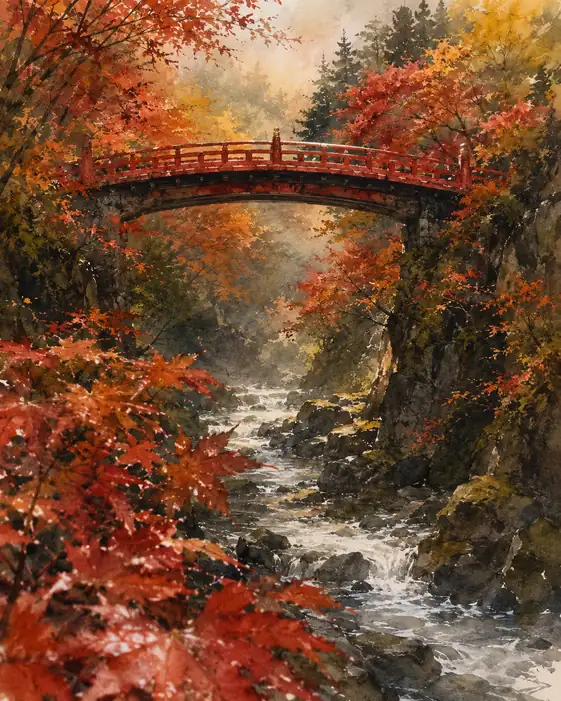 Vermilion Spans the Deepening Season
Similar Artworks
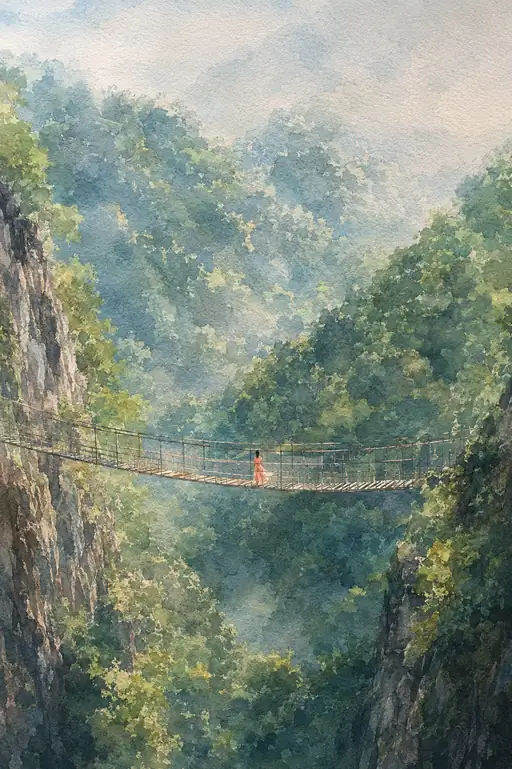 Suspended Silence
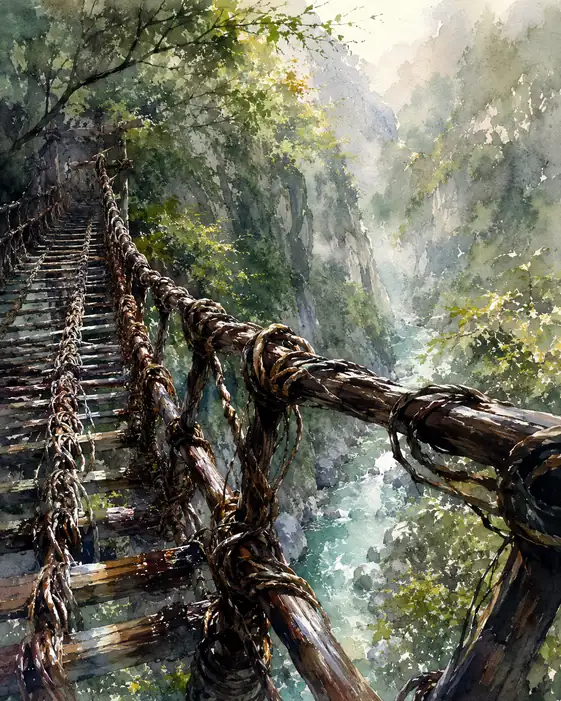 Where the Soul Crosses the Canyon
 The Golden Passage: A Bridge Between Silence and Light
 Echoes of the Mist: A Passage Through the Sky
 Bridge Through the Veil
 The Valley Suspended from a Single Step
 Echoes in Vermilion: A Bridge Through the Mist
 The Woven Threshold of the Misty Gorge
 Bridge to the Emerald Unknown
 Whispers of the Misty Autumn Span