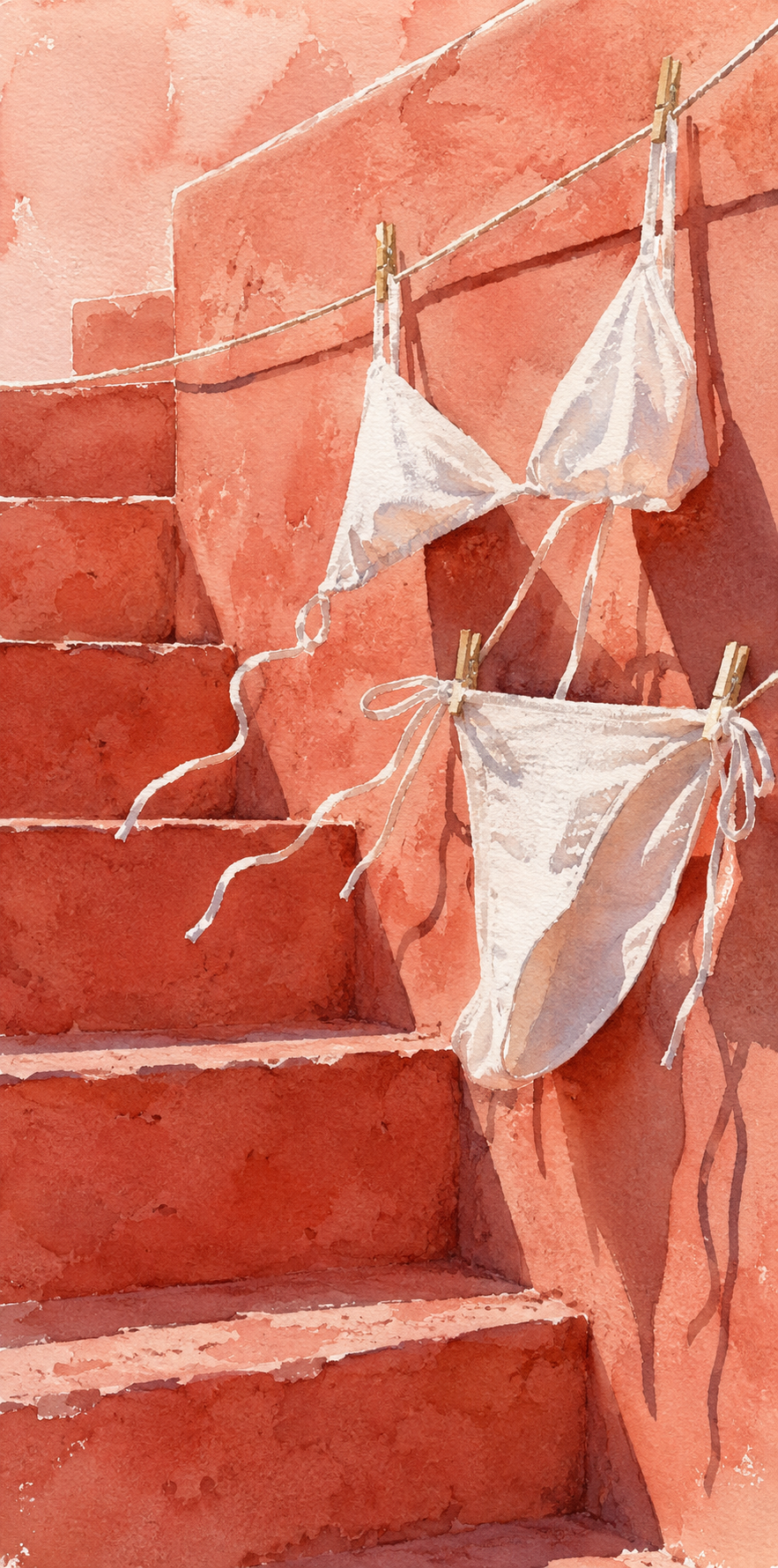
Terracotta Sunbath
Critique
1. Introduction This painting depicts white garments pinned to clotheslines against red-brown stairs and walls. No person appears; laundry, pegs, cords, and architecture alone communicate domestic presence. By placing intimate objects in bright outdoor light, the work makes relationships of color, shape, and daily life its subject. 2. Description White upper and lower garments hang on the right, secured to two lines with wooden clothespins. Red steps rise along the left, and long shadows from the cords and architectural edges cross the walls. Loose ties curve as if moved by air, introducing softness among the rigid planes. Pale blue-gray and pink shadows model the sunlit fabric. 3. Analysis Diagonal stairs, nearly horizontal lines, and vertically hanging garments intersect in a clear, stable structure. The high-value white cloth stands out immediately against the broad terracotta field. Watercolor blooms across the masonry contrast with more closely observed edges on fabric, pegs, and cords. Repeated steps and clips give the composition an ordinary but measured rhythm. 4. Interpretation and Evaluation The washed garments indirectly represent an absent body and the routines that sustain it. Private objects exposed outdoors combine intimacy with openness, while their suspended state evokes time spent waiting to dry. The bold color design, close viewpoint, and distinction between cloth and wall demonstrate assured observation. Transforming household work into a still life of light, wind, and architecture gives the scene originality. 5. Conclusion At first, the vivid opposition of red ground and white clothing dominates the image. Longer viewing shifts attention toward the traces of a life whose occupant remains unseen. Through concise composition, tactile technique, and controlled color, the painting draws duration and human presence from a modest daily action.
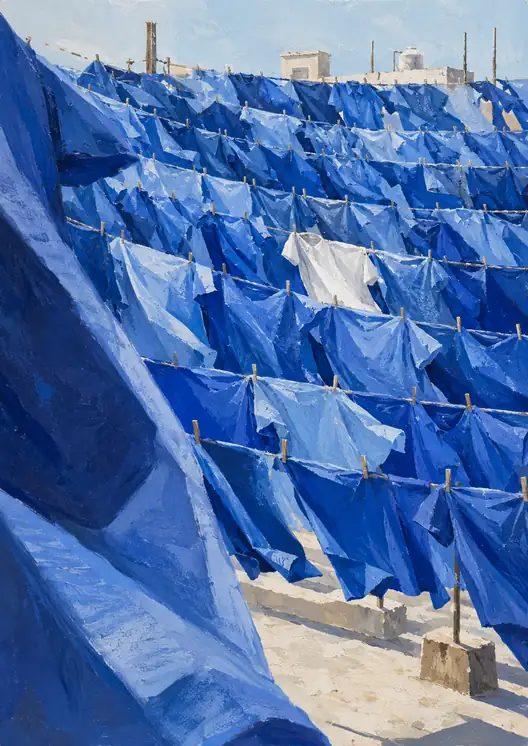 A Whisper of White in the Deep Blue
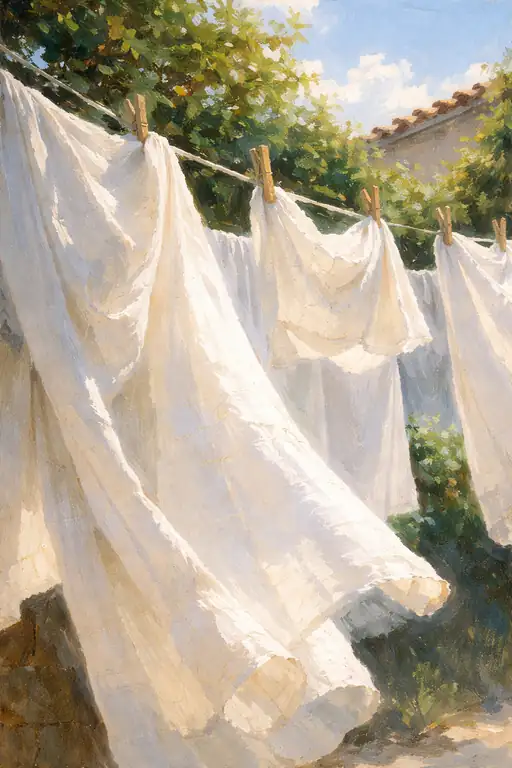 White Sheets in the Summer Breeze
 Welcome to the Sun-Kissed Cottage
 White Sails in the Summer Sky
 Dancing in the Sunlit Breeze
 The Shadow of a Journey
 Windless Sail on a White Wall
 Whispering Pink, Eternal Blue
 Echoes of the Sunlit Plaster
 A Summer Melody in Pink and Blue
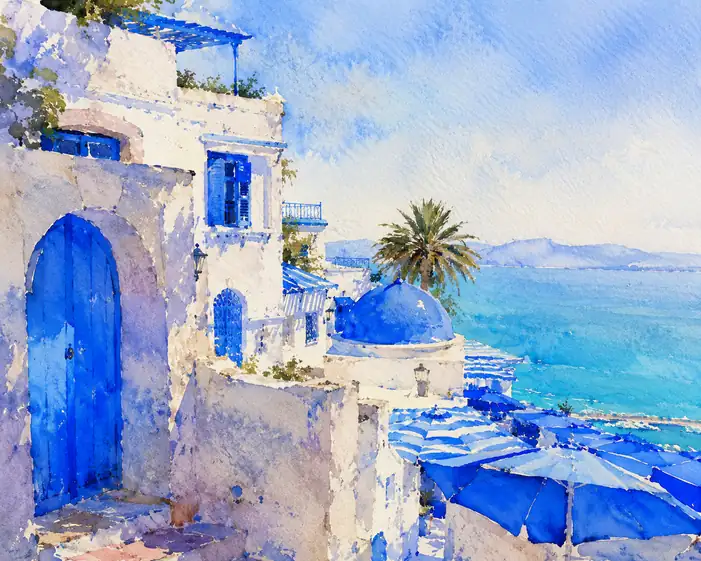 Where the Blue Begins