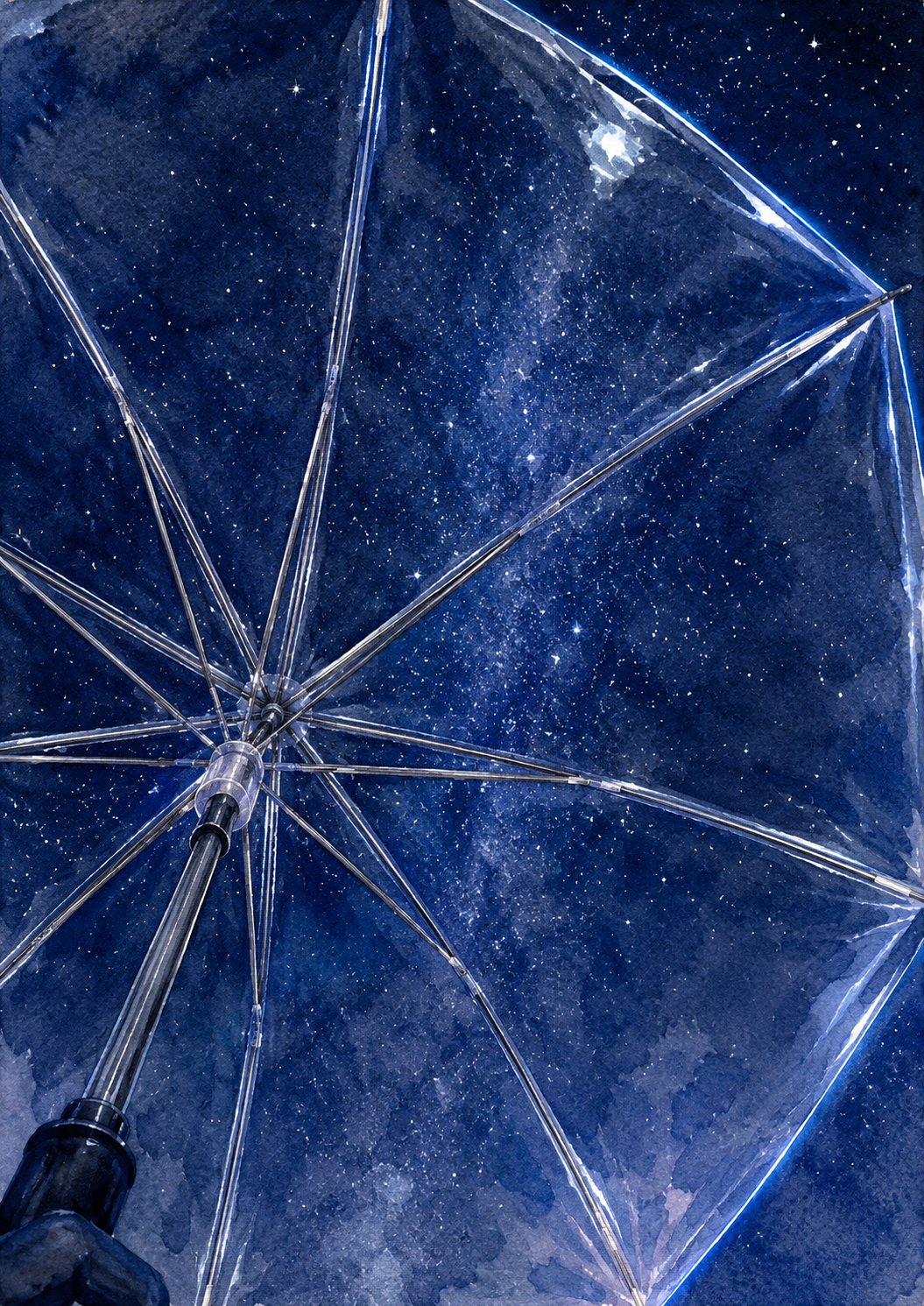
A Shelter for the Starry Rain
Critique
1. Introduction This painting depicts a transparent umbrella viewed from below against a starry sky. It centers on the radial structure and stars and examines the relation between an object, its setting, and visible light. Familiar material is organized into a scene that rewards sustained looking. 2. Description The umbrella fills the frame, and stars and streaks of light remain visible between its clear ribs. Supporting details remain legible without competing with the main subject. Foreground and background are clearly separated, allowing the place and moment to be read with ease. 3. Analysis Lines radiating from the hub create a strong geometry and distribute attention across the sky. The palette uses deep navy and black with thin white edges and stars. rigid ribs, flexible membrane, and distant light are separated through value. These choices give the still image a controlled rhythm, a clear route for the eye, and convincing spatial depth. 4. Interpretation and Evaluation Because the umbrella protects without concealing the sky, it combines enclosure with openness. Meaning emerges from the relation between subject and environment rather than from explicit narrative. Description, composition, and color support one another with restraint. The selected viewpoint and transformation of ordinary material also give the work measured originality. 5. Conclusion At first, the geometric transparent canopy attracts attention, but prolonged viewing reveals the infinite space visible through a human-made structure as the deeper concern. Repeated details bind the focal object to its surrounding space. The painting balances familiarity with imagination and draws a sustained aftereffect from limited visual elements.
Same Subcategory
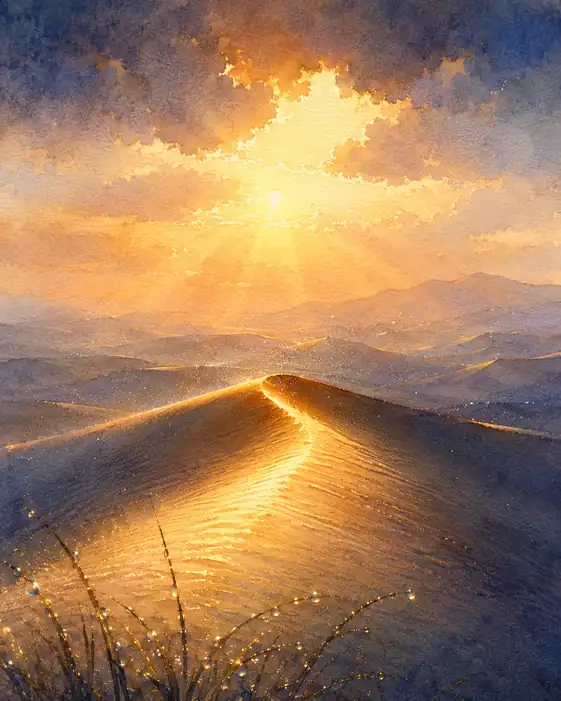 Golden Ridge across the Dunes
Similar Artworks
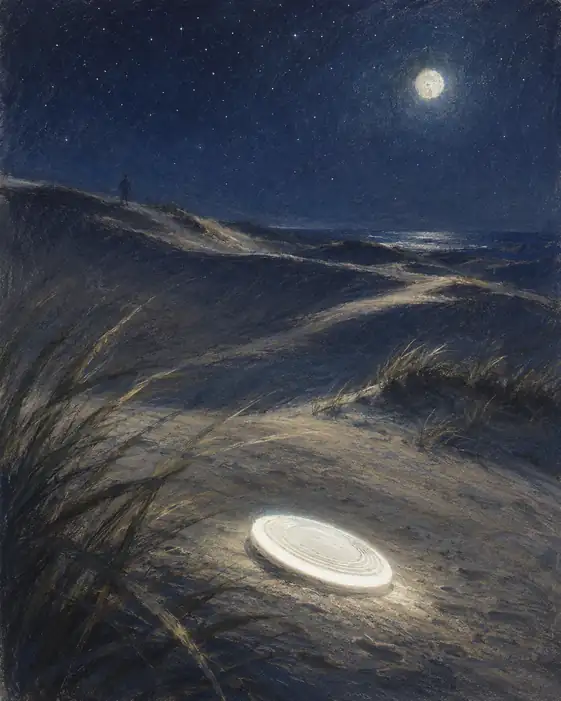 The Terrestrial Moon
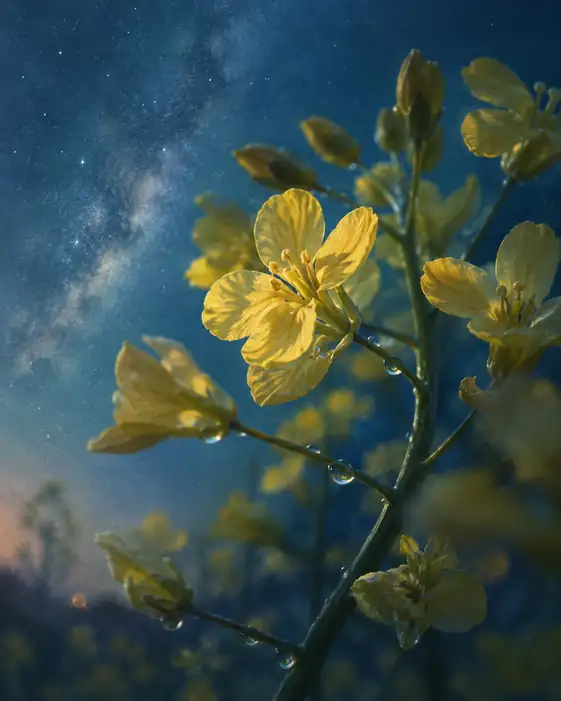 Canola Blossom Beneath Starry Skies
 Waiting for the Sun Beneath the Stars
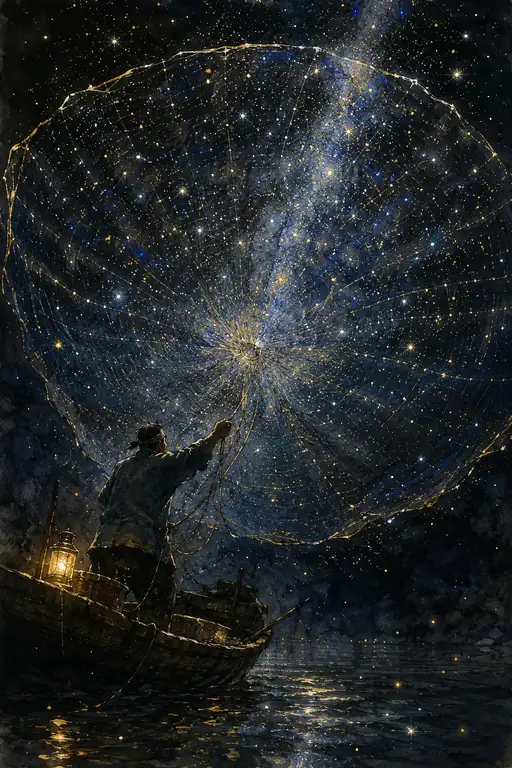 Reaching Out to the Unreachable Light
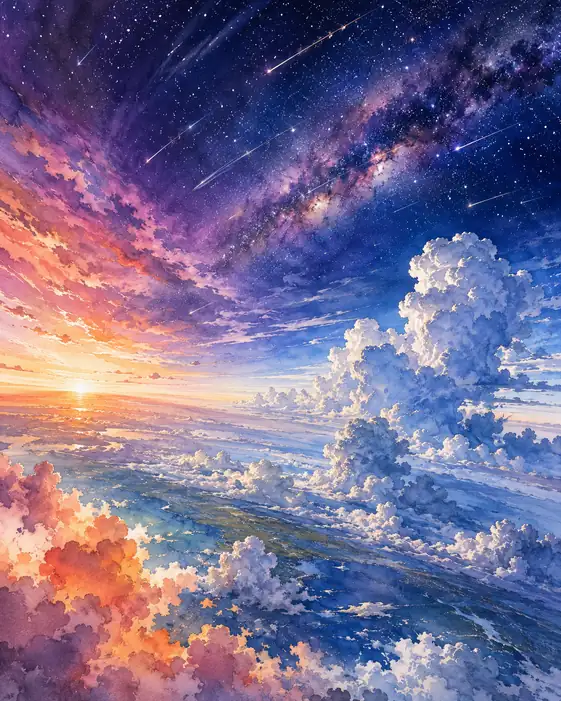 Where Space Touches the Earth
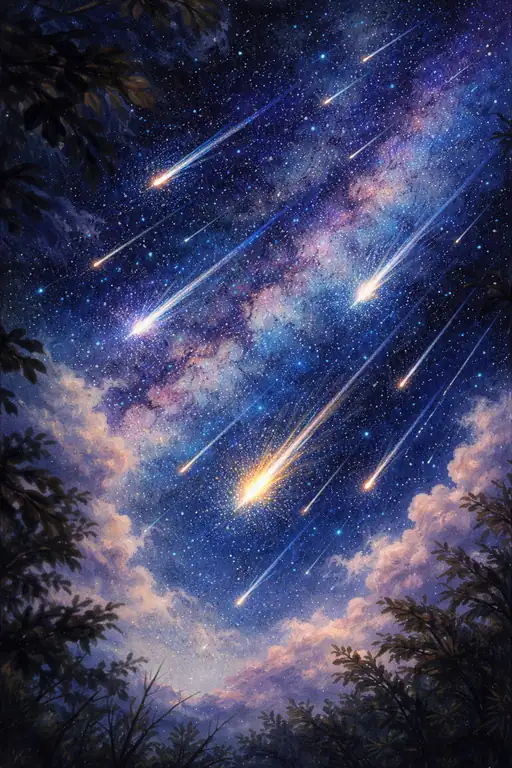 Tears of the Starry Expanse
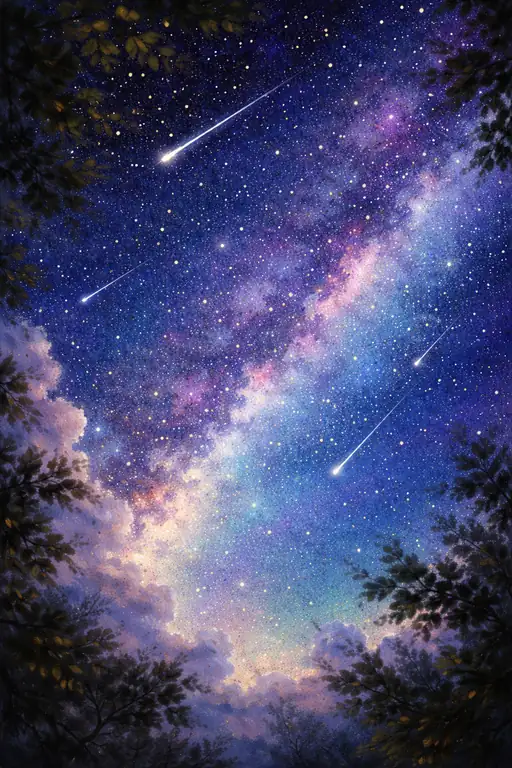 Meteor's Dance Through the Violet Veil
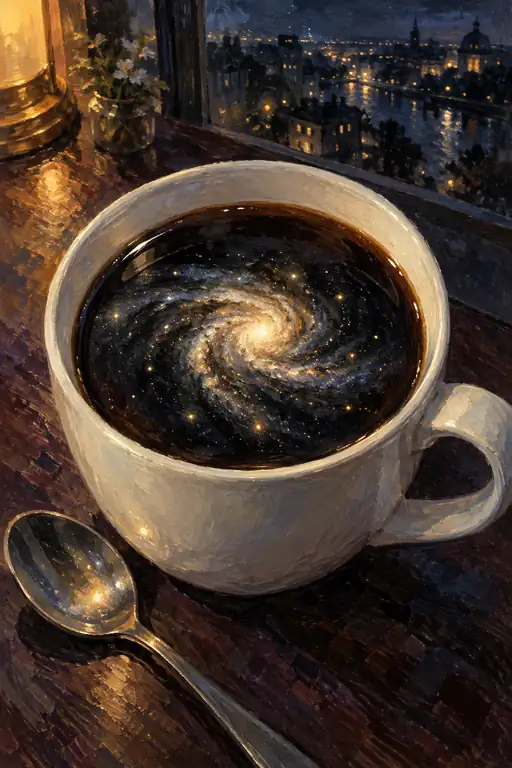 Galaxy in a Porcelain Cup
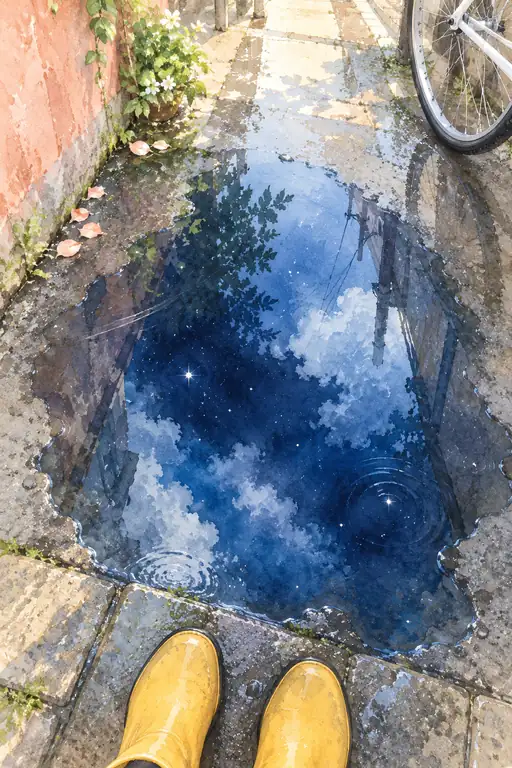 Heavens Beneath My Steps
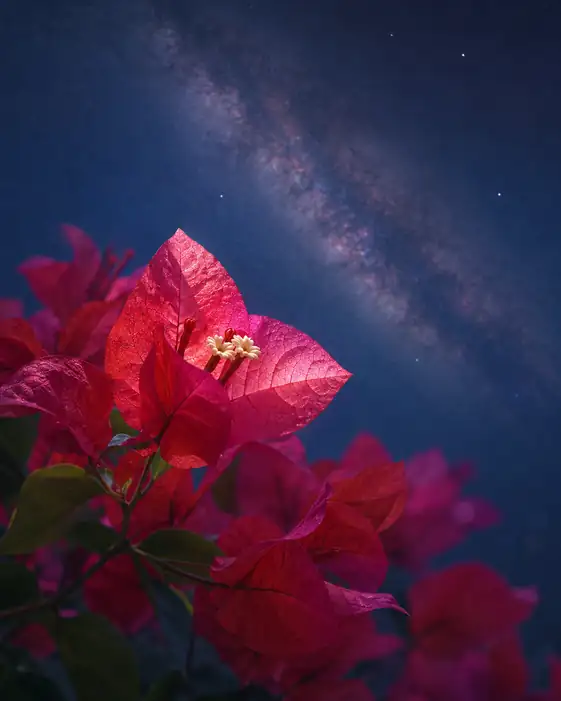 Crimson Bougainvillea beneath the Milky Way