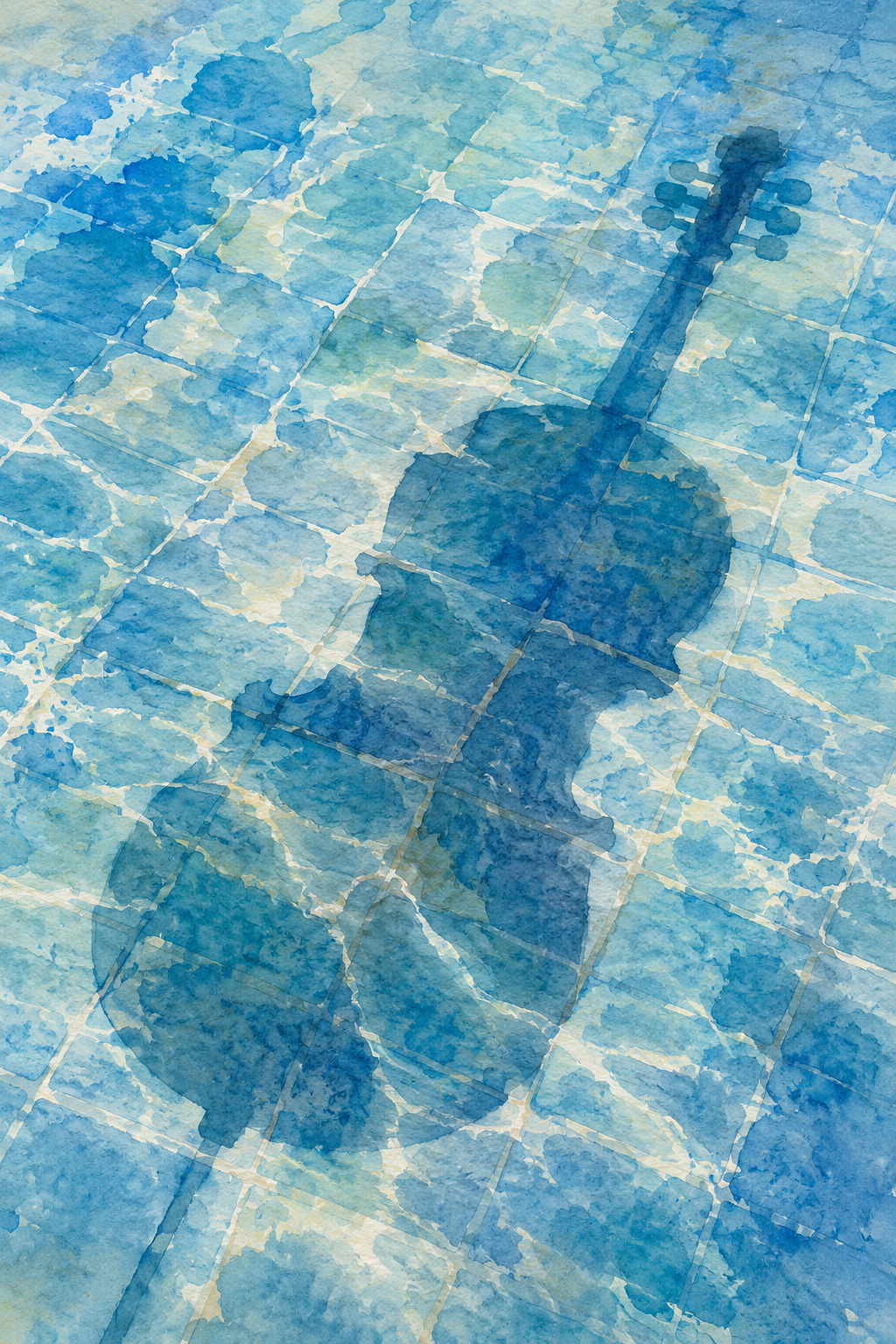
Silent Melody in the Rippling Blue
Critique
1. Introduction This painting depicts the shadow of a stringed instrument crossing shallow blue water. It centers on the distorted silhouette and unseen object and examines the relation between an object, its setting, and visible light. Familiar material is organized into a scene that rewards sustained looking. 2. Description A dark instrument shape extends vertically across a tiled surface, while the object itself remains outside the frame. Supporting details remain legible without competing with the main subject. Foreground and background are clearly separated, allowing the place and moment to be read with ease. 3. Analysis The off-center shadow overlaps a wavering grid and organizes the image through distortion. The palette uses light aqua and white opposed by blue-black shadow. short strokes and refracted edges show water reshaping the silhouette. These choices give the still image a controlled rhythm, a clear route for the eye, and convincing spatial depth. 4. Interpretation and Evaluation Presenting an instrument only as shadow evokes unheard music and an absent performer. Meaning emerges from the relation between subject and environment rather than from explicit narrative. Description, composition, and color support one another with restraint. The selected viewpoint and transformation of ordinary material also give the work measured originality. 5. Conclusion At first, the clear dark shape on water attracts attention, but prolonged viewing reveals the suggestion of sound and presence arising from visual instability as the deeper concern. Repeated details bind the focal object to its surrounding space. The painting balances familiarity with imagination and draws a sustained aftereffect from limited visual elements.
 Silent Echoes of the Journey
 Ripples of a Silent Song
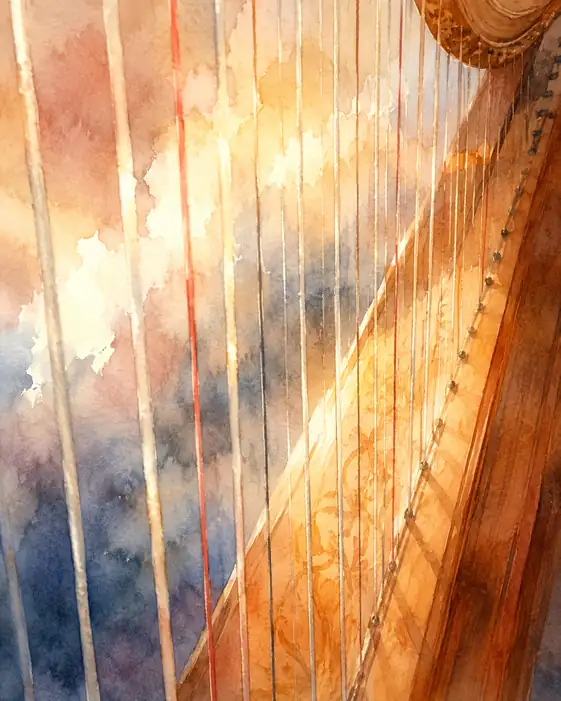 Echoes of the Celestial Realm
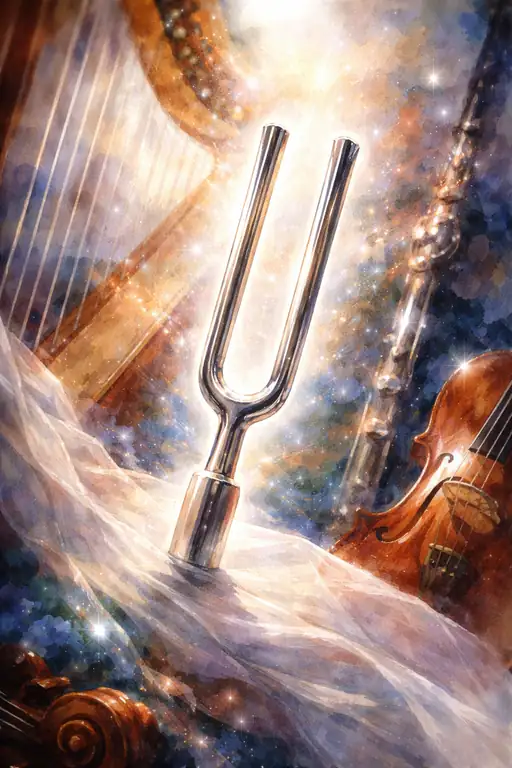 The Tuning of the Cosmos
 A Spoonful of Summer Sky
 Mirrored Refuge
 Sunlit Morning Harmonies
 The Museum of Forgotten Tides
 Before the First Note
 Invitation to the Silent Deep
 The Silent Song of Sunset