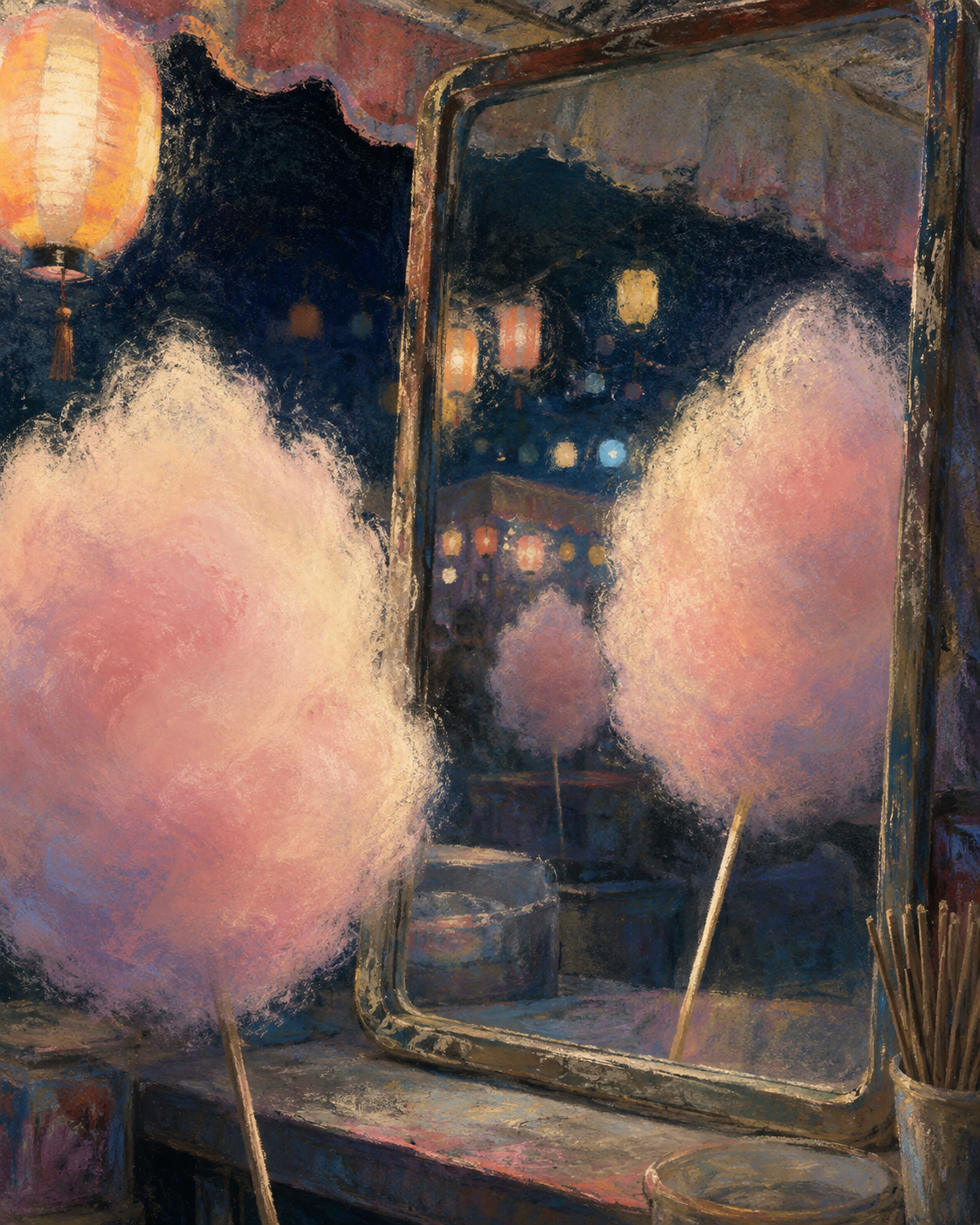
A Sweet Mirage of Summer Nights
Critique
1. Introduction This painting depicts two large portions of cotton candy reflected around a night stall. It centers on the soft sweets and mirror image and examines the relation between an object, its setting, and visible light. Familiar material is organized into a scene that rewards sustained looking. 2. Description Pink and white cotton candy rises on both sides, while a central mirror holds lights and the stall interior. Supporting details remain legible without competing with the main subject. Foreground and background are clearly separated, allowing the place and moment to be read with ease. 3. Analysis Near symmetry is joined by reflection, which adds depth to the confined space. The palette uses navy and black with pink, white, and orange light. blurred edges contrast with hard glass and describe spun sugar against the city night. These choices give the still image a controlled rhythm, a clear route for the eye, and convincing spatial depth. 4. Interpretation and Evaluation Festival sweetness and reflected space overlap, making the boundary between present experience and memory uncertain. Meaning emerges from the relation between subject and environment rather than from explicit narrative. Description, composition, and color support one another with restraint. The selected viewpoint and transformation of ordinary material also give the work measured originality. 5. Conclusion At first, the soft color of the cotton candy attracts attention, but prolonged viewing reveals the human presence and recollection expanded by reflection as the deeper concern. Repeated details bind the focal object to its surrounding space. The painting balances familiarity with imagination and draws a sustained aftereffect from limited visual elements.
Same Subcategory
 The Beacon Cast in Blue Jelly
 The Moon Keeps a Goldfish Dream
Similar Artworks
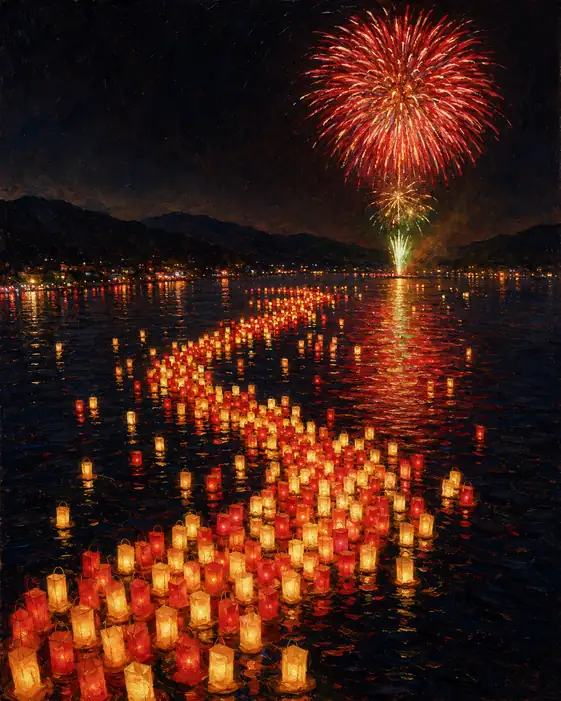 Scarlet Fireworks and the Flow of Light
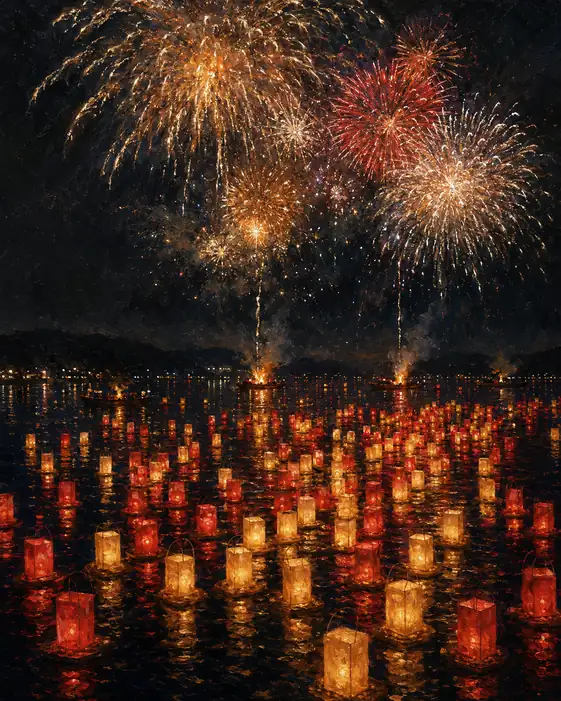 Golden Canopy Over Lake Lanterns
 River of Lanterns and Summer Fireworks
 Floating Lanterns and Fireworks Over Lake
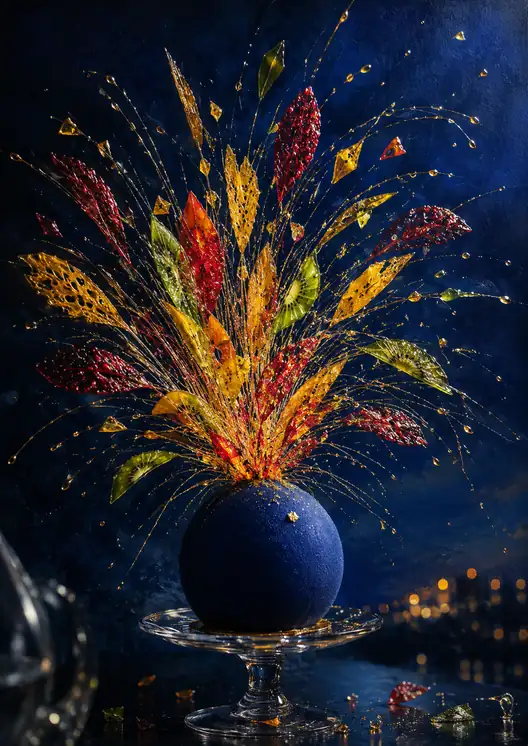 The Night Bursts into Edible Fireworks
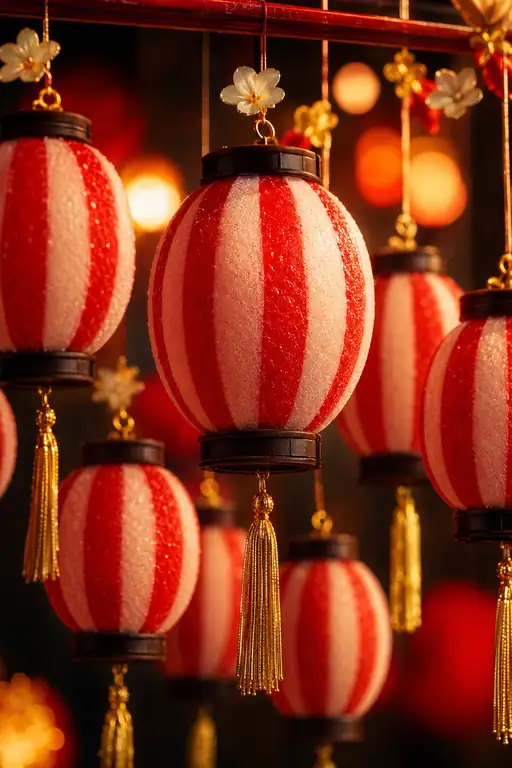 The Warm Glow of Nostalgic Summer Night Lanterns
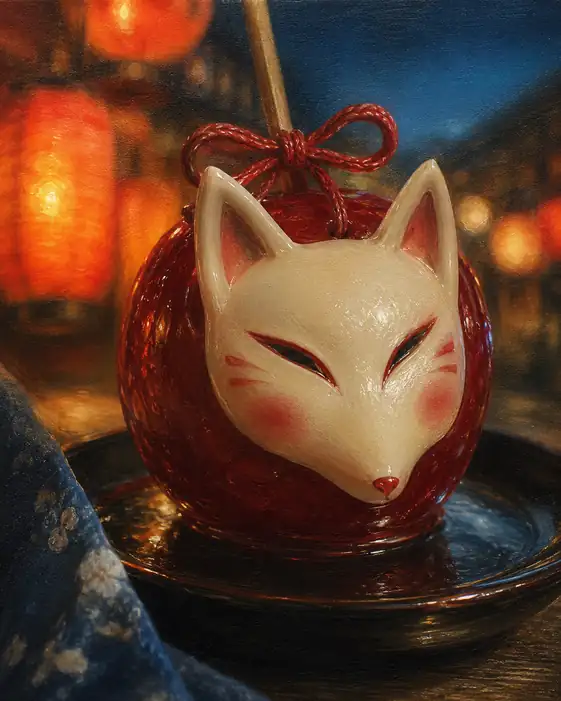 The Festival Fox Guards One Crimson Wish
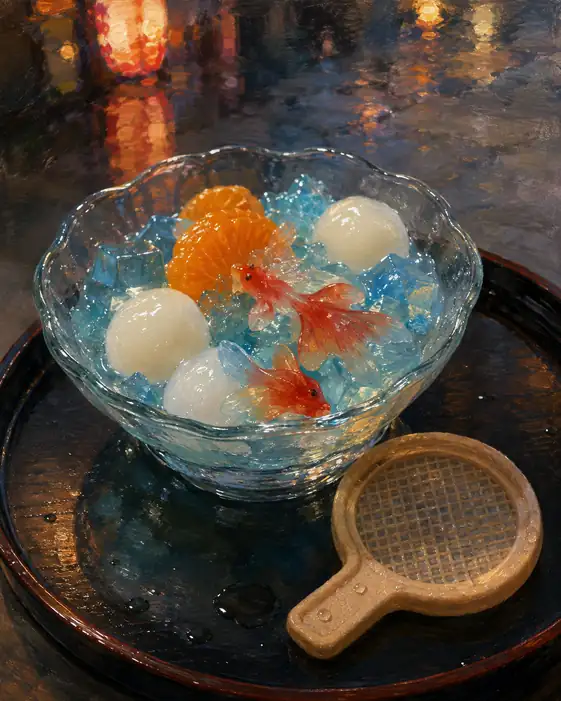 Two Goldfish Swim Through a Festival Night
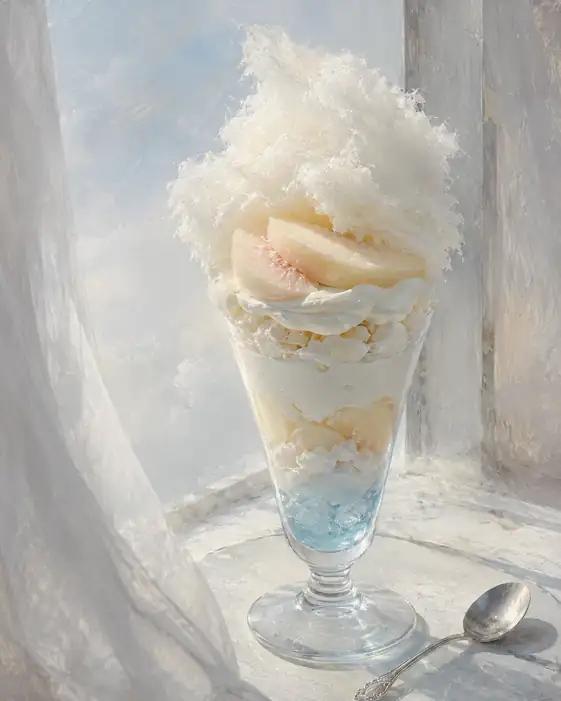 Clouds Are Sweetest at Noon
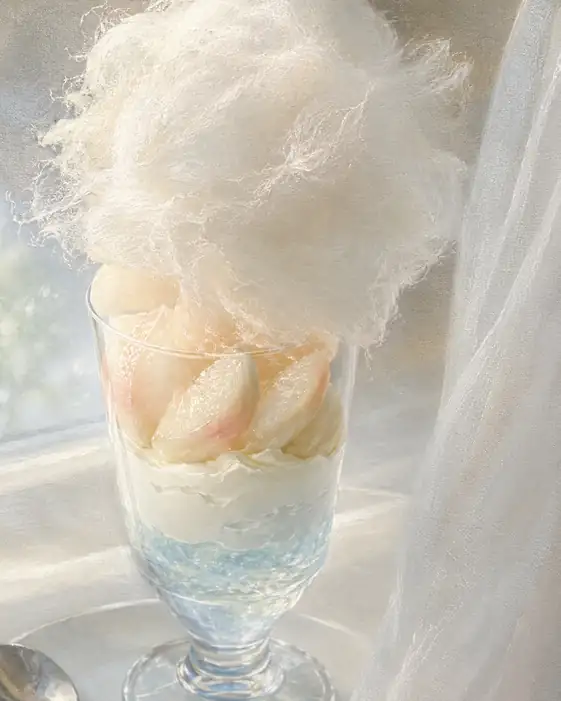 A Peach Cloud Touches the Summer Window