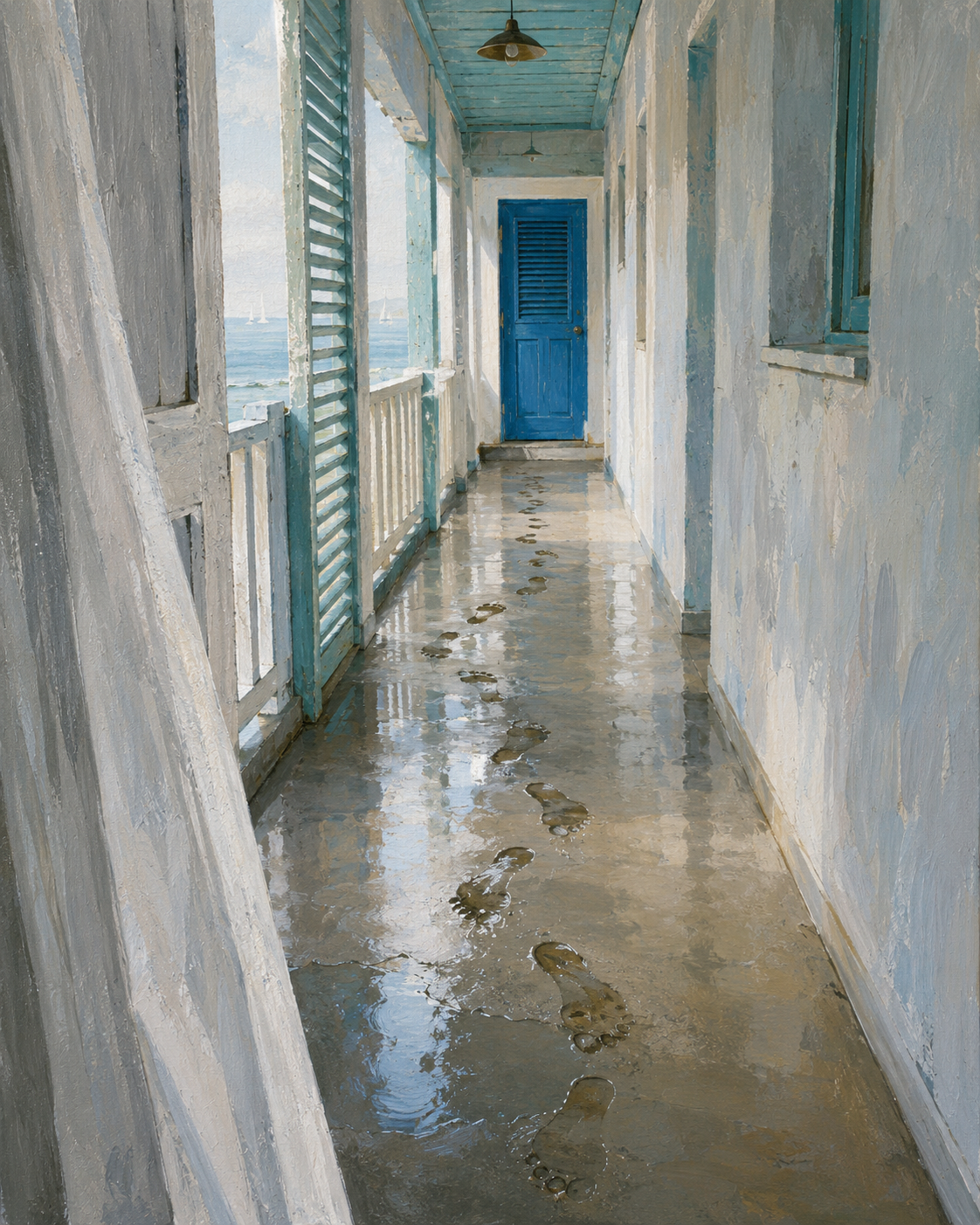
Traces of a Silent Journey
Critique
1. Introduction This painting depicts wet footprints continuing through a white seaside corridor. It centers on the footprints and blue door and examines the relation between an object, its setting, and visible light. Familiar material is organized into a scene that rewards sustained looking. 2. Description A narrow passage extends toward a blue door, and dark bare footprints cross the reflective floor. Supporting details remain legible without competing with the main subject. Foreground and background are clearly separated, allowing the place and moment to be read with ease. 3. Analysis One-point perspective and repeated marks pull the eye forcefully toward the central distance. The palette uses white and gray, focused by blue from the door and sea. subtle reflections and dry walls distinguish moisture from hard architecture. These choices give the still image a controlled rhythm, a clear route for the eye, and convincing spatial depth. 4. Interpretation and Evaluation Showing a traveler only through traces encourages speculation about the journey and the space beyond the door. Meaning emerges from the relation between subject and environment rather than from explicit narrative. Description, composition, and color support one another with restraint. The selected viewpoint and transformation of ordinary material also give the work measured originality. 5. Conclusion At first, the orderly white architecture attracts attention, but prolonged viewing reveals the unseen action recorded by the footprints as the deeper concern. Repeated details bind the focal object to its surrounding space. The painting balances familiarity with imagination and draws a sustained aftereffect from limited visual elements.
Same Subcategory
Similar Artworks
 Steps to the Blue
 Summer's Hiding Place
 The Eternal Light of Learning
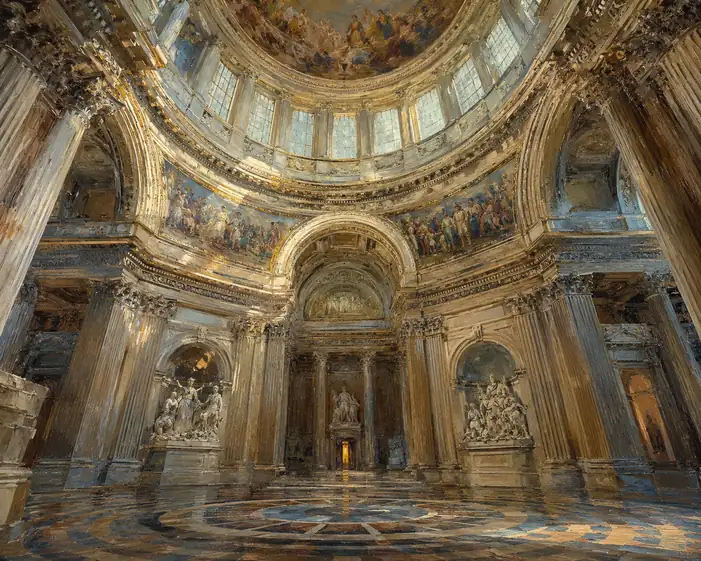 Ascent to the Celestial Dome
 Whispers of Chios: Where Geometry Meets the Sun
 A Breath of Eternal Afternoon
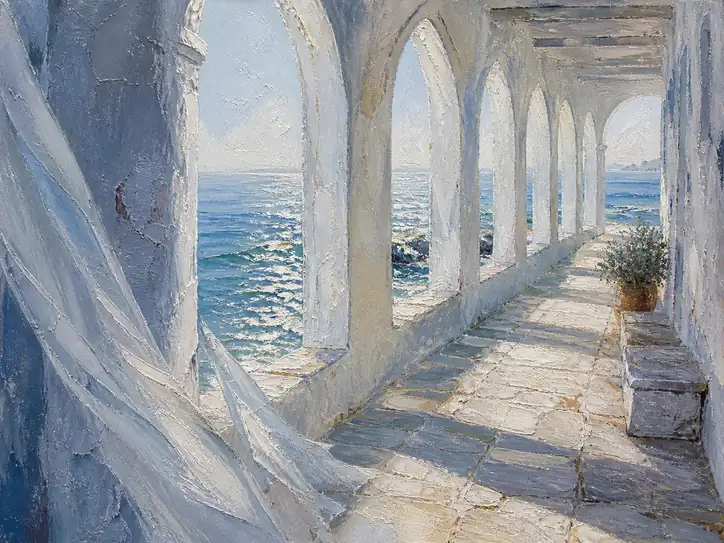 Luminous Whispers along the Coastal Arcade
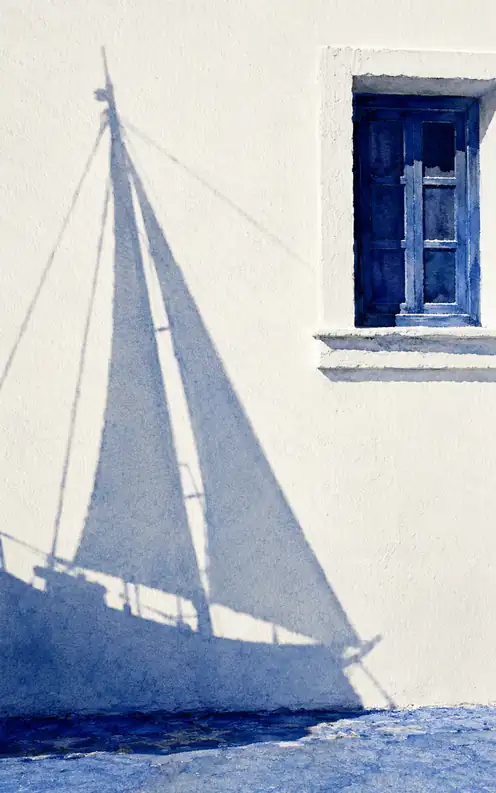 The Shadow of a Journey
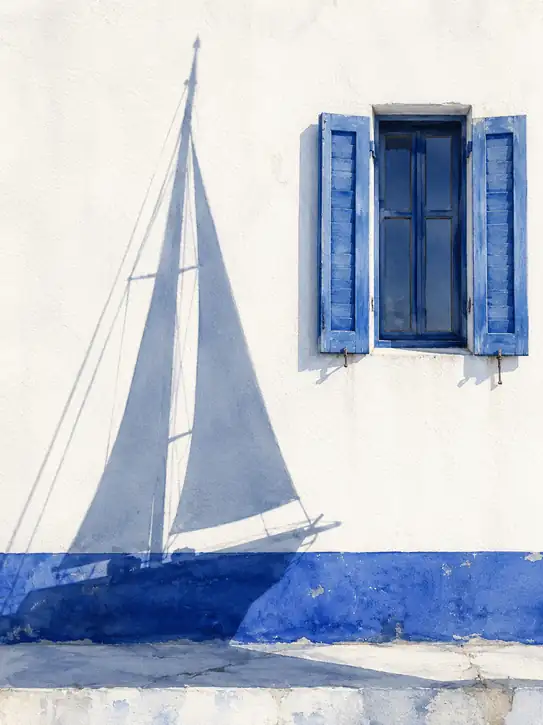 Windless Sail on a White Wall
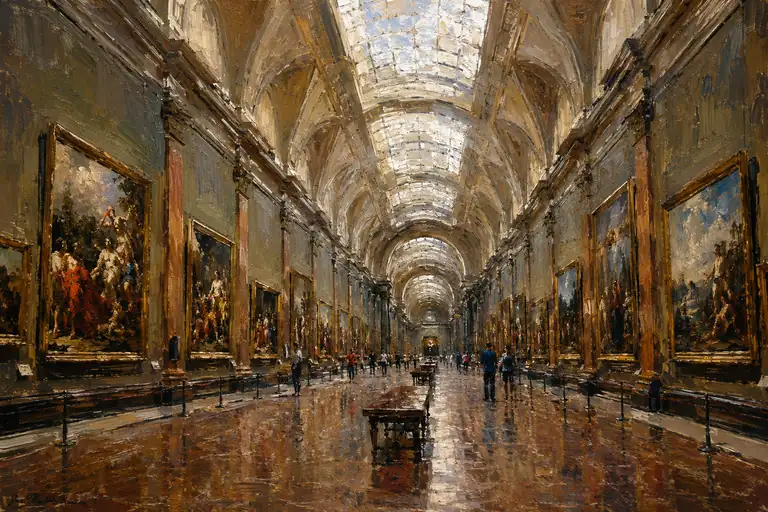 The Whispering Gallery of History