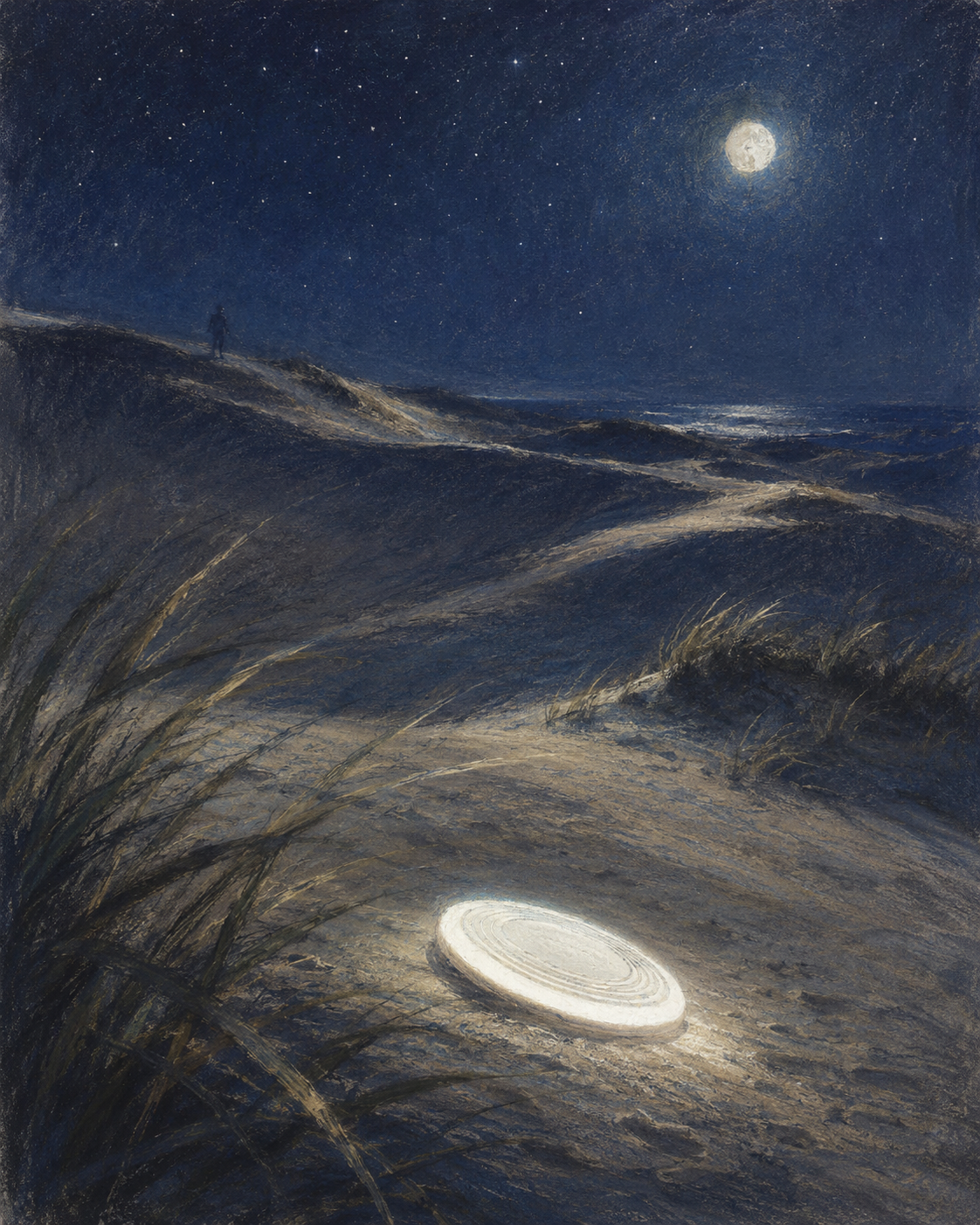
The Terrestrial Moon
Critique
1. Introduction This painting depicts dark sandy terrain beneath a full moon, with a white circular object placed prominently in the foreground. A tiny distant figure sets the scale, while the apparent artifact contrasts with the surrounding landscape. 2. Description Sand and windblown grasses fill the lower portion, where a pale disc or ring rests near the center. A solitary person stands on the far left ridge, and a bright moon occupies the upper right sky. Fine stars are scattered through blue-black space, while cool light touches the clouds and ground. 3. Analysis The foreground circle formally echoes the moon, creating an axis between near earth and distant sky. Placing the figure small and off-center emphasizes both the scale of nature and human isolation. A restricted progression from deep navy to gray-blue is interrupted by the high value of the two white circles. 4. Interpretation and Evaluation The purpose of the white object cannot be determined from the image. It may be read as a lost instrument, a marker, or a terrestrial repetition of the moon, and this ambiguity encourages a narrative about why the figure has stopped. The economical composition uses scale and empty space with assurance, while the controlled nocturnal color maintains clarity. 5. Conclusion At first, the painting appears to offer a serene moonlit landscape. Prolonged viewing makes the relationship among the two circles and the isolated person its central question. Through lucid contrasts of form, distance, texture, and light, the work turns stillness into an expectant interval and creates a lasting afterimage from very few elements.
Same Subcategory
 Melody of the Rippling Light
Similar Artworks
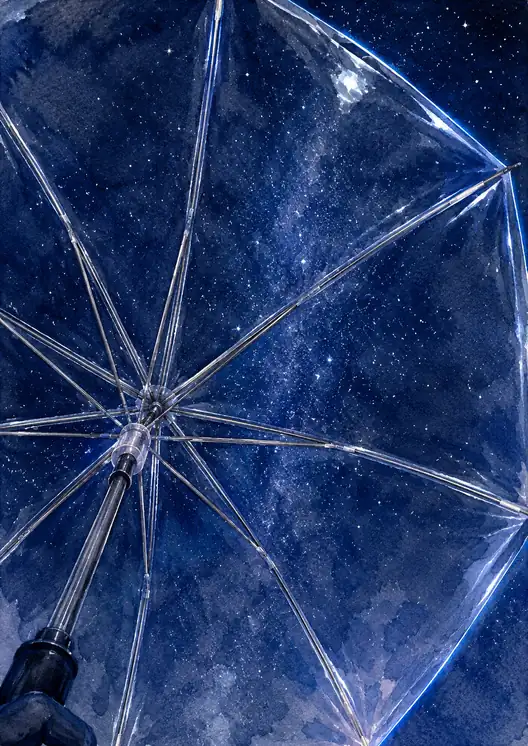 A Shelter for the Starry Rain
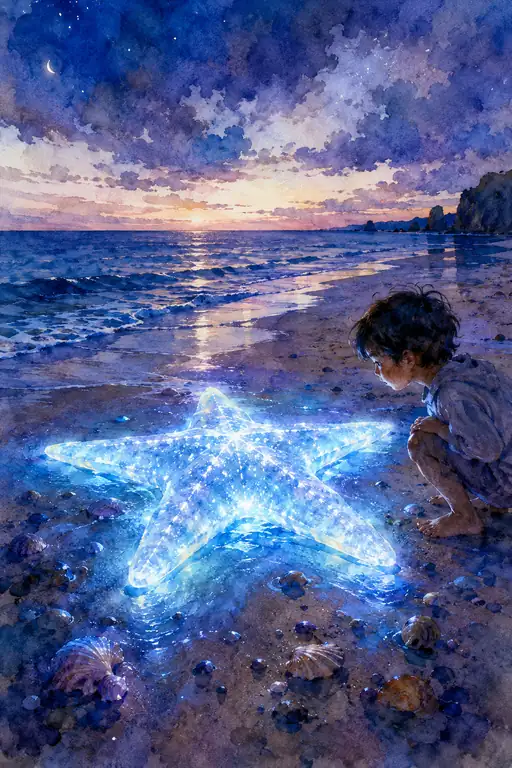 The Star That Fell to the Shore
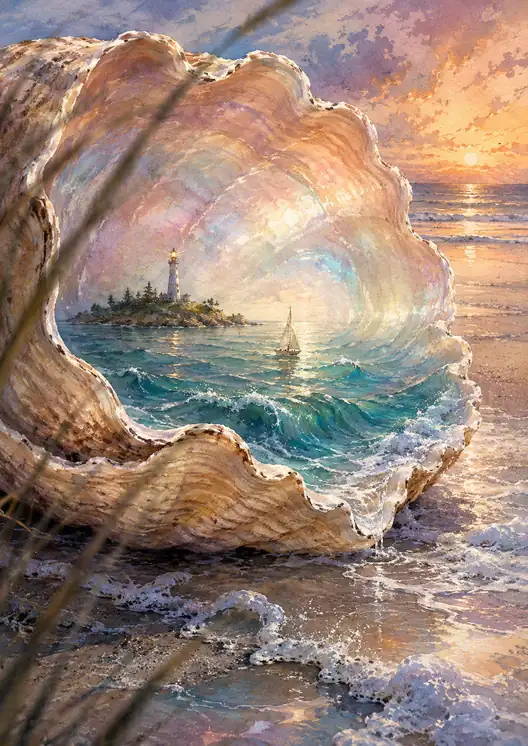 The Shell's Infinite Horizon
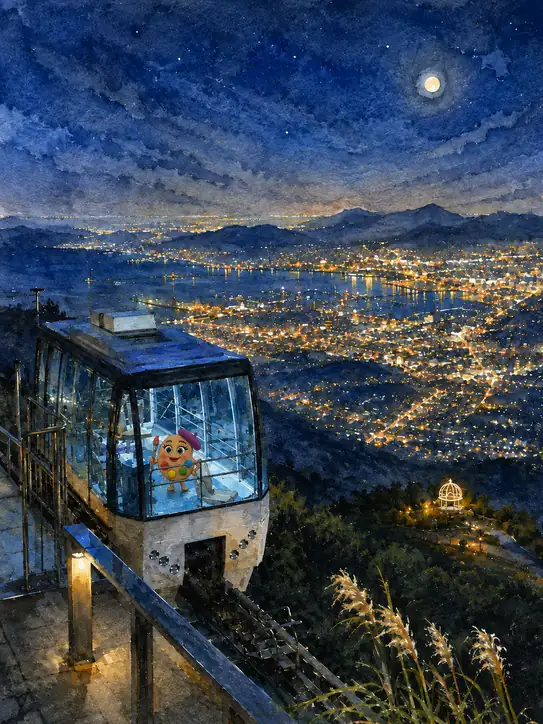 Quiet Gaze from the Midnight Tram
 Little Painter Overlooking the City of Lights
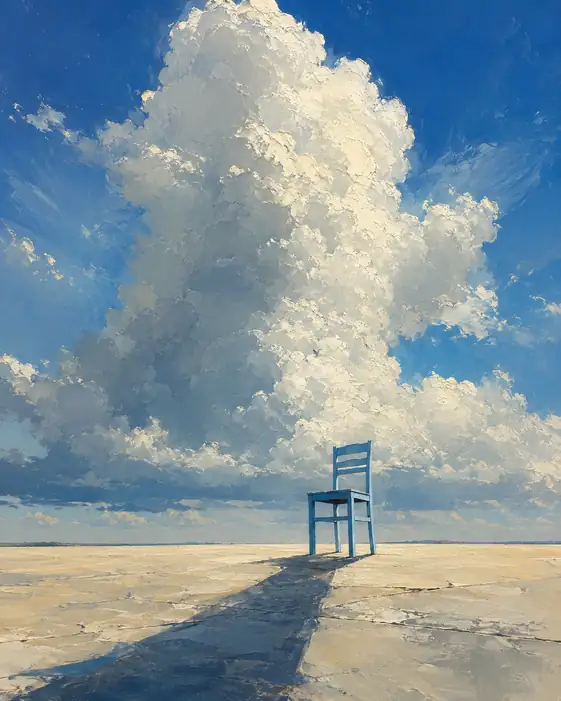 Echoes on the Sunbaked Earth
 Weighing the Moon Against a Feather
 The Sea in a Glass Orb
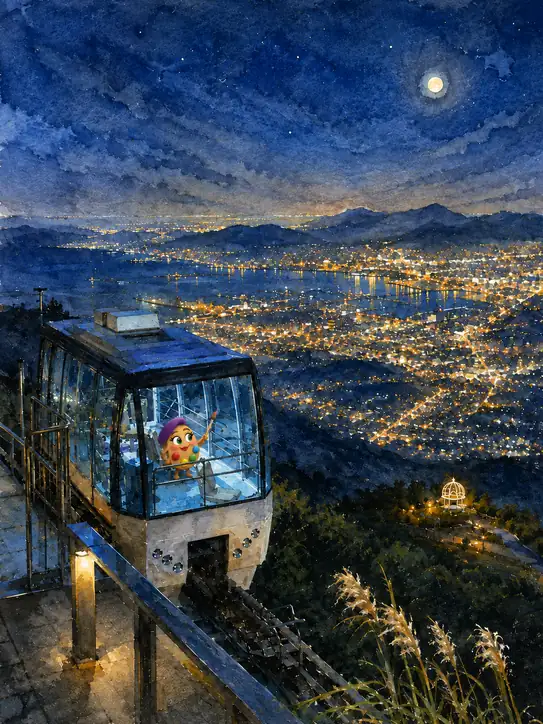 Pointing the Brush to the Starlit City
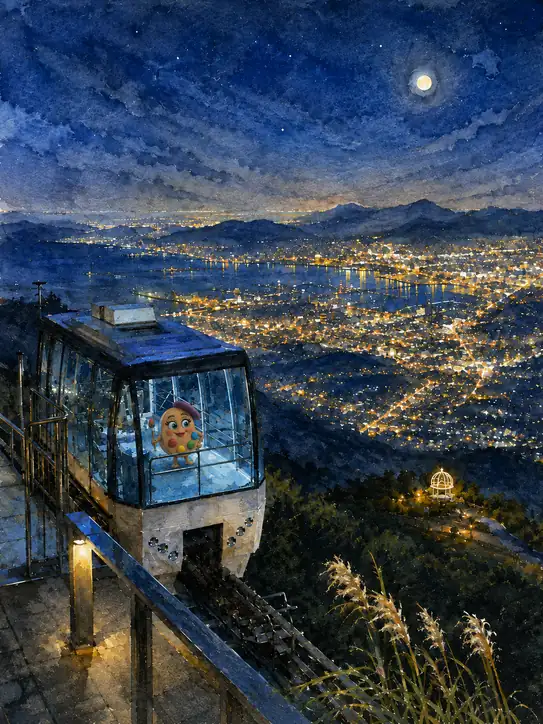 Descent Across the Sea of Golden Lights