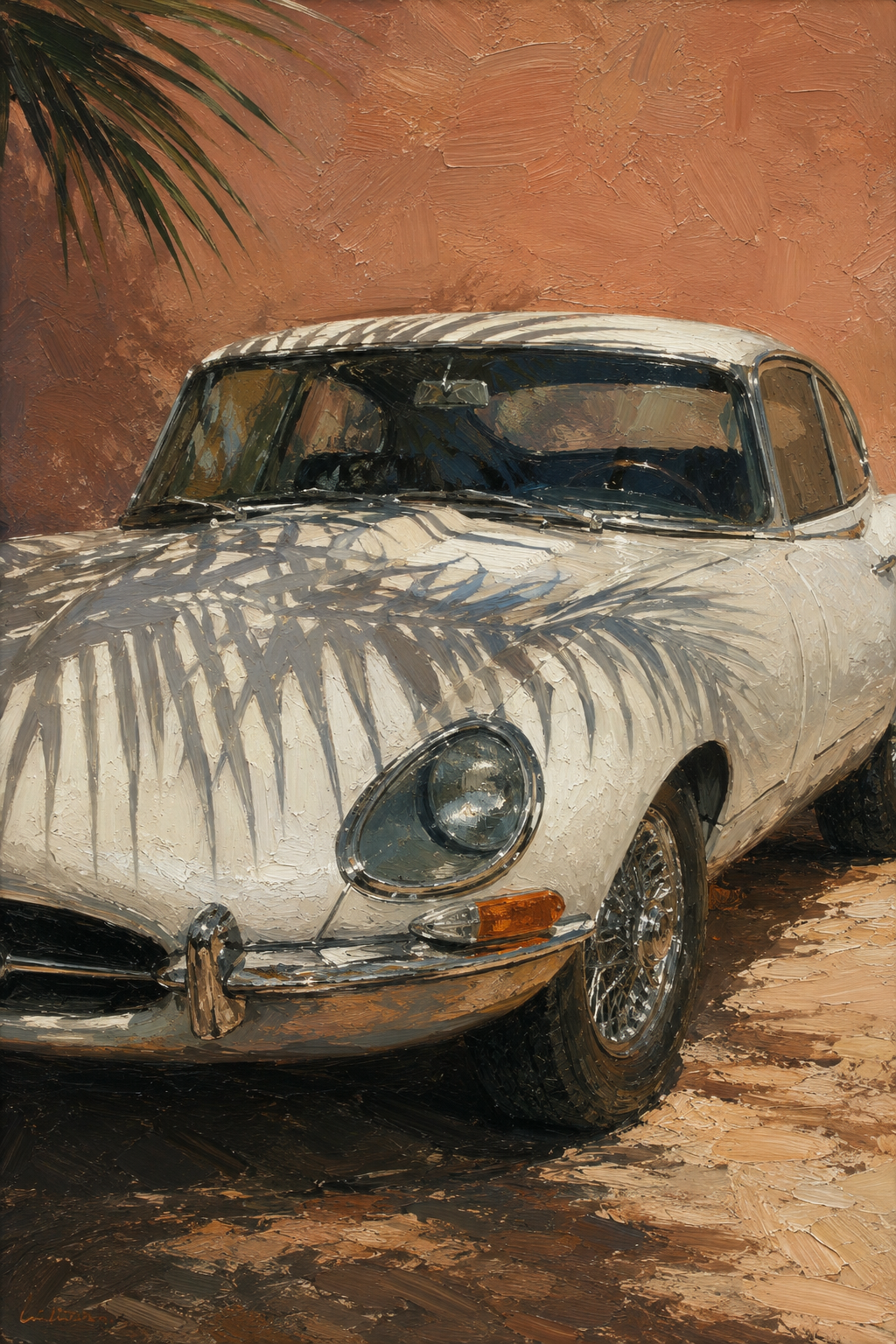
The Grace of Forgotten Speed
Critique
1. Introduction This work is a frontal impasto painting centered on a white vintage car parked against a warm wall. Its subject is immediately legible, while surrounding light and space establish a measured emotional register. 2. Description Oval headlamps, a low hood, amber indicators, and narrow wheels form the densely filled composition. Foreground forms receive the greatest specificity, while contours and color soften with distance. Reflections, shadows, and secondary objects provide spatial cues without competing with the subject. 3. Analysis A red-brown wall contrasts with white and gray bodywork, while palm shadows sweep across the paint. Impasto follows the vehicle's swelling curves, and dark windows and ground shadows support the bright exterior. Alternating sharp and dissolved edges organize focus. Composition, color, and technique operate as one coherent visual rhythm. 4. Interpretation and Evaluation The work can be understood as an exploration of the enduring appeal of designed form considered apart from speed. Its descriptive control is joined to a strong ability to connect subject and setting within a limited frame. The palette is purposeful, and technical variation conveys differences of texture, atmosphere, and distance. The choice of viewpoint also lends originality to familiar visual material. 5. Conclusion At first, the central motif commands attention, but closer study reveals how light, intervals, and repeated forms participate in its meaning. Detailed observation and overall structure remain balanced. The result renews attention to the richness of looking.
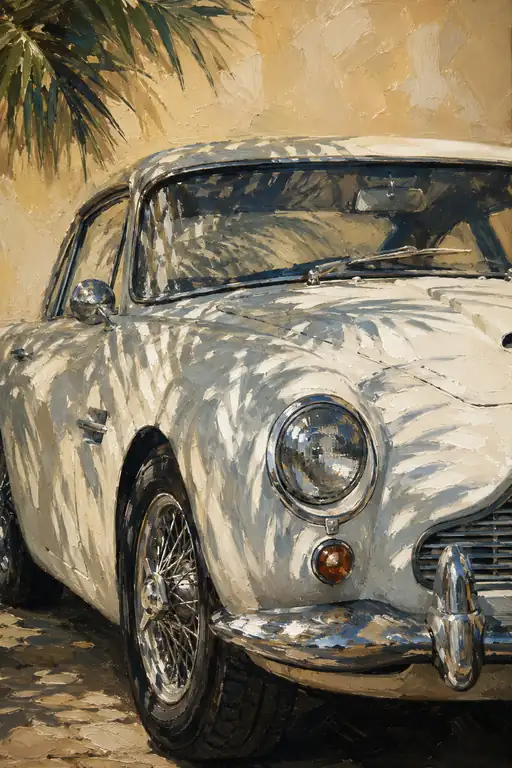 The Portrait of Sculpted Steel
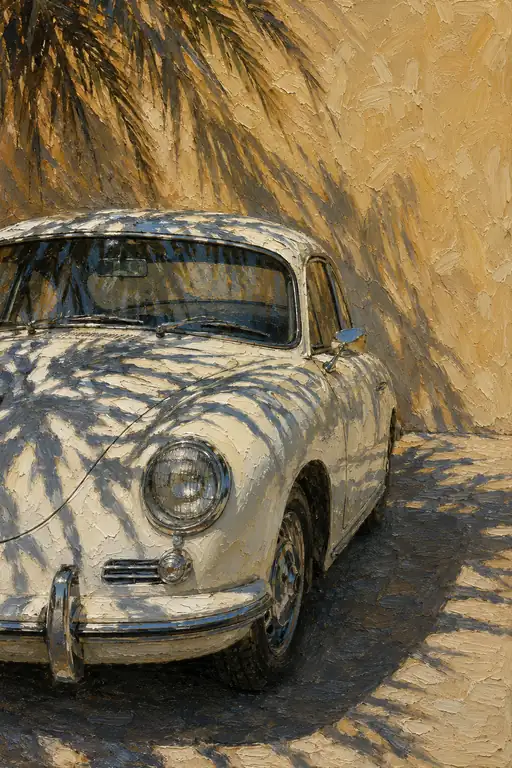 Where the Light Lingers
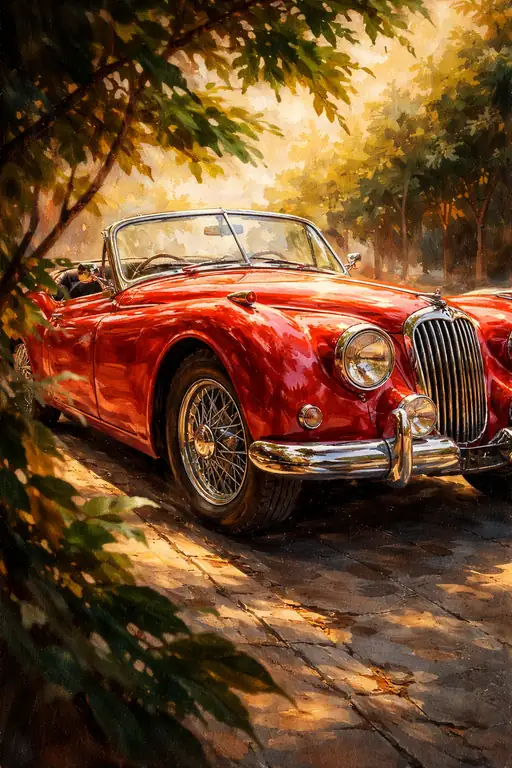 Crimson Under the Canopy
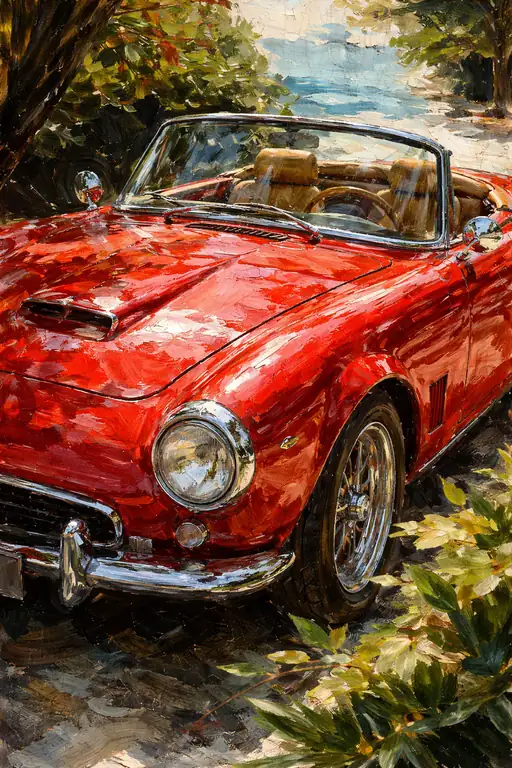 Sunlit Nostalgia in Red
 Passion's Intense Reflection
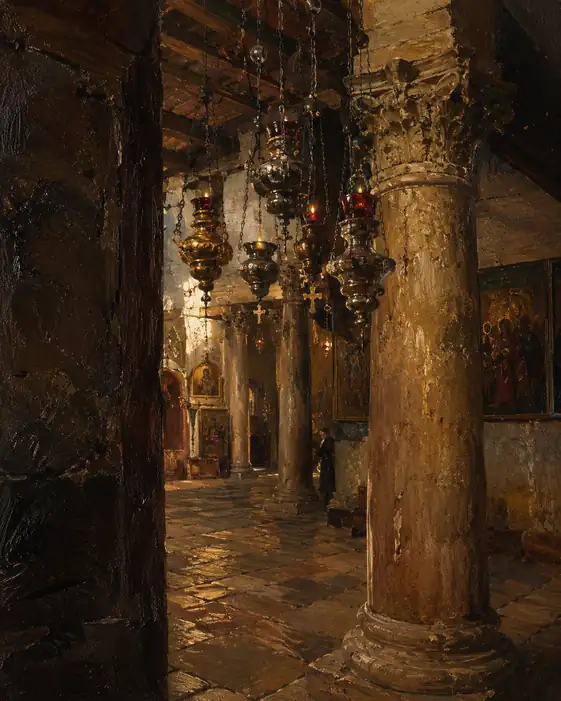 Whispers of the Green Machine
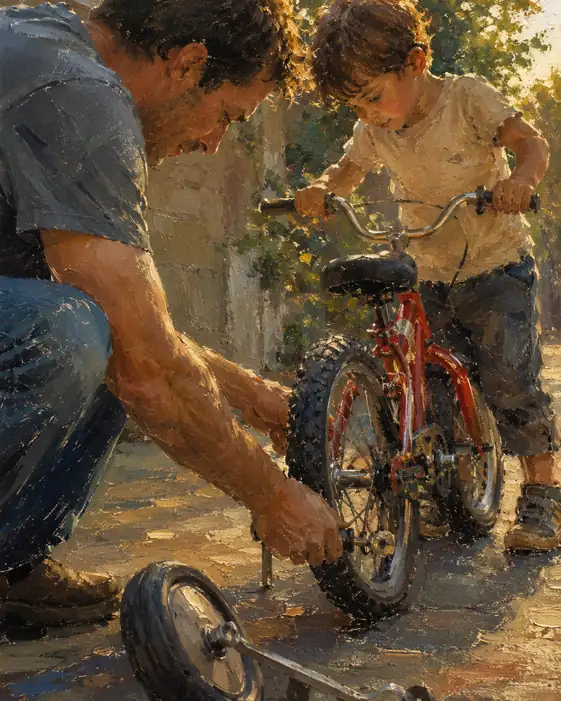 Gleam of the Midnight Steel
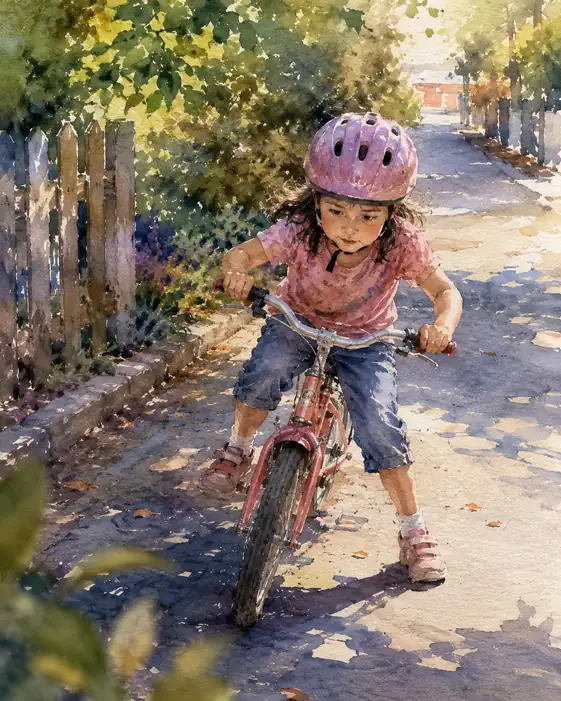 The Blue-Silver Soul
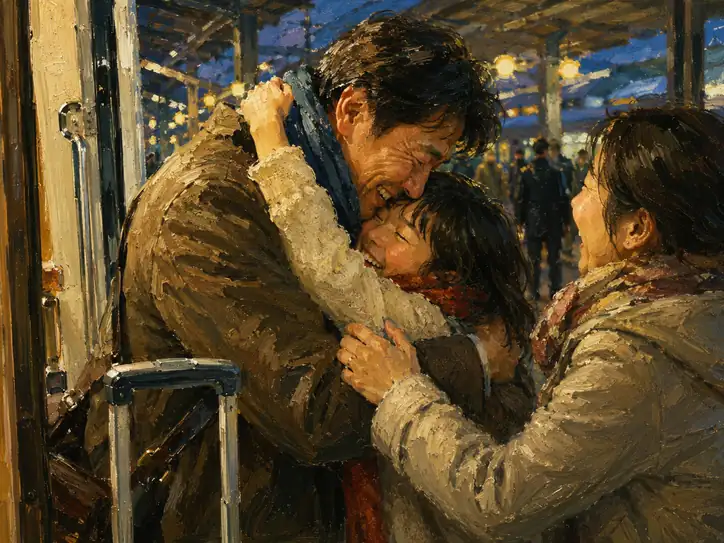 Reflected History
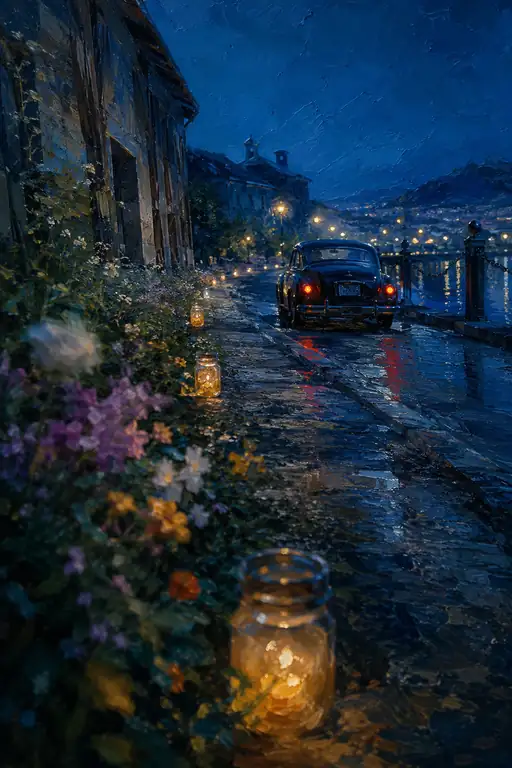 A Quiet Ride into Yesterday