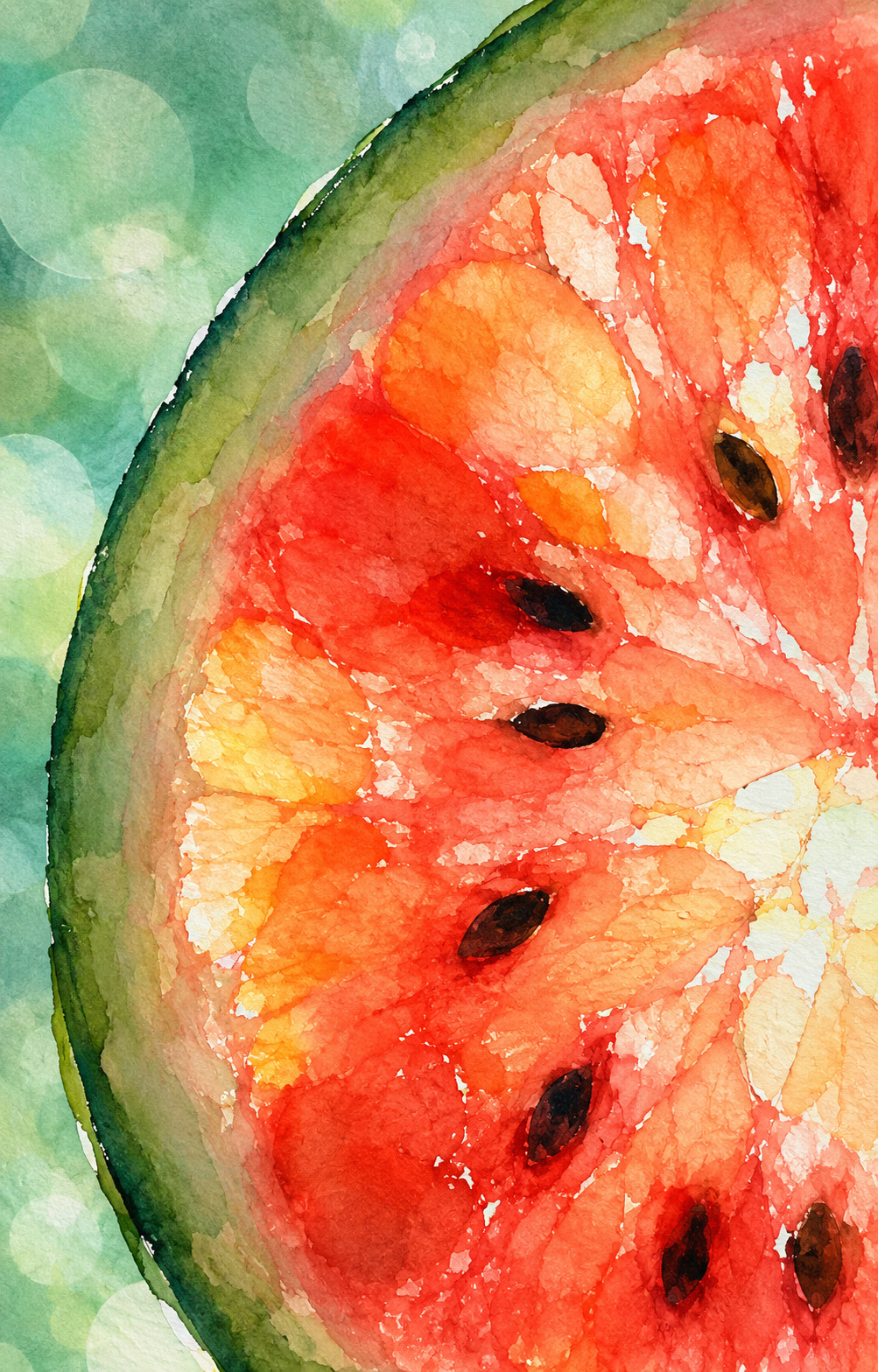
Summer's Crimson Beat
Critique
1. Introduction This watercolor painting presents a close-up view of a sliced watermelon, bursting with juiciness and summer freshness. The contrast between the vibrant red pulp and the fresh green background creates a strong visual impact and color harmony. This essay analyzes the watercolor techniques and color relationships used in this botanical still life. 2. Description The right half of the canvas features a detailed section of a ripe watermelon. The flesh shifts from rich red in the center to soft orange and yellow near the rind, with glossy black seeds distributed radially. The green rind borders the left, against a soft background of green and white circular bokeh light patterns. 3. Analysis The color palette relies on the complementary contrast between the red of the flesh and the green of the rind and background. Soft washes and wet-on-wet techniques capture the water-rich texture of the pulp and the hard reflection of the seeds. The diagonal curve of the rind divides the frame, establishing balance. 4. Interpretation and Evaluation The work symbolizes the simple joys of summer and the fertility of nature by focusing on the fruit's inner texture. Rendering the fresh, wet appearance of the pulp through translucent washes demonstrates the artist's high technical control of watercolor. The composition successfully elevates a common food subject into a significant aesthetic piece. 5. Conclusion Initially seen as a simple fruit illustration, closer observation shifts the viewer's focus to the delicate rendering of fiber and light. The background light circles enhance the refreshing quality of the subject. In conclusion, this painting achieves high artistic quality, presenting a sophisticated balance of color, texture, and light through masterly watercolor application.
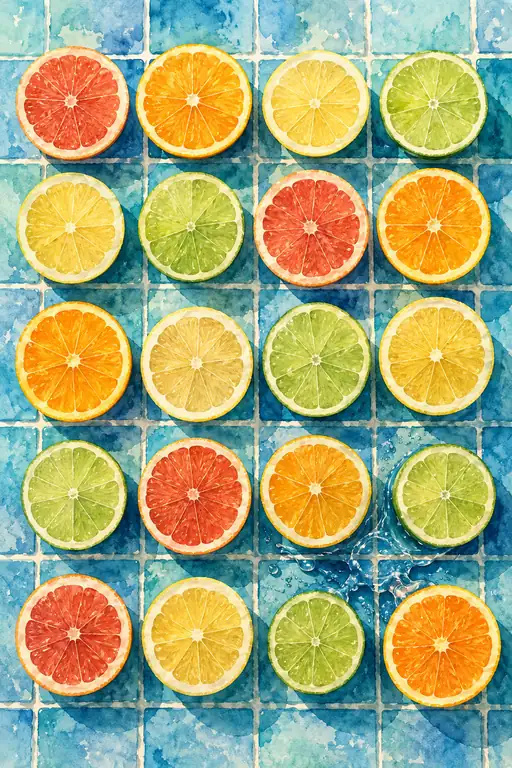 Midnight Citrus Splash
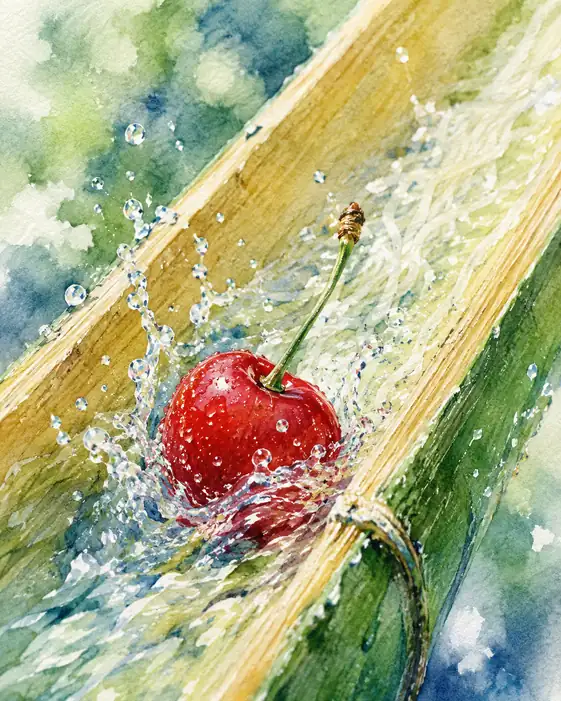 A Crimson Splash of Summer
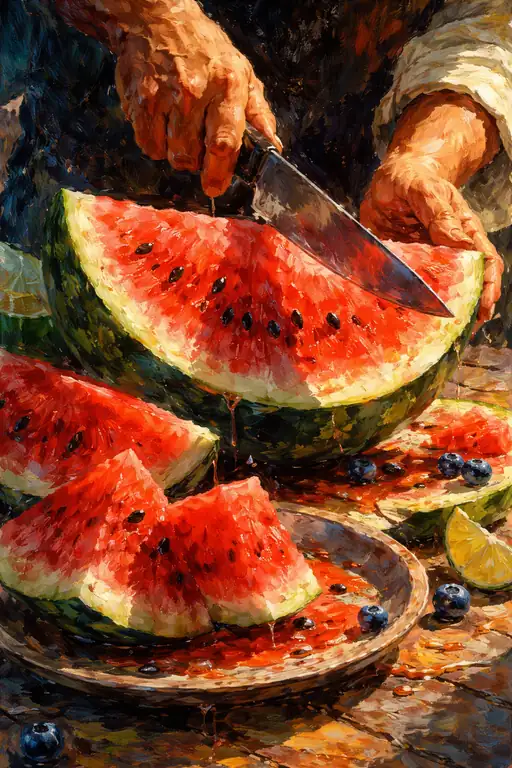 Vibrant Burst of a Summer's Heart
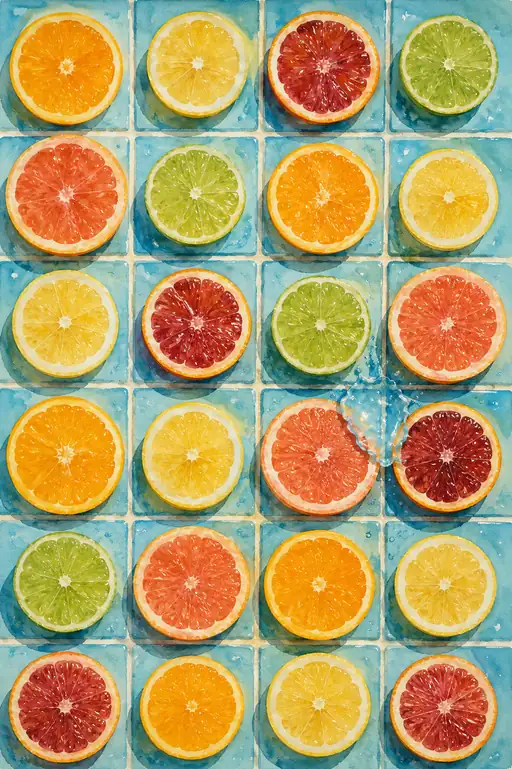 Symphony of Blue and Citrus
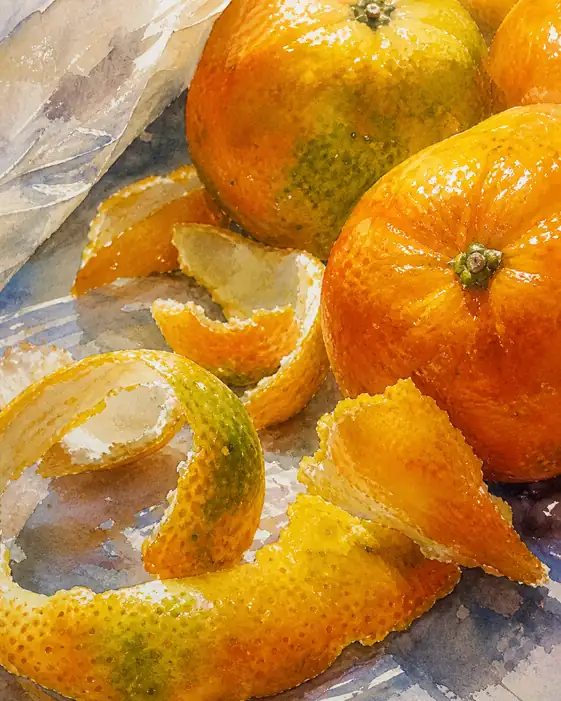 Life’s Spiraling Radiance
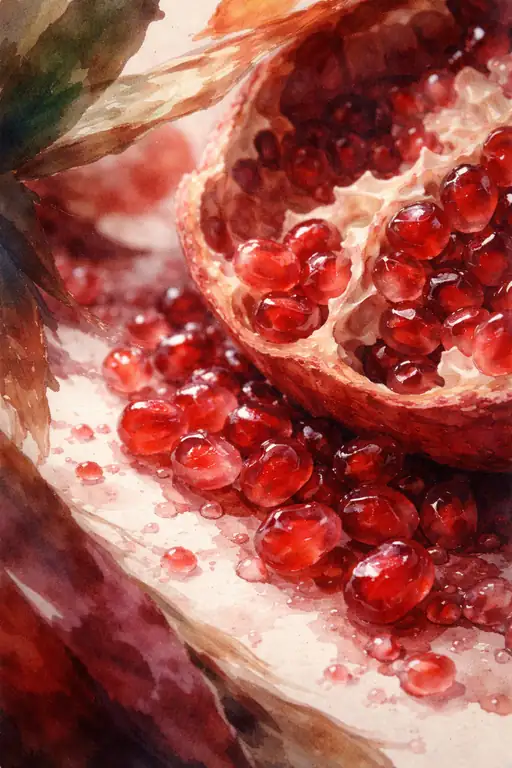 The Bursting Secret of Life
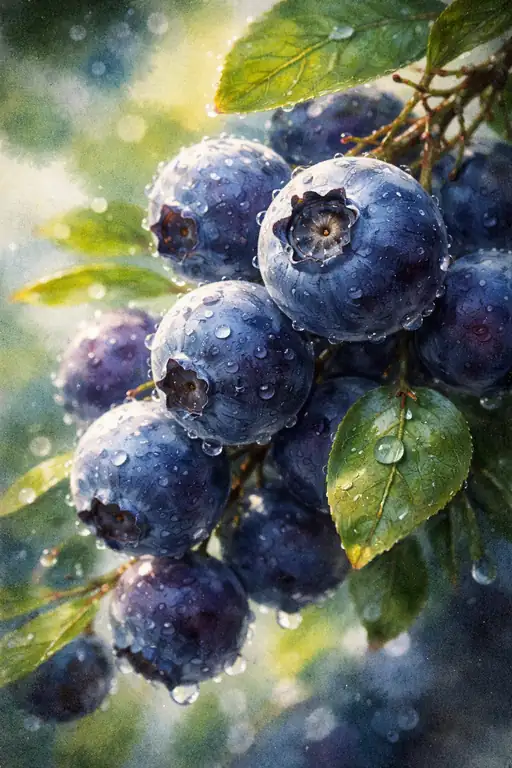 Pearls of the Morning Mist
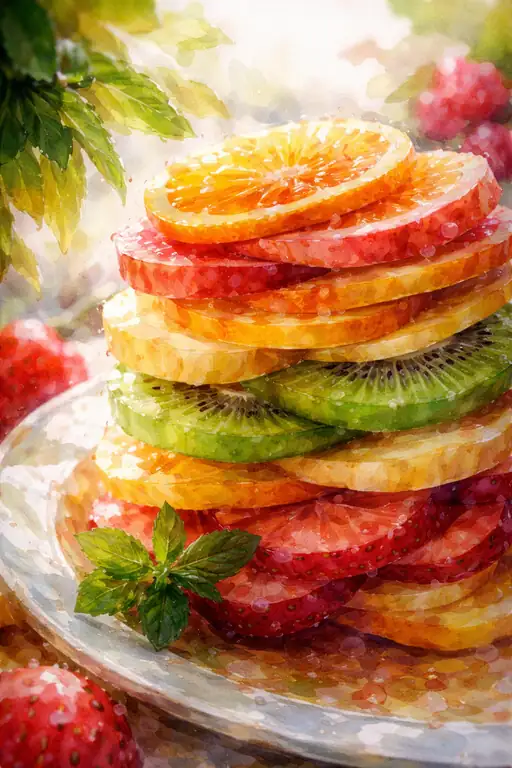 Vibrant Citrus Tower
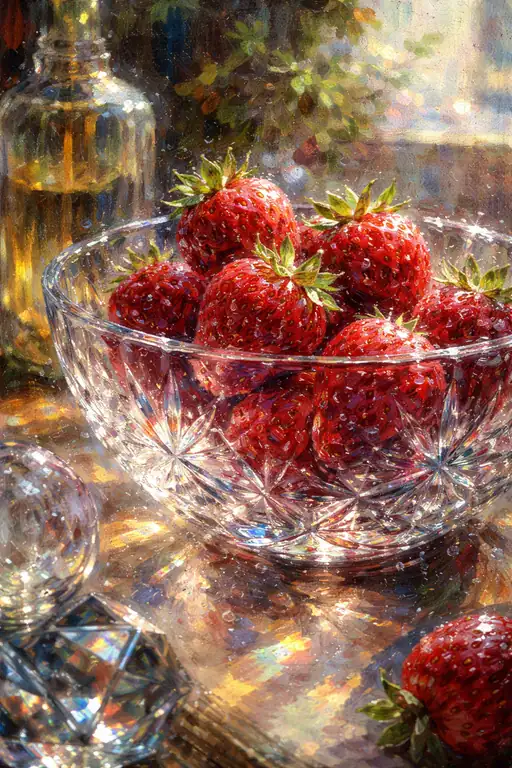 Crimson Gems of Summer's Zenith
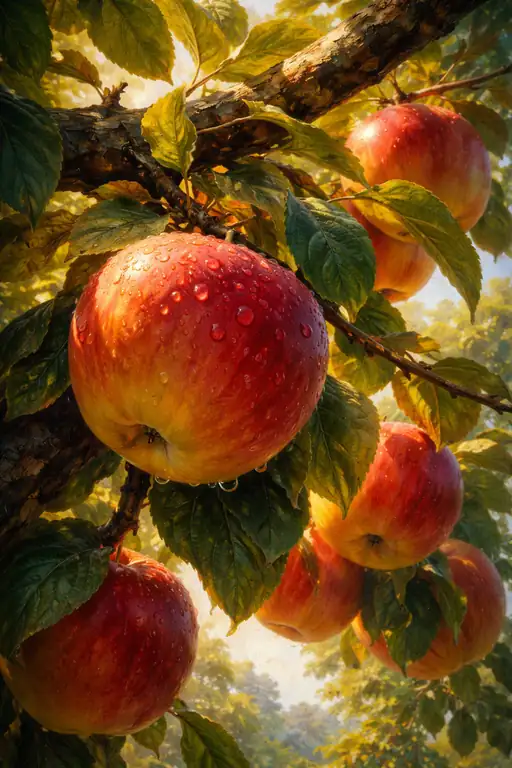 Whispers of the Orchard