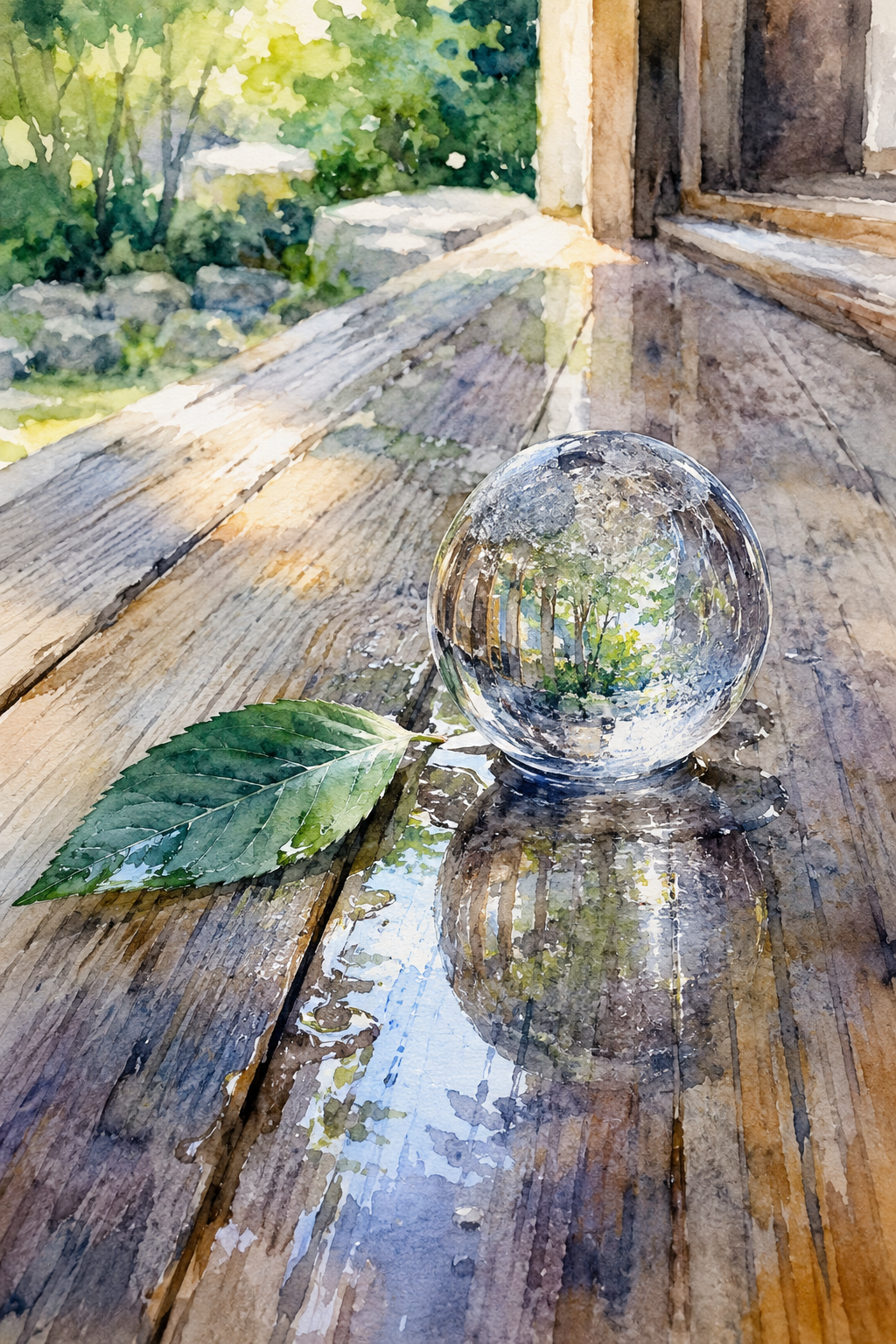
The Boundary of Reality and Reflection
Critique
1. Introduction This watercolor painting depicts a transparent glass sphere and a single green leaf placed on a wet wooden veranda in summer. The clarity of the glass, the reflections on the floor, and the warm sunlight evoke a serene and refreshing atmosphere. This essay analyzes the light representation, reflections, and spatial composition of this quiet still life. 2. Description In the center-right, a clear glass sphere rests on a wet wooden deck, reflecting the surrounding trees. To its left lies a fresh green leaf, and the wet floorboards create a mirror reflection of both the sphere and the leaf. The background shows a sunlit garden with rocks and plants out of focus, framed by sliding doors. 3. Analysis The color palette coordinates the warm browns of the wooden deck, the fresh greens of the leaf and garden, and the blue sky reflected in the sphere. Transparent watercolor washes effectively capture the distorted light within the glass and the glossy reflection on the wet floor. The diagonal shadows of the sunlight create deep perspective. 4. Interpretation and Evaluation The work symbolizes the intersection of reality and illusion by showing the garden reflected and inverted inside the glass sphere and on the wet floorboards. The artist's ability to render light refraction and glossy reflections with delicate washes demonstrates high technical skill. The clean, balanced composition elevates this simple motif into high art. 5. Conclusion Initially seen as a pleasant summer snapshot, further observation shifts the viewer's understanding toward a contemplation of clarity, double reflection, and time. The veranda serves as a quiet interface with the natural world. In conclusion, this painting achieves high aesthetic quality, presenting a poetic and visually sophisticated experience through masterly control of watercolor.
Same Subcategory
Similar Artworks
 The Trace of a Dripping Summer
 A Warm Shelter from the Cold Rain
 Rainbow Reflections on a Rainy Stone
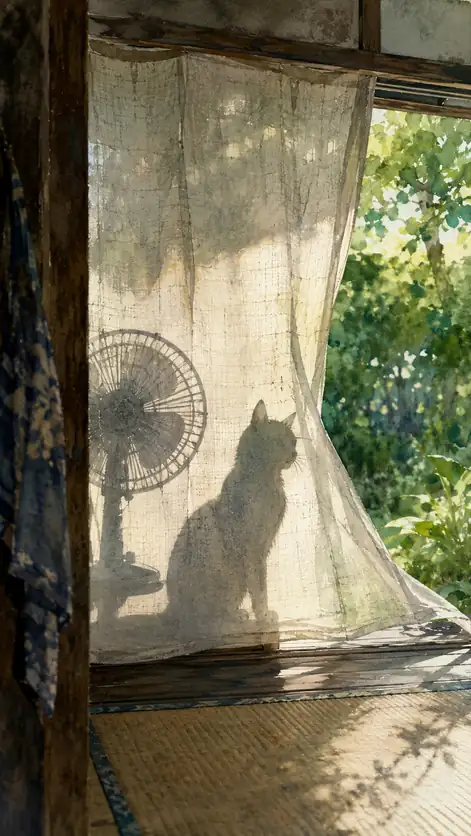 Summer Whispers in the Shadows
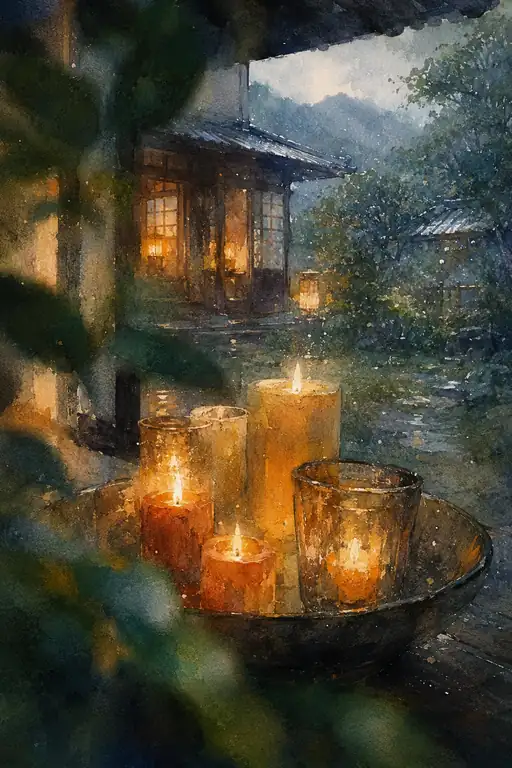 Where Shadows Meet the Flame
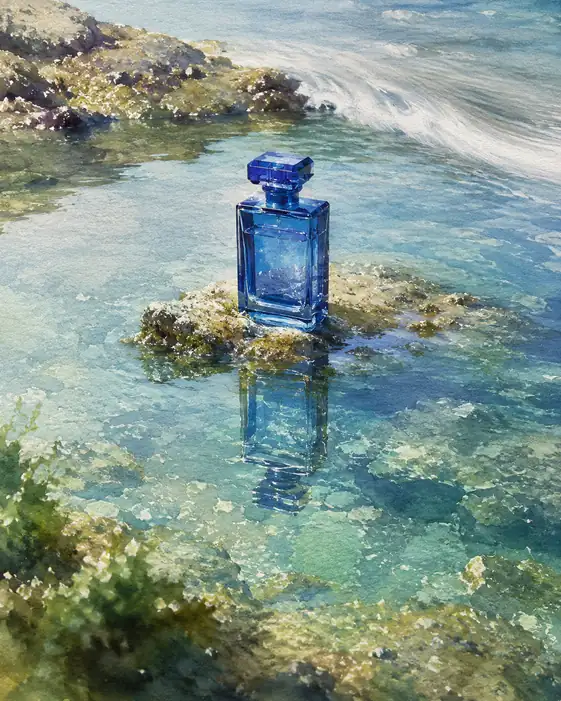 Echoes of the Blue Tide
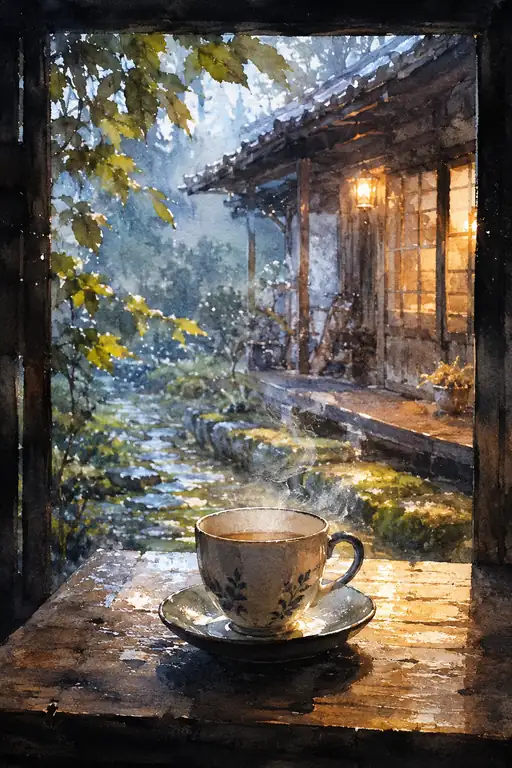 A Moment Kept in Warmth
 Tranquility in the Whispering Rain
 Glistening Drops of a Summer Noon
 Where the Cool Breeze Lingers