
Where the Wind Rests
Critique
1. Introduction This watercolor painting presents a serene and minimal summer scene of a half-opened blue Japanese folding fan resting on fine, rippled sand. The work coordinates the deep indigo folds, the wooden fan spokes, and the warm sunlight on the sand dunes using delicate washes. 2. Description In the center-right, a folding fan made of deep blue paper and light-colored wood lies flat on the ground. The earth is covered with wind-swept sand patterns that glow white and beige in the sun. The fan's shadow is cast softly onto the uneven sand in the lower-left. 3. Analysis The color palette relies on the contrast between the cool indigo and cobalt blues of the fan, and the warm beige and off-white tones of the sand. Structurally, the fan's radial geometry interacts dynamically with the horizontal wavy lines of the sand, creating a balanced asymmetrical composition. 4. Interpretation and Evaluation The painting explores themes of summer relief (ryo), human presence in nature, and craftsmanship, presenting the fan as a symbol of cool air and relaxation. The empty sand landscape suggests solitude, while the fan's folds suggest human care. The artist shows excellent skill in rendering the detailed sand textures. 5. Conclusion In conclusion, the artwork is a successful still life landscape that masterfully links natural textures with human objects. While initially drawn to the bright blue fan and its geometric folds in the center, the viewer is soon captivated by the detailed sand ripples and soft shadows. It remains a tranquil and technically accomplished watercolor.
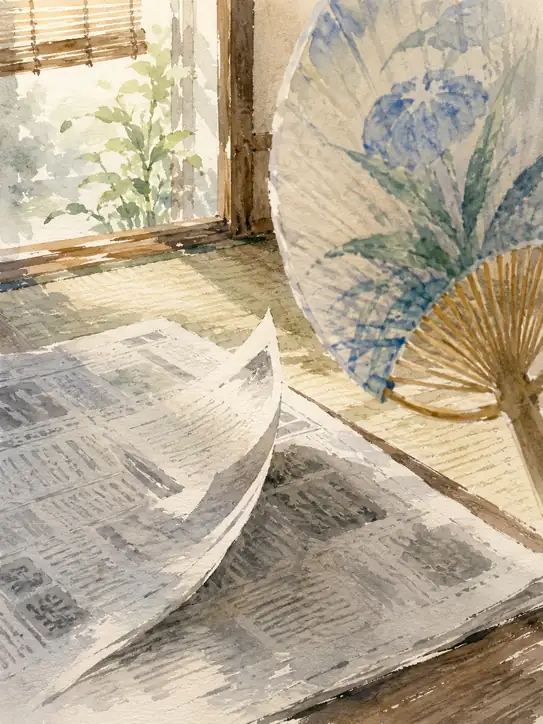 Whisper of the Summer Breeze
 Indigo Breeze in the Sand
 Breeze of Nostalgia
 The Color of Wind
 The Song of a Summer Breeze
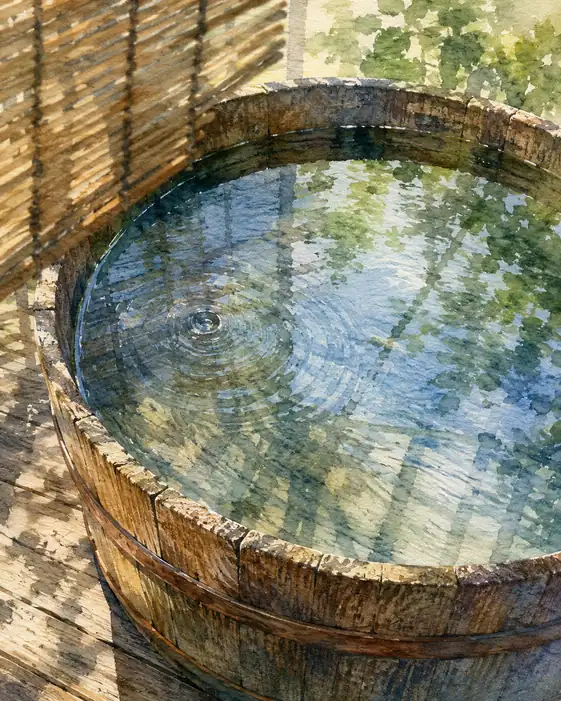 The Mirror of Summer Stillness
 Whispers of the Wind
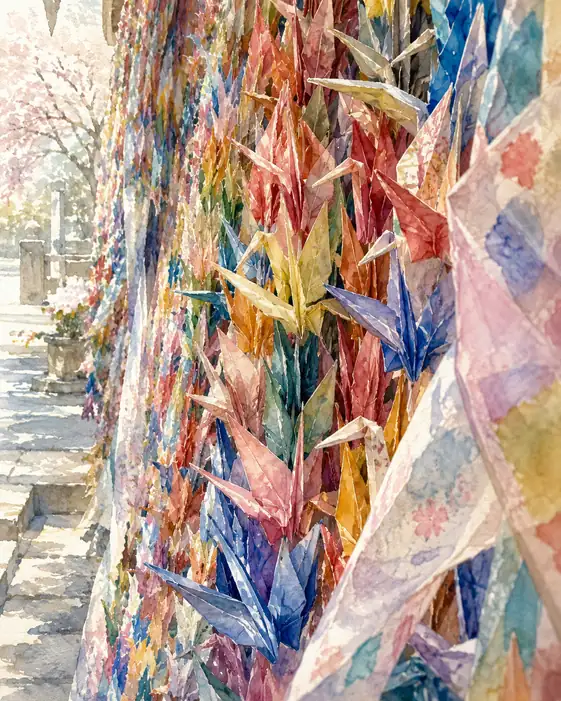 A Thousand Fluttering Prayers
 Under the Sunlit Crimson
 Beneath the Golden Canopy