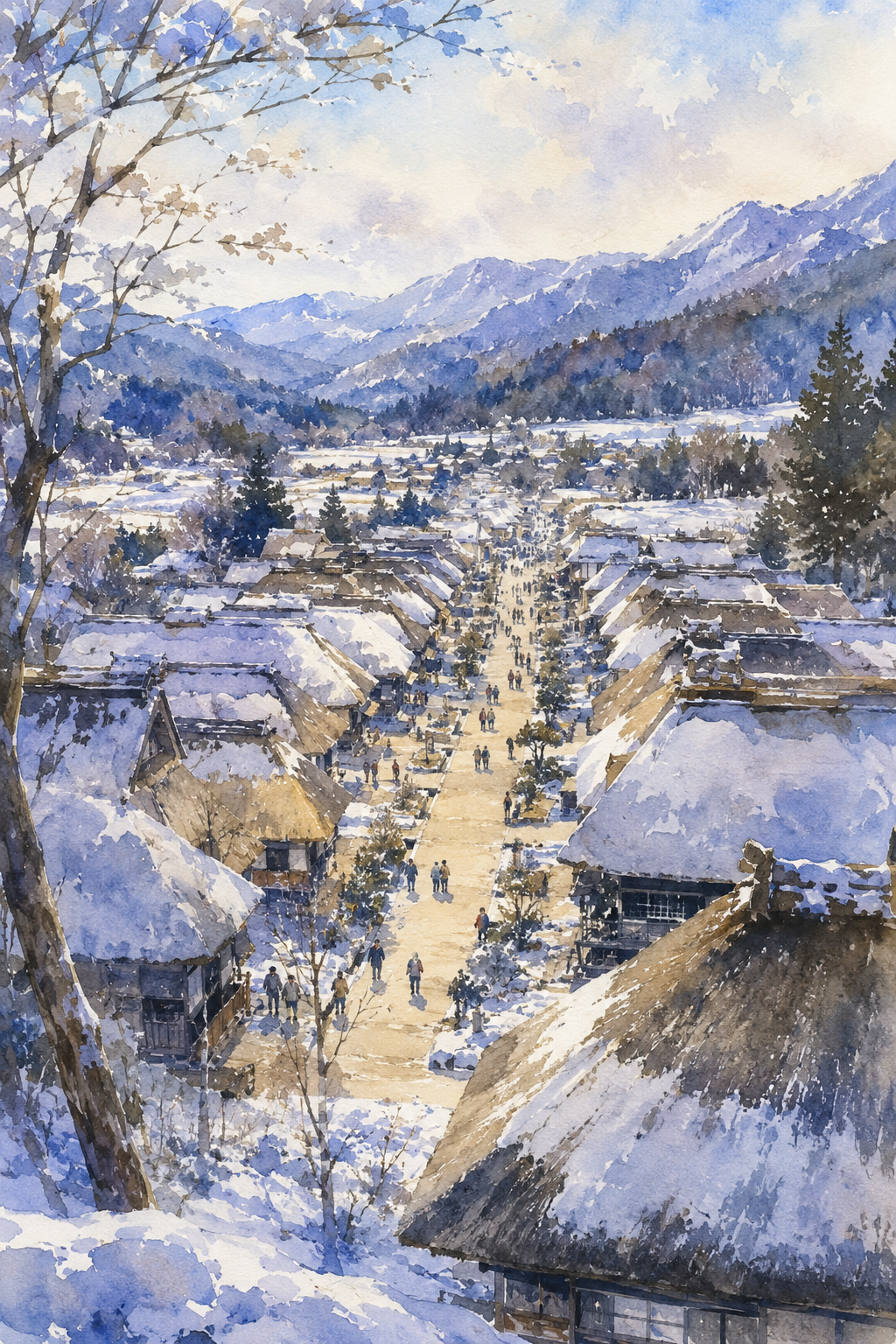
Warmth in the Snow-Clad Village
Critique
1. Introduction This watercolor painting captures a serene and nostalgic winter scene of a historic Japanese post town with snow-covered thatched-roof houses. The work beautifully harmonizes the traditional wooden streetscape with the distant snowy mountains and the gentle movement of visitors. 2. Description On both sides of the street stand rows of traditional houses with thick snow piled on their thatched roofs, showing their wooden pillars and plaster walls. A wide unpaved road runs straight down the center, filled with the small silhouettes of people walking. The background features layers of snow-capped mountains under a pale blue sky, while a slender bare tree stands on the left. 3. Analysis The color palette relies on the dominant winter cool tones of snowy white, soft indigo, and light purple in the shadows and mountains. These are offset by the warm browns and beiges of the thatched roofs and the dirt road, creating a cozy color harmony. The symmetrical, one-point perspective composition provides strong depth and structural order. Blended watercolor washes depict the soft snow texture and the atmospheric haze on the mountains. 4. Interpretation and Evaluation The painting contrasts the heavy silence of the winter snow with the active warmth of community life on the street. The enduring thatched houses represent cultural heritage coexisting with the seasonal cold. The artist shows excellent skill in rendering the voluminous thatched roofs and the delicate mountain ridges with transparent watercolor layers, creating a highly evocative piece. 5. Conclusion In conclusion, the artwork is a successful landscape that combines historical architectural charm with natural winter beauty. While initially drawn to the snowy thatched roofs lining the street, the viewer is soon captivated by the distant blue mountains and the gentle energy of the path. It remains a tranquil and technically masterful watercolor.
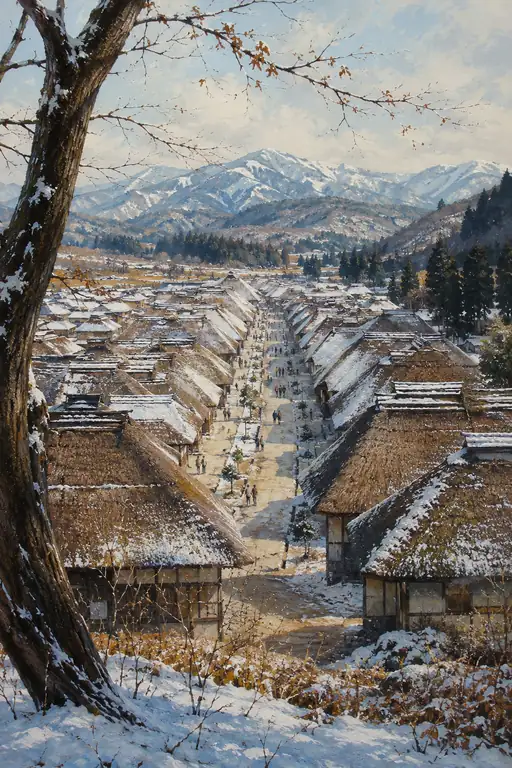 Warmth in the Silent Snow
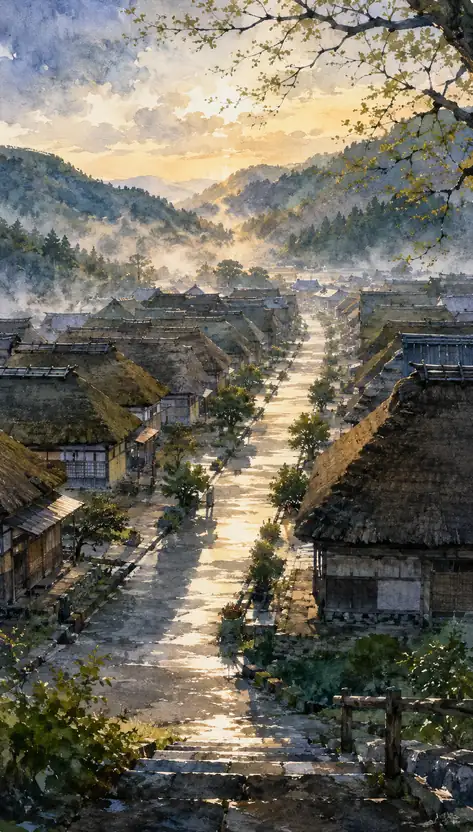 One Road Parting the Morning Mist
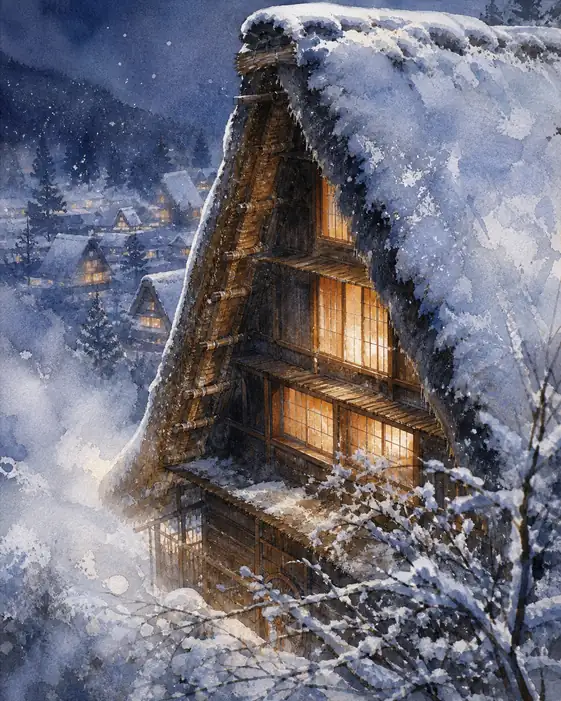 The Amber Vigil of the Snowy Hamlet
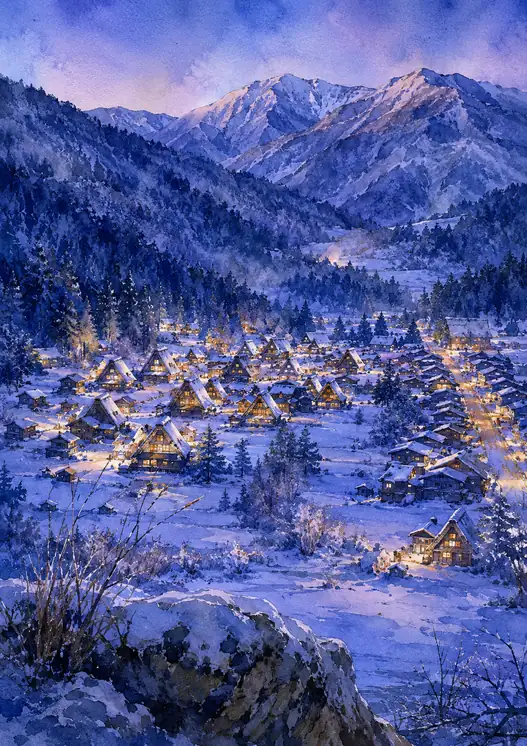 The Village Keeps One Ember
 A Beacon in the Silent Snow
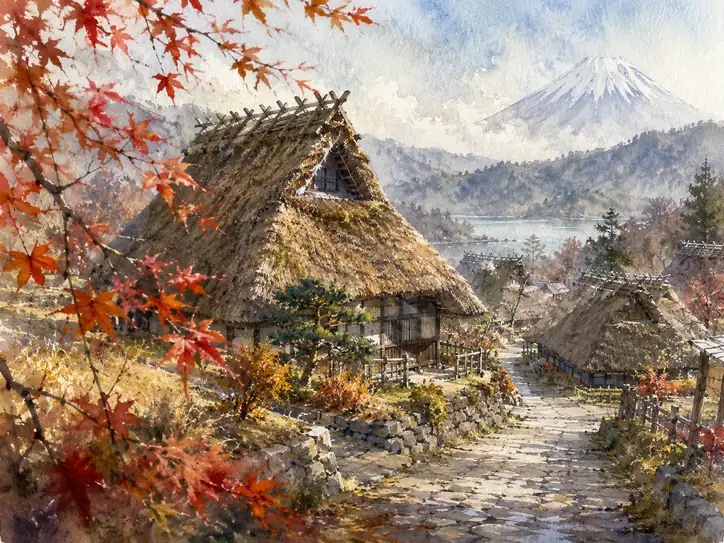 Sanctuary of the Eternal Mountain
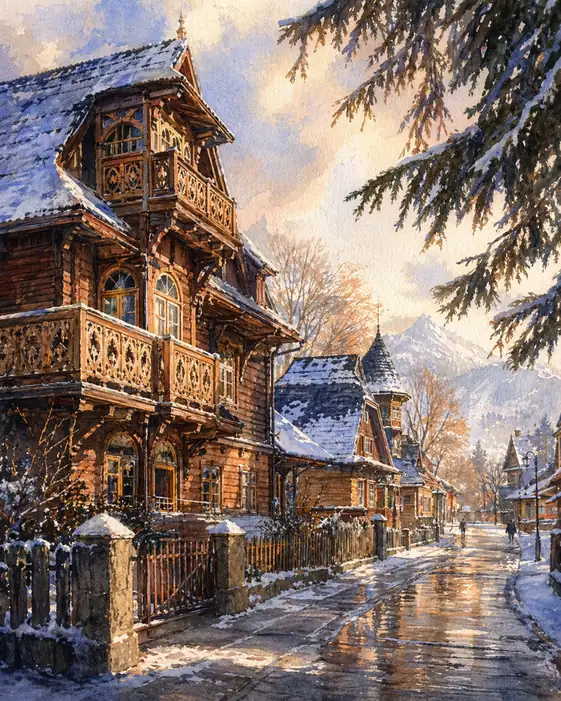 Winter's Soft Awakening
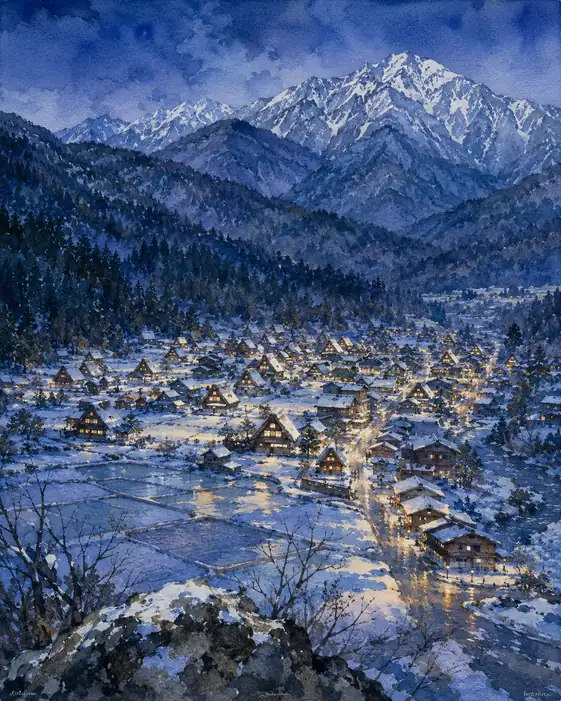 A Thousand Roofs Holding Warmth
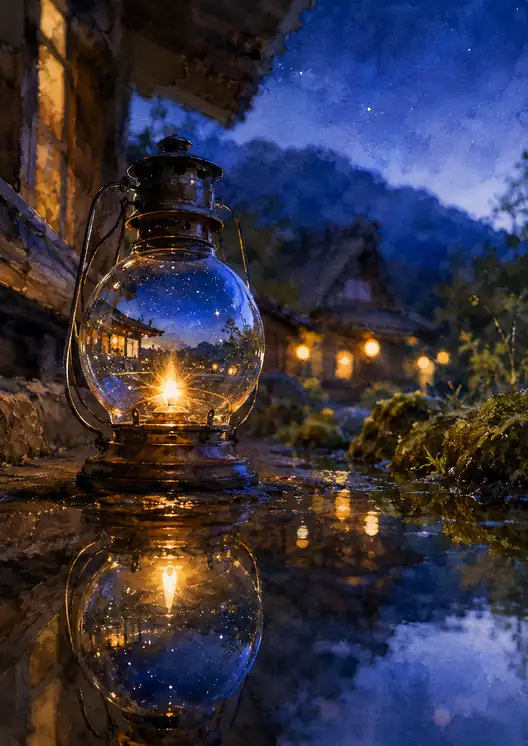 Echoes of Starlight on the Water
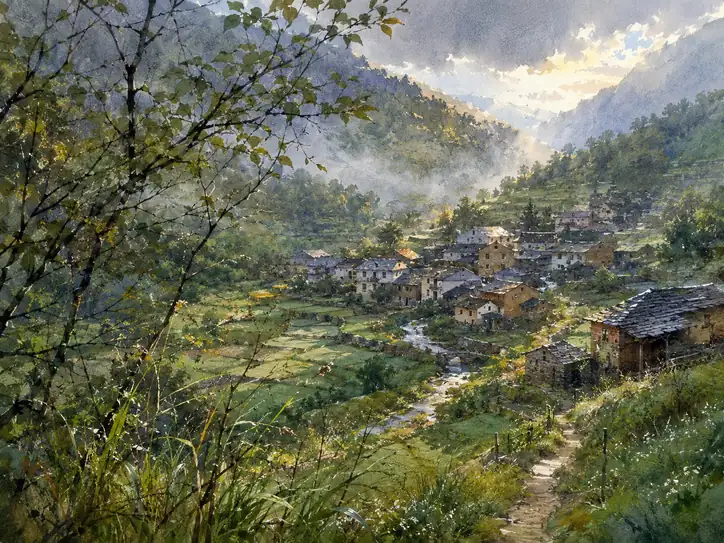 Where the Mist Whispers
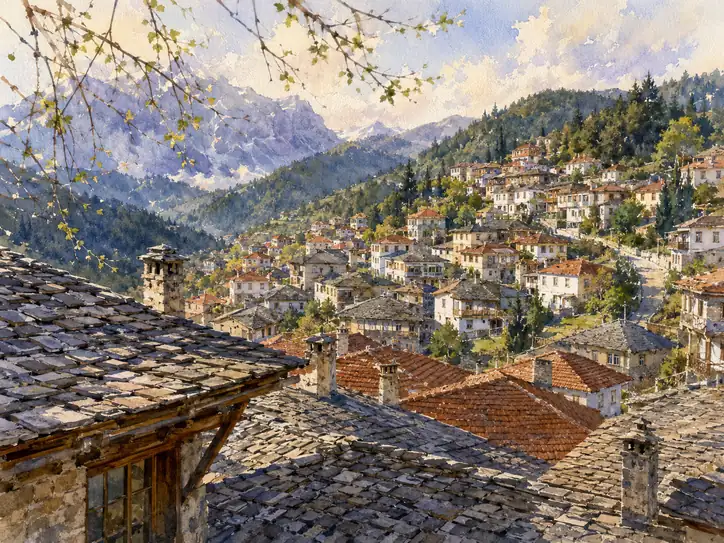 Warmth Beneath the Silent Peaks