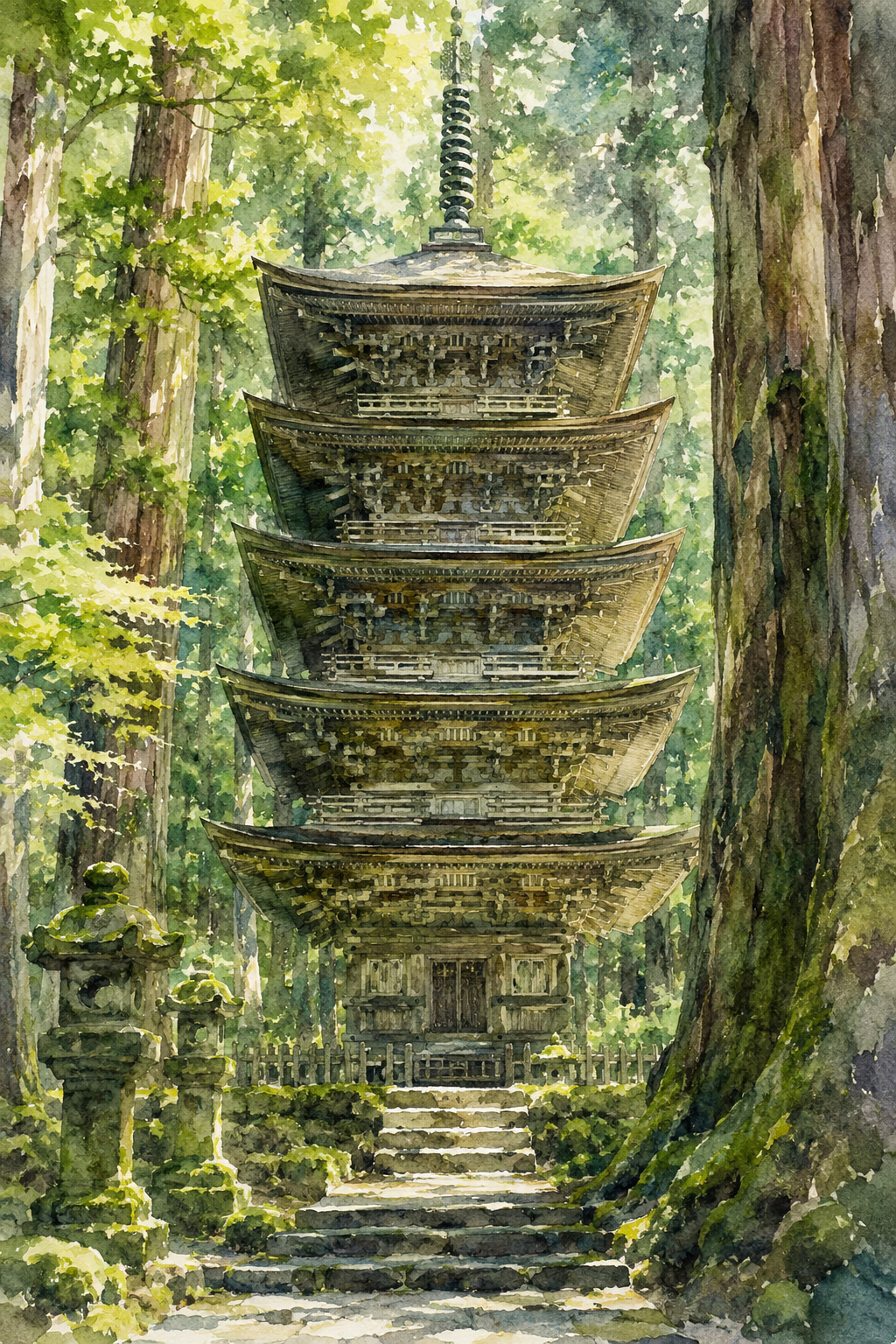
Silent Prayers of the Forest
Critique
1. Introduction This watercolor painting captures the serene grandeur of a traditional wooden five-story pagoda standing deep within a lush, ancient forest. The harmony between the sacred architecture, the giant cedar trees, and the soft sunlight creates a solemn, mystical atmosphere. 2. Description In the center stands a detailed five-story pagoda made of dark wood, topped by a metal finial. Dappled stone steps lead toward the structure, with two moss-covered stone lanterns standing on the bottom left. The composition is framed by massive, mossy cedar tree trunks on both sides, while bright green leaves filter the sunlight, casting light patches on the roofs. 3. Analysis The color palette is built on rich shades of forest green, moss green, and the earthy browns and grays of the wooden pagoda and stone lanterns. The centered placement of the pagoda offers stability, while the vertical lines of the giant trees and the steps enhance the sense of height and depth. Watercolor blending and dry brush techniques convey the textures of rough bark and soft moss. 4. Interpretation and Evaluation The painting explores themes of nature worship and spiritual sanctuary, positioning the pagoda as a timeless refuge coexisting with the ancient forest. The sunlight filtering through the canopy represents divine energy or hope, illuminating the quiet setting. The artist's handling of the complex architectural joints using delicate, transparent watercolor washes is highly successful, creating a deep emotional impact. 5. Conclusion In conclusion, the artwork is a successful landscape that combines architectural elegance with natural scale. While initially drawn to the detailed structure of the pagoda, the viewer is soon enveloped by the calm, green presence of the forest and the gentle play of light. It stands as a tranquil and technically proficient masterpiece.
Same Subcategory
Similar Artworks
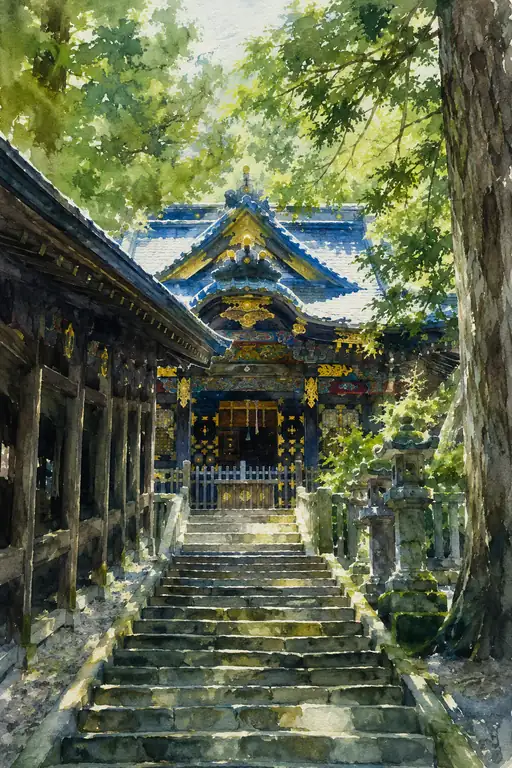 Steps of Dappled Light
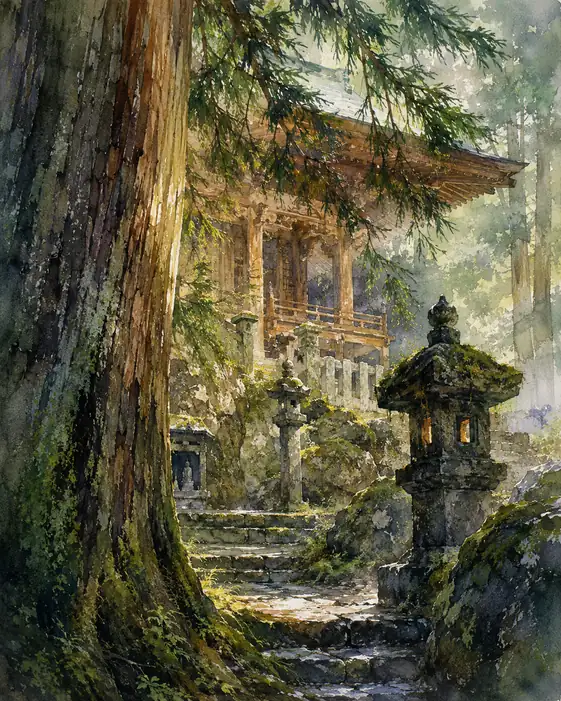 Sanctuary of the Ancient Cedars
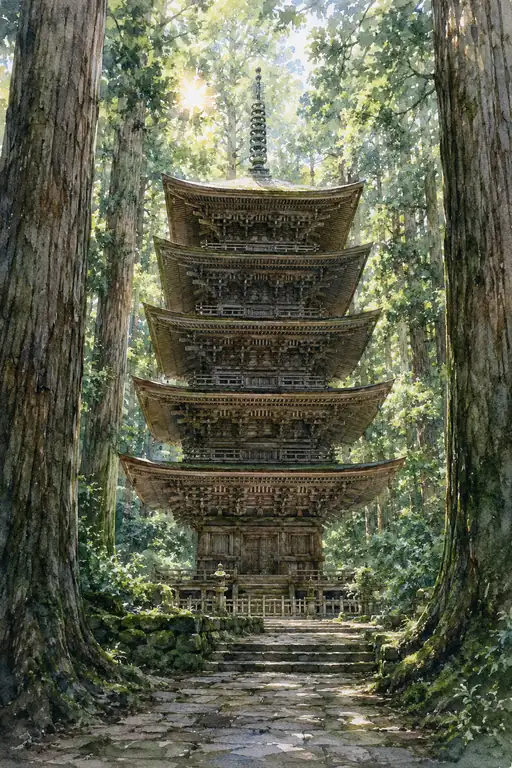 Silent Watcher of the Sacred Forest
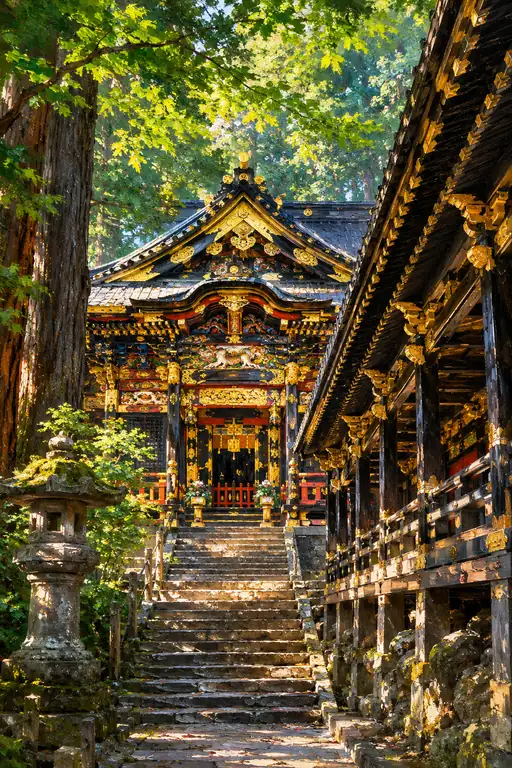 Sacred Light Spilling Across the Stone Steps
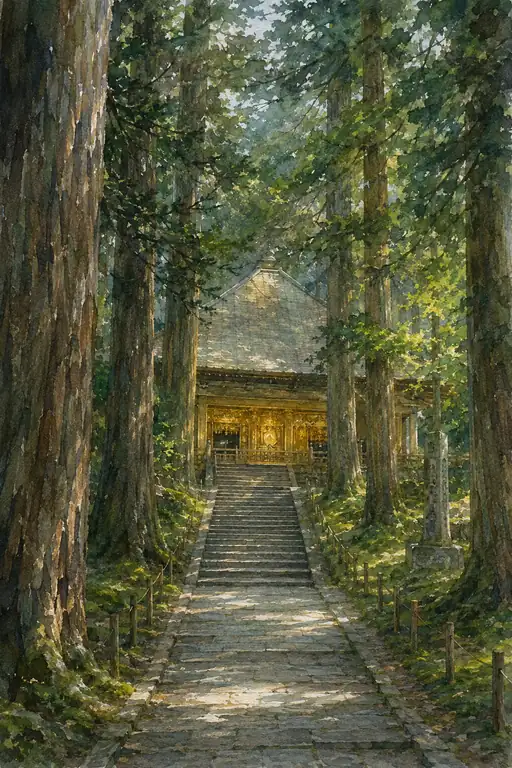 A Sanctuary of Golden Silence
 Whispers in the Mossy Sanctuary
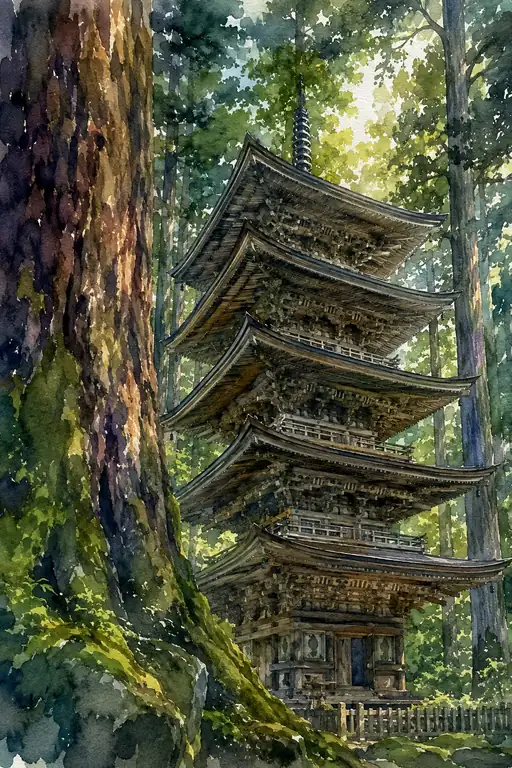 Sacred Rhythm of the Cedar Forest
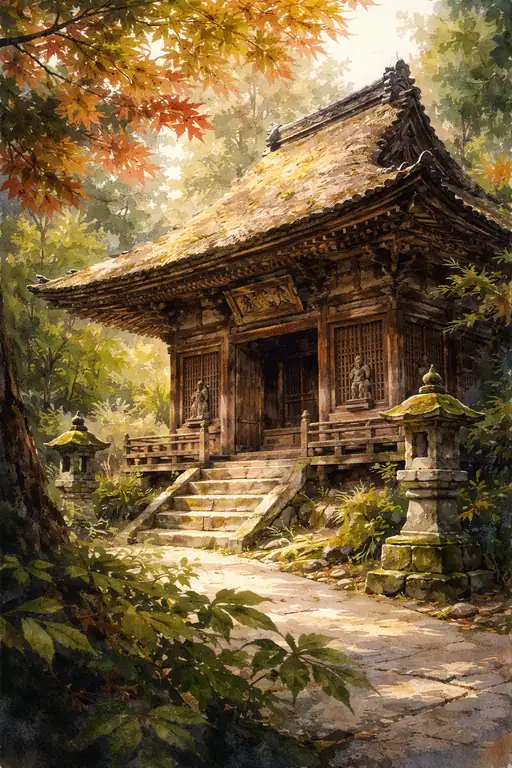 Sunlight Through the Crimson Gate
 Sunlight Upon the Vermilion Pillars
 Pathway to the Sacred Silence